The British countryside harbours some genuinely elusive creatures that most people will only ever see in documentaries or grainy wildlife photographs taken by incredibly patient experts.
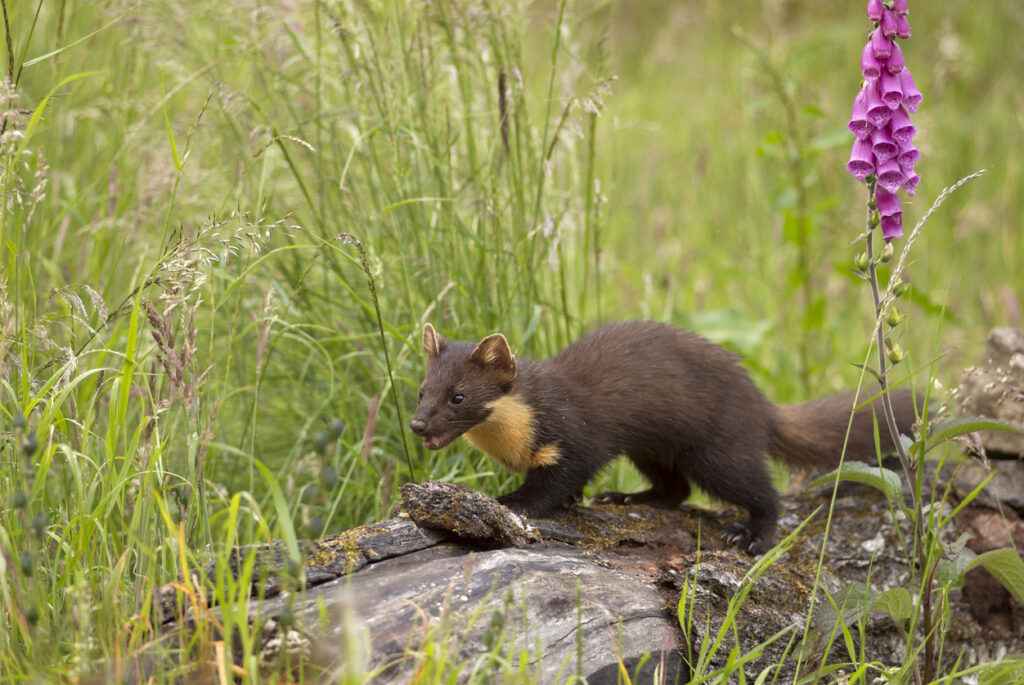
While the most intrepid explorers might be fortunate enough to eventually lay eyes, even fleetingly, on some of these remarkable creatures, the rest of us will have to settle for being awed by them from afar, unfortunately. At least we can take comfort knowing they exist at all!
1. Scottish wildcats are the UK’s most endangered feline, with fewer than 300 left.
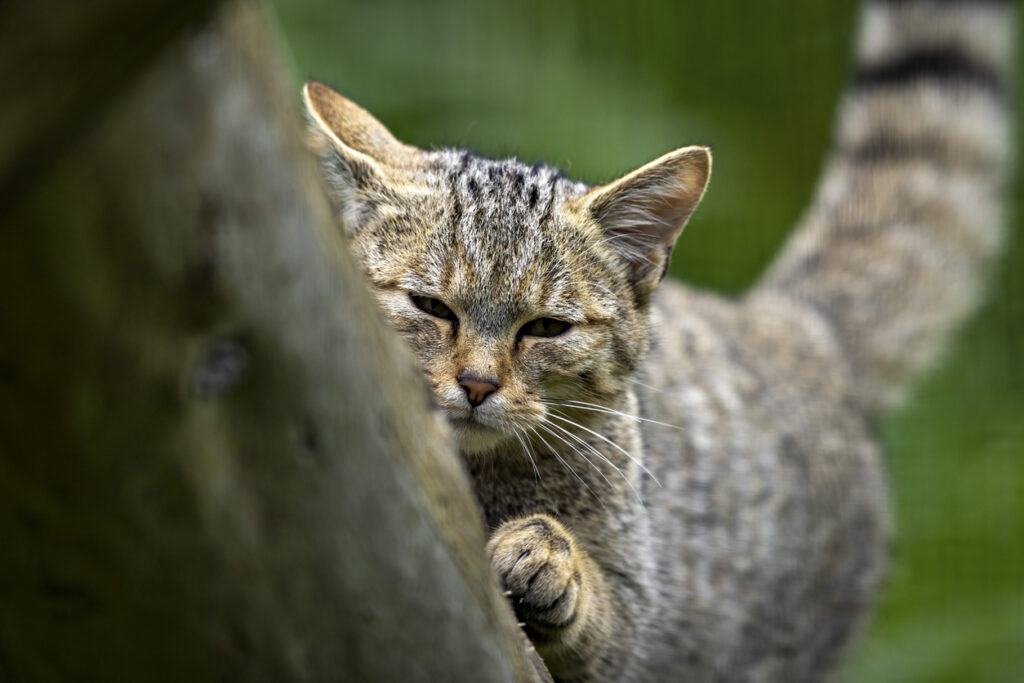
With distinctive black bands around its large, fluffy tail, a large jaw and a wide, flat head, the Scottish wildcat is one of our most endangered animals. Rarer than the tiger, it’s estimated that there are less than 300 Scottish Wildcats left in the wild, so you’re extremely lucky if you ever get to see one!
The only feline species native to the British Isles, the wildcat was once widespread, but is now restricted to northern Scotland, where as few as 100 may remain. When wildcats crossbreed with domestic (feral) cats, it dilutes the wildcat gene until it is completely wiped out. These cats are twice the size of house cats and considerably more ferocious, making any encounter genuinely memorable.
2. The new forest cicada is possibly already extinct.
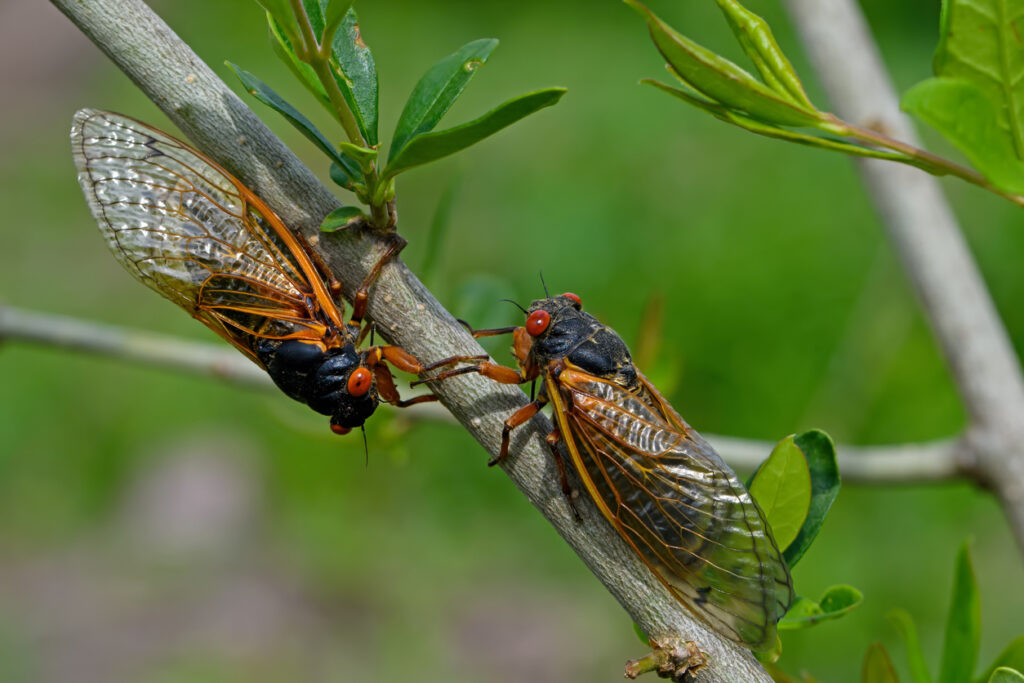
The New Forest cicada has not been seen or heard in the UK since 2000, although even this sighting was unconfirmed. The species is endangered and threatened with extinction due to habitat loss, climate change and overgrazing. Many believe the New Forest cicada is already extinct.
The only cicada native to the UK, this insect is a striking specimen with clear wings and golden stripes. However, nymphs spend eight years underground, so it is possible that there may still be some in existence. If any do remain, they would represent one of Britain’s rarest insects, making them virtually impossible to encounter.
3. Pine martens were once common, but are now critically rare outside Scotland.
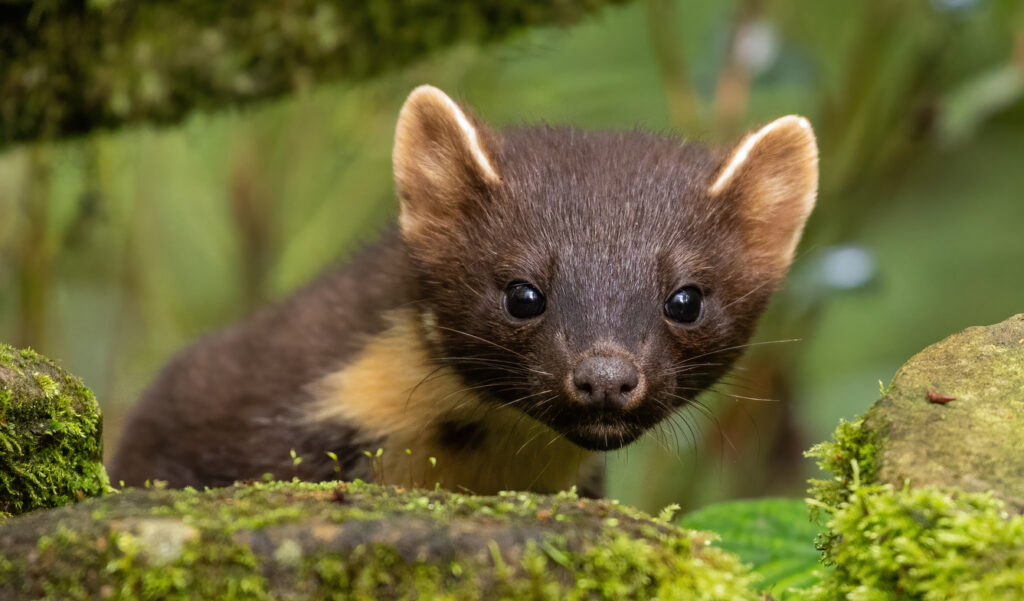
These secretive mustelids have a chestnut brown coat, white-yellow throat and long hairy tail. Once the second most common carnivore in the UK, pine martens have declined considerably. Roughly the size of a domestic cat, these mammals have a long, furry body, pointed face, and a long bushy tail.
Though pine martens are the largest of Britain’s tree-dwelling mammals, you’d be exceptionally lucky to glimpse one in the wild since they’re nocturnal, lightning fast and highly secretive. The pine marten is classified as Critically Endangered in England and Wales by the Red List for Britain’s mammals. Even in Scotland, where they’re most common, spotting one requires extraordinary luck and patience.
4. Water voles are rapidly disappearing riverbank dwellers.
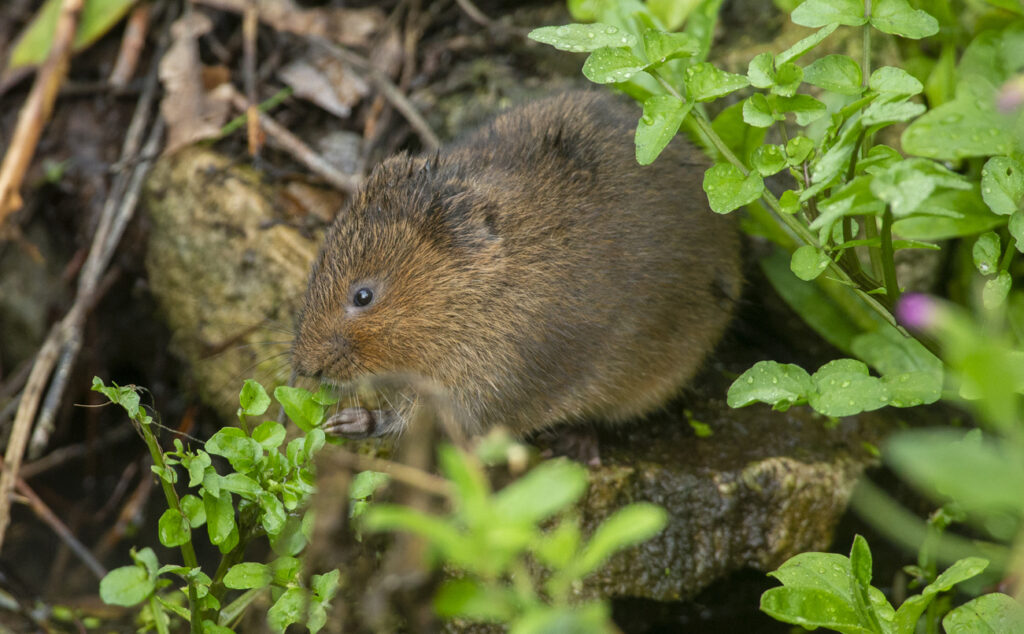
Once found in almost every waterway in Scotland, England and Wales, it is believed this species has now been lost in around 90% of these sites. Water voles have seen a 94% drop in population within the past three decades and lost about 90% of its historic range, driving the species to the brink of extinction.
The semiaquatic rodent spends most of its day in rivers and streams, but digs burrows along riverbanks to rest at night, which helps maintain river ecosystems. The drastic population decline is attributed to the arrival and predation of the non-native American mink. Their secretive nature and declining numbers make encounters increasingly unlikely.
5. Bechstein’s bats are one of Britain’s rarest bat species.
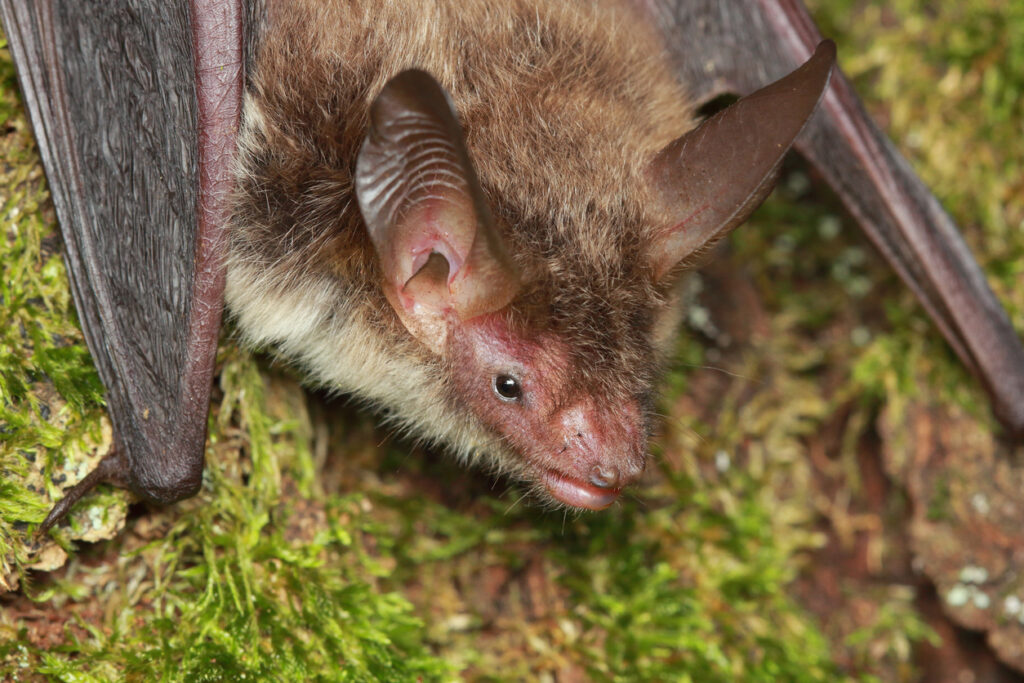
The Bechstein’s bat was once the most common bat species in Britain. With long ears, a pink face and brown fur, this species is a woodland specialist, relying on ancient woods and trees in particular. Sadly, ancient woodland destruction has reduced this species population considerably, and there are now thought to be less than 10 breeding locations in England and Wales.
During breeding season, which occurs in late autumn and early spring, females will gather in maternity colonies of up to 100 bats. This species has been known to live for as long as 21 years. Their dependence on ancient woodlands and nocturnal habits make them exceptionally difficult to observe.
6. Hazel dormice are adorably sleepy woodland rarities.
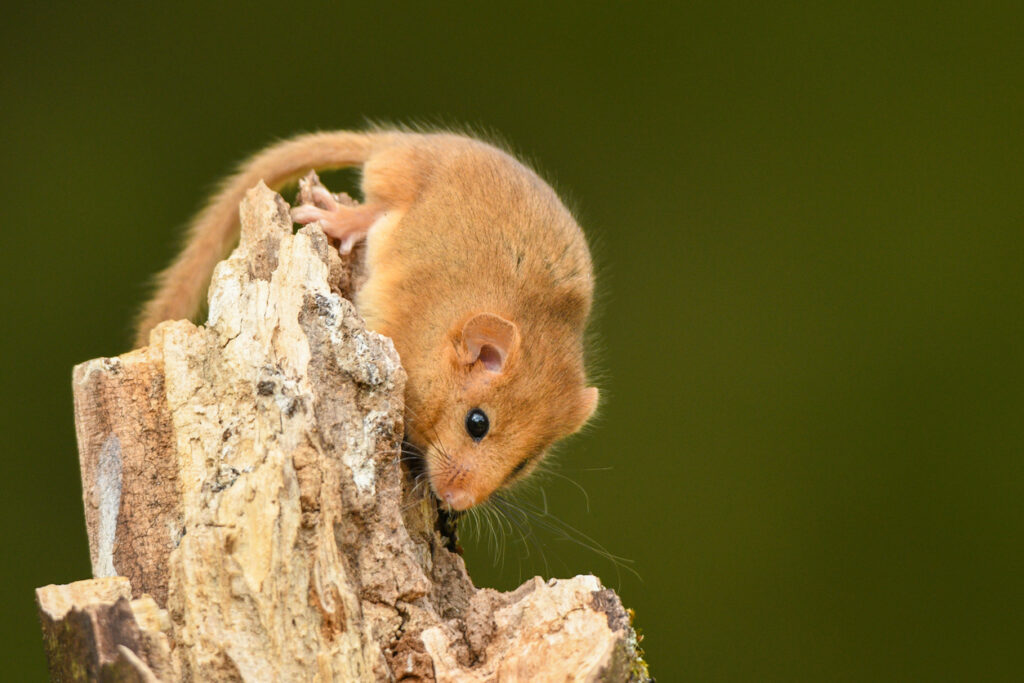
A nocturnal mammal with golden fur, a furry tail and large eyes, the hazel dormouse is considered one of our cutest rodents and is found in the south of the UK. During the colder months they hibernate, entering a sleeping state known as torpor, which slows their body functions.
Hazel dormice rely on hedgerows and ancient woodland, particularly hazel coppice and other deciduous woodland areas with an understorey. The loss of ancient woodland and hedgerows has had a significant impact on dormouse populations. Their arboreal lifestyle and reluctance to cross open ground means you’d need to be in exactly the right woodland at the right time to spot one.
7. Capercaillies are turkey-sized birds on the brink of extinction.
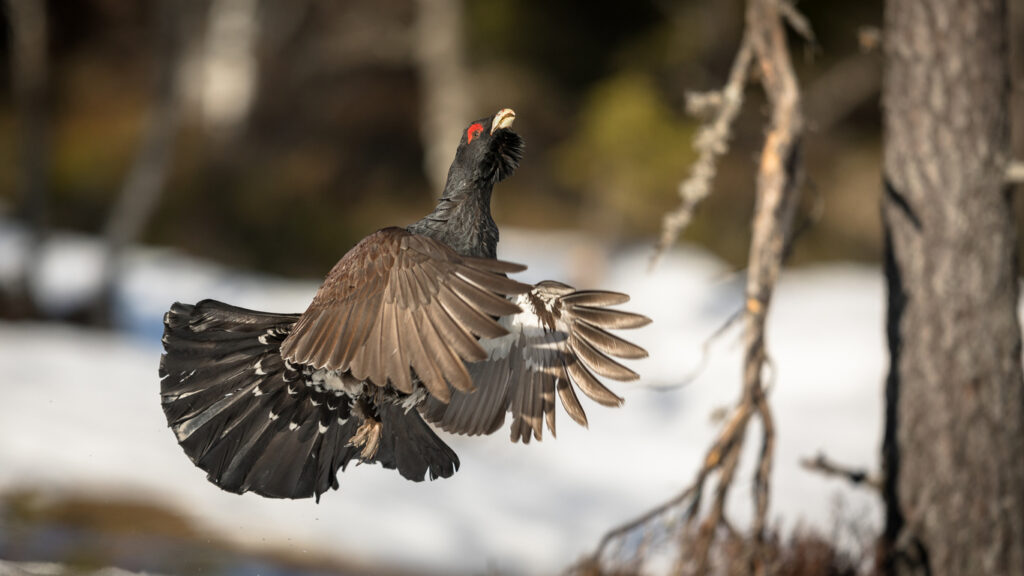
The UK is home to many unique species of birds, one of which is the Capercaillie, a large bird around the size of a turkey. Today the Capercaillie is on the IUCN UK Red List of Threatened Species with fewer than 2,000 birds remaining. The Capercaillie is a species of bird with an estimated total UK population of 542.
For their protection, Capercaillies are restricted to the native pinewoods of Northern Scotland, a rare and vulnerable habitat. Capercaillies are highly sensitive to disturbance, so on the rare occasion that you do see one, you must keep a good distance in order to protect them. Their sensitivity to human presence makes wildlife watching extremely challenging.
8. Natterjack toads are one of only two toad species left.
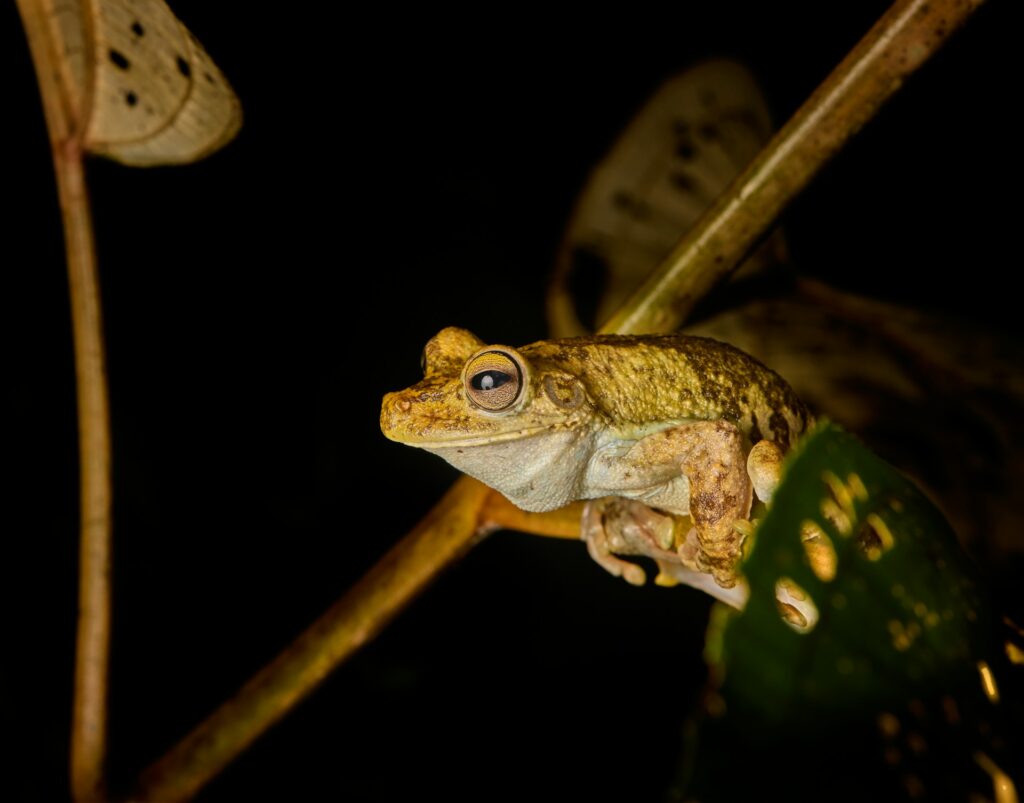
One of only two species of toad in the UK, this noisy amphibian is said to be audible over several kilometres, but sadly, there are vast swathes of Britain in which it can’t be heard at all. With sadly only one of two toad species left in the UK, the Natterjack toad is the rarest species of them all.
Their population is limited to colonies within just 60 sand dune sites, making them an exciting and rare one to spot for wildlife watchers. The Natterjack toad is slightly smaller than the common toad and can be identified by the yellow stripe that runs down its back. Their extremely limited range makes encountering them a matter of being in very specific coastal locations.
9. Red squirrels have been outcompeted and are increasingly rare.
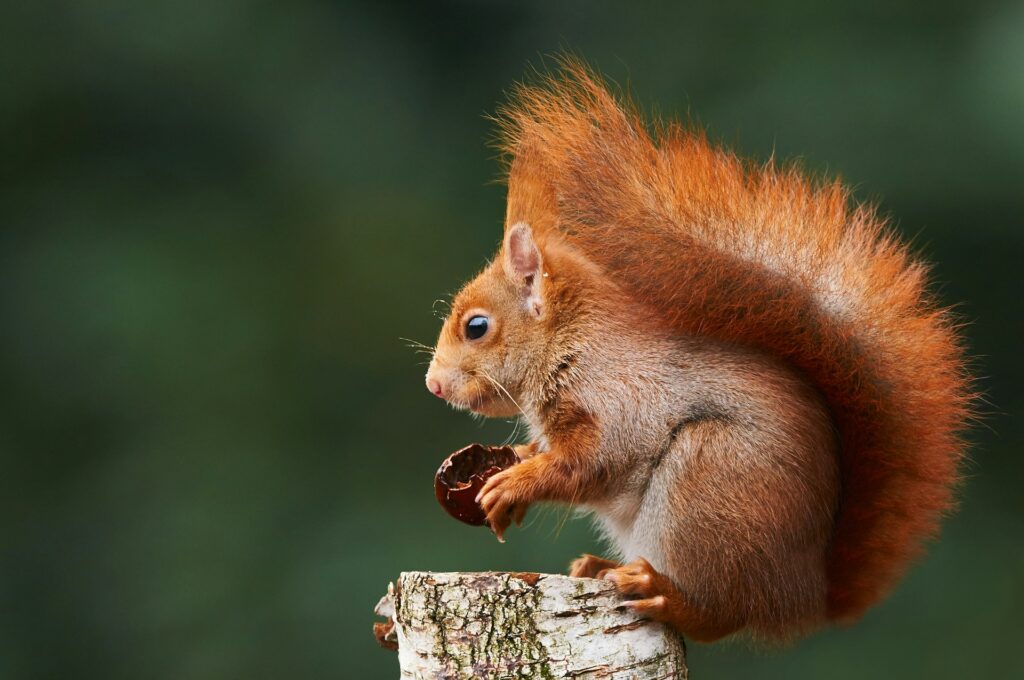
Red squirrels are one of the UK’s most well-known creatures, but also one of the rarest animals in the UK. Once extremely common, there are only around 120,000 red squirrels left in the UK, compared to the whopping 2.5 million grey squirrels we have today.
Now only found in Scotland, Northern Ireland and the far north of England, their population is around 140,000 compared to several million in the grey squirrel population. Another threat facing red squirrels is the deadly squirrelpox virus, which greys can transfer to reds without becoming affected themselves. While less rare than others on this list, seeing one requires being in specific northern locations where they haven’t been displaced.
10. Lesser spotted woodpeckers should be called the never-spotted woodpecker.
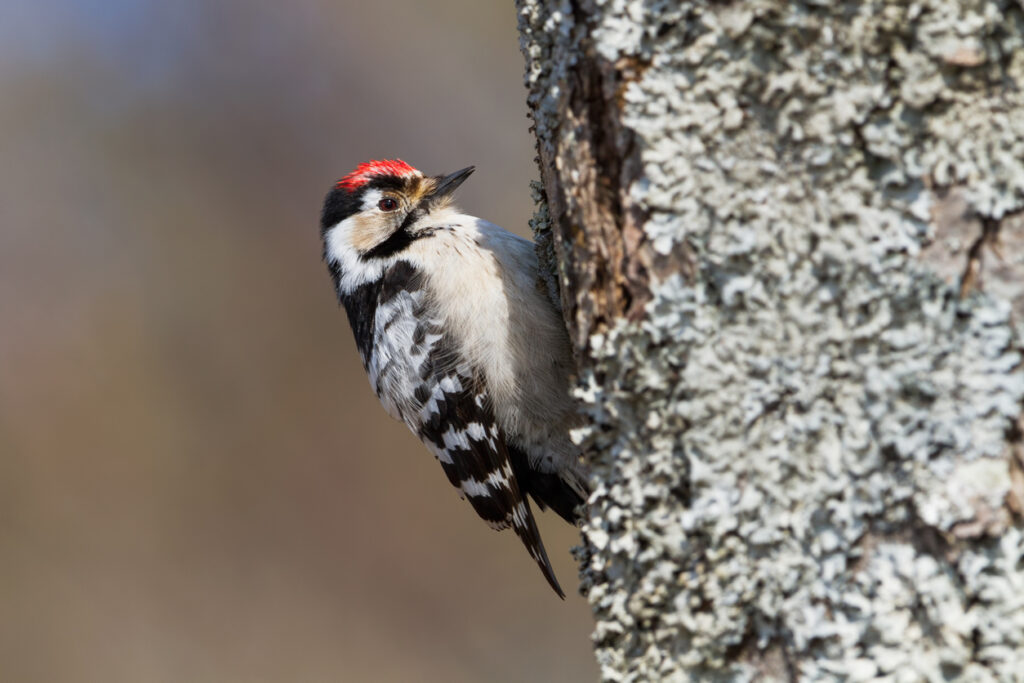
For some, this is the never-spotted woodpecker. Little bigger than a house sparrow, the lesser is the smallest of the three UK woodpecker species and increasingly seldom seen in Britain. Its strongholds are ancient woodlands of southern England, from Dartmoor to Kent, but especially the New Forest.
Its small size and habit of living much of its life high in the woodland canopy means that it is often overlooked, but the species has also undergone a dramatic decline in numbers. Their tiny size and canopy-dwelling behaviour make them nearly impossible to spot, even when they’re present in suitable habitat.