Some garden weeds sneak in without you even noticing until they’re there. Others barge through like they own the place—and this one’s got a whole marketing team of birds, mammals, and unsuspecting humans helping it do the job. Fast-growing, ridiculously persistent, and strangely clever in how it gets around, this weed doesn’t just rely on the wind or rain. It uses fur, feathers, shoes, dogs, and wheelbarrows to hitch a ride and claim new territory.
Here’s what makes it such an aggressive spreader, and how to spot it before your whole garden’s hosting the party.
It’s called cleavers, but you might know it as sticky weed.
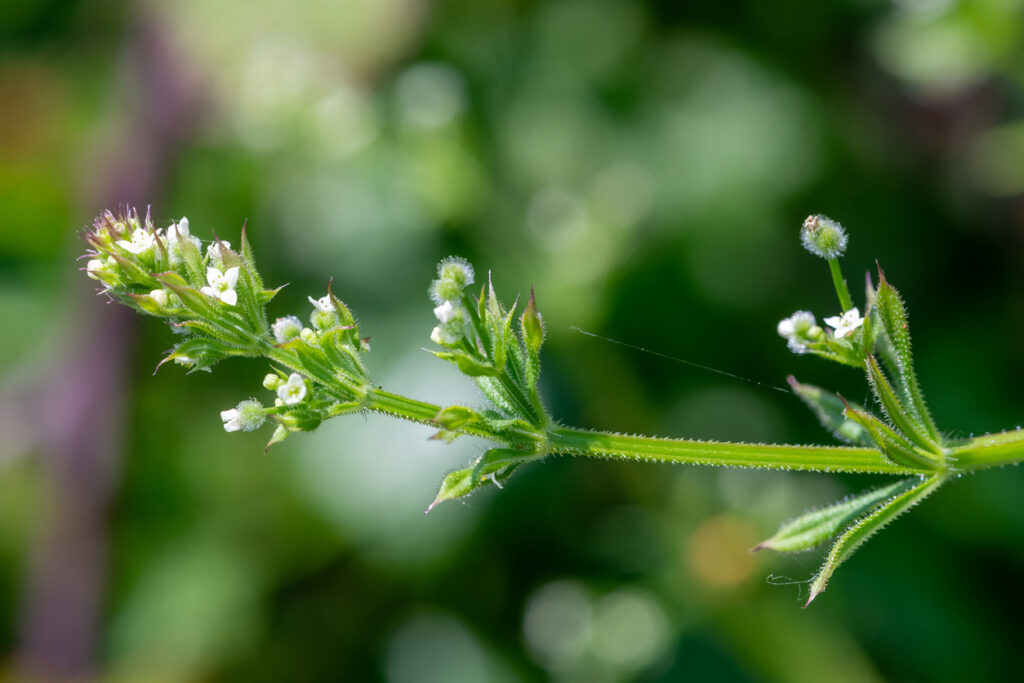
This weed goes by a few names: cleavers, goosegrass, sticky willy. Whatever you call it, you’ve probably ended up with bits of it clinging to your socks after a walk. It’s the one with fine hooks all over its stems and seeds, making it a master of the cling-and-travel technique.
That velcro-like surface is its secret weapon. As soon as something brushes past—be it your dog, your jumper, or a passing fox—those tiny barbed hairs latch on. And just like that, it’s off to a new corner of your garden (or someone else’s).
It grows fast—really fast.
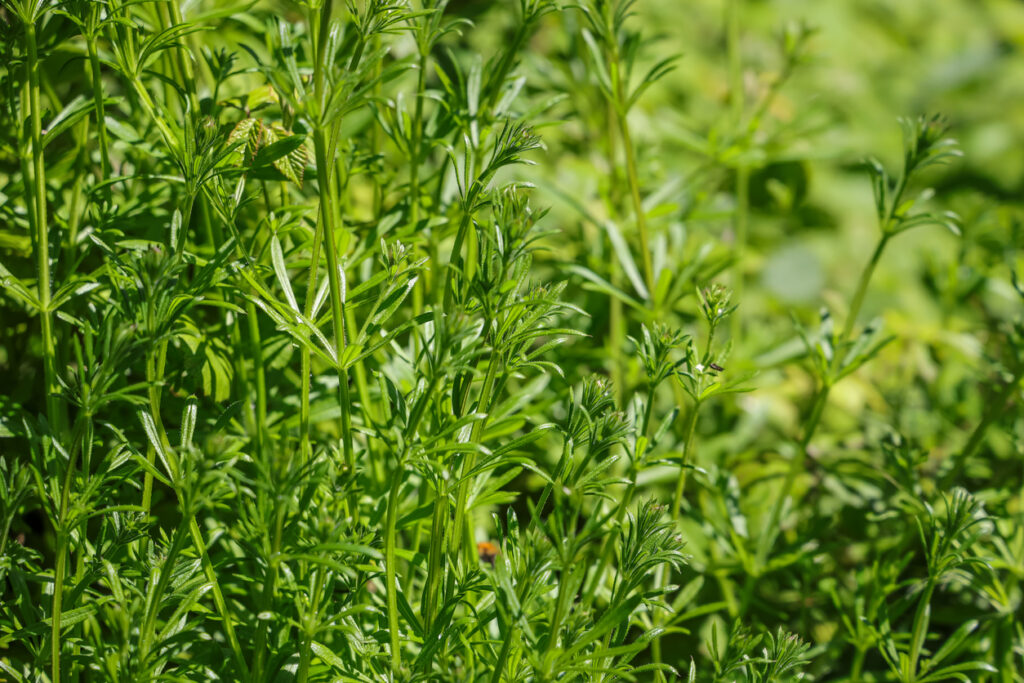
Once cleavers germinate, they don’t hang about. They can shoot up over a metre tall in what feels like no time, using nearby plants or fences as makeshift climbing frames. Because it’s an annual, it has one mission: grow, sprawl, and seed before the season’s out. And since it can produce thousands of seeds per plant, it absolutely gets the job done if left unchecked.
Birds love to help it travel.
Seed dispersal isn’t just a ground-level game. Birds that brush through sticky weed in hedgerows or long grass often end up wearing its seeds like little hitchhikers. As they fly off to perch somewhere new, those seeds drop off and settle in, creating surprise outbreaks in places far from the original plant. It’s an effortless bit of aerial marketing.
It clings to pets without mercy.
Dogs, in particular, are walking weed couriers. If they run through a patch of cleavers, they’ll likely come back with strands of it stuck to their fur, ears, and legs. Those seeds then drop off onto garden beds, patios, or even your carpet if they make it inside. It’s one of the reasons sticky weed often pops up in gardens where no one remembers planting anything at all.
Its seeds survive being eaten.
Some seeds get eaten by animals and birds, but cleavers’ seeds don’t mind. They can pass through a digestive system and come out ready to grow—often with the added bonus of some natural fertiliser. This means even wildlife that’s not brushing past the plant might still help it spread. All it takes is one dropped parcel in the right bit of soil.
You might be carrying it on your clothes.
Those little hooked hairs are annoyingly good at clinging to fabric. Walk through long grass or along a hedgerow, and you might come home covered in its seeds without even realising. Once you step into your garden, the seeds drop off and settle into borders, gravel paths, or even between paving slabs. It’s not malicious—it’s just extremely effective freeloading.
It takes advantage of untidy corners.
Cleavers don’t need a flower bed or carefully raked soil. Give it an overgrown edge, a neglected compost heap, or a forgotten corner near a fence, and it’ll move right in. It loves shady spots and disturbed soil, so gardens that aren’t weeded regularly give it a perfect launching pad to spread even faster come spring.
It spreads low as well as high.
While cleavers love to climb, they’ll also sprawl along the ground if there’s nothing to latch onto. This makes them excellent at creeping into neighbouring areas without being spotted straight away. That crawling growth habit means they can sneak under shrubs or into the base of hedges, silently taking over while your attention’s elsewhere.
It produces masses of seeds right under your nose.
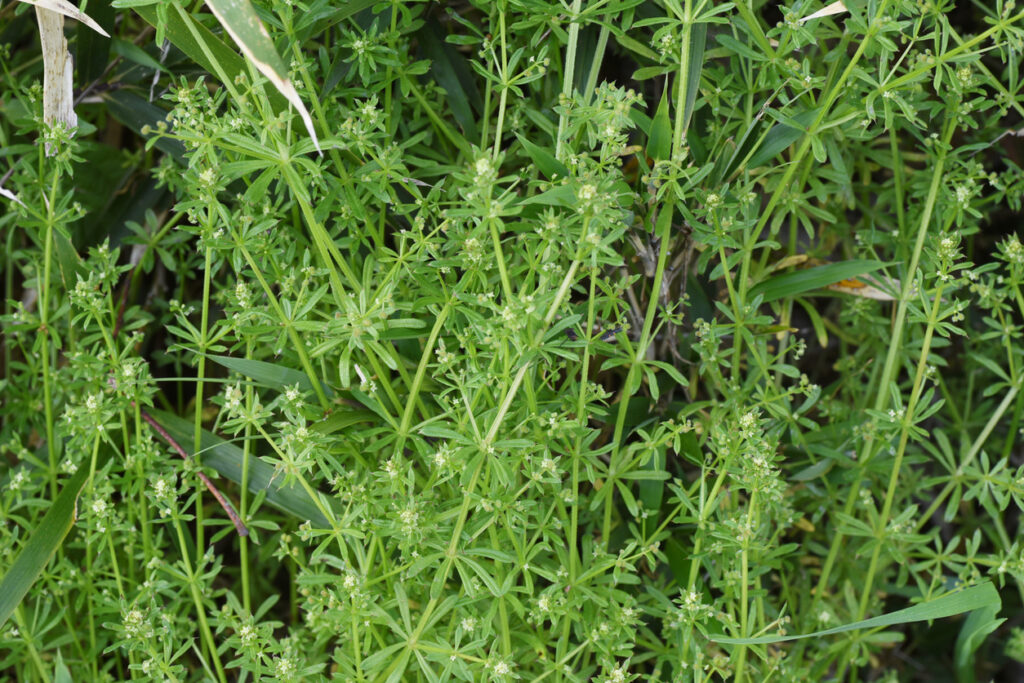
Once cleavers start flowering (tiny, white star-shaped blooms), it doesn’t take long for them to set seed. There’s no dramatic show—just loads of tiny hooked balls waiting to travel. If you catch it after flowering but before those seeds drop, you might save yourself a much bigger problem next year. Left too long, and each plant becomes a seed bomb.
It’s a spring starter and summer spreader.
Cleavers germinate early, often before other plants even get going. That head start gives them time to take hold before you’re fully back into gardening mode. By the time July rolls around, they’ve usually spread across paths, fences, and flower beds. The key is spotting them early, ideally in March or April, before they become tangled giants.
It’s ridiculously hard to pull once established.
When it’s young, cleavers come out of the soil easily. But once they’ve wrapped themselves around other plants or structures, they turn into a stretchy, stringy nightmare to remove. You end up playing tug-of-war with something that refuses to let go—and often breaks off in pieces, leaving roots or seeds behind. Get it early or bring gloves and patience.
It thrives in both countryside and urban gardens.
Cleavers don’t care if they’re in a woodland, a city verge, or your suburban back garden. They’re not fussy about location—they just want soil, shade, and something to climb. That makes them one of the most commonly spread weeds across the UK. Whether you’ve got a wild corner or a tidy patio, they’ll find a way in if they can.

Compost heaps can accidentally spread it.
Throwing cleavers into your compost pile seems harmless—until you realise those seeds can survive and end up mixed through next year’s soil. If you’re going to compost it, make sure it hasn’t started flowering or forming seeds. Otherwise, you’re just giving it free rein to pop up all over again later.
Strimming it just makes it stronger.
It’s tempting to whack back a patch of cleavers with a strimmer, but all that does is chop it into tiny pieces and scatter the seeds. You’re basically helping it expand its reach. For proper control, it’s best pulled out by hand before flowering. If it’s already spread, dig it out carefully and bag the lot for disposal—not the compost bin.
It looks innocent—until it takes over.
In its early stages, cleavers looks a bit like a soft green tangle—easy to ignore. But within weeks, it can overwhelm seedlings, smother shrubs, and wrap itself into places it’s not wanted. It’s not aggressive in a loud way—it just quietly takes up space and doesn’t stop. Catching it early and staying on top of removal is the only way to stop it using your garden (and your pets) as a launchpad for world domination.