
Many dog owners think crate training looks restrictive, but most vets say the opposite. When it’s introduced properly, a crate can give a dog security, structure, and peace of mind. It mimics the den-like comfort they instinctively crave, creating a space that’s entirely their own. Far from being cruel, it can reduce anxiety, prevent bad habits and make daily life easier for both of you.
If you want to make the process smooth and stress-free, here are 12 vet-approved benefits that show how a crate can genuinely improve your dog’s wellbeing.
It helps create a sense of safety.
Dogs are natural den animals. In the wild, they’d seek out small, enclosed spaces to rest where they feel safe from danger. A crate offers the same sense of comfort and control. It becomes their go-to spot when they need to switch off, retreat from noise, or recover after a long day.
A familiar, predictable environment helps lower stress hormones, which means your dog learns to associate the crate with calm rather than confinement. Over time, they’ll start using it by choice, not because they’re told to.
It reduces anxiety during travel.
Car journeys can be overwhelming, especially for nervous or young dogs who aren’t used to the motion or noise. A crate provides a stable, enclosed space where they can relax safely. Instead of sliding around the car or barking out the window, they’re secure in a familiar setting.
Once they associate their crate with comfort, travel becomes far less daunting. It’s one of the simplest ways to make holidays, vet visits or even quick drives a calmer experience for everyone involved.
It makes house-training quicker.
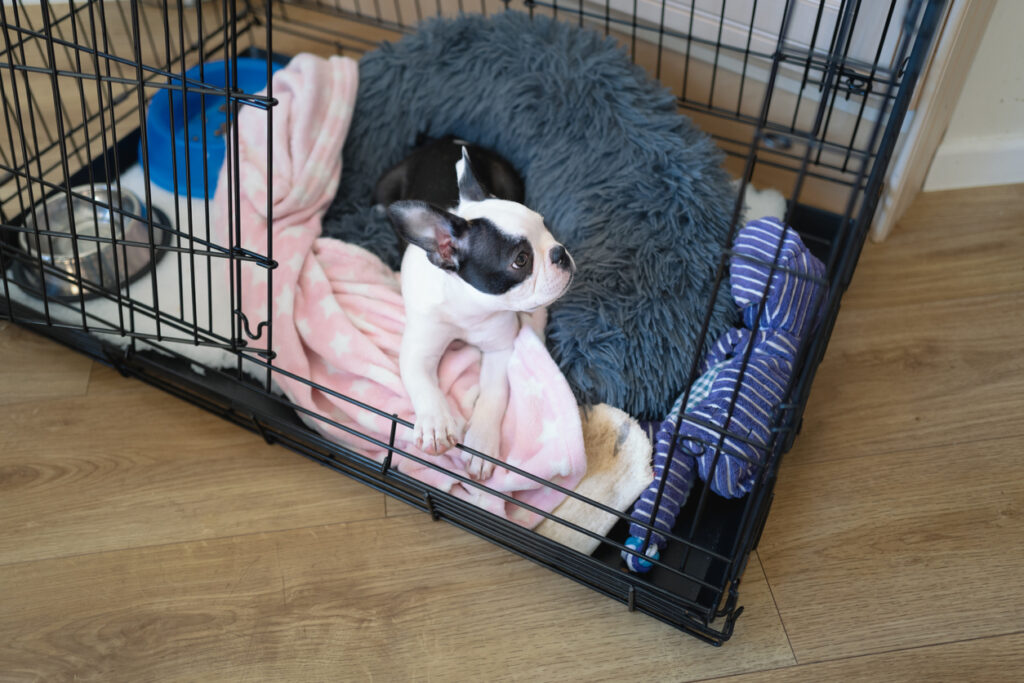
According to veterinary behaviourists, crate training is one of the most reliable ways to teach toilet habits. Dogs naturally avoid soiling where they sleep, so they quickly learn to control their bladder and wait until they’re taken outside. The key is consistency and timing.
With a steady routine, your puppy begins to link the crate with cleanliness and structure. Doing it this way removes confusion and helps new dogs settle into household life with fewer accidents and less frustration.
It prevents destructive behaviour.
Left unsupervised, dogs often explore in ways that aren’t exactly safe: chewing furniture, scratching doors, or getting into things they shouldn’t. A crate keeps them out of trouble while you’re away or unable to watch them. Vets are clear that this isn’t punishment; it’s protection.
When used for short, positive periods, it teaches boundaries and self-control. The result is a calmer, safer home and a dog that understands what’s off-limits without fear or confusion.
It aids recovery after surgery or illness.
Rest is incredibly important after any medical procedure, but it’s not something dogs do naturally. They want to move, play and greet everyone who walks by. A crate provides a contained, quiet space where they can rest without risking injury.
Vets often recommend it for recovery because it offers both safety and predictability. The calm, consistent setting reduces stress, which supports faster healing. For owners, it’s peace of mind knowing your pet can’t overdo it while they’re on the mend.
It supports multi-dog households.
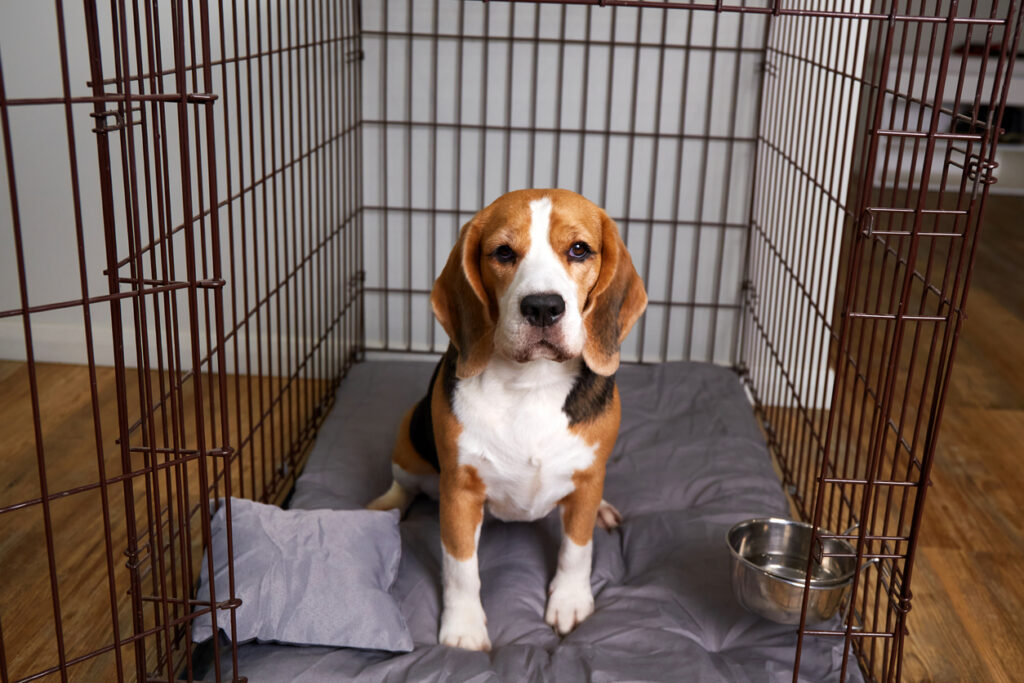
When you have more than one dog, crates can be a game-changer for harmony. They allow you to separate dogs during feeding, rest, or training without tension or drama. Each dog learns that they have their own space to relax, away from competition or resource guarding.
As time goes on, this creates a calmer dynamic at home, especially during busy moments. Crate time becomes part of their rhythm, something predictable that keeps everyone feeling secure.
It makes vet visits easier.
For dogs who are crate-trained, being enclosed doesn’t feel scary or unfamiliar. This makes vet visits, and especially overnight stays, far less stressful. Dogs already associate the space with calm, so they’re more likely to rest quietly in a kennel or recovery area.
It helps staff handle them safely and keeps their anxiety under control. A dog who’s used to a crate travels, waits, and heals better than one who sees confinement as punishment.
It helps during house moves or new environments.
Dogs thrive on routine, and big changes like moving house or visiting new places can unsettle them. Bringing the crate along gives them a piece of stability wherever they go. It smells like home and feels familiar, no matter what’s happening outside it.
During stressful transitions, such as new homes, travel, or holidays, the crate acts like an anchor, helping them adapt more easily. When everything else changes, that sense of continuity can make all the difference.
It teaches patience and self-settling.
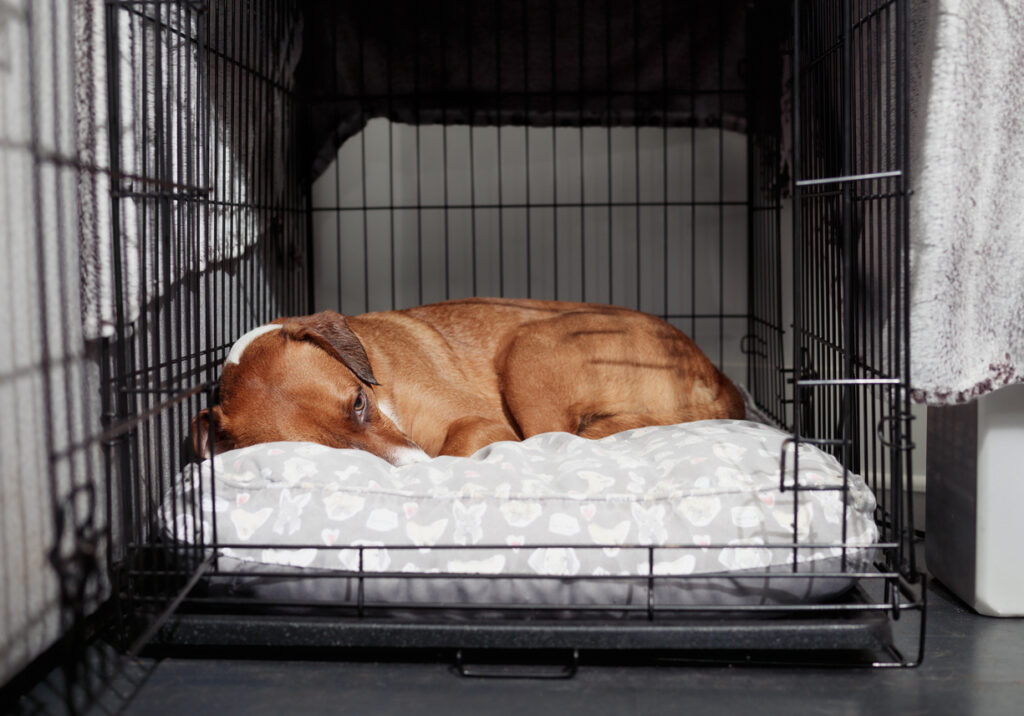
Dogs need to learn how to calm down on their own, and a crate helps them practise that skill safely. Instead of relying on constant attention or stimulation, they get used to relaxing quietly. This teaches emotional balance and makes it easier for them to cope when life’s a bit noisy or busy.
When used consistently, the crate becomes part of their daily rhythm. It’s a signal that it’s time to rest, not perform. It’s a small thing that helps create a well-adjusted, confident dog.
It keeps them safe in emergencies.
In situations like storms, house repairs or evacuations, having a dog that’s comfortable in a crate can be a lifesaver. It prevents panic, escape, or injury when things get chaotic.
Vets often point out that dogs trained to rest calmly in crates are easier to protect and transport in emergencies. For owners, it’s one less thing to worry about in a stressful moment. The crate becomes a built-in safety plan that both of you already understand.
It reduces separation anxiety.
Many dogs struggle when left alone, but a crate can help ease that stress when introduced gradually and kindly. It teaches them that being on their own doesn’t have to mean being afraid. Pairing crate time with soothing background noise, toys, or gentle routines builds independence.
Eventually, the dog learns that solitude can feel peaceful rather than lonely. It’s not about isolating them, but about giving them the confidence to relax without constant reassurance.
It strengthens trust between you and your dog.

Crate training, when done positively, builds trust through consistency and care. Your dog learns that you’ll always provide structure and safety, which strengthens your bond. The crate becomes a shared language between you, a signal of security rather than control.
That trust spills into every other part of your relationship, from training to handling stress together. When your dog knows you’ll protect their comfort, their confidence grows everywhere else.
How to make crate training positive
Experts agree that a crate should never be used for punishment or forced confinement. The goal is creating comfort and safety, not control. Start slowly, encourage your dog with praise and treats, and keep sessions short at first.
You want your dog to choose their crate because they feel at ease there, not because they’ve been made to. With patience and consistency, it becomes one of their favourite places, and a reliable space of calm, comfort and belonging.