Whether your outdoor space is a sprawling lawn or a compact patio, there are plenty of ways to turn it into somewhere that’s not just nice to look at, but actually fun and useful for everyone in the household. From low-maintenance play zones to clever storage ideas and garden features that double up as conversation starters, these tips can help you build a space that feels relaxed, practical and genuinely enjoyable to spend time in. Here are 14 simple ways to make your garden more fun, more usable, and way more family-friendly.
Create zones for different activities.
Breaking your garden into clear areas can help everyone enjoy the space more. One section might be for growing food, another for lounging, and a third for playing or crafting. You don’t need a massive garden; just a few well-placed dividers like potted plants, decking, or even a trellis can define each zone nicely.
This helps avoid everyone tripping over each other’s hobbies and makes it easier to keep things tidy. Kids know where to kick a ball, you know where your herbs are safe, and the lounging area stays relatively peaceful—most of the time, anyway.
Add outdoor storage that doesn’t look like storage.
Benches with lift-up seats, deck boxes that double as coffee tables, or vertical shelves filled with pots can all serve as handy storage while still looking good. It’s especially useful for chucking in toys, garden tools or stray plant pots without everything ending up in the shed of doom.
Not only does this keep your garden looking neat, it also makes it easier for everyone to use the space because, let’s face it, if the football’s buried behind a pile of secateurs, no one’s playing with it.
Introduce playful planting ideas.
Gardens don’t need to be overly serious or “grown-up” looking. You can add pops of colour, textures, and fun by choosing plants that feel interactive, such as lamb’s ear (soft to touch), snapdragons (that “talk”), or sunflowers that kids can measure as they grow.
Letting children plant their own section of the garden is another way to keep it fun. Whether they grow strawberries or daffodils, it gives them ownership over a little patch, and a reason to spend more time outside.
Set up a garden games corner.
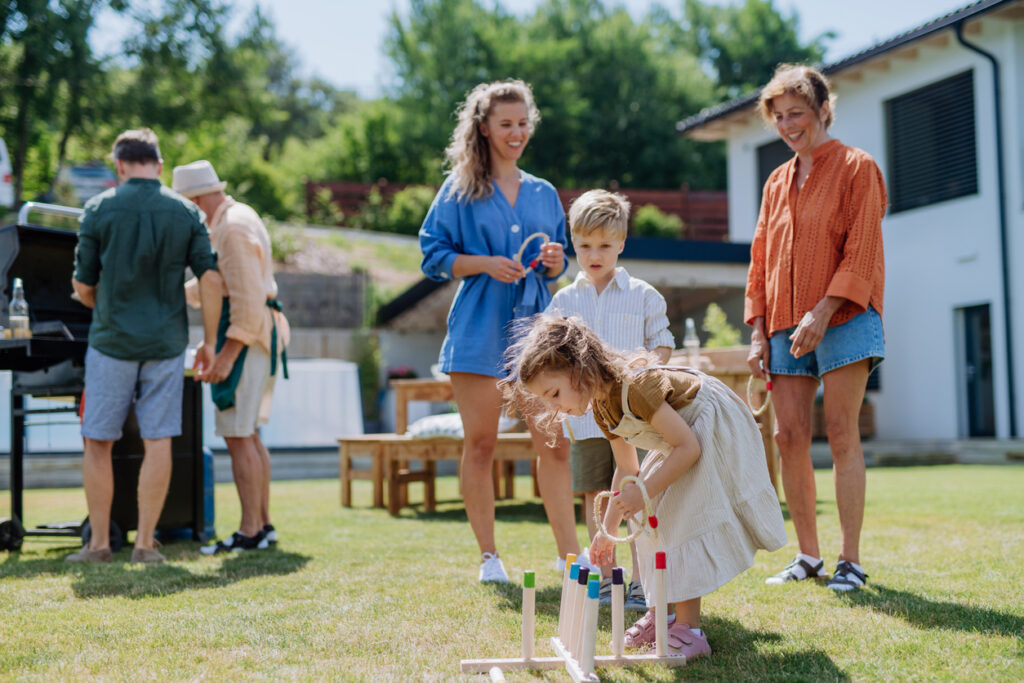
From swing ball to giant Jenga, a few easy-to-pack-away outdoor games can make a garden feel more sociable. You don’t need a big lawn either—tabletop games, chalkboards on fences, or a fold-up cornhole board all work on patios or small grassy areas. If you’ve got kids (or just competitive mates), having a go-to area for games makes summer afternoons feel less like babysitting and more like bonding. And the best part? It gives you an excuse to play, too.
Make the most of vertical space.
Small garden? Go up, not out. Hanging planters, wall-mounted shelves, or climbing plants on a trellis can give you more growing room without sacrificing floor space. You can even add vertical herb gardens near the kitchen for easy picking. It also opens up creative ways to display things—like fairy lights, wind chimes or insect hotels—turning a plain wall or fence into something quirky and interactive. It’s a great way to pack more personality into a modest area.
Include child-friendly seating.
If you want everyone to enjoy the garden, make sure there’s somewhere for everyone to sit, without being told “not to climb on that.” Think beanbags, hammocks, picnic blankets, or little wooden stools that can handle a bit of jumping around. When seating is comfortable and easy to move, it invites people to actually stay outside. Plus, smaller-sized furniture lets kids feel included without needing to perch on grown-up deck chairs that swamp them.
Build a mud kitchen or sensory play area.
If you’ve got young children, a mud kitchen or sensory play corner can be a winner. It doesn’t have to be fancy—an old pallet, some bowls and spoons, and a patch of earth is usually all you need. It gives kids something to do that’s creative, messy (but outdoors), and imaginative. You’ll be amazed at how long they’ll stay engaged with something as simple as water, stones, and old leaves when it’s theirs to mess with.
Light it up for evenings.
Don’t let your garden go to waste after sunset. Adding fairy lights, solar lamps, or LED lanterns turns it into a whole new space. It creates atmosphere, makes the garden safer, and gives you more time to enjoy it year-round. You don’t need a big lighting budget, either. Just drape fairy lights over fences, or use jam jars with tea lights for a softer glow. It makes even the smallest space feel a bit magical when the sun goes down.

Build a fire pit or chiminea.
If you’ve got the space (and safety set-up), a fire pit or chiminea can become the heart of your garden. It keeps things cosy in cooler months, encourages more time outside, and naturally draws people together. Marshmallows, blankets, and a few garden chairs—suddenly it feels like a mini holiday. Just make sure it’s positioned safely, and that kids know the boundaries. It’s simple, but it adds a lot of warmth, literally and socially.
Grow food you can snack on.
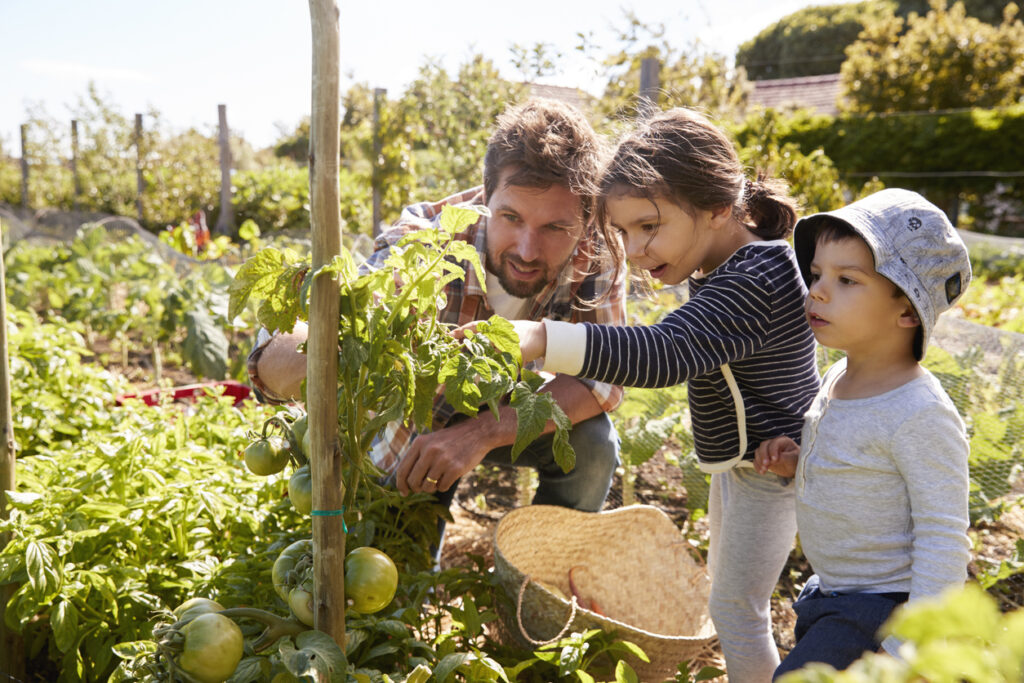
Fruit bushes, cherry tomatoes, sugar snap peas—they’re not just productive, they’re fun to nibble on straight from the plant. Kids (and adults) love picking their own food, and it gives a stronger connection to what’s on your plate. It doesn’t need to be a full allotment. Even a few containers of strawberries or herbs can make the garden feel more interactive and satisfying. It turns snacking into an activity, and sometimes even a teaching moment.
Add a bug hotel or wildlife corner.
Encouraging wildlife in your garden is great for the environment and for kids’ curiosity. A bug hotel, a log pile, or a bird feeder can attract fascinating visitors—bees, butterflies, beetles, and birds. It teaches respect for nature, keeps the garden buzzing (literally), and offers loads of talking points. Even a shallow dish with water and pebbles can become a mini oasis for garden creatures.

Install a weatherproof chalkboard.
Mounting a chalkboard on a shed, fence, or garden wall gives kids a creative outlet that’s easy to clean and always available. It also works well for adults who want to use it as a to-do list, plant diary or family scoreboard. Chalk washes away with rain or a hose, and it adds a bit of fun to a space that might otherwise be underused. Bonus: no need to bring out paper and pens every time the drawing mood strikes.
Include sensory plants for hands-on exploring.
Plants like rosemary, mint, lamb’s ear, ornamental grasses and scented geraniums all offer something beyond just visual beauty. They smell nice, feel interesting, and often move in the wind in calming ways. These kinds of plants make a garden feel alive, not just pretty. They invite everyone—kids and adults alike—to touch, sniff and connect with the space in a more hands-on way.
Keep it low-maintenance where it counts.
For a garden to be genuinely family-friendly, it needs to be manageable. Swapping out high-maintenance flower beds for mixed containers, artificial grass patches, or mulch-heavy borders can give you more time to enjoy the garden instead of constantly fixing it. This doesn’t mean giving up on greenery. It just means choosing smarter layouts and fuss-free plants, so you spend more time relaxing outside and less time apologising for the state of the lawn.