Purple and black plants are having a real moment in the natural world.

Garden centres are filling up with deep plum leaves, dark stems and flowers that look almost velvet. They stand out without shouting for attention. There’s something satisfying about seeing a plant that looks mysterious and dramatic mixed in with all the usual greens. It makes a space feel richer, almost like you’ve curated your own little world instead of just placing plants where they fit.
You don’t need to redesign your entire garden to enjoy them, either. A single dark plant can change the energy of a bed, a pot, or even a windowsill. They pair well with soft greens, silvery foliage and bright blooms. If you choose the right ones, they’re surprisingly easy to care for. Let’s look at a few ways to add them into your space so it feels intentional, balanced and full of personality.
They create instant depth in any planting scheme.
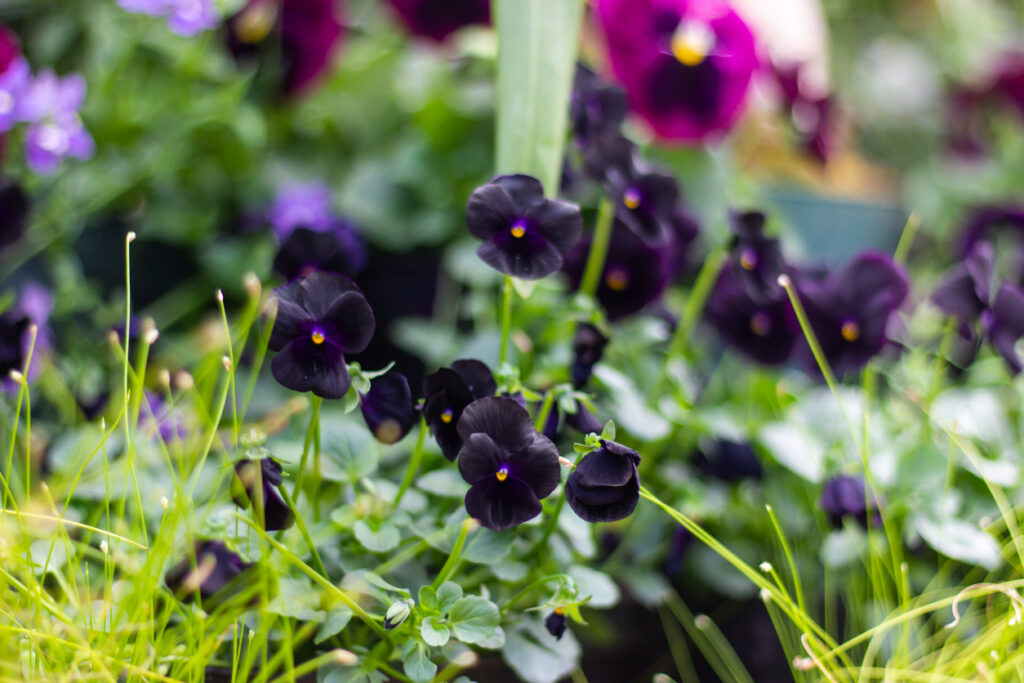
Dark foliage acts like shadows in your garden, making spaces feel layered and three-dimensional rather than flat. When you place purple or black plants behind lighter ones, they recede visually, creating the illusion of depth even in shallow borders.
Designers use dark plants as anchor points throughout a scheme. You end up with a garden that feels more established and complex because the darker tones provide contrast that makes every other colour pop whilst adding visual weight.
Black mondo grass works brilliantly as edging.
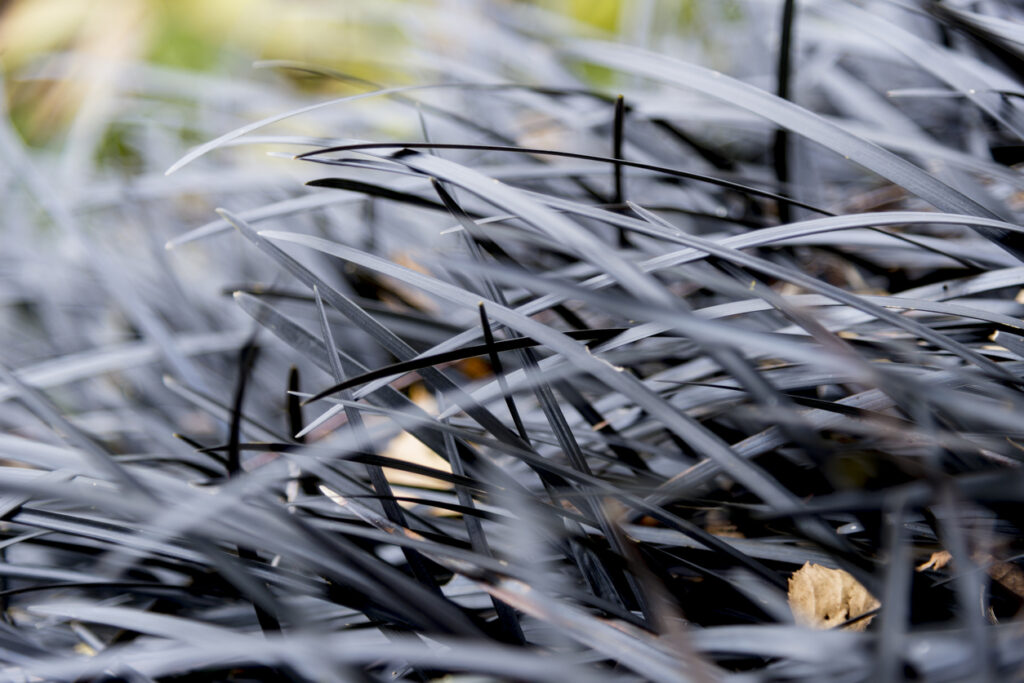
This near-black grass stays compact and provides a striking border along paths or at the front of beds. Its dark, strappy leaves create clean lines that frame brighter plants beautifully, and it’s low-maintenance once established. It makes sense that it’s become such a popular choice for modern garden design. The edging you have is far more interesting than traditional box without the constant clipping, and it looks particularly stunning against gravel or pale paving.
Purple heucheras are the ultimate gap fillers.
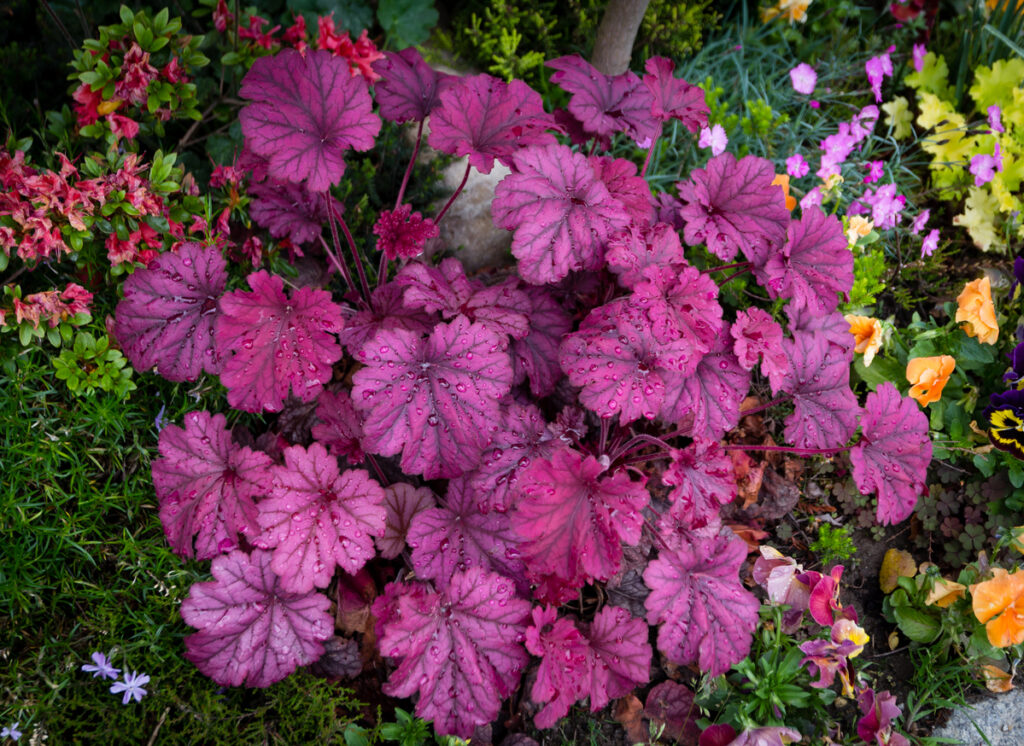
These hardy perennials come in shades from deep plum to near-black, they’re evergreen, and they’ll happily fill awkward spots in partial shade. Their ruffled leaves provide texture and colour year-round, with delicate flower spikes as a bonus in summer.
Heucheras have become go-to plants for adding consistent dark tones. They have a reliable structure that doesn’t die back in winter, and they’re brilliant for softening the edges of paving or providing groundcover under taller plants.
Pair them with silver and white for maximum impact.
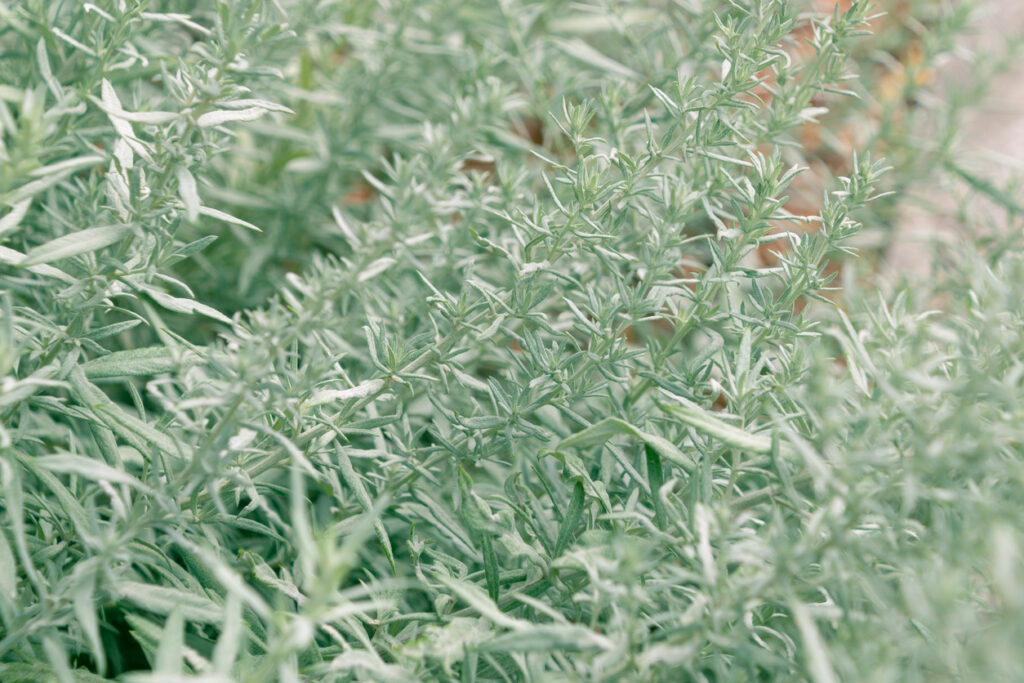
Dark plants look their most dramatic when contrasted with silver foliage like artemisia or white flowers like cosmos. The combination creates a sophisticated palette that feels contemporary rather than trying too hard.
This pairing works so much better than mixing darks with lots of bright colours. It’s a scheme that feels cohesive and elegant, where the dark plants provide depth whilst the light elements bring luminosity without overwhelming the eye.
Black petunias and violas are perfect for containers.
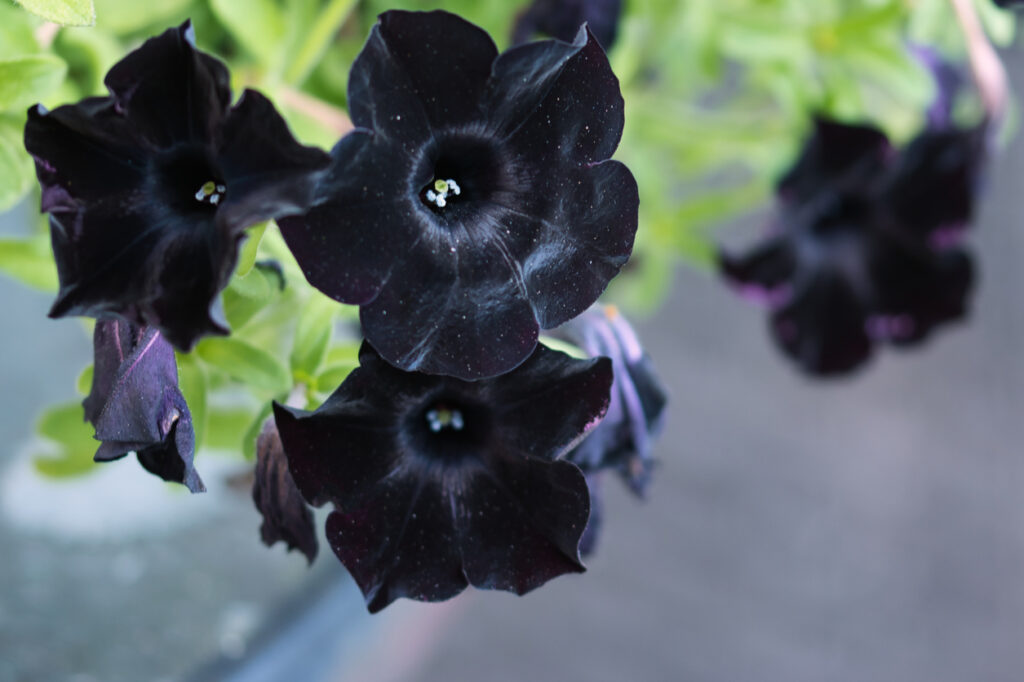
Near-black flowers like ‘Black Velvet’ petunias or ‘Molly Sanderson’ violas add sophistication to pots and hanging baskets. They’re particularly effective mixed with lime green foliage or pale pink flowers for a combination that’s striking without being garish.
Dark-flowered bedding has become incredibly popular for balconies and patios as a result. Your container look more considered and less like the usual riot of primary colours, creating displays that feel more grown-up and design-led.
Purple sage brings colour and flavour together.
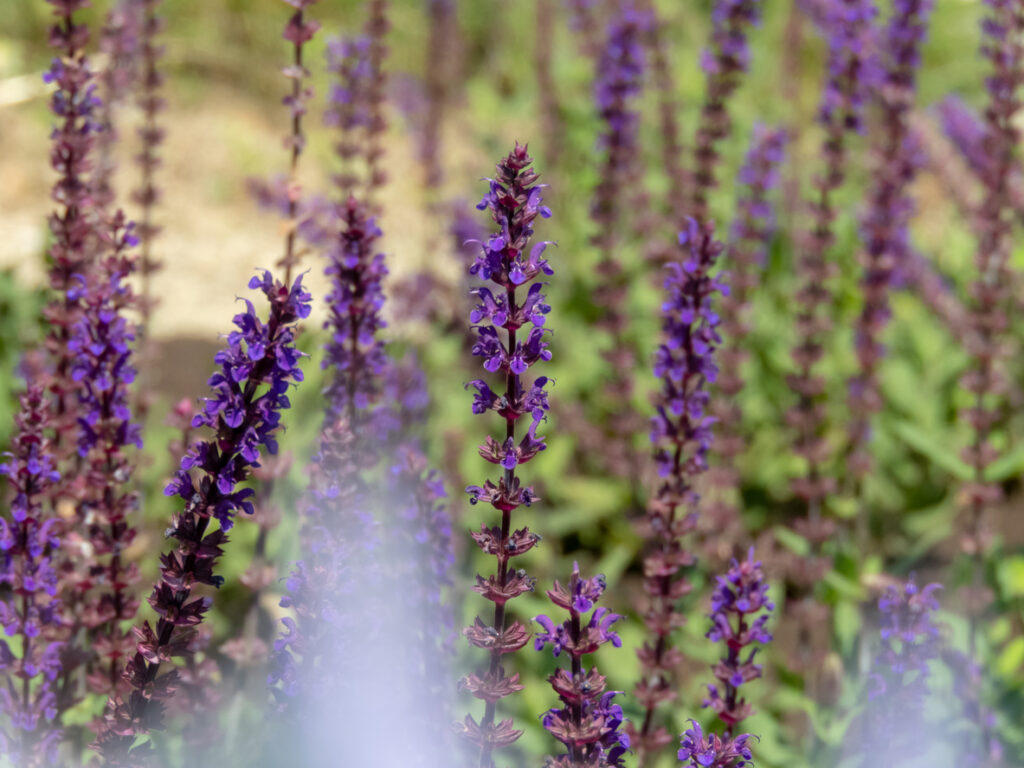
Herb gardens don’t have to be purely green, and purple sage is the perfect example of ornamental meeting practical. Its soft, velvety leaves in deep purple-grey are beautiful enough for borders whilst still being perfectly usable in cooking.
It’s worth including even if you’re not particularly into herbs. You can enjoy a Mediterranean-looking plant that’s drought-tolerant, fragrant, and looks stunning next to grey stone or terracotta pots whilst pulling double duty in the kitchen.
They need careful placement to avoid disappearing.
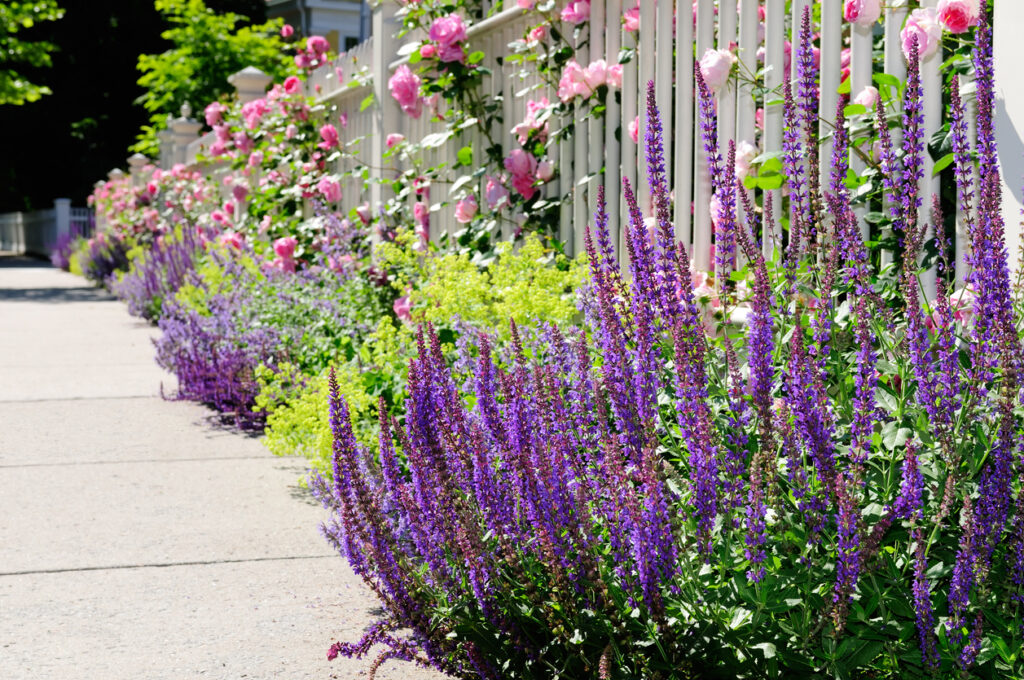
Dark plants can vanish into shaded corners or against dark fences if you’re not thoughtful about where you put them. They show up best with light behind them, against pale backgrounds, or where they catch sunlight at certain times of day.
Positioning matters so much with purple and black foliage. You waste their impact if they’re lost in shade, but place them where light can backlight their leaves or against a light-coloured wall, and they become absolute showstoppers.
Black tulips create unforgettable spring drama.
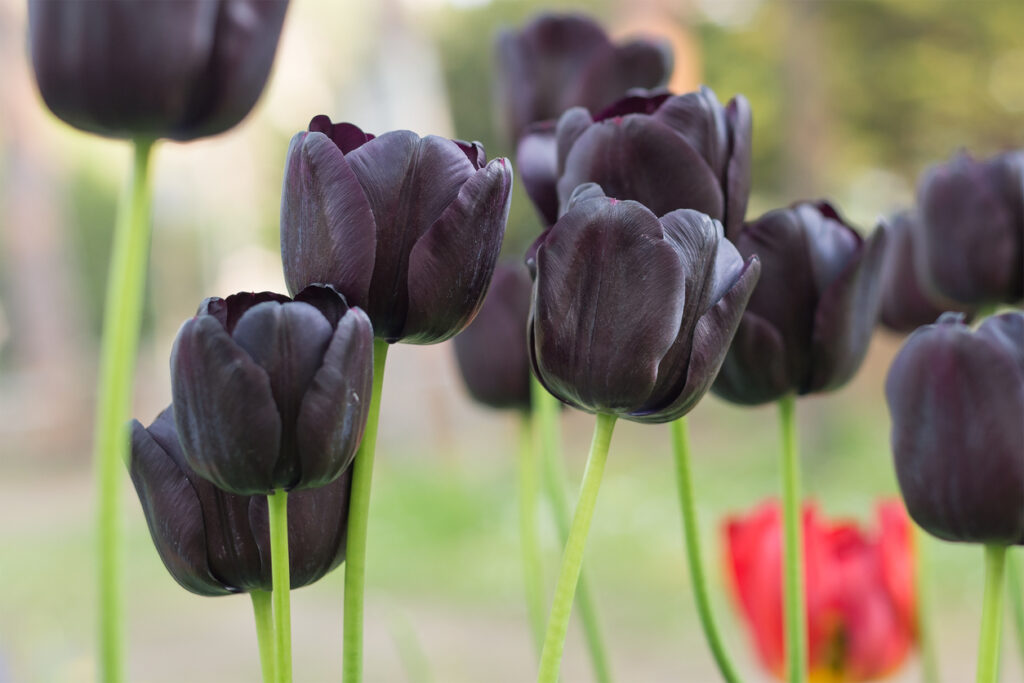
Varieties like ‘Queen of Night’ or ‘Black Hero’ aren’t truly black, but such a deep purple they appear almost black in certain lights. Planted en masse, they create a moody spring display that’s miles away from typical pastel tulip schemes.
They’re worth seeking out if you’re planting bulbs this autumn. In spring, your garden will feel more sophisticated and modern, particularly effective when paired with white tulips or emerging silver foliage for contrast.
Physocarpus adds dark foliage at shrub height.
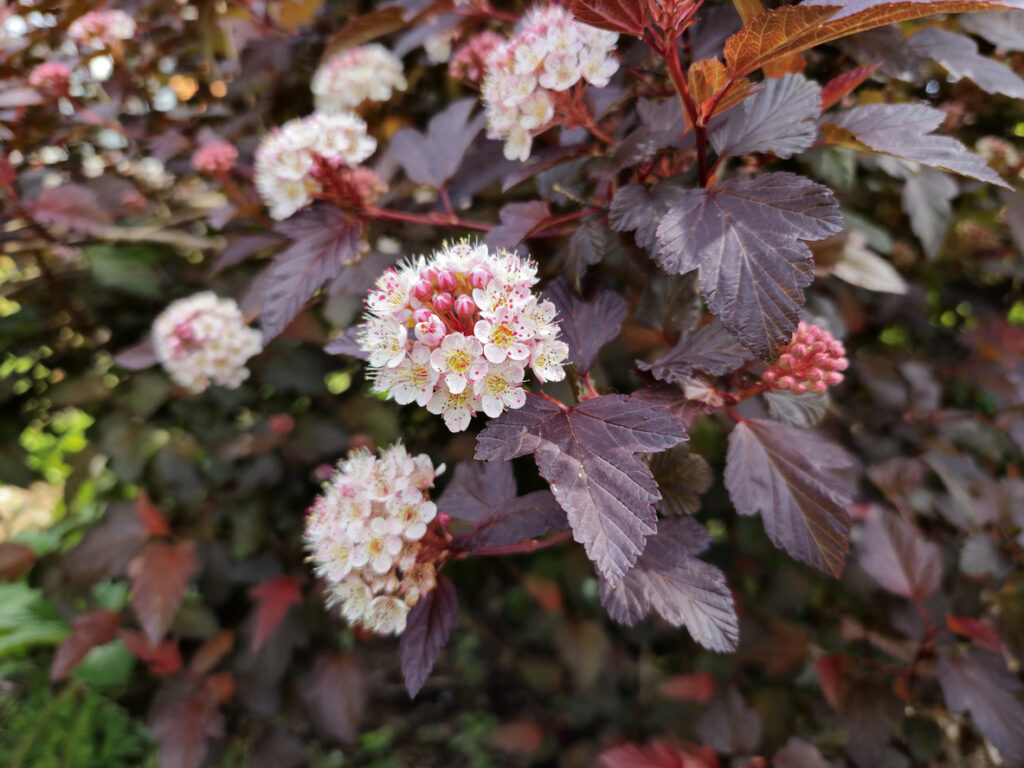
Varieties like ‘Diabolo’ give you substantial dark purple foliage on a decent-sized shrub that works as a backbone plant. It’s deciduous but provides months of colour, and the leaves look particularly stunning when backlit by evening sun.
It’s become a staple in contemporary planting schemes, largely because it provides structure and height in dark tones rather than just low groundcover. This helps distribute the dark colours throughout your planting rather than concentrating them all at one level.
Don’t overdo it, or your garden becomes a black hole.
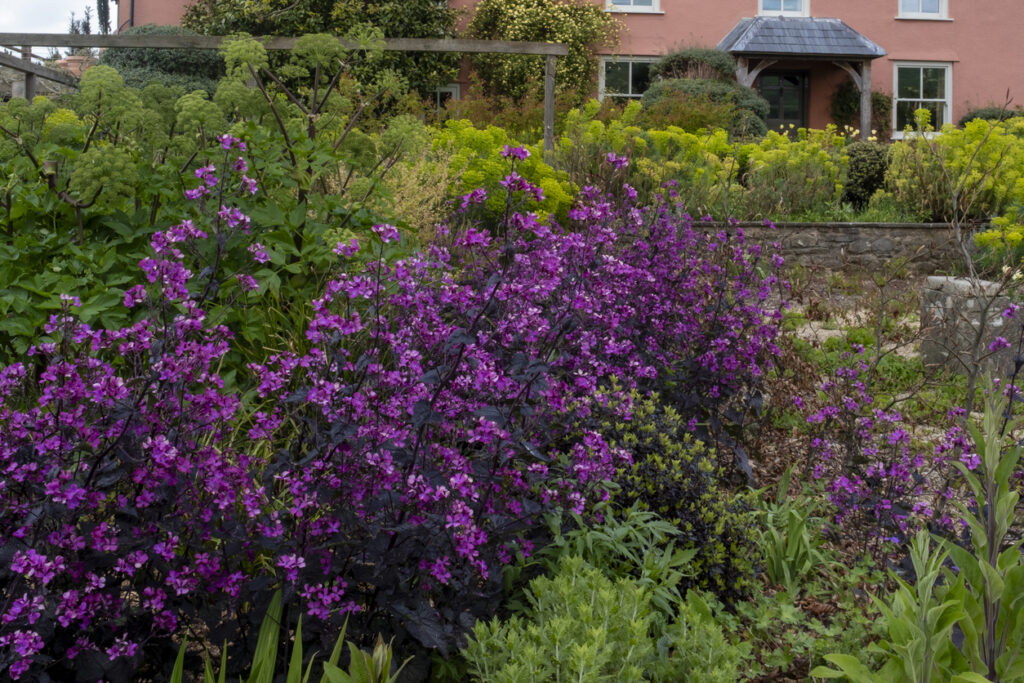
As gorgeous as dark plants are, too many can make a space feel heavy and oppressive rather than dramatic. The key is using them as accents and contrasts, not as the dominant colour in your scheme.
The ratio matters more than you’d think. The result is a balanced, sophisticated look when dark plants make up maybe 20-30% of your planting, providing depth without overwhelming. Any more and your garden starts feeling like it’s been decorated by a goth teenager rather than celebrating the beauty of dark foliage done well.