There are plenty of weird and wonderful creatures roaming the planet, but the takin has to come pretty high up on the list.
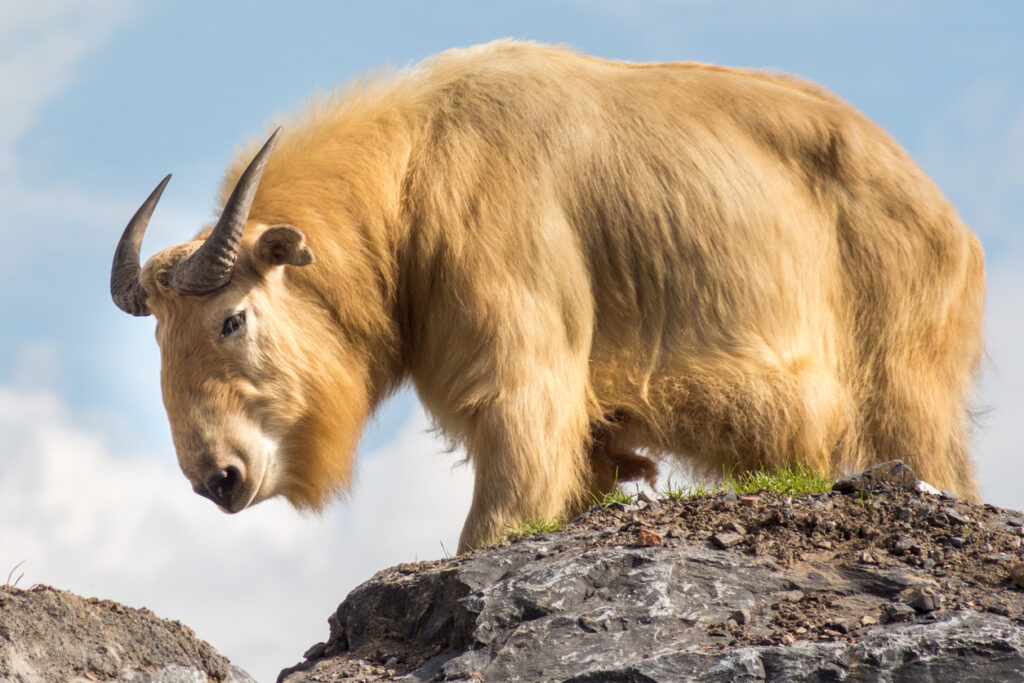
You’ve probably never heard of them, but these bizarre-looking animals are wandering around the Himalayas right now, and they’re so weird that when you first see one you’ll think someone’s mixed up a cow, a goat, and maybe a golden retriever in some kind of mad science experiment.
1. They look like nature couldn’t decide what animal to make.
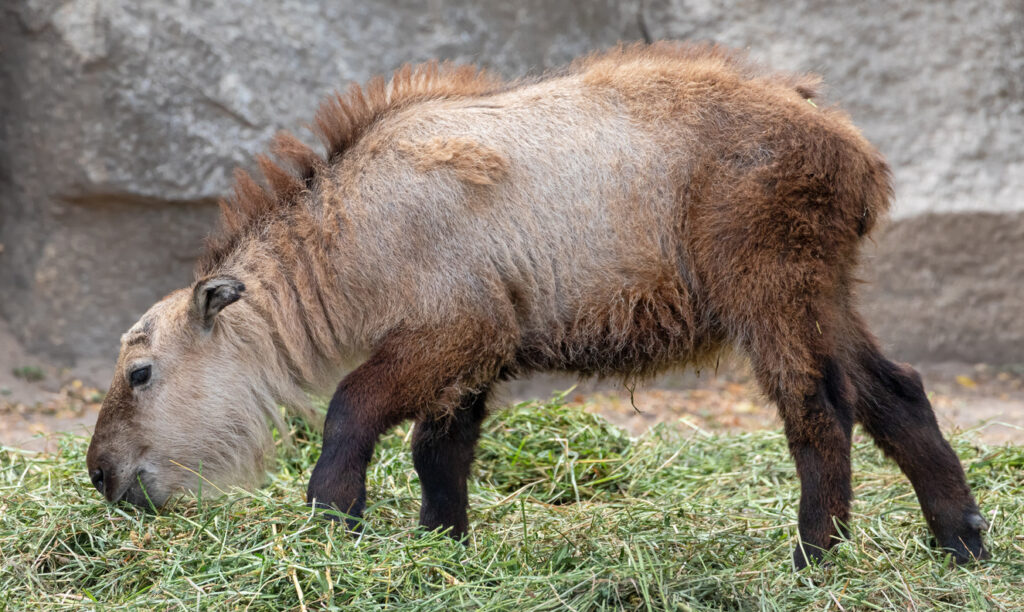
Takins have got the stocky body of a cow, the face of a goat, thick golden fur that makes them look a bit like a giant retriever, and horns that curve backwards as if they’re wearing a helmet. They’re pretty much what you’d get if you asked a 5-year-old to design an animal using all their favourite bits from different creatures.
The weirdest part is that despite looking completely made-up, they’re actually real animals that have been roaming around the Himalayas for thousands of years. They’re so unusual that early European explorers thought locals were having them on when they described these golden cow-goat things living in the mountains.
2. They’re massive, but surprisingly agile.
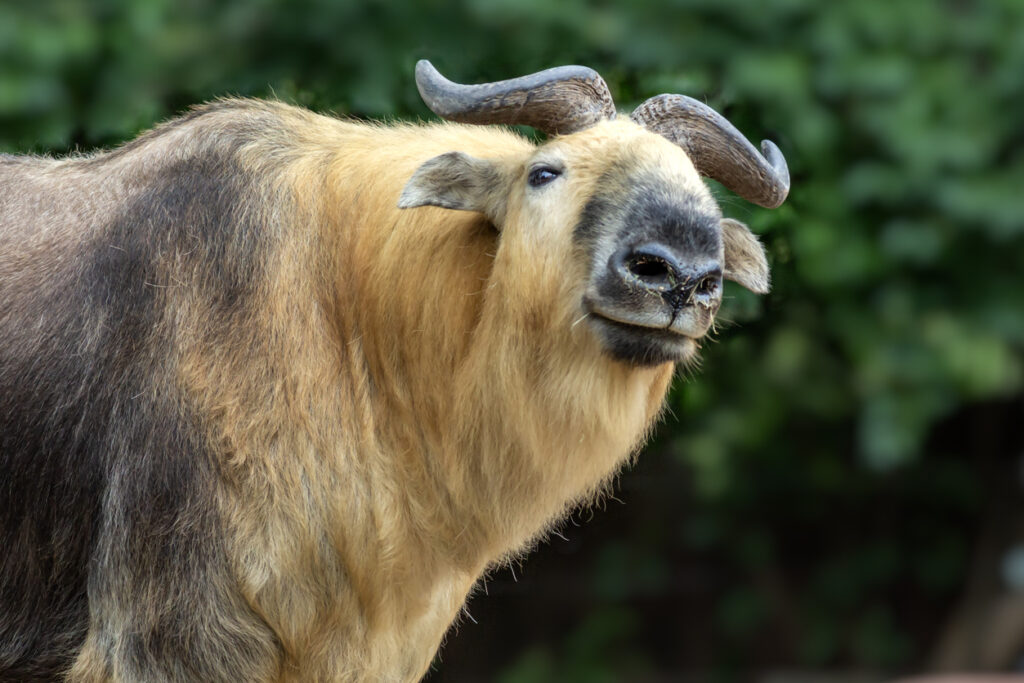
These things can weigh up to 400 kilos, which is about the same as a small horse, but they can scramble up rocky mountain slopes like mountain goats. Watching a takin navigate steep terrain is mental because something that big shouldn’t be able to move that gracefully over rocks and cliffs.
Their hooves are specially adapted for gripping on rocky surfaces, and they’ve got incredibly strong legs that let them jump and climb in ways that seem impossible for something their size. They can even stand on their hind legs to reach higher branches, which looks absolutely ridiculous but works perfectly for getting to food.
3. They live in some of the world’s most extreme conditions.
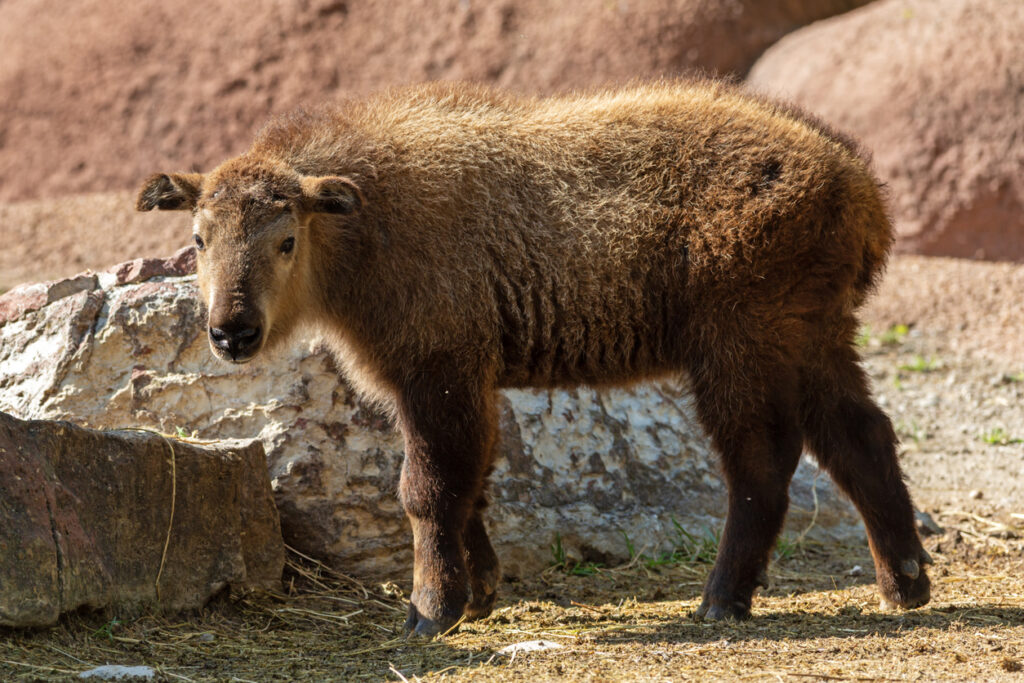
Takins hang about in the Himalayas at altitudes where most animals would struggle to breathe, dealing with freezing temperatures, thin air, and terrain that would challenge experienced mountaineers. They’re living and even thriving in conditions that would kill most other large mammals without breaking a sweat.
Their thick, oily fur keeps them warm in temperatures that drop well below freezing, and they’ve got special blood that carries oxygen more efficiently in the thin mountain air. They’re so well adapted to harsh conditions that they actually prefer the cold and can overheat if temperatures get too warm.
4. They’re completely obsessed with salt.
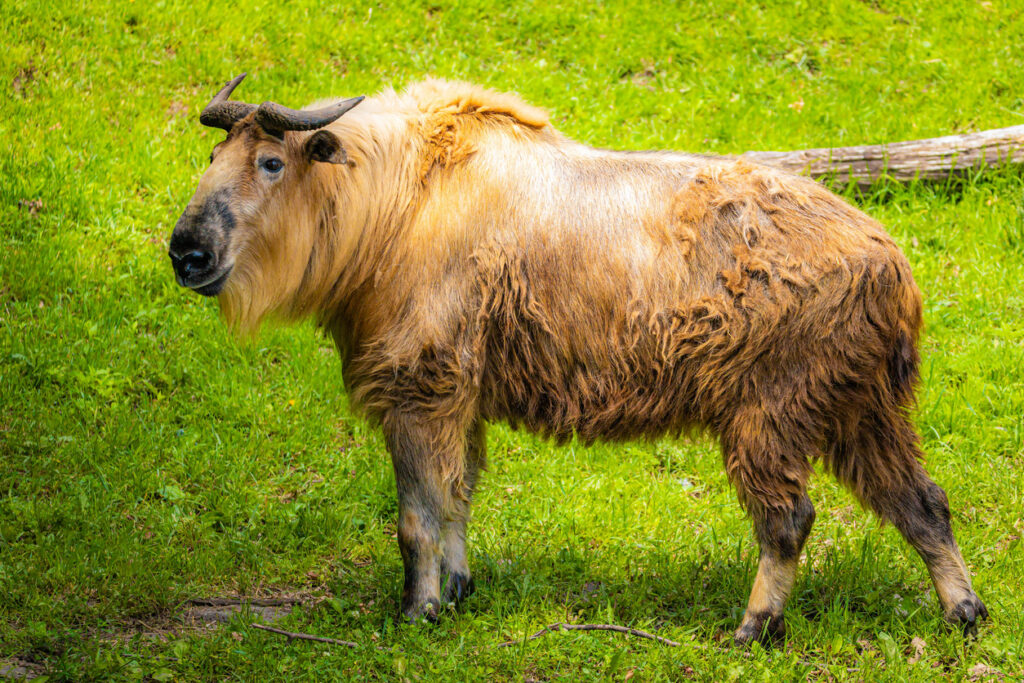
Takins will travel for miles just to find natural salt licks, and they’ll spend hours licking rocks and soil to get the minerals they need. This salt addiction isn’t just a preference. They literally need these minerals to survive in their high-altitude environment, where normal food doesn’t provide enough sodium.
They’ve got such sensitive noses that they can detect salt deposits from incredible distances, and they’ll remember the location of good salt licks for years. Local people have been using this obsession to track and study takins because if you find a salt lick in takin territory, you’re guaranteed to see them eventually.
5. They eat pretty much any plant they can find.
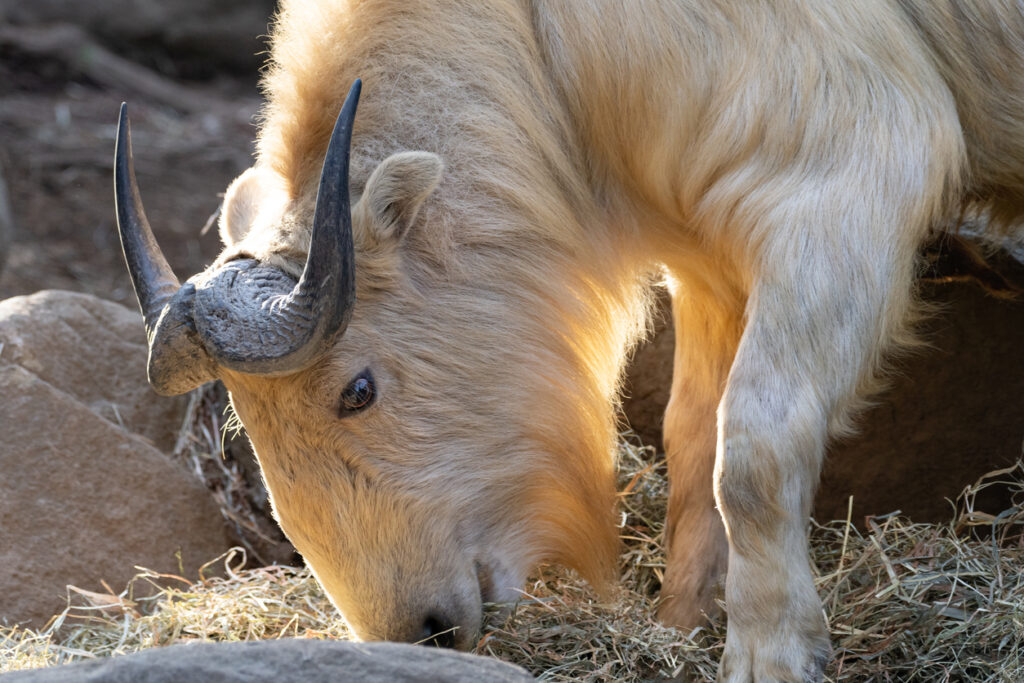
These animals are proper gluttons when it comes to vegetation, munching their way through bamboo, rhododendron leaves, grasses, and basically any plant matter they can get their mouths around. They’re not picky eaters and will happily switch between different plants depending on what’s available seasonally.
Their stomachs are designed like cows, with multiple chambers that let them digest tough, fibrous plants that other animals can’t handle. They can eat plants that are actually toxic to most mammals, which gives them access to food sources that other mountain animals can’t touch.
6. They’re the national animal of Bhutan.

Bhutan chose the takin as their national animal, which shows how important these weird creatures are to the region. The Bhutanese have loads of legends about takins, including stories about how they were created by a famous Buddhist saint who stuck the head of a goat onto the body of a cow.
These animals are deeply woven into local culture and folklore, and many mountain communities consider them symbols of strength and resilience. They appear on Bhutanese stamps, coins, and official documents, making them one of the few national animals that most people outside the region have never heard of.
7. They live in herds but can be quite antisocial.
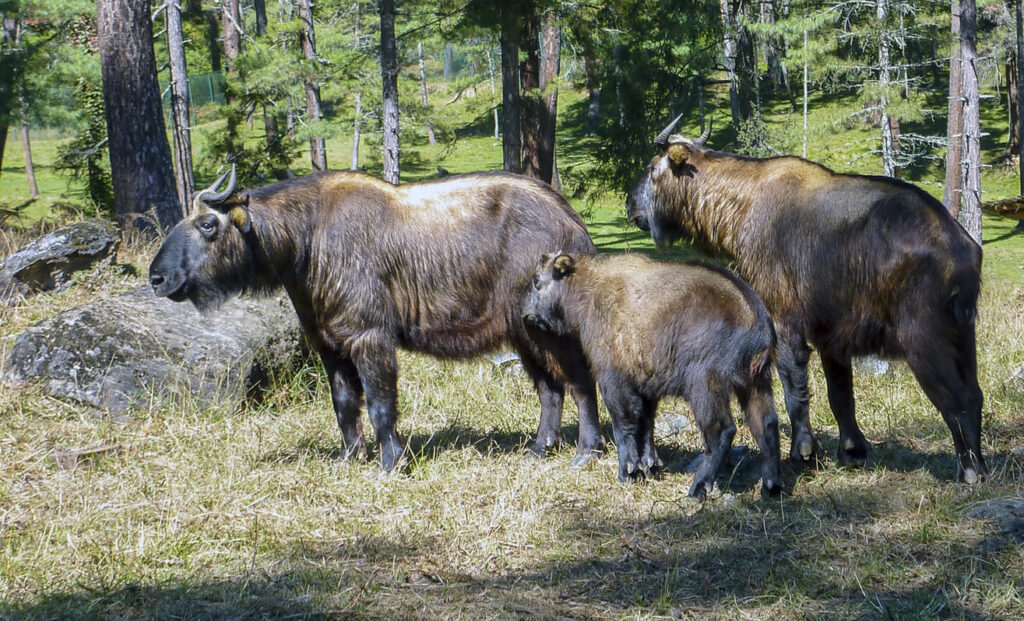
Takins form groups that can range from just a few animals to herds of several dozen, but they’re not particularly cuddly or social within these groups. They’ll hang about together for protection and to find food more easily, but they’re not constantly grooming each other or playing like some herd animals do.
During mating season, the males become proper grumpy and will fight each other using their curved horns and impressive bulk. These fights can get quite intense, with males charging at each other and wrestling like they’re in some kind of mountain wrestling match.
8. They make the weirdest sounds.
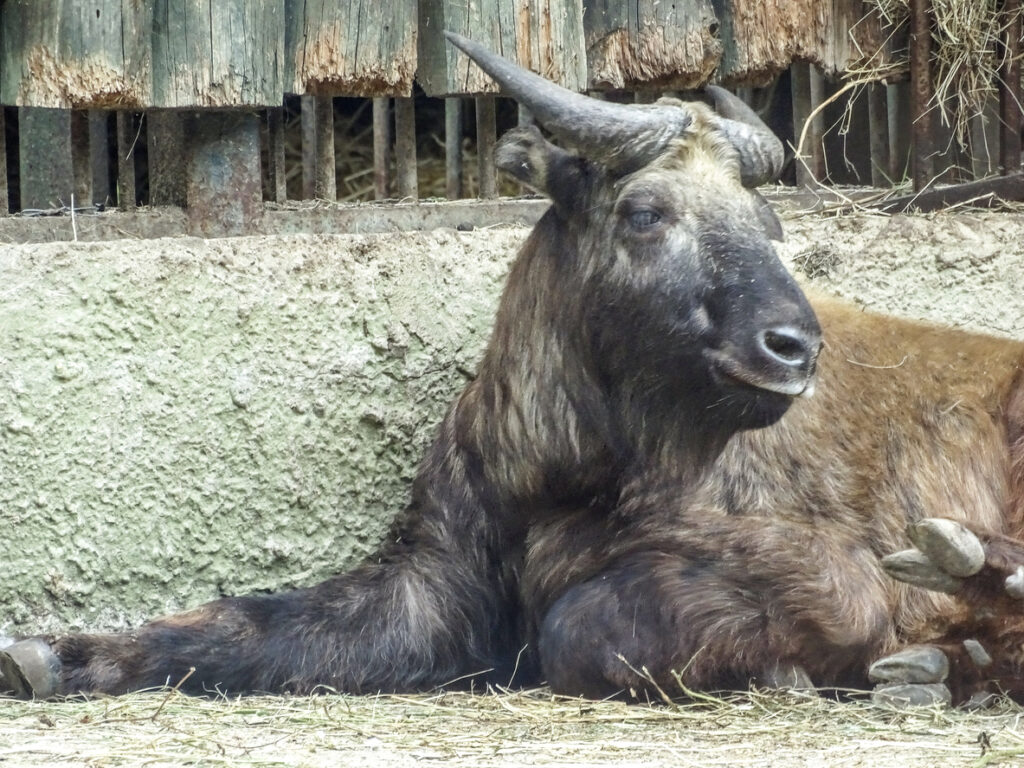
Instead of mooing like cows or bleating like goats, takins make these strange coughing, snorting noises that sound like someone’s trying to clear their throat mixed with a bit of grunting. The sounds are so unusual that if you heard one in the mountains, you’d probably think it was a person with a bad cold rather than an animal.
They use these vocalisations to communicate with each other across the mountainous terrain, and different sounds mean different things like warning calls, mating calls, or just general “hello, I’m over here” messages. Baby takins make even weirder squeaky noises that sound nothing like you’d expect from such a large animal.
9. They’re surprisingly good swimmers.
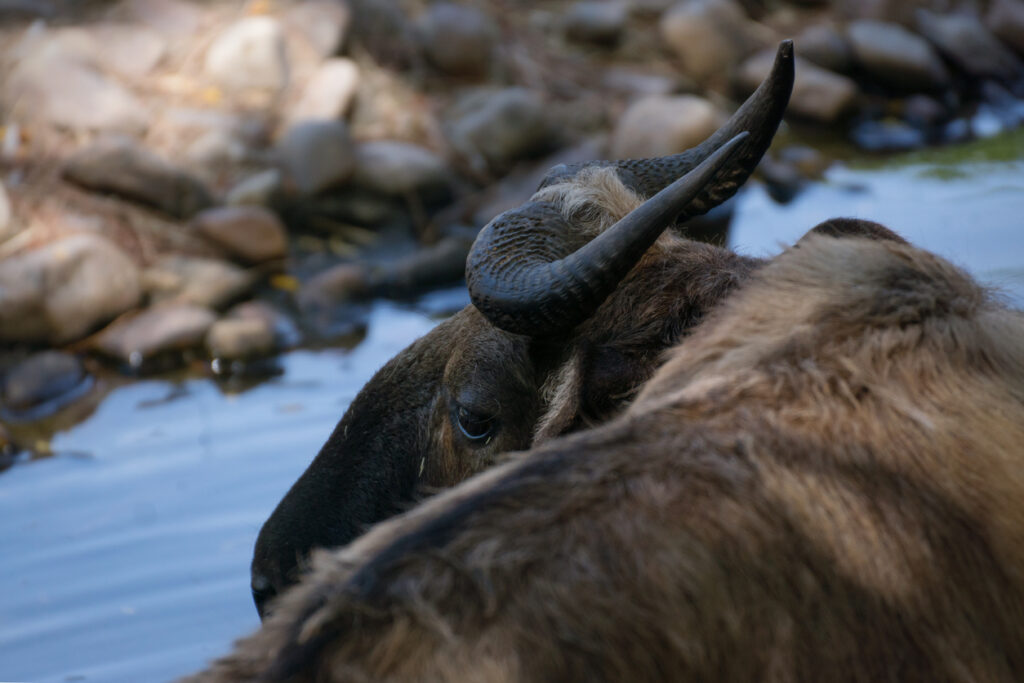
Despite being built like furry tanks, takins are excellent swimmers and will happily wade through mountain streams and rivers to get to better grazing areas. Their thick fur helps them stay warm in freezing water, and their strong legs make them surprisingly graceful in water.
They’ll even swim across fairly wide rivers if there’s good food on the other side, which is mental to watch because they look as if they should sink like stones but actually move through water quite efficiently. Their swimming ability gives them access to grazing areas that other large mountain animals can’t reach.
10. They’re incredibly hardy but face modern threats.
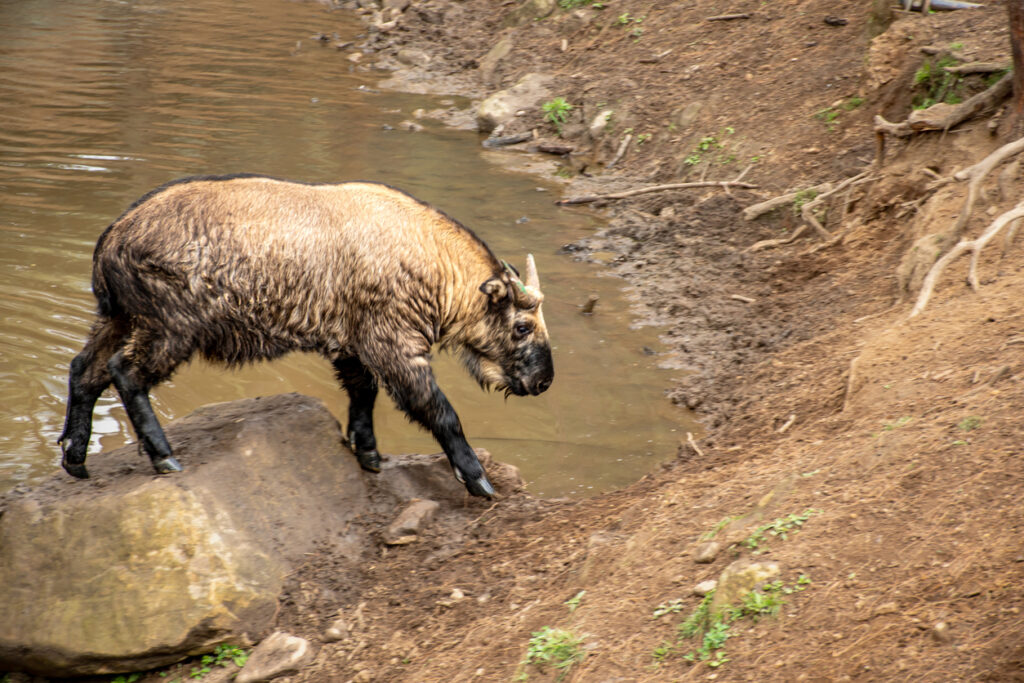
Takins have survived in harsh mountain conditions for thousands of years, dealing with predators like snow leopards, harsh weather, and limited food sources, but they’re now facing challenges from human activities like habitat destruction and climate change.
Road building, mining, and development in mountain regions is fragmenting their habitat, while changing weather patterns are affecting the plants they depend on. Their population numbers aren’t critical yet, but conservationists are keeping a close eye on them because mountain animals often struggle when their environment changes quickly.
11. They shed their entire coat once a year.

Every spring, takins basically moult their entire winter coat in one go, leaving them looking as if they’ve been attacked by a very enthusiastic hairdresser. The amount of fur they shed is absolutely mad—enough to stuff several pillows—and it just falls off in massive chunks.
Local people have traditionally collected this shed fur to use for making warm clothing and blankets because takin hair is incredibly insulating and water-resistant. The animals look quite ridiculous during shedding season, walking around with patches of long fur hanging off them.
12. They’re probably the weirdest animals you’ve never heard of.
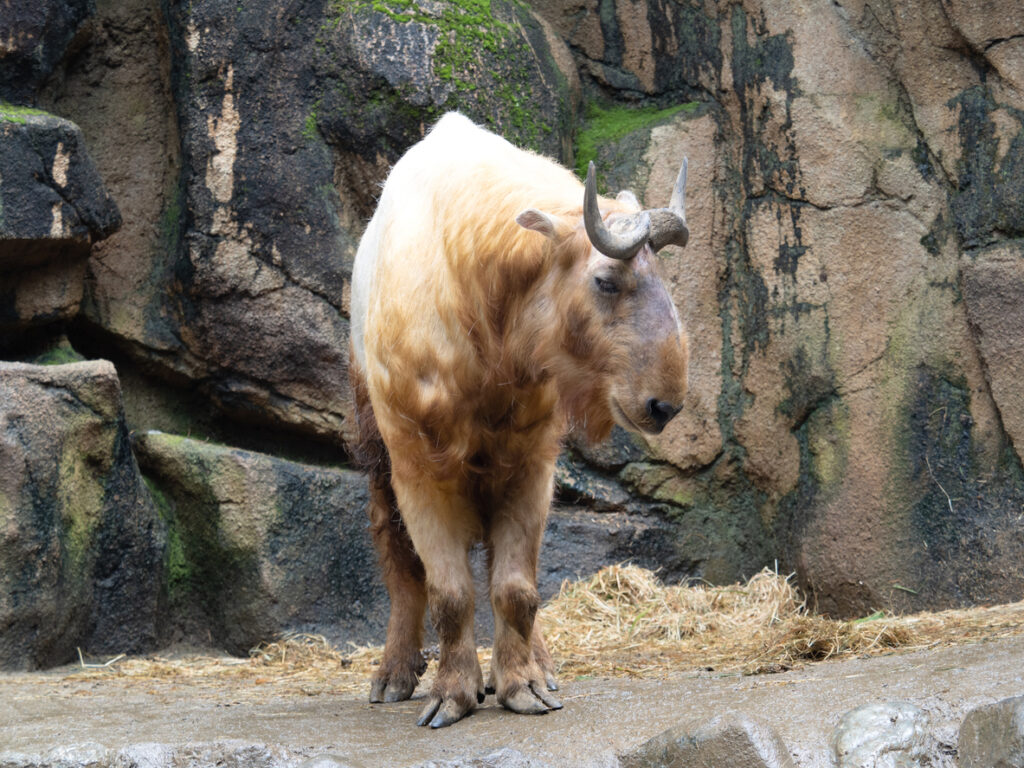
Despite being the national animal of an entire country and living in one of the world’s most famous mountain ranges, most people have never heard of takins because they live in such remote, inaccessible areas. They’re the ultimate example of how many incredible animals are out there that we know almost nothing about.
If more people knew about these golden, cow-goat hybrid creatures scrambling around the Himalayas eating everything in sight and making weird coughing noises, they’d probably become as famous as pandas or tigers. They’re proof that our planet is still full of amazing animals that seem too bizarre to be real but are just getting on with their lives in some of the world’s most challenging places.