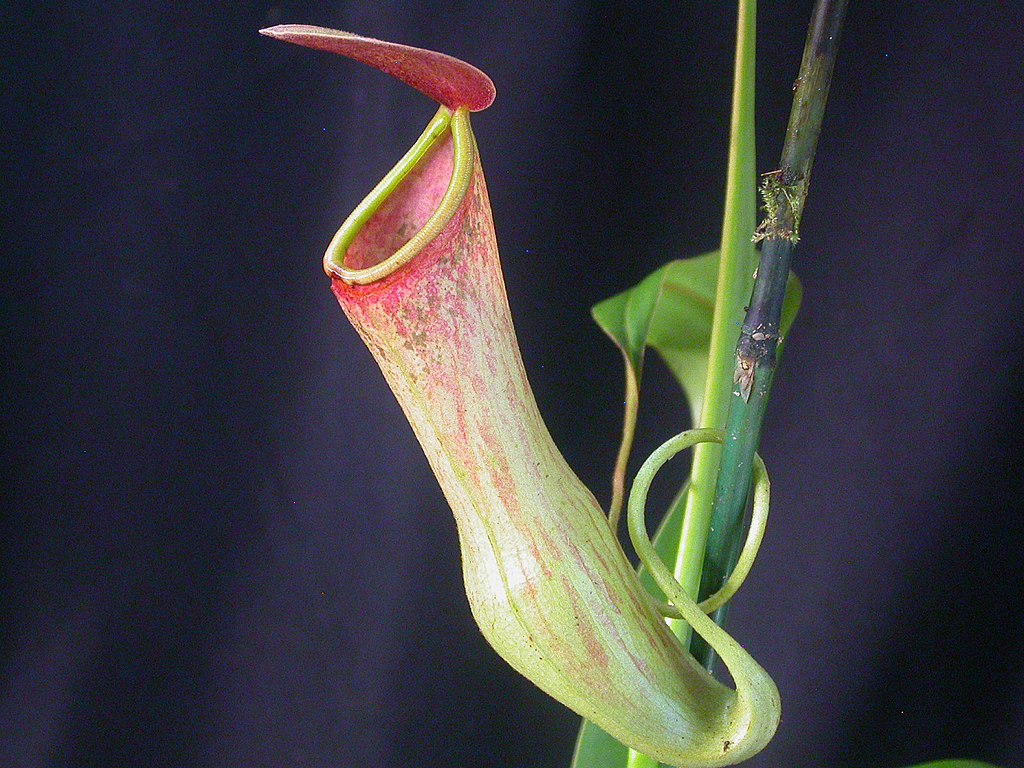
Some plants survive by doing things you wouldn’t expect, and the pitcher plant is one of the boldest examples. At first glance it looks harmless, with its tall, tube shaped leaves and striking colours, but the design is far from decorative. Every part of it works together to lure insects in, trap them, and use what’s left behind for nourishment. It’s a clever bit of evolution that helps the plant thrive in places where the soil can’t give it what it needs.
Once an insect slips inside, the plant takes over. The shape of the pitcher, the slick inner walls and the pool of digestive liquid at the bottom all play their part. It’s not a dramatic struggle, more a steady process that ends with the plant absorbing what it needs. Understanding how it works gives you a better sense of why these plants have adapted in such an unusual way, and why they’ve fascinated scientists and gardeners for years.
They’re shaped like water-filled jugs.
Pitcher plants have modified leaves that form deep tube or jug shapes that collect rainwater. The opening at the top is designed to be attractive and accessible to insects. Once filled with water, these pitchers become drowning chambers that insects can’t escape from.
The shape isn’t accidental, it’s evolved specifically to trap prey. The smooth, slippery sides and the water at the bottom create a one-way system. Insects go in easily but getting out is nearly impossible once they’ve fallen in.
They use sweet nectar as bait.
Pitcher plants produce nectar around the rim of the pitcher opening that smells and tastes attractive to insects. Ants, flies, wasps, and beetles are drawn to this free food source. The nectar lures them to the edge where they’re most likely to fall in.
This nectar isn’t just random, it’s a deliberate lure that the plant invests energy in producing. The plant is essentially baiting a trap and waiting for prey to take the bait. It’s active hunting despite being rooted in one place.
The rim is incredibly slippery.
The edge of the pitcher is covered in a waxy coating that’s impossibly slippery for insects. Their feet can’t get grip on it. When they land on the rim to feed on nectar, they lose their footing and tumble straight into the water below.
Some pitcher plants also have downward-pointing hairs on the inside that act like a lobster pot. They let insects slide down easily but prevent them climbing back up. The whole structure is engineered to be easy to enter and impossible to exit.
Insects drown in the water.
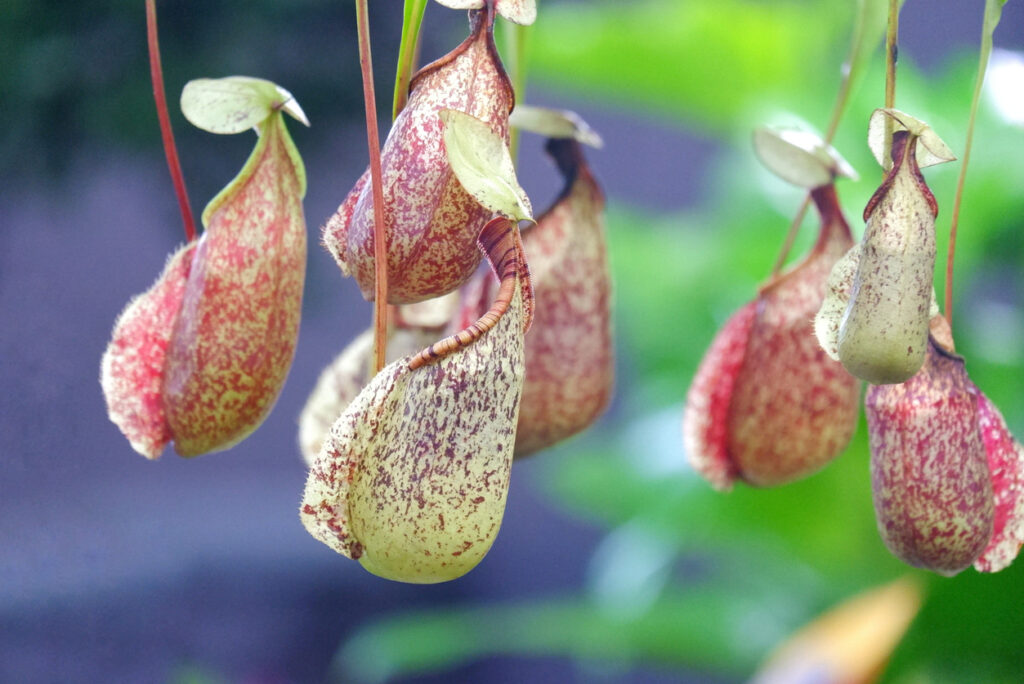
Once an insect falls into the water-filled pitcher, it can’t get back out. The sides are too smooth and steep to climb. The insect struggles and eventually exhausts itself trying to escape. Most drown within minutes to hours, depending on the size of the insect.
The water isn’t just water, it contains digestive enzymes that the plant secretes. So, while the insect is drowning, it’s also starting to be dissolved. The plant doesn’t wait for the insect to die before beginning digestion.
The plant dissolves the insect’s body.
After the insect drowns, the digestive enzymes in the water break down its body over several days. The plant secretes acids and enzymes similar to stomach acid that dissolve the soft tissues of the insect. It’s essentially an external stomach.
This process turns the insect into a nutrient-rich soup that the plant can absorb. The harder parts like the exoskeleton take longer to break down, but eventually most of the insect is digested and absorbed by the plant through the pitcher walls.
They absorb nutrients through the pitcher walls.
The inside of the pitcher is lined with cells that absorb the dissolved nutrients from dead insects. The plant takes in nitrogen, phosphorus, and other essential nutrients that are scarce in the poor soils where pitcher plants grow. This is why they evolved to eat insects in the first place.
The pitcher works like a stomach and intestine combined. It breaks down the food and absorbs the nutrients all in one structure. It’s a complete digestive system sitting on the outside of the plant.
They grow in nutrient-poor soils.
Pitcher plants evolved carnivory because they grow in bogs, marshes, and poor soils where nitrogen and other nutrients are scarce. Plants normally get these nutrients from soil, but when soil is rubbish, some plants evolved to get nutrients from insects instead.
This is why you find carnivorous plants in wetlands and acidic bogs. The soil there is too poor to support normal plants, but carnivorous plants supplement their diet with bugs and thrive where others struggle. It’s an evolutionary solution to a nutrient problem.
Different species have different trap designs.
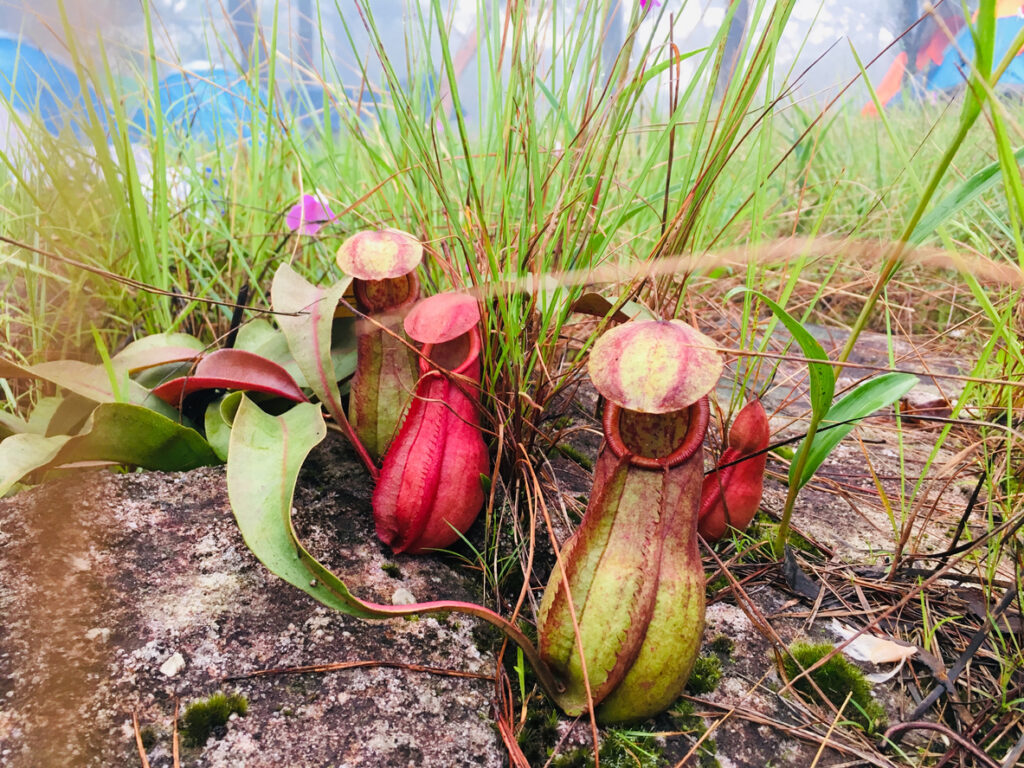
There are loads of different pitcher plant species and they’ve evolved different designs. Some have tall upright pitchers, others have ground-level traps. Tropical pitcher plants can be massive, big enough to trap rats and frogs occasionally, not just insects.
Each design is adapted to the environment and prey available. Some target flying insects, others target crawling ants. The diversity shows how effective this carnivorous strategy is, it’s evolved independently multiple times in different plant families.
They can catch hundreds of insects.
A single pitcher can trap and digest dozens to hundreds of insects over its lifetime. Large pitchers can be filled with dozens of dead insects at various stages of decomposition. It’s like looking into a mass grave when you peer inside an active pitcher.
This constant supply of nutrients allows the plant to grow in places where other plants can’t survive. The more insects they catch, the better they grow, which lets them produce more pitchers and catch even more insects. It’s a successful strategy.
Some insects have evolved to survive in them.
Incredibly, some insects have evolved to live inside pitcher plants without being eaten. Certain mosquito larvae, flies, and even crabs can survive in the digestive fluid. They’ve adapted to resist the enzymes and actually feed on the other insects that get caught.
These insects have turned the death trap into a home. They get shelter and a constant food supply of other insects falling in. Some even help the plant by speeding up decomposition. It’s a bizarre symbiotic relationship in what should be a deadly environment.
They’re found all over the world.
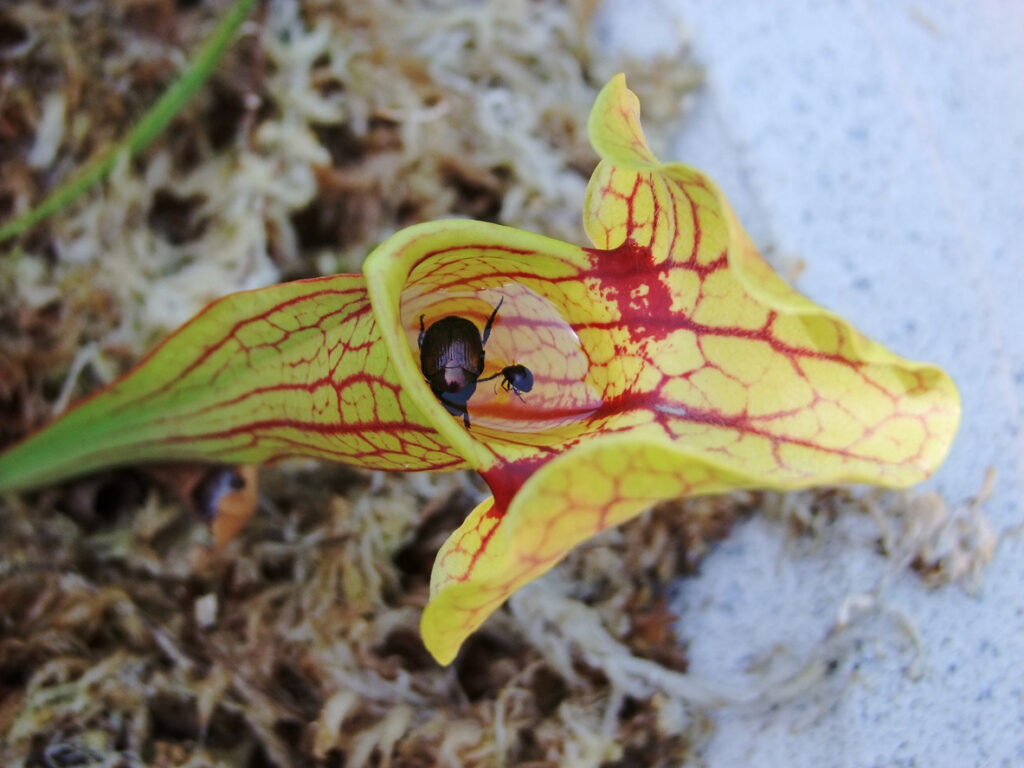
Pitcher plants exist on most continents in various forms. North America has several species, Southeast Asia has tropical pitcher plants, and Australia has its own varieties. Wherever there are poor soils and insects to catch, pitcher plants have evolved.
Their worldwide distribution shows how effective carnivory is as a plant survival strategy. In the right conditions, eating insects beats trying to survive on soil nutrients alone. Evolution found this solution independently in different places.
You can grow them at home, but it’s tricky.
People grow pitcher plants as unusual houseplants because they’re fascinating, but they’re not easy to care for. They need specific conditions including distilled or rainwater only, high humidity, and poor nutrient soil. Feeding them tap water or fertiliser kills them because they’re adapted to nutrient-poor conditions.
If you do grow them right, watching them catch and digest insects is genuinely fascinating. You can see the whole predator-prey relationship playing out in a plant pot. It’s nature being weird and brutal in your living room. Just don’t expect them to be easy, they’re specialists that need specialist care to survive.