The planet is full of some amazing creatures, and the muntjac deer comes pretty high on the list.
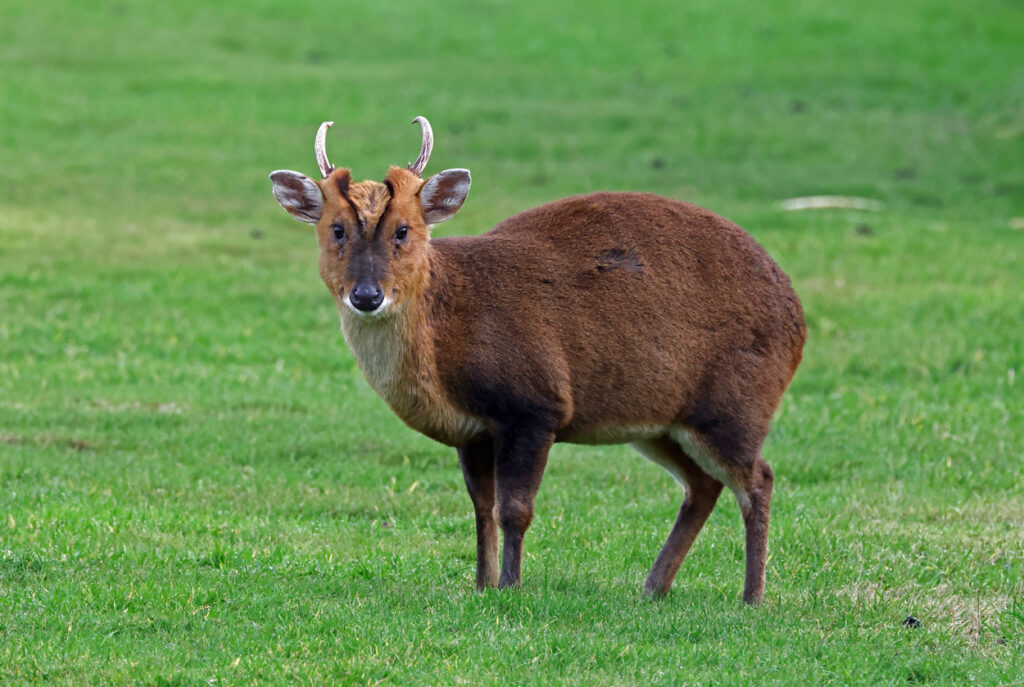
You may or may not have been lucky enough to spot one in the wild—they’re pretty widespread, especially in southern and central England. This tiny deer looks harmless enough but has some of the weirdest adaptations in the animal kingdom, and most people have no idea just how strange they really are.
1. They have vampire-like fangs instead of antlers.

Male muntjacs sport prominent canine teeth that look more like vampire fangs than anything you’d expect on a deer, and these tusks can grow up to 6.5 cm long. Unlike other deer species that rely on antlers for fighting, muntjacs use these razor-sharp teeth as their primary weapons, and they’re surprisingly effective at causing damage.
These fangs are constantly growing throughout their lives, which means muntjacs need to wear them down through regular use and grinding. The teeth are so prominent that they often stick out even when the mouth is closed, giving these small deer a perpetually menacing expression that’s both comical and slightly unsettling.
2. They bark like dogs when threatened.
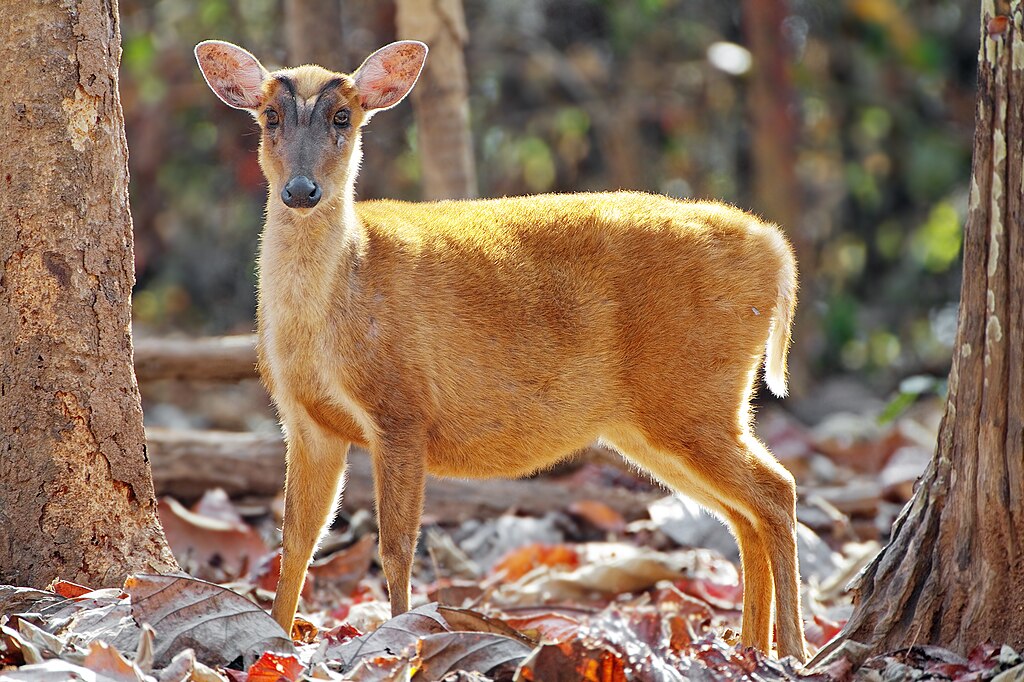
Muntjacs make loud barking sounds that are virtually indistinguishable from a medium sized dog, and this strange vocalisation has confused countless hikers and countryside residents. The barking can continue for hours when the deer feels threatened or territorial, and it’s so persistent that it often drives neighbours mental in areas where muntjacs are common.
Their vocal repertoire also includes clicking sounds, squeaks, and screams that sound more like they belong in a horror film than a woodland creature. These deer are surprisingly loud for their size and aren’t shy about making noise, which has earned them the nickname “barking deer” in many parts of the world.
3. Their face has scent glands that open like tiny doors.
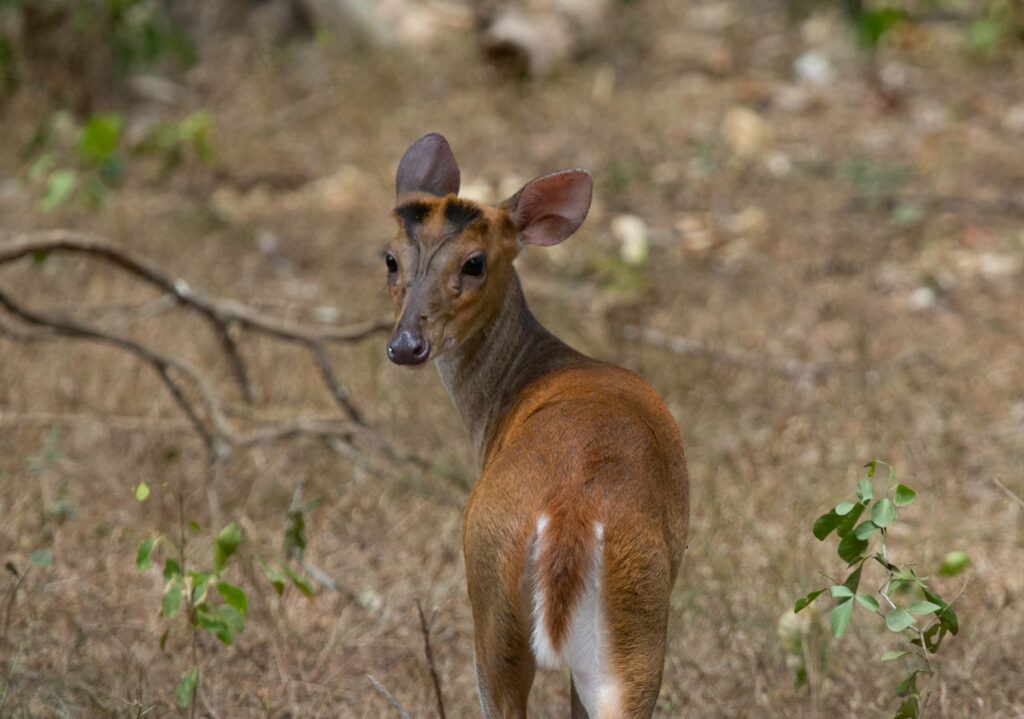
Muntjacs have large scent glands in front of their eyes that can open and close like little pockets, and when they’re excited or stressed, these glands flare open to release pheromones. The glands are so prominent that they look like extra nostrils or small wounds on the deer’s face, and watching them open and close is genuinely unsettling.
Their facial glands are used for marking territory and communicating with other muntjacs, and the deer can control them consciously to release different scent messages. When the glands are fully open, they create dark, gaping holes in the deer’s face that make them look like they’re wearing a weird-looking mask.
4. They can breed year-round with no fixed season.
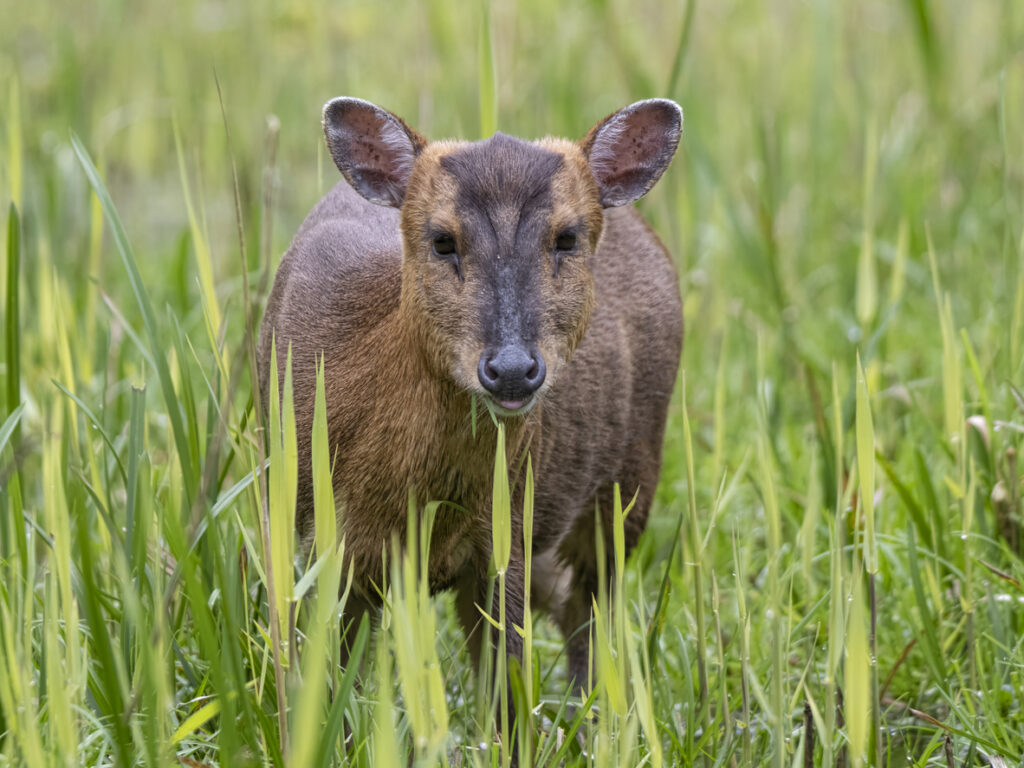
Unlike most deer species that have specific breeding seasons, muntjacs can mate and give birth at any time of year, which has made them incredibly successful invasive species in many countries. Females can become pregnant again just days after giving birth, creating a breeding cycle that produces offspring constantly rather than seasonally.
This reproductive strategy means muntjac populations can explode rapidly when conditions are favourable, and their ability to breed continuously has made them nearly impossible to control in areas where they’ve been introduced. Their reproductive rate is more similar to rabbits than traditional deer, which explains their success as colonisers.
5. They’re surprisingly tiny but incredibly aggressive.

Muntjacs are only about the size of a medium dog, standing roughly 50 cm tall at the shoulder, but they’re disproportionately aggressive and will attack much larger animals when defending territory. Their small size makes their fierce temperament even more surprising, and they’ve been known to chase off dogs, cats, and even humans who get too close.
Despite their diminutive stature, muntjacs are incredibly territorial and will use their sharp fangs to inflict serious wounds on rivals or threats. Their aggression combined with their small size creates a Napoleon complex situation where these tiny deer act like they’re much larger and more dangerous than they appear.
6. They have the most chromosomes of any mammal.
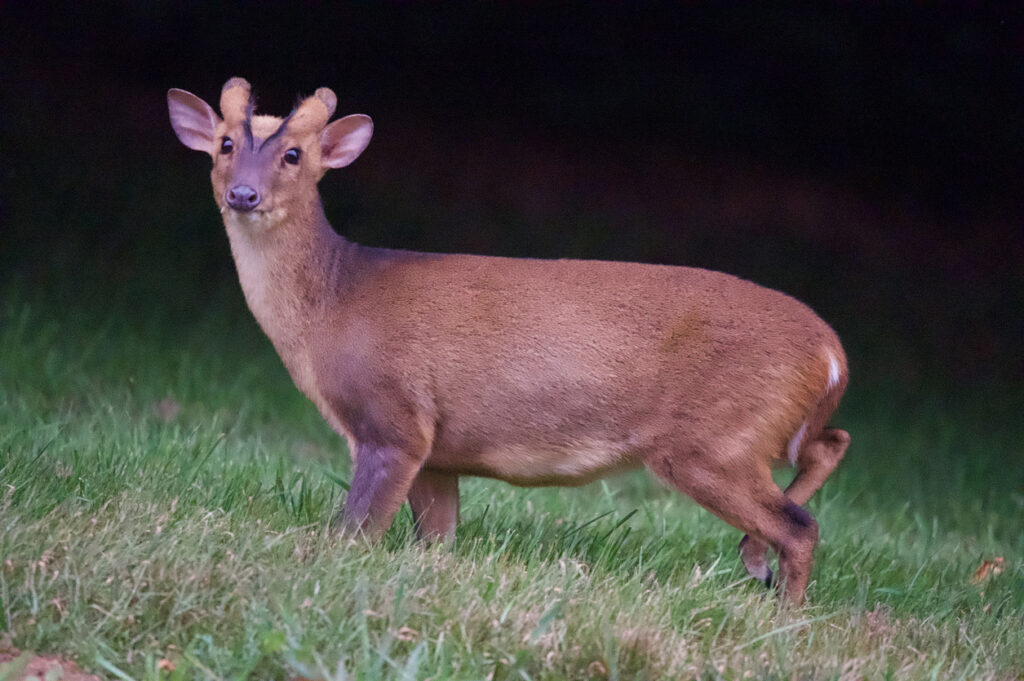
Muntjacs hold the record for chromosome variation among mammals, with different species having anywhere from 6 to 70 chromosomes, and scientists still don’t fully understand how this genetic diversity works. The Reeves’s muntjac has 46 chromosomes like humans, whilst the Indian muntjac has only 6 or 7, making them genetic oddities in the mammal world.
This extreme chromosome variation should theoretically prevent different muntjac species from interbreeding, but somehow they manage to produce viable offspring despite their genetic differences. Their unusual genetics have made them subjects of intense scientific study, and researchers are still puzzling out how their reproduction actually works.
7. They can live happily in suburban gardens.
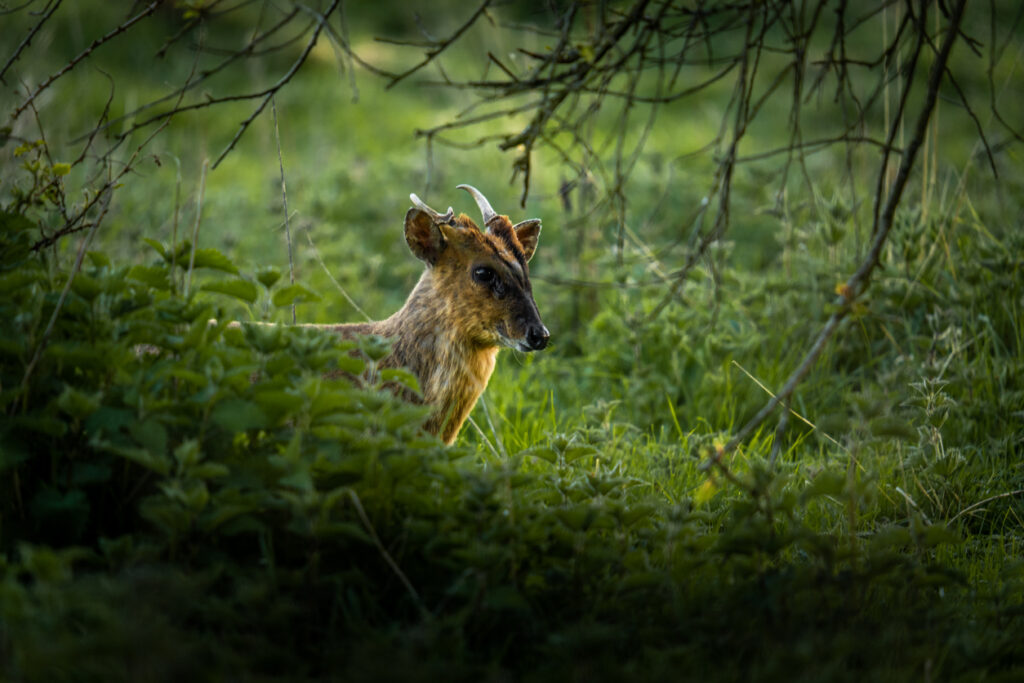
Muntjacs have adapted remarkably well to human environments and often prefer suburban gardens to wild habitats because of the abundant food and lack of large predators. They’re commonly spotted in residential areas eating flowers, vegetables, and ornamental plants, and they’ve become a significant pest problem in many communities.
Their adaptability to urban environments is almost unnatural for a deer species, and they seem to have no fear of humans, cars, or domestic animals. This fearlessness, combined with their destructive eating habits, has made them unwelcome guests in many neighbourhoods where they treat gardens like personal buffets.
8. They have a bizarre gait that looks like hopping.
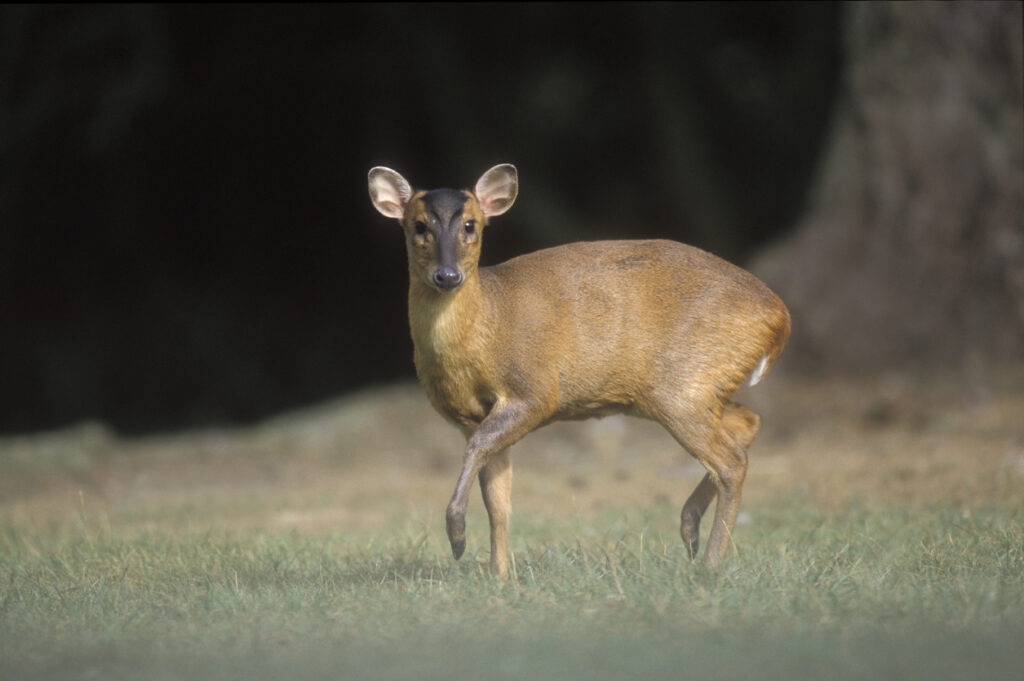
When muntjacs run, they use a peculiar bouncing gait where their back legs move together like a rabbit’s, creating a distinctive hopping motion that looks completely wrong for a deer. This unusual running style makes them surprisingly fast and agile, and they can navigate dense undergrowth more effectively than larger deer species.
Their hopping gait is particularly noticeable when they’re startled, and the sight of a tiny deer bouncing through the forest like an oversized rabbit is both amusing and slightly disturbing. This movement pattern is so distinctive that experienced wildlife watchers can identify muntjacs from a distance just by their peculiar locomotion.
9. They’re practically indestructible survivors.
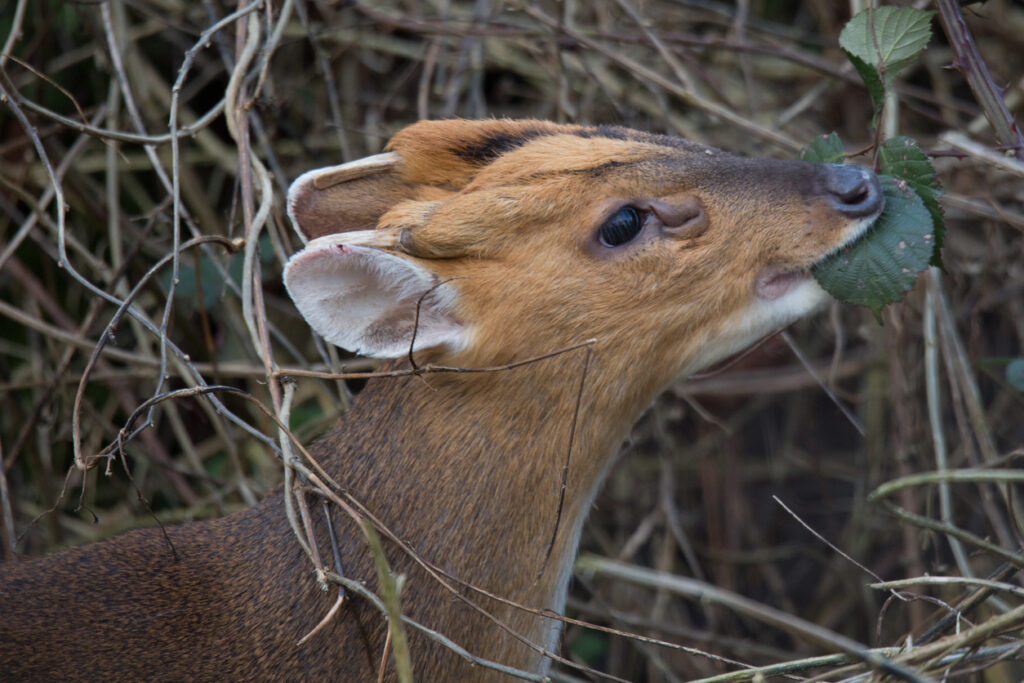
Muntjacs can survive in almost any habitat and climate, from tropical rainforests to temperate woodlands, and they’ve successfully established populations on multiple continents where they were introduced. Their adaptability is so extreme that they’re considered one of the world’s most successful invasive species, thriving in environments that challenge most other deer.
These deer can eat almost anything, tolerate extreme weather conditions, and reproduce so rapidly that population control efforts often fail to keep up with their breeding rate. Their survival skills are so impressive that they’re essentially living proof that sometimes being small and adaptable beats being large and specialised.
10. They’re excellent swimmers and climbers.

Despite being deer, muntjacs are surprisingly good at swimming and will readily cross rivers and streams that would deter other deer species. They’re also capable climbers who can navigate steep terrain and even climb over fences and barriers that would stop larger deer, making them incredibly difficult to contain.
Their swimming and climbing abilities have contributed to their success as invasive species because they can cross geographical barriers that limit other animals. This versatility means muntjacs can colonise islands, cross waterways, and access areas that should theoretically be protected from deer invasion.
11. They eat meat when plant food is scarce.
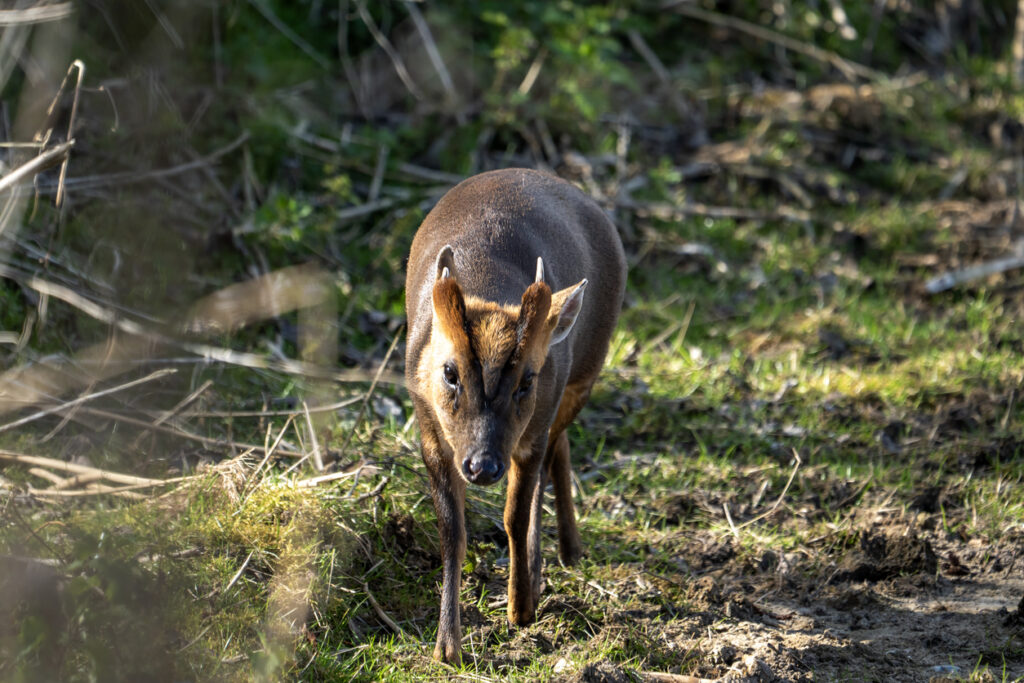
Whilst primarily herbivorous, muntjacs will opportunistically eat bird eggs, small birds, and even carrion when plant food becomes scarce, making them more omnivorous than most deer species. This dietary flexibility has helped them survive in environments where purely herbivorous deer would struggle to find enough nutrition.
Their willingness to eat protein sources that other deer avoid gives them a significant survival advantage and contributes to their success as invasive species. Bird conservationists consider them a threat to ground-nesting birds because of their habit of raiding nests for eggs and chicks.
12. They can jump surprisingly high for their size.
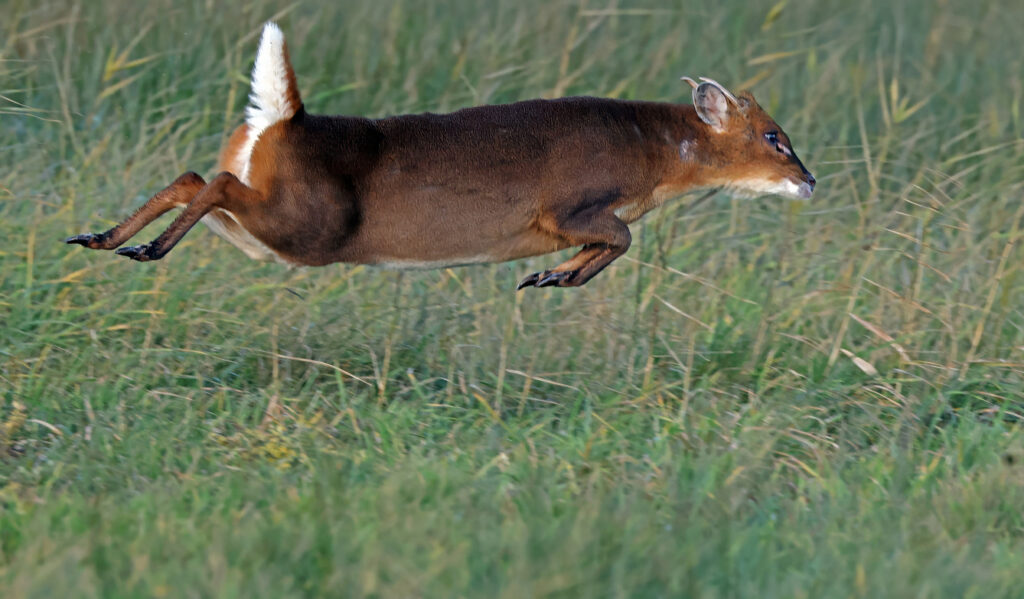
Muntjacs can leap over obstacles that are several times their own height, and their jumping ability often surprises people who underestimate these small deer. They can easily clear garden fences, hedges, and other barriers that homeowners assume will keep deer out, making them particularly frustrating pests.
Their jumping prowess, combined with their small size, means they can access areas that larger deer cannot reach, and they often appear in gardens that seem completely deer-proof. This ability to overcome physical barriers has contributed to their rapid spread in areas where they’ve been introduced.
13. They live much longer than other small deer.
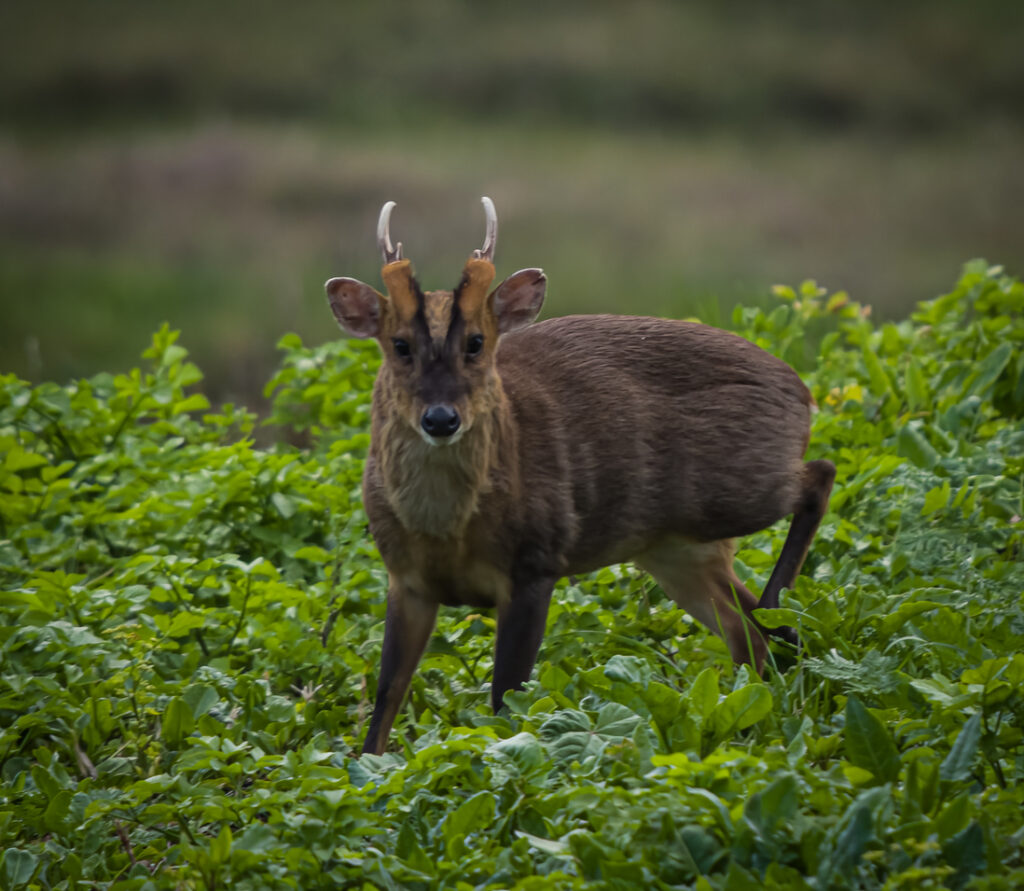
Despite their tiny size, muntjacs can live up to 19 years in captivity and around 10 to 15 years in the wild, which is remarkably long for such a small deer species. Their longevity, combined with their year-round breeding capability, means individual muntjacs can produce dozens of offspring during their lifetime.
This extended lifespan gives them multiple opportunities to reproduce and establish themselves in new territories, and older muntjacs become increasingly bold and territorial as they age. Their combination of longevity and high reproductive rate creates a perfect storm for population growth that makes them nearly impossible to eradicate once established.