If you’ve ever spotted a plump, lime-green caterpillar with massive, glaring eyes peering out from your garden, you’ve likely met the elephant hawk moth in its early stages.
It’s one of nature’s best bits of theatre; those eyes are completely fake, designed to make a harmless larva look like a small, intimidating snake to anything hoping for a quick snack. This moth has evolved a survival strategy built entirely on a bluff, using its own body to perform a high-stakes vanishing act when things get hairy.
It’s more than just the markings, as well; it’s the way it retracts its head to mimic a hooded serpent is a brilliant example of how a creature with no real defences can still hold its own in a brutal environment. Realising how much work goes into that tiny deception makes you appreciate just how clever the British countryside can be when it wants to stay hidden in plain sight. Here’s what you should know about this remarkable creature.
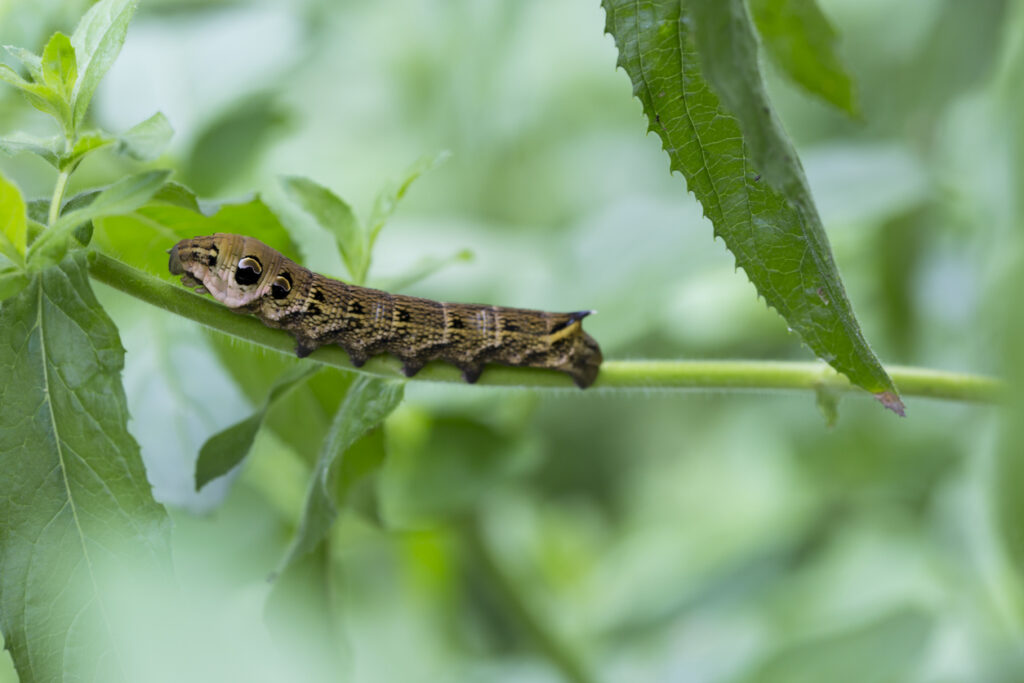
The caterpillar looks like it has an elephant’s face.
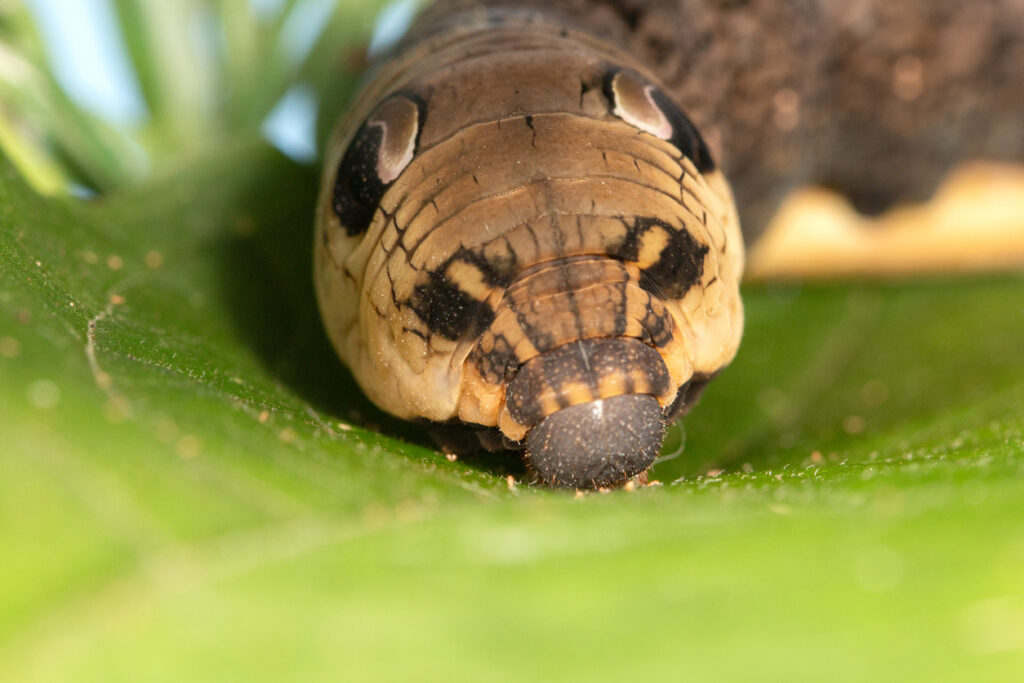
The elephant hawk moth caterpillar is brilliant green or brown and covered in tiny bumps, but the truly bizarre feature is the two large eye-like markings near its head that make it look like a tiny elephant. These false eyes aren’t just random patterns – they’re part of an elaborate defence system designed to scare off predators by making the caterpillar look bigger and more threatening than it actually is.
When the caterpillar feels threatened, it can inflate its front end and display those fake eyes even more dramatically, creating the impression of a tiny elephant head ready to attack. The bluff is incredibly effective because most predators would rather avoid something that looks like it has teeth and attitude.
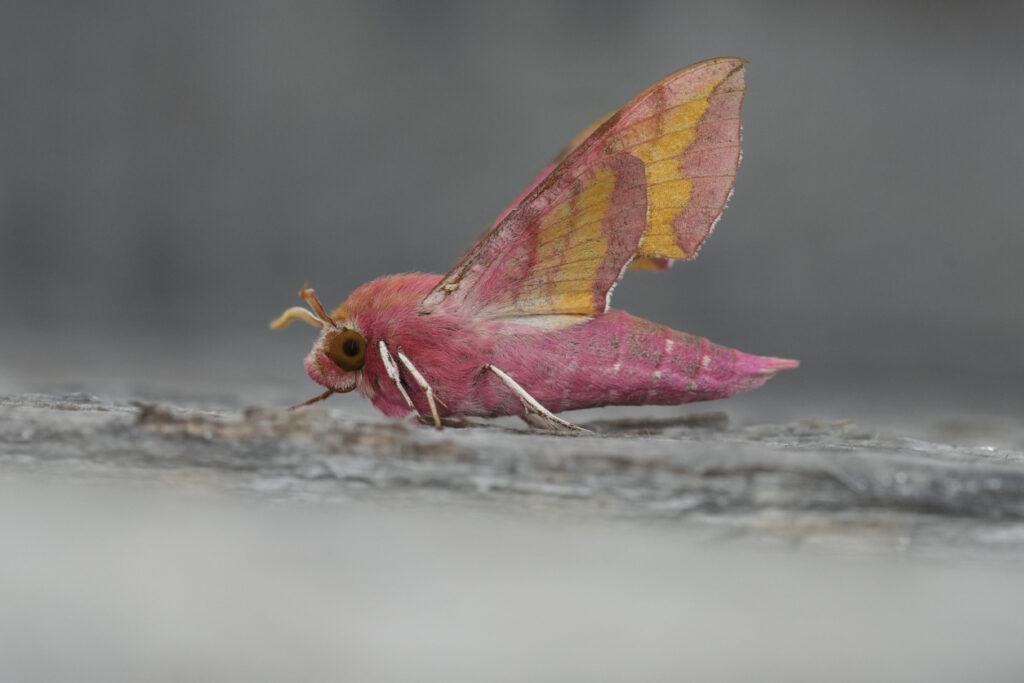
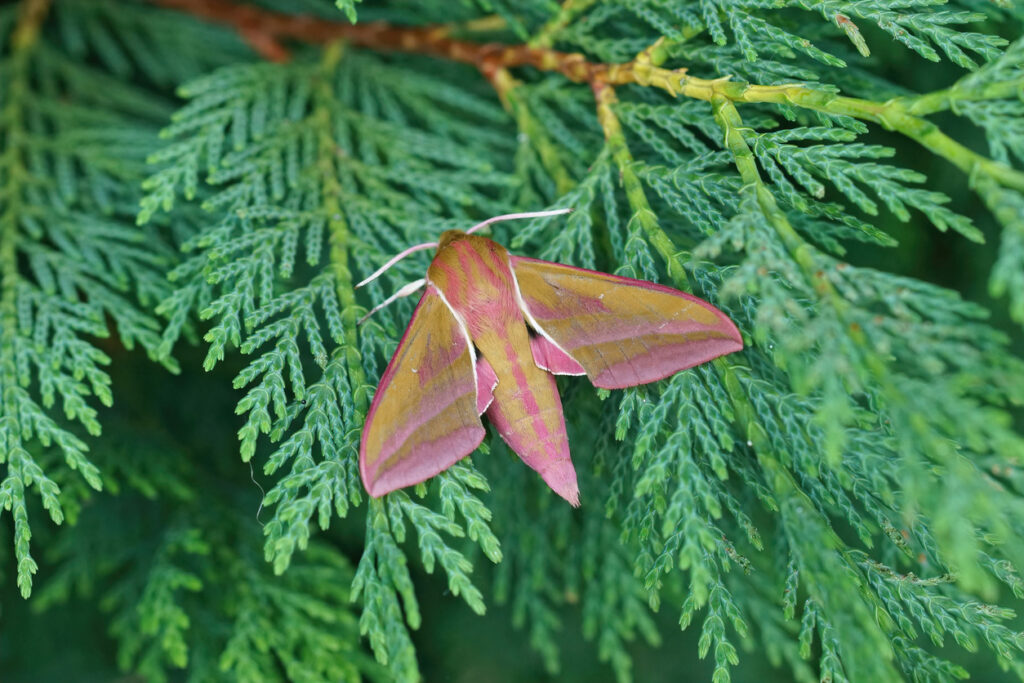
The adult moth is stunningly pink and red.
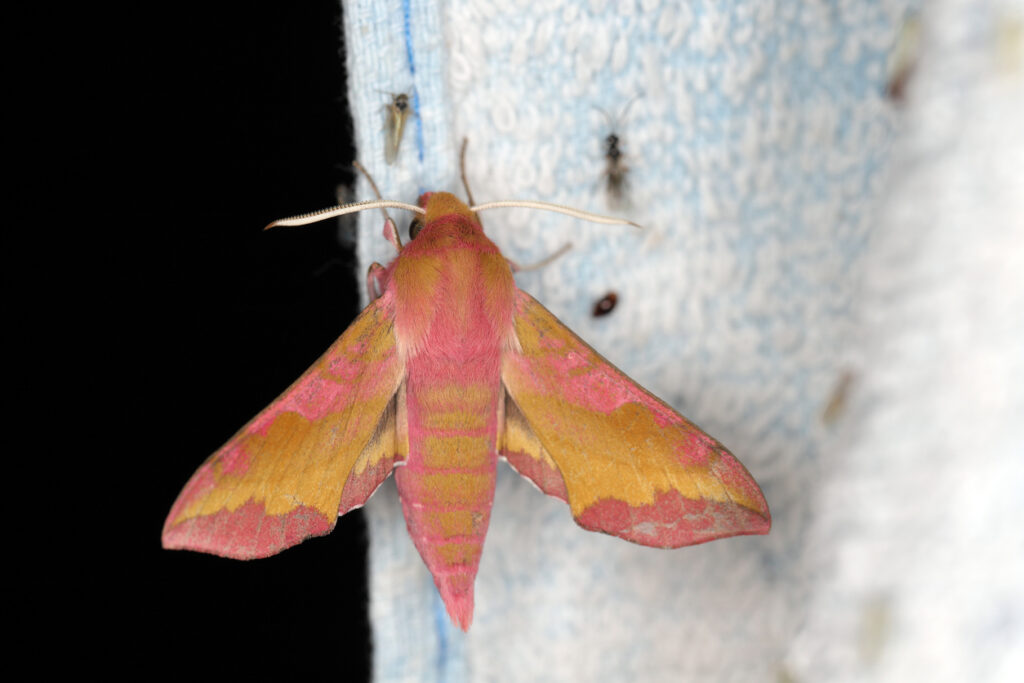
When the elephant hawk moth finally emerges as an adult, it’s absolutely gorgeous, with a bright pink body and wings that range from pale pink to deep crimson red. The contrast between the soft pink thorax and the darker pink wings makes this moth one of the most visually striking insects you’ll ever see in a garden.
Most moths are brown or drab for camouflage, but the elephant hawk moth seems to have completely ignored that strategy in favour of being absolutely beautiful. Its vibrant colouring doesn’t make it easy to spot because it often rests on pink flowers, where it blends in perfectly.
It has one of the longest proboscis of any European moth.
The elephant hawk moth has an exceptionally long proboscis, which is the tube-like mouth it uses to drink nectar from flowers deep inside blooms that other insects can’t reach. This long feeding tube is one of its most distinctive features and explains why it’s attracted to specific flowers with deep nectar.
The proboscis is coiled underneath the moth’s head when it’s not in use, making it look almost like it’s tucking away a tiny hose. Its feeding apparatus is so specialised that it limits what the moth can eat, but it gives the moth access to food sources that competitors can’t reach.
The caterpillar’s defence mechanism is pure theatre.
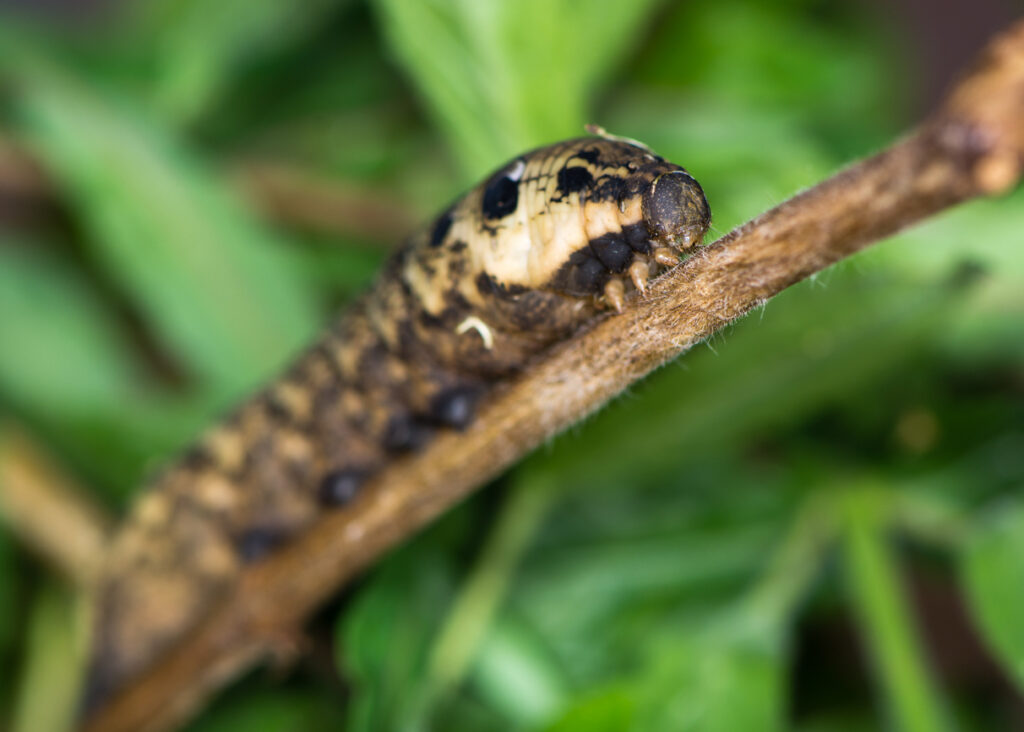
When threatened, the elephant hawk moth caterpillar doesn’t just look scary – it performs an elaborate defensive display that would make any predator think twice. The caterpillar retracts its head into its body and inflates the front section, making those fake eyes bulge out menacingly while the whole front end assumes a threatening posture.
It’s basically an insect version of a bluff, where the caterpillar is pretending to be something huge and dangerous when it’s actually tiny and completely vulnerable. Most predators are fooled by this act and back off before realising they’ve been tricked by an insect.
The moth is incredibly fast and agile in flight.
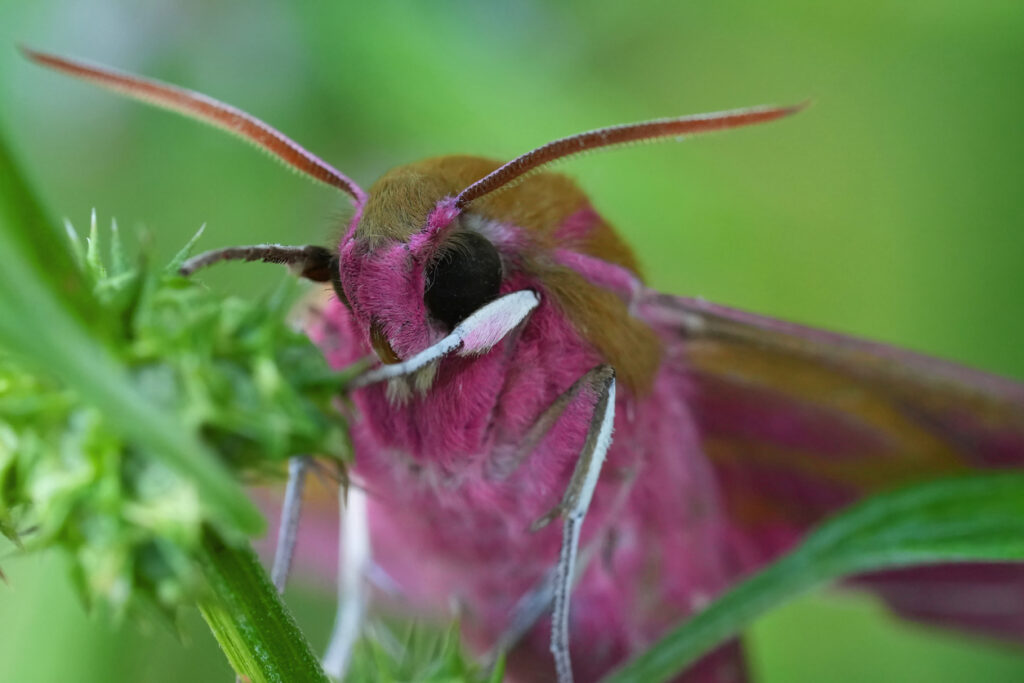
As a hawk moth, the elephant hawk moth is built for speed and manoeuvrability, capable of rapid flight that allows it to escape predators and navigate between flowers with precision. Their wings beat incredibly quickly, allowing them to hover in place like hummingbirds while they feed on nectar.
Their flying ability makes them one of the most impressive insects in the air, capable of performing aerial manoeuvres that would make many birds jealous. You might see them darting around your garden at dusk, moving so quickly they’re almost a blur.
It’s found across Europe but expanding its range northward.
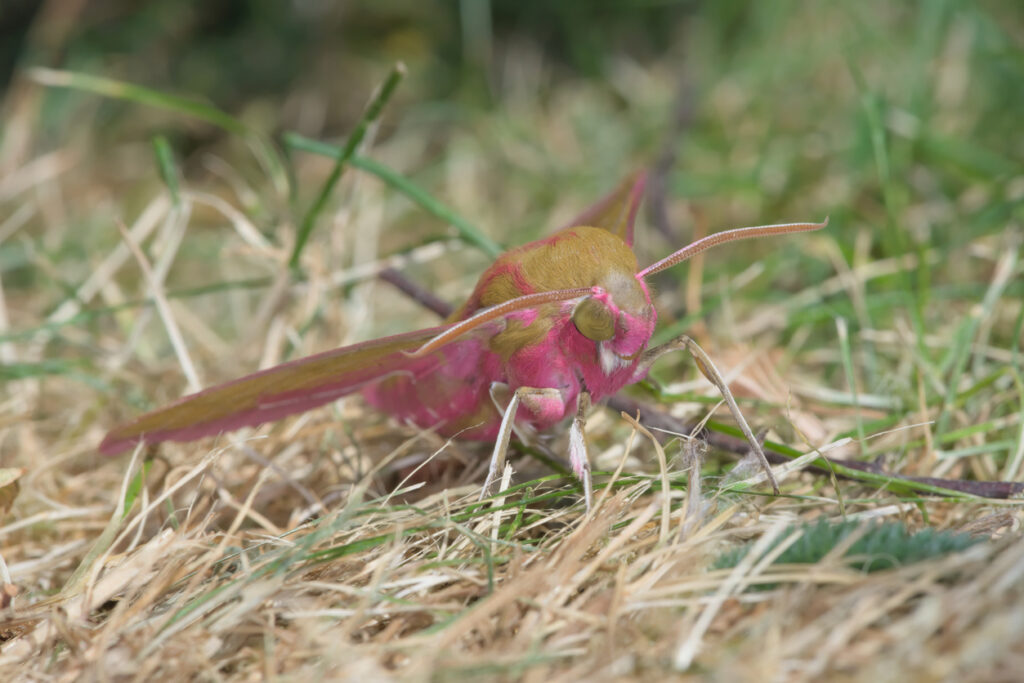
The elephant hawk moth is native to southern and central Europe but has been steadily expanding its range northward over recent decades, probably due to climate change making northern areas warm enough for it to survive. People in the UK and even further north in Scandinavia are seeing these moths more frequently than they did years ago, suggesting they’re adapting to cooler climates.
That range expansion means more people are discovering these beautiful moths in their gardens for the first time. It’s one of the clearest examples of how climate change is physically moving where insects can actually live.
The caterpillar feeds on specific plants, mainly bedstraw and willowherb.
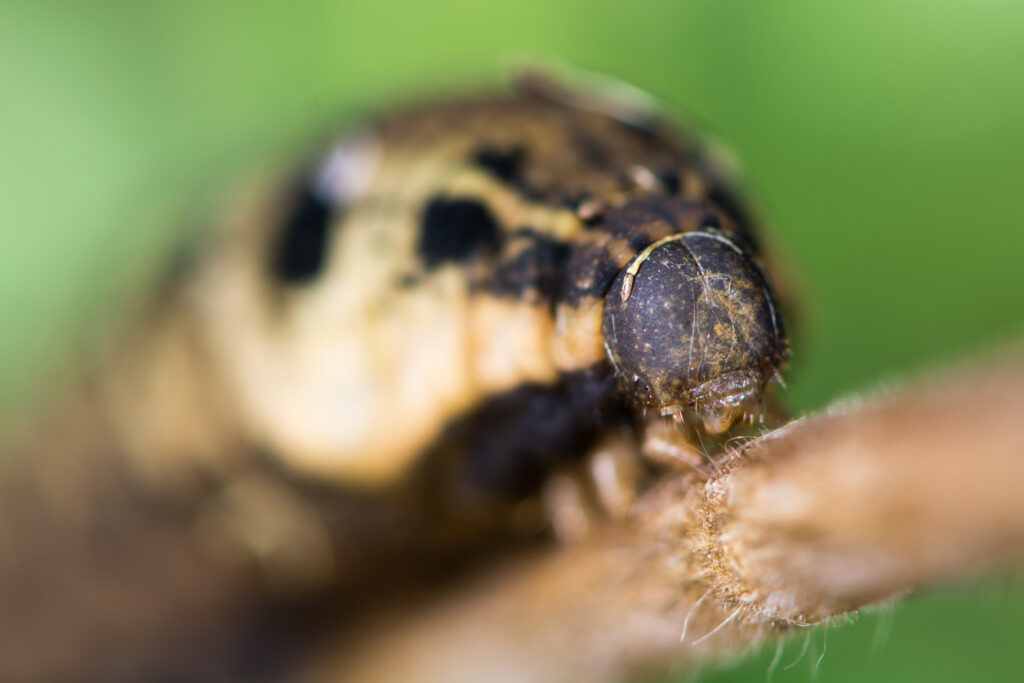
The elephant hawk moth caterpillar is a specialist feeder, preferring certain plants like lady’s bedstraw and willowherb, which limits where populations can establish themselves. That specialisation means you’re more likely to find these caterpillars in areas where their food plants grow abundantly.
If you want to attract elephant hawk moths to your garden, growing their preferred plants is basically essential because they won’t eat just anything. Such specificity shows how interconnected insects are with their environment and why habitat loss is so devastating.
The pupa phase is surprisingly cryptic and well-hidden.
After the caterpillar finishes eating and growing, it burrows into the soil and forms a pupa, where the dramatic transformation from caterpillar to moth happens. The pupa is brown and fairly unremarkable, designed to be hidden and unnoticed underground where predators can’t find it.
The contrast between the caterpillar’s dramatic defence displays and the pupa’s secretive hiding strategy shows how the moth uses different survival tactics at different life stages. The pupa can spend months in the soil, completely hidden from view until the adult moth emerges.
Adult moths are active at dusk and can be attracted to lights.
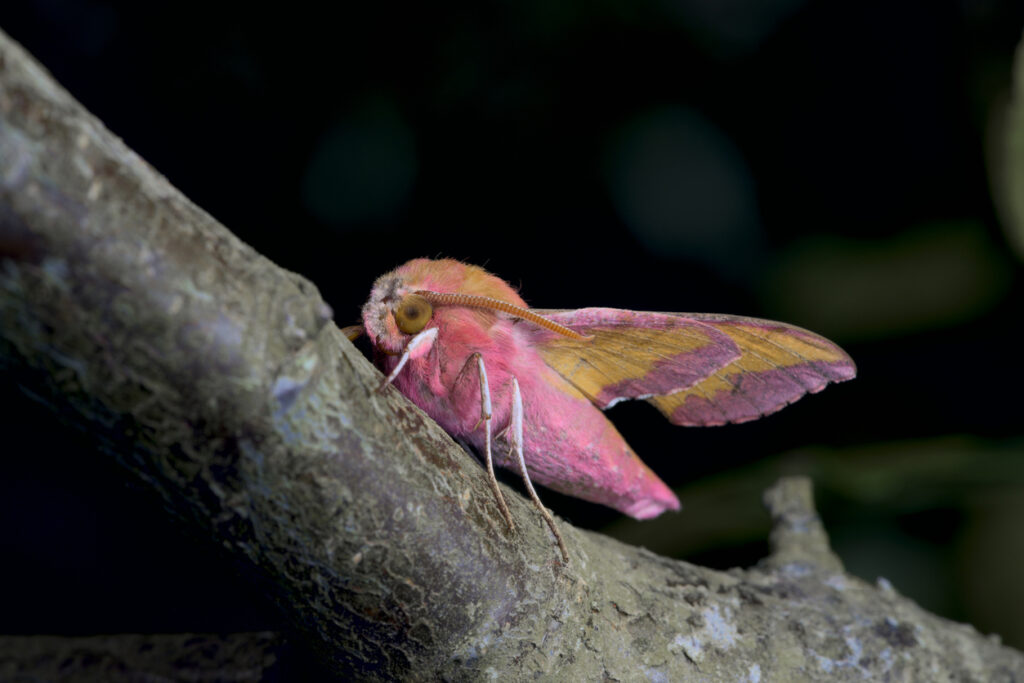
Elephant hawk moths are crepuscular, meaning they’re most active during twilight hours, when they feed on flowers and search for mates. That timing coincides with the dimming of daylight, when the moths’ bright pink colouring is less visible, but their movement catches the eye.
They’re attracted to artificial lights, which is why gardeners sometimes spot them around porch lights or street lamps in the evening. Their attraction to lights is actually a bit of a danger because it disorients them and makes them vulnerable to predators and vehicles.
The colour pattern likely serves a warning function to experienced predators.
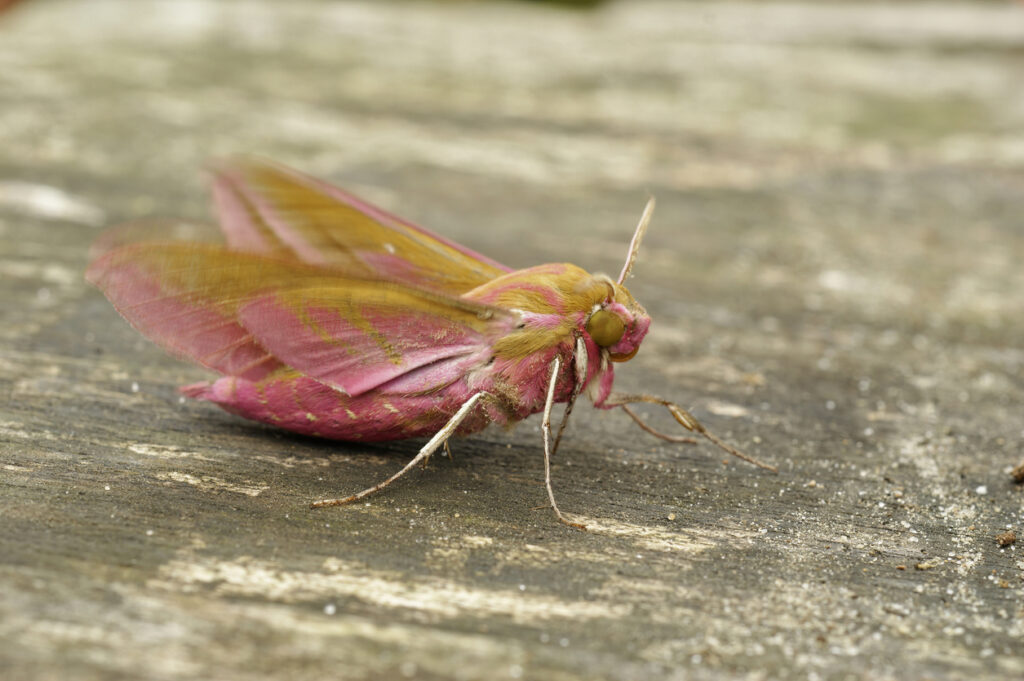
While the bright pink might seem like terrible camouflage, it actually works as a warning signal to predators that have learned to associate bright colours with insects that taste bad or are toxic. The elephant hawk moth’s bold colouring tells predators that it’s not worth attacking because the effort isn’t worth the potential cost.
This strategy only works if predators have learned the association, which is why young or naive predators might still attack, but experienced hunters know to leave these moths alone. The pink becomes a kind of shield, advertising the moth’s confidence in its unpalatability.