At first glance, the lionfish looks like something out of a tropical dream, all elegant fins, striking stripes, and colours that shimmer under water.

However, behind that beauty is one of the ocean’s most destructive invaders. Native to the Indo-Pacific, these fish have spread rapidly through the Caribbean, the Gulf of Mexico, and even parts of the Atlantic, leaving chaos in their wake. Their delicate appearance hides venomous spines, a voracious appetite, and a talent for wiping out entire reef ecosystems.
The lionfish may be stunning to look at, but beneath the surface, it’s a reminder that not everything beautiful belongs where it ends up.
They’re covered in venomous spines.

Those elaborate, feathery fins aren’t just for show, they’re armed with 18 venomous spines that deliver an incredibly painful sting. The venom isn’t usually fatal to humans, but it causes intense pain, swelling, and can lead to serious complications. The spines are purely defensive, as lionfish don’t use them to hunt. However, they’re effective enough that most predators have learned to leave them alone, which is part of why they’ve become such successful invaders.
They’re not supposed to be in the Atlantic.

Lionfish are native to the Indo-Pacific region, but they’ve invaded the Atlantic Ocean, Caribbean Sea, and Gulf of Mexico where they have no natural predators. That invasion likely started when aquarium owners released them into Florida waters in the 1980s. What began as a few released pets has become one of the most damaging marine invasions ever recorded. They’ve spread rapidly because nothing in these new waters knows how to eat them or compete with them.
They eat absolutely everything.
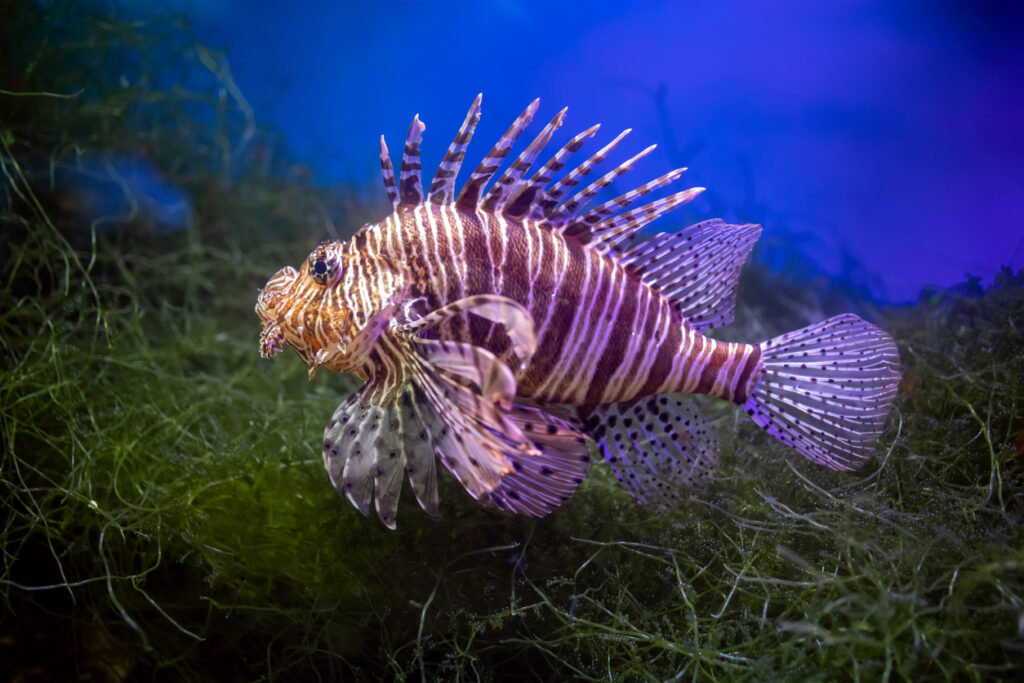
Lionfish aren’t picky eaters, they consume over 70 different species of fish and invertebrates, including juveniles of commercially important species like grouper and snapper. A single lionfish can reduce native fish populations on a reef by up to 90% in just five weeks. Their appetite is genuinely staggering for their size. They can eat prey up to half their own body length and will keep eating even when their stomachs are completely full.
They reproduce at an alarming rate.
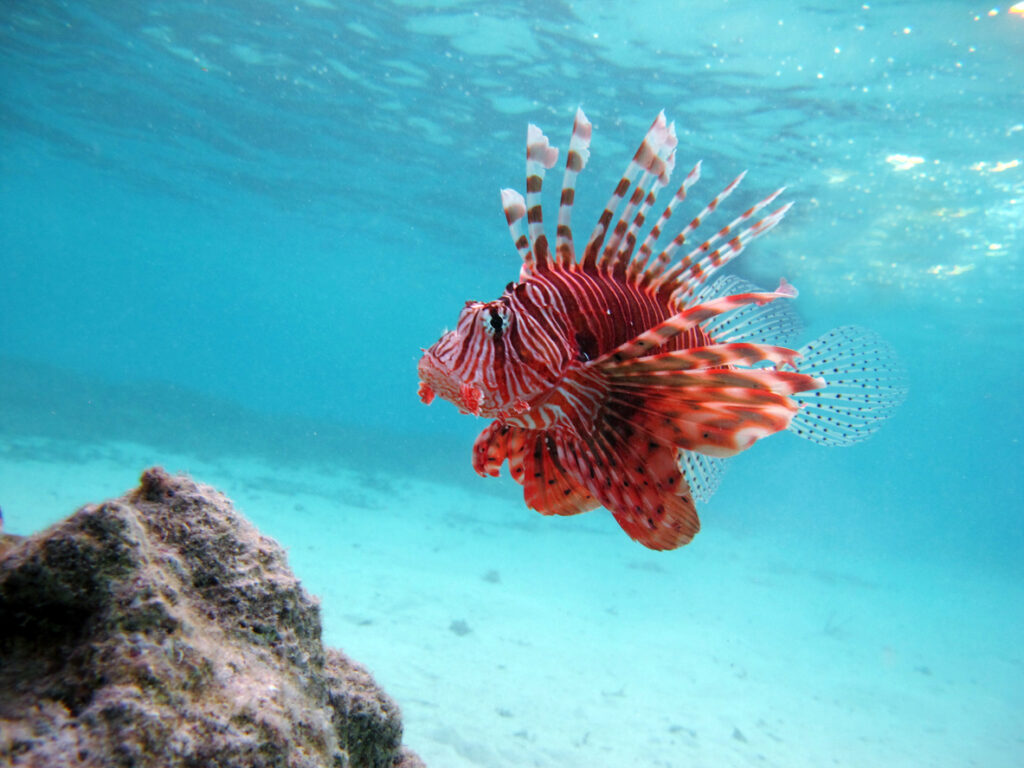
Female lionfish can release up to 2 million eggs per year, spawning every four days during peak season. Those eggs are wrapped in a mucus ball that floats, spreading them across vast distances via ocean currents. That reproductive rate is one reason controlling their population is nearly impossible. Even if you remove hundreds from an area, the remaining ones can repopulate it within months.
They hunt using their elaborate fins.
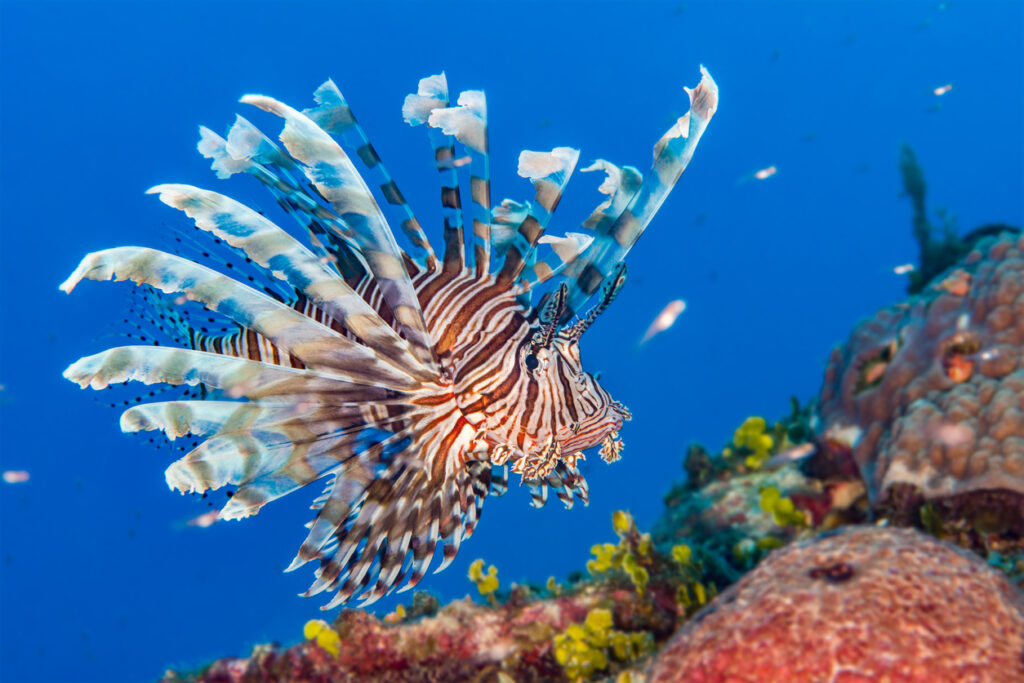
Those flowing pectoral fins aren’t just decorative, lionfish use them to herd small fish into corners or against the reef where they can’t escape. They spread their fins wide and slowly advance, creating a visual barrier their prey can’t see through. Once the prey is trapped, the lionfish strikes with lightning speed, sucking the fish into its mouth whole. That hunting technique is devastatingly effective, and something native fish haven’t evolved to recognise as danger.
Native fish don’t recognise them as threats.
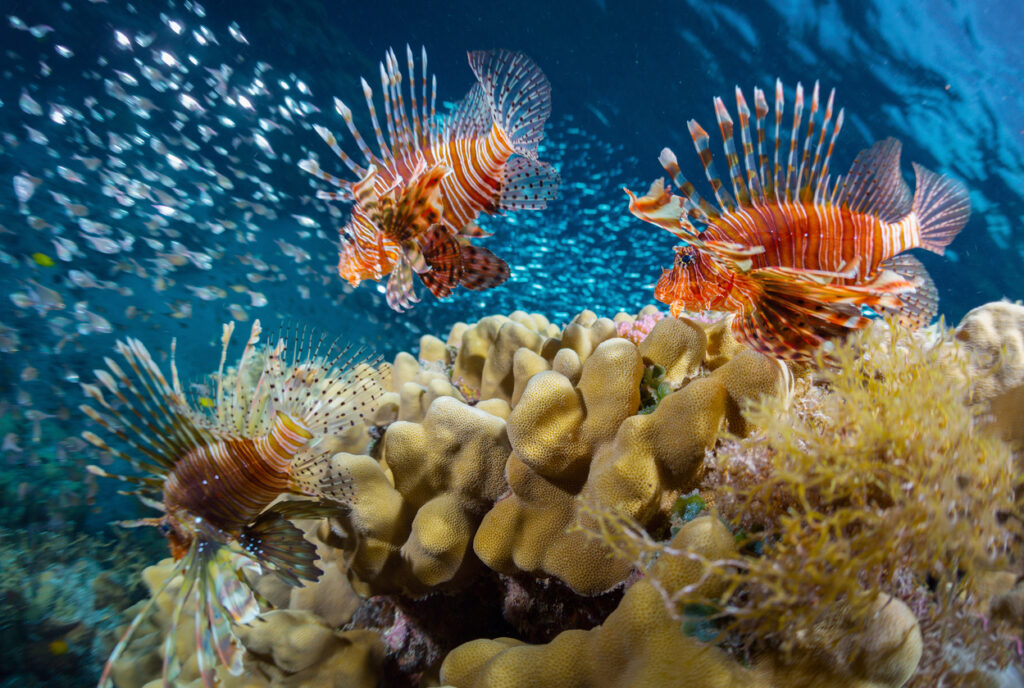
Because lionfish are new to Atlantic waters, local fish haven’t learned to fear them. They don’t recognise the lionfish’s body shape or hunting behaviour as dangerous, so they don’t flee when they should. That lack of natural wariness makes them incredibly easy targets. It’s like the native fish are completely blind to the danger until it’s too late, giving lionfish a massive advantage.
They’re actually delicious to eat.
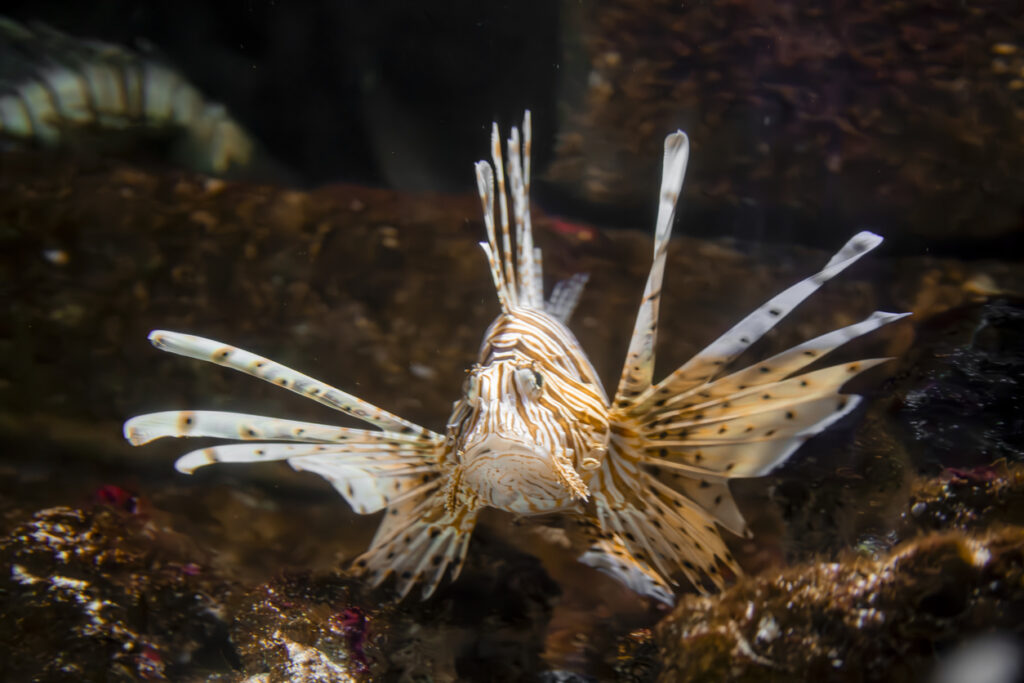
Despite the venomous spines, lionfish meat is completely safe and reportedly tasty, with a mild, slightly sweet flavour similar to grouper. The venom is only in the spines, not the flesh, and it breaks down when cooked anyway. Promoting lionfish as a food source is one strategy for controlling their population. If humans develop a taste for them and create commercial demand, it could help reduce their numbers while providing a sustainable seafood option.
They can survive in various conditions.
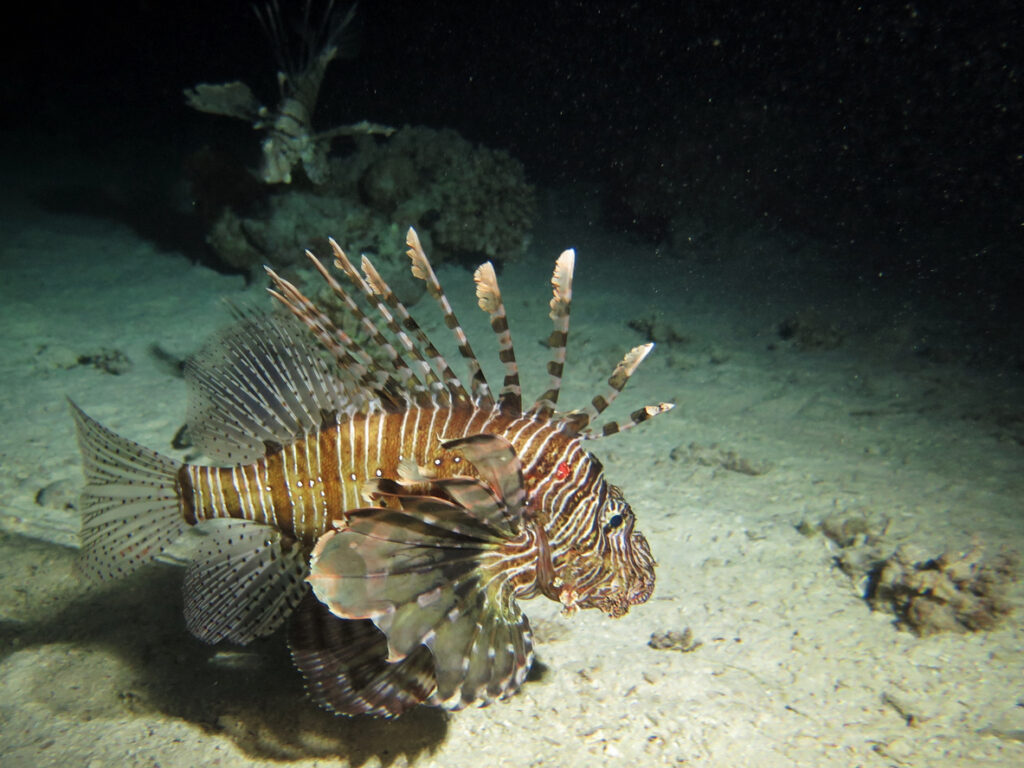
Lionfish are incredibly adaptable, tolerating a wide range of temperatures, salinities, and depths. They’ve been found everywhere from shallow reefs to depths of over 300 metres, in tropical and subtropical waters alike. That adaptability means they can colonise almost any marine habitat in their invaded range. There are few environments where they can’t establish themselves, which makes containment nearly impossible.
Removing their spines requires skill.

Preparing lionfish for eating means carefully removing all 18 venomous spines without stabbing yourself, which requires training and proper technique. Even dead lionfish can sting you if you’re careless with the spines. Divers who hunt them use special containers designed to safely store the fish underwater. That need for careful handling is one reason lionfish haven’t become more widely commercially fished despite being edible.
They’re solitary and territorial.
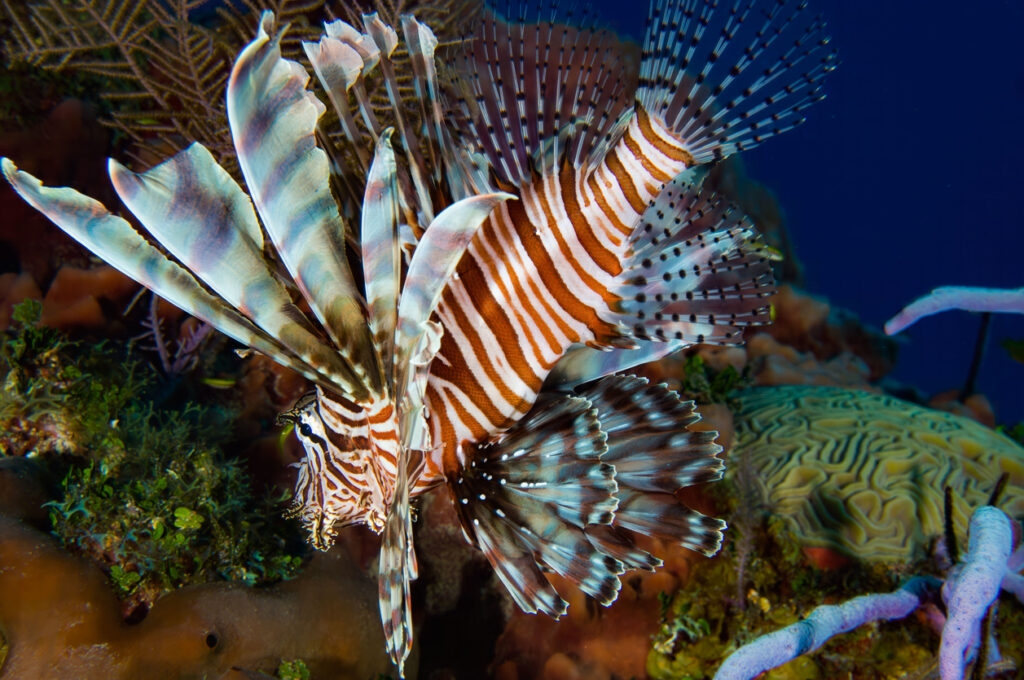
Unlike many reef fish that school together, lionfish are loners that defend territories and only tolerate others during mating. They’re most active at dawn and dusk, spending daylight hours tucked into crevices or under ledges. Their solitary nature actually helps them spread because they don’t rely on finding others of their species to establish in new areas. A single lionfish can colonise a reef alone and eventually attract mates.
Sharks and groupers are learning to eat them.
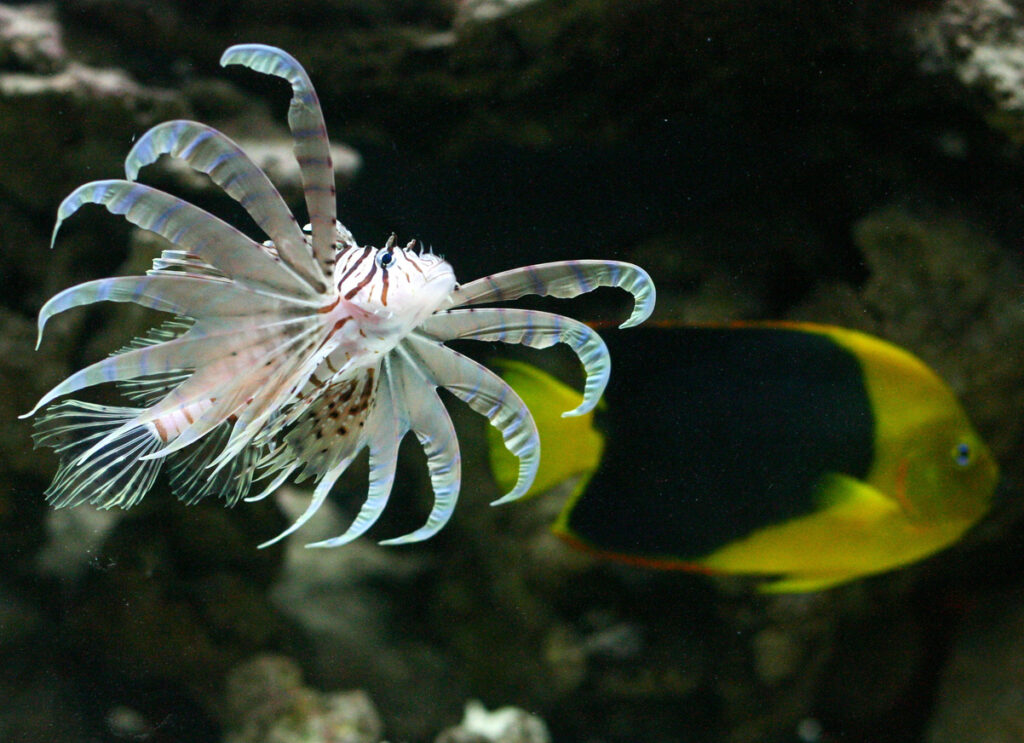
In some areas, large predators like sharks and Nassau groupers are slowly learning that lionfish are food despite the spines. This learned behaviour offers hope for biological control, though it’s happening too slowly to reverse the invasion. Training programmes have attempted to teach native predators to eat lionfish by feeding them spines-removed fish. Some success has been reported, but whether it’ll make a significant dent in populations remains uncertain.
They’re impacting coral reef health.
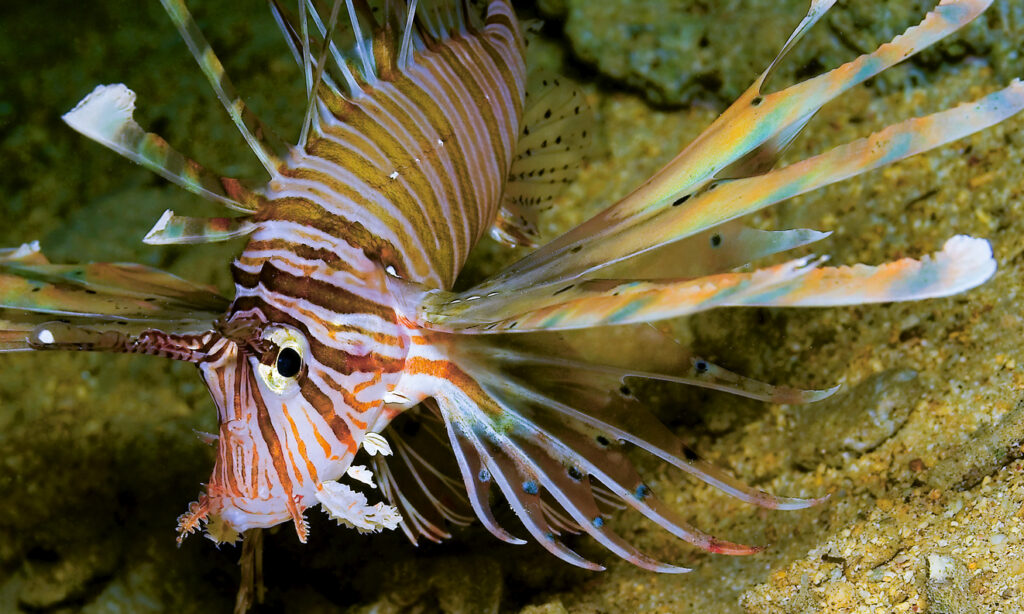
By decimating herbivorous fish that eat algae, lionfish indirectly harm coral reefs. When algae-eating fish disappear, algae overgrows the coral, smothering it and preventing new coral growth. That cascade effect means lionfish damage goes beyond just eating fish, they’re fundamentally altering reef ecosystems. Healthy reefs require balanced fish populations, and lionfish disrupt that balance catastrophically.
Regular culling helps, but isn’t enough.
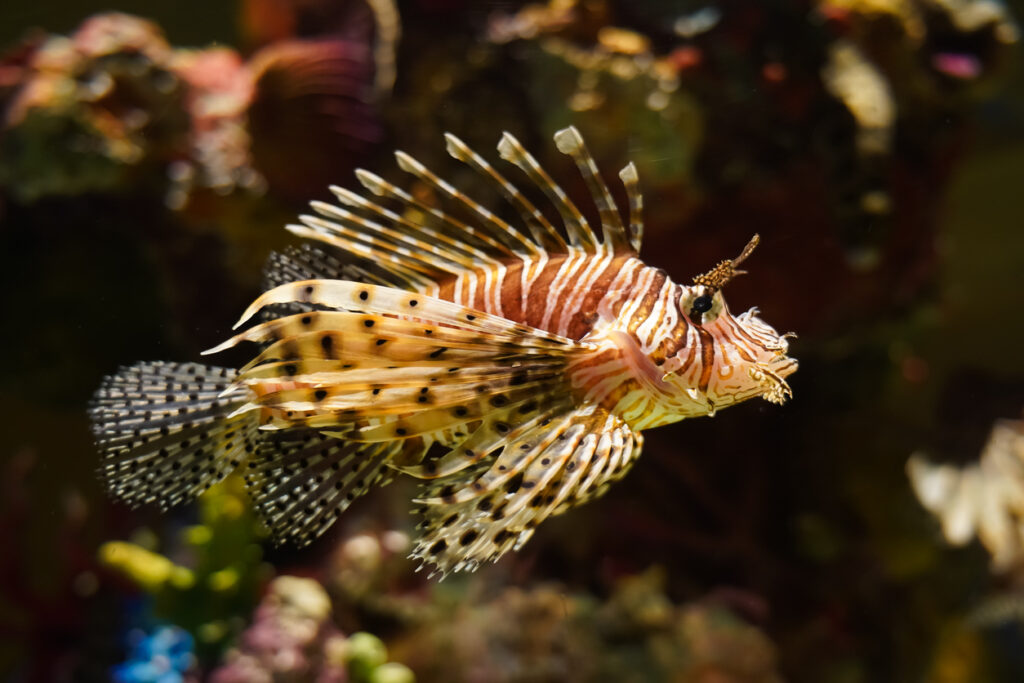
Organised lionfish derbies and regular removal efforts by divers do reduce local populations and protect specific reefs. However, lionfish are so widespread and reproduce so quickly that removal efforts can’t keep up across their entire invaded range. These culling efforts are most effective in marine protected areas and popular dive sites where the effort can be sustained. But vast areas of ocean simply don’t get enough attention to control the population.
They’re beautiful but devastating.
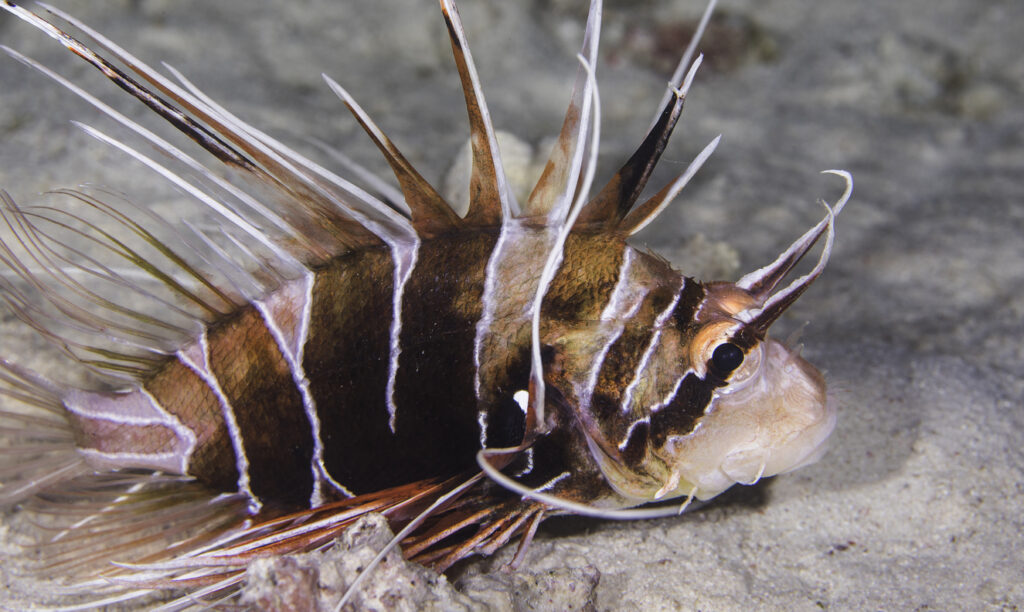
The lionfish’s stunning appearance, with striped patterns and flowing fins, makes them popular in aquariums and a favourite subject for underwater photographers. That beauty masks the ecological damage they’re causing to invaded ecosystems.
It’s a reminder that invasive species problems often start with humans thinking something is too beautiful or interesting to leave behind. Those few released aquarium fish decades ago have become an environmental disaster that may never be fully reversed.