The Gila monster is one of the strangest reptiles in North America.
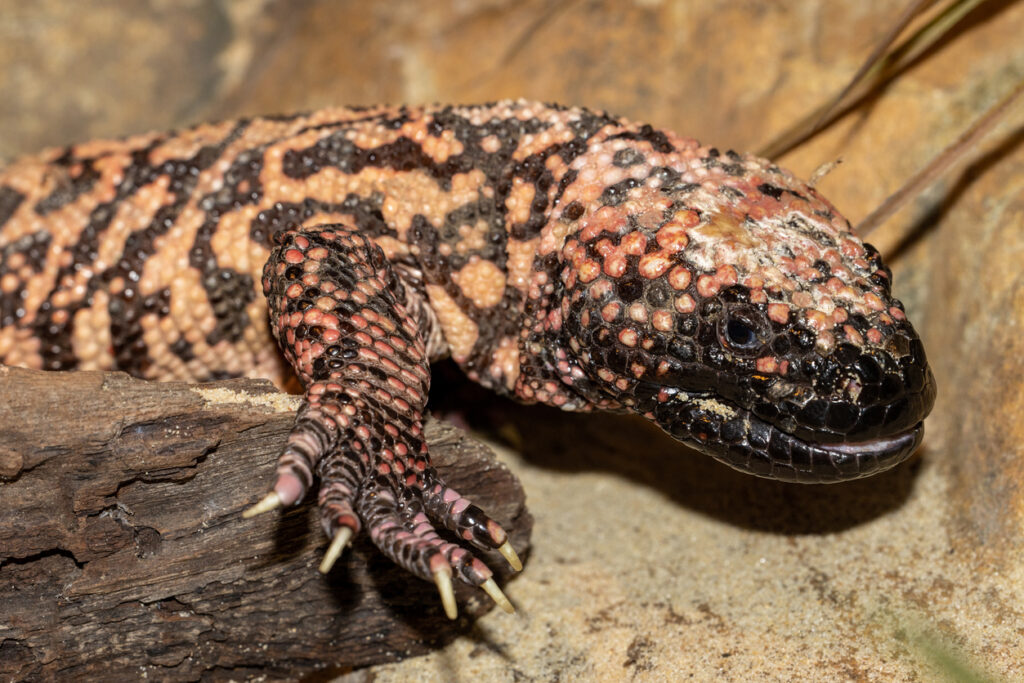
Found mostly in the deserts of the southwestern United States and northern Mexico, it’s one of the only venomous lizards in the world. Unlike snakes that deliver venom quickly, the Gila monster takes its time, injecting it slowly as it chews. Here’s what makes this creature so unusual (and actually pretty impressive).
It looks like a creature from another time.
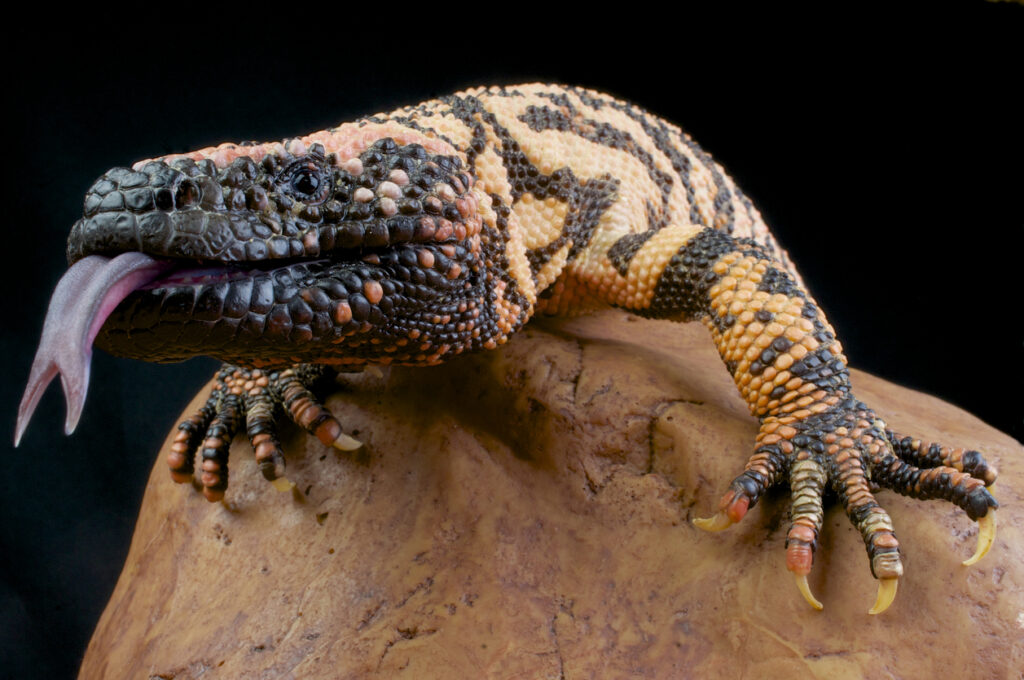
The Gila monster has thick, bumpy skin covered in black and orange patterns that make it look prehistoric. Its rough texture helps protect it from the harsh desert sun. At around two feet long, it’s not huge, but its chunky body and beaded scales give it an intimidating look. It moves slowly, but when threatened, it’s best left alone.
It’s one of the only venomous lizards on Earth.

Most lizards aren’t venomous, but the Gila monster is an exception. Its venom glands sit in its lower jaw, releasing poison as it bites down. What’s unusual is how it delivers it. Instead of striking like a snake, it chews steadily, letting the venom seep into its prey through grooves in its teeth.
Its bite is painful but rarely deadly.
A Gila monster bite causes burning pain, swelling, and nausea, but it’s not usually fatal to humans. They don’t inject a large amount of venom, and bites are rare since they avoid people. Still, they’re strong enough to latch on tightly. Some victims report the lizard holding on for several minutes before letting go.
It prefers peace to aggression.

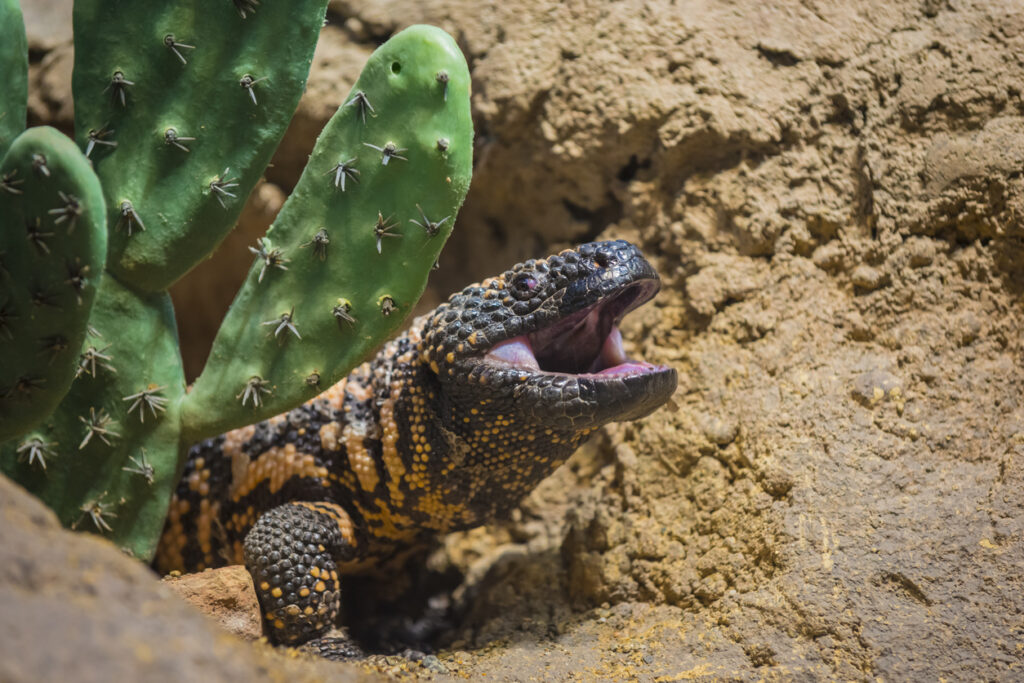
Despite its scary reputation, the Gila monster isn’t out looking for trouble. It spends most of its time hiding under rocks, logs, or burrows to stay cool. It only bites when cornered or handled roughly. If left alone, it prefers to hiss, puff up its body, and show its open mouth as a warning before attacking.
It spends most of its life underground.

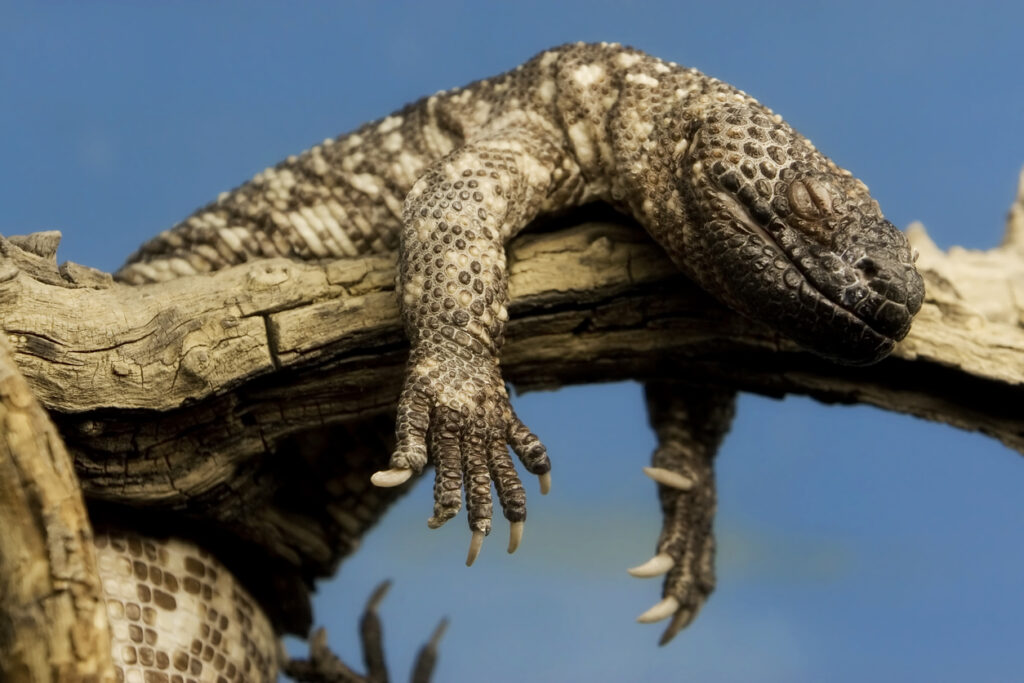
The desert heat is tough to survive, so the Gila monster stays underground for almost 90% of its life. It only comes out in spring to eat, mate, or bask in the sun. Its secretive behaviour helps it conserve energy and water. It’s one of the reasons scientists still find it hard to study in the wild.
It eats just a few big meals a year.
Because of its slow metabolism, the Gila monster doesn’t need to eat often. It feeds mainly on bird eggs, small animals, and newborn rabbits. Its large stomach lets it store enough energy from one big meal to last for months. That’s how it survives long stretches without food or water.
Its venom evolved for hunting, not defence.
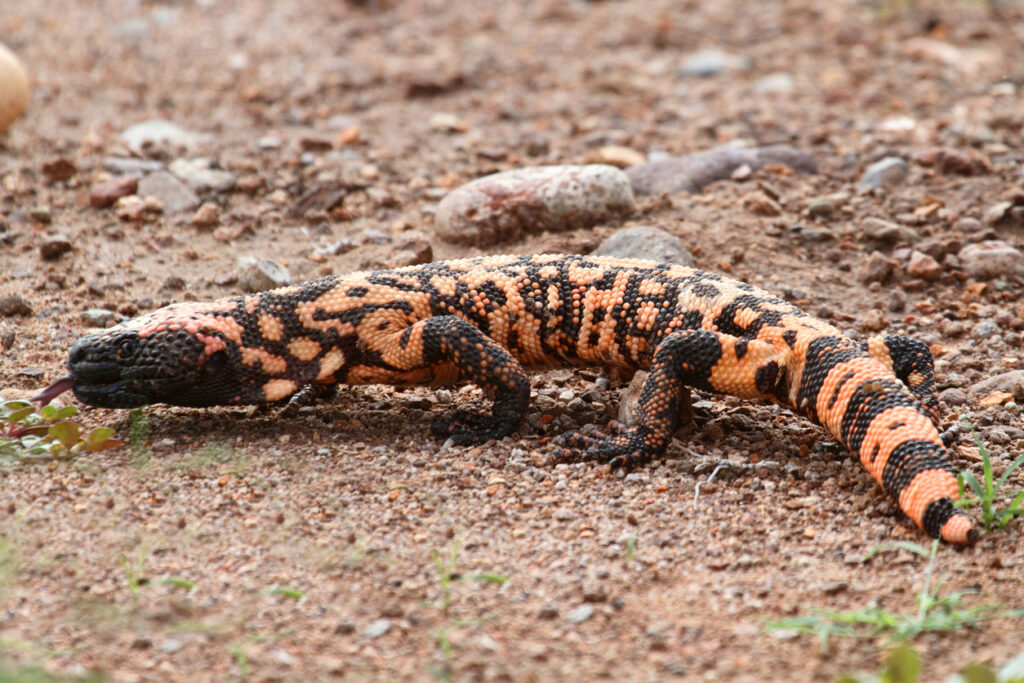
The Gila monster’s venom isn’t designed to kill humans; it’s meant to subdue prey. The toxin stops blood from clotting and causes shock in smaller animals. Once the prey weakens, the lizard swallows it whole. The slow injection gives it time to hold onto struggling food until it’s completely still.
It uses its tongue like a snake.
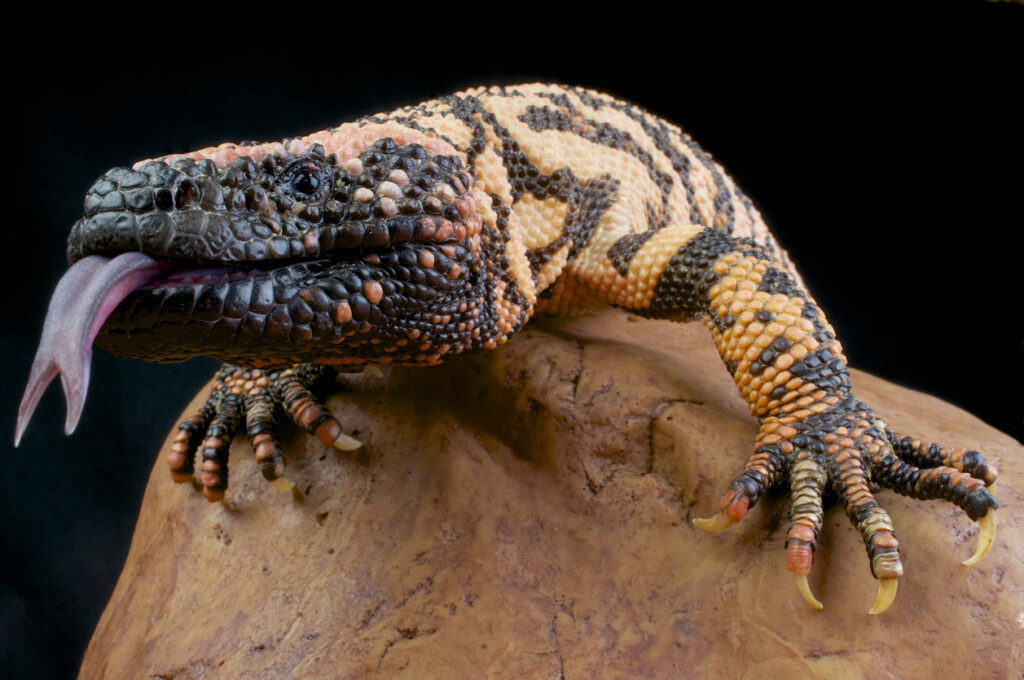
The Gila monster flicks its forked tongue to pick up scent particles in the air, helping it locate food or sense danger nearby. This behaviour makes it appear snake-like, even though it moves on short, stocky legs. Its keen sense of smell helps it find eggs buried deep in sand or soil.
Its venom inspired modern medicine.

Researchers discovered that part of the Gila monster’s venom helps regulate blood sugar. This finding led to a diabetes drug called exenatide, which is now used by millions of people. It’s one of the rare cases where a deadly toxin became a life-saving treatment. The Gila monster’s biology has proven more valuable than anyone expected.
It’s protected by law.

Because of habitat loss and illegal collection, Gila monsters are now a protected species. It’s against the law to harm or capture them in places like Arizona and Nevada. Despite their slow movement, they play an important role in the desert ecosystem. Protecting them helps keep the food chain balanced.
It moves slowly, but with purpose.

Gila monsters are not built for speed. They move with a slow, deliberate crawl, saving energy for when it really matters, such as catching prey or escaping danger. Their sluggish pace also helps them stay cool in the desert heat. Every movement is careful and calculated to conserve strength.
They can store fat in their tails.

The Gila monster’s thick tail acts as a backup battery. It stores fat that the lizard can live on when food is scarce during dry months. Having that ability makes it perfectly suited for desert life. Even when food disappears, it can survive for weeks using the energy stored in its tail.
They’ve been around for millions of years.

Fossil records show that Gila monsters have changed very little over time. Their design works so well that they’ve survived desert conditions for millions of years. They’re living proof that slow and steady can win in nature. Despite their fierce look, they’re patient survivors that thrive by keeping calm and conserving energy.