
Movies have made quicksand look like the ultimate doom trap—step in the wrong spot, and you’ll be sucked under in seconds, never to be seen again. But is that actually how quicksand works in real life? Turns out, not really. While it’s definitely weird stuff, and getting stuck in it can be serious, it’s nowhere near the instant death trap Hollywood makes it out to be. Here’s what’s really going on when you find yourself knee-deep in nature’s gloopy mess.
What even is quicksand?
Quicksand forms when sand gets completely saturated with water, usually in areas where underground water wells up or where tides meet dry land. The water pushes apart the grains of sand just enough that the structure becomes unstable. The result is a mix that looks solid on top but collapses under pressure, like when you step on it.
It’s not some special kind of sand or a bottomless pit. It’s regular sand in an unusual state. The key is that it can’t support weight well, which is why people or animals can sink into it much more easily than, say, dry beach sand or packed dirt.
You don’t actually sink all the way in.
Contrary to every dramatic jungle movie you’ve ever seen, quicksand won’t swallow you whole. That’s physically impossible. The human body is less dense than quicksand, which means you’d float… eventually. You might sink to your waist or chest, but unless you’re carrying a lot of gear or thrashing wildly, you won’t vanish underground.
The real danger isn’t being sucked under—it’s being stuck and unable to get out, especially if the tide comes in or if you’re in a remote area where no one’s around to help. It’s more of a survival issue than an instant death trap.
It’s a lot harder to get out than you’d think.
Quicksand grips tightly. The more you struggle, the more the particles move and lock together, making it harder to move. Trying to yank your leg out quickly is like trying to pull it out of wet cement—it just won’t budge easily.
What makes it feel dangerous is how energy-draining it can be. If you’re panicked, overheated, or alone, you can exhaust yourself quickly trying to escape. That’s when real problems can start, especially if there are environmental factors like rising tides or cold weather.
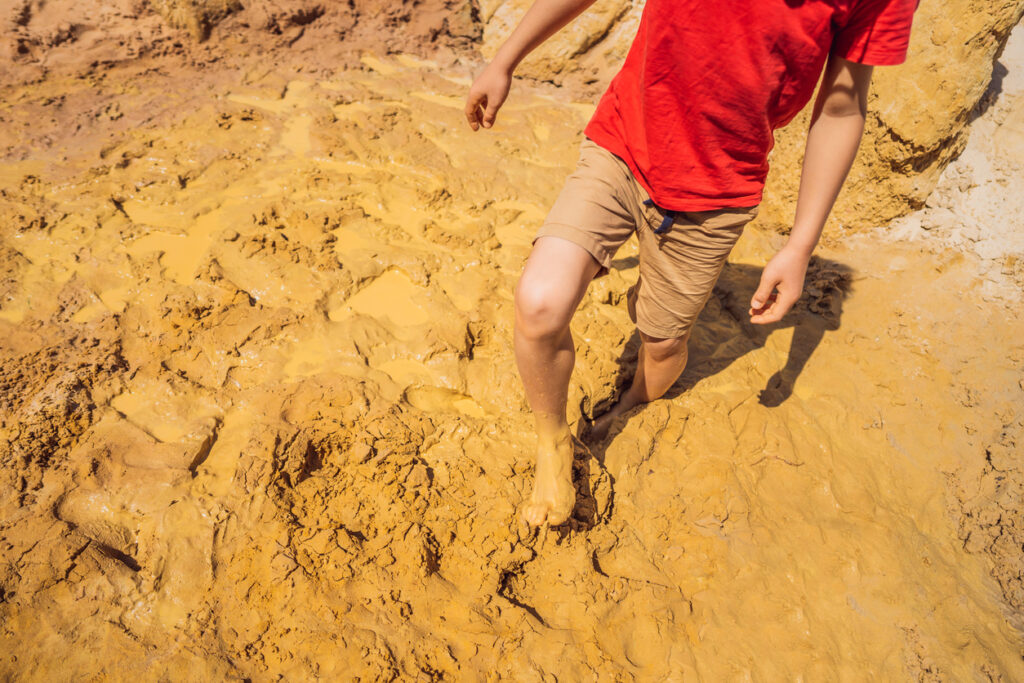
Staying calm is your best chance
The safest thing to do if you find yourself stuck in quicksand is to stop struggling and try to lean back slowly. The more you distribute your body weight, the easier it is to float. Shifting gently and patiently is how you’ll start to work your way out, not flailing or yanking.
Eventually, the water in the quicksand helps support you, and by carefully freeing one leg at a time (wiggling rather than pulling), you can start to inch your way out. It takes time and patience, but it’s absolutely doable, especially if you don’t panic.
It’s more common in some places than others.
Quicksand can show up anywhere there’s loose sand and a steady supply of underground water. Riverbanks, marshes, tidal flats, and some deserts are all fair game. It’s not specific to tropical jungles or dramatic cliffside adventures.
That said, it’s relatively rare, and even when it does appear, it’s usually shallow. In most cases, you’d only get stuck if you wandered far off the path or stepped somewhere unstable during low tide or flooding. So, no, you’re not going to randomly get swallowed by it on your morning walk.
Animals can get stuck too, but most escape.
You might assume wild animals are constantly falling victim to quicksand, but most of them avoid it instinctively. If they do get stuck, they’re often better at staying still and moving slowly than humans are, which actually helps.
Larger animals like horses or cattle can struggle more, especially if they panic or carry weight, but even then, rescue is usually possible if help arrives in time. Again, it’s rarely the quicksand itself that causes harm—it’s exhaustion, dehydration, or exposure if they’re stuck too long.
So, why do movies exaggerate it so much?
Because it’s dramatic. Quicksand scenes give an easy way to raise the stakes without needing a villain or explosion. Someone slowly sinking while screaming for help adds tension, and a false sense of danger that makes the audience lean in. However, in reality, it’s much more slow-going and survivable than we’ve been led to believe. It’s tricky, annoying, and sometimes dangerous, but not the death sentence that action films made it out to be in the 80s and 90s.
There’s still a weird fascination with it.
Even though we know quicksand isn’t as deadly as it looks, it still pops up in pop culture. From cartoons to adventure novels, there’s something oddly satisfying about the idea of a solid surface suddenly giving way beneath your feet. Maybe it taps into a basic fear of losing control, or the unsettling idea that the ground beneath us might not be as stable as we think. Either way, quicksand still has a hold on our imaginations, even if the real stuff is way less dramatic.