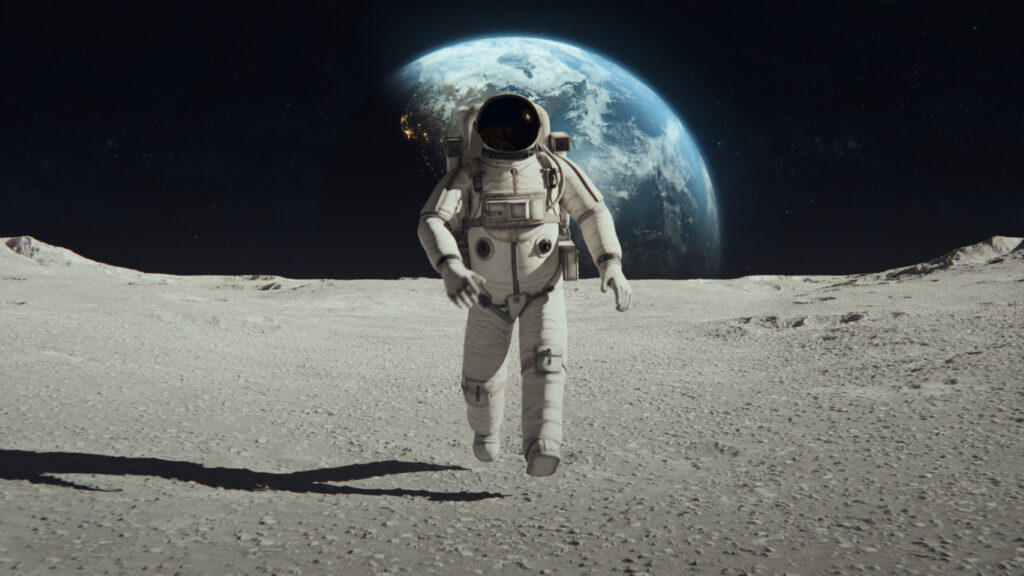
More than 50 years after the last Apollo mission, multiple nations and private companies are racing to return to the Moon. The question isn’t whether we can get there again, it’s whether the enormous costs and risks justify the potential benefits. These are some of the considerations that need to be weighed before any new lunar mission.
The Moon could become humanity’s first stepping stone to Mars.
Lunar missions provide crucial experience for long-duration space travel without the extreme commitment of Mars expeditions. The Moon is only three days away, while Mars requires six to nine months of travel each direction with limited rescue possibilities.
Testing life support systems, habitat construction, and resource extraction on the Moon allows us to solve problems before attempting much riskier Mars missions. Failures on the Moon can mean rescue missions or supply drops—failures en route to Mars likely mean death.
Lunar water ice could revolutionise space exploration economics.
Confirmed water deposits at the Moon’s poles could be split into hydrogen and oxygen—the basic components of rocket fuel. This would eliminate the need to launch fuel from Earth’s deep gravity well, dramatically reducing costs for missions throughout the solar system.
A lunar refuelling station could make asteroid mining, Mars colonies, and deep space exploration economically viable. The cost savings from not having to launch fuel from Earth could pay for entire lunar infrastructure programs within decades.
The Moon offers unique scientific research opportunities.
The lunar far side provides perfect radio silence from Earth’s electromagnetic interference, making it ideal for radio astronomy that could detect signals from the early universe. No Earth-based telescope can achieve this level of isolation from human radio noise.
Moon-based telescopes could operate without atmospheric distortion and with extremely stable foundations for precise observations. The low gravity also allows construction of much larger telescope arrays than possible on Earth while maintaining structural integrity.
Mining lunar resources could supply Earth with rare materials.
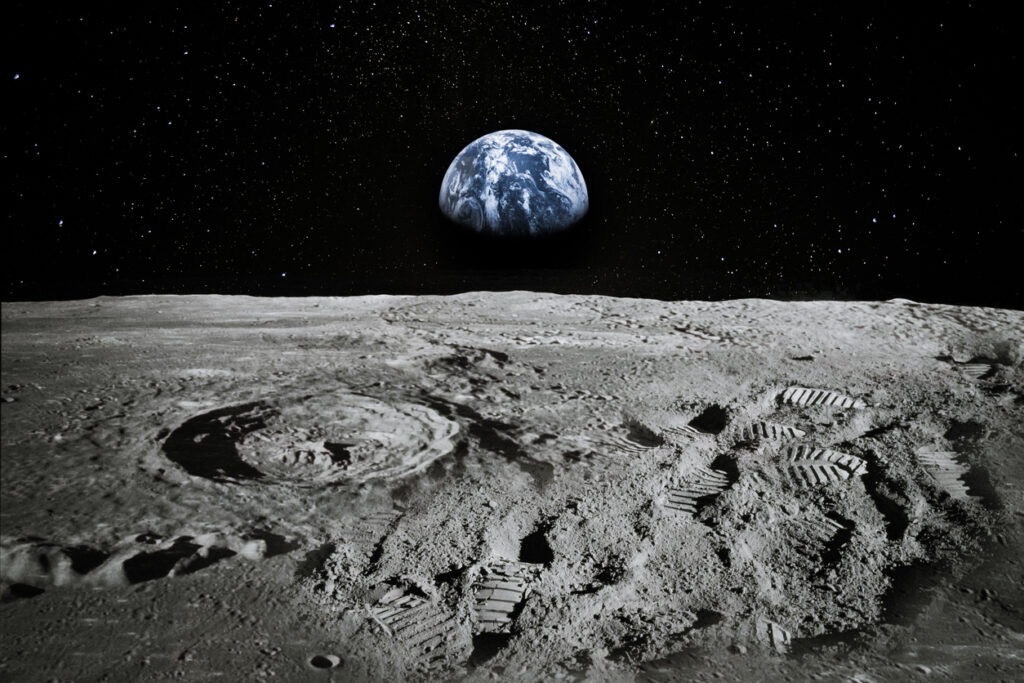
The Moon contains substantial deposits of rare earth elements and helium-3, which could be valuable for fusion reactors. Lunar mining operations wouldn’t face environmental restrictions or land rights issues that complicate Earth-based extraction.
However, the economics remain questionable. Current estimates suggest lunar mining wouldn’t be cost-competitive with Earth sources for decades, even accounting for environmental benefits. The transportation costs alone make most lunar materials economically unviable.
International competition drives innovation but wastes resources.
The new lunar race between America, China, India, and private companies creates rapid technological advancement through competition. This rivalry accelerates development timelines and pushes innovation boundaries in ways that collaborative programs often don’t achieve.
Yet competition also means duplicated efforts and incompatible systems that reduce overall efficiency. Multiple nations developing separate lunar programs wastes resources that could fund more ambitious collaborative projects or address pressing Earth problems.
Private companies might make lunar development economically sustainable.
Companies like SpaceX have dramatically reduced launch costs through reusable rockets and commercial competition. Private lunar ventures could potentially achieve profitability through space tourism, manufacturing, or resource extraction without relying on government funding.
However, private companies face the same fundamental physics and economics that make lunar operations expensive. Lower launch costs help, but they don’t eliminate the enormous technical challenges and financial risks of establishing sustainable lunar operations.
Lunar colonies could serve as backup locations for human civilisation.
Establishing self-sufficient lunar settlements provides insurance against existential risks on Earth, from asteroid impacts to nuclear wars or climate catastrophes. A lunar colony could preserve human knowledge and culture if Earth became uninhabitable.
This argument assumes lunar colonies could actually achieve self-sufficiency, which remains highly questionable. Current technology requires massive ongoing support from Earth, making lunar settlements more vulnerable than resilient in crisis scenarios.
The costs could fund pressing problems on Earth instead.

Lunar programs cost hundreds of billions of dollars that could address climate change, poverty, disease, or education. The opportunity cost of space exploration includes all the Earth problems that remain unsolved while resources go to lunar development.
Conversely, space technology often produces innovations that benefit Earth applications. GPS, weather satellites, and communication systems all emerged from space programs, suggesting lunar development might generate unexpected technologies that justify the investment.
Technical challenges remain enormous despite past successes.
Landing on the Moon is still incredibly difficult, as recent mission failures demonstrate. Establishing permanent settlements requires solving life support, radiation protection, and resource extraction problems that we’ve barely begun to address seriously.
The Apollo program succeeded in landing humans temporarily, but creating sustainable lunar infrastructure is exponentially more complex. Current technology isn’t adequate for long-term lunar habitation without constant Earth support and resupply missions.
Scientific benefits might not require human presence.
Robotic missions can accomplish most lunar science objectives at a fraction of the cost and risk of human missions. Modern rovers and automated systems can conduct experiments, collect samples, and transmit data without life support systems or return capabilities.
However, human flexibility and problem-solving capabilities remain superior to robots for complex tasks. Humans can adapt to unexpected situations and make real-time decisions that robotic systems struggle with, potentially accelerating scientific discoveries.
Geopolitical benefits of lunar leadership may justify costs.
Nations that establish lunar capabilities first gain significant prestige and potential strategic advantages. Lunar bases could provide communication relays, Earth observation platforms, or even defensive capabilities that alter international power balances.
Yet space militarisation risks escalating conflicts rather than providing security. International competition for lunar resources could create new sources of tension rather than demonstrating technological superiority or enhancing national security.
Environmental impact of lunar development remains unclear.
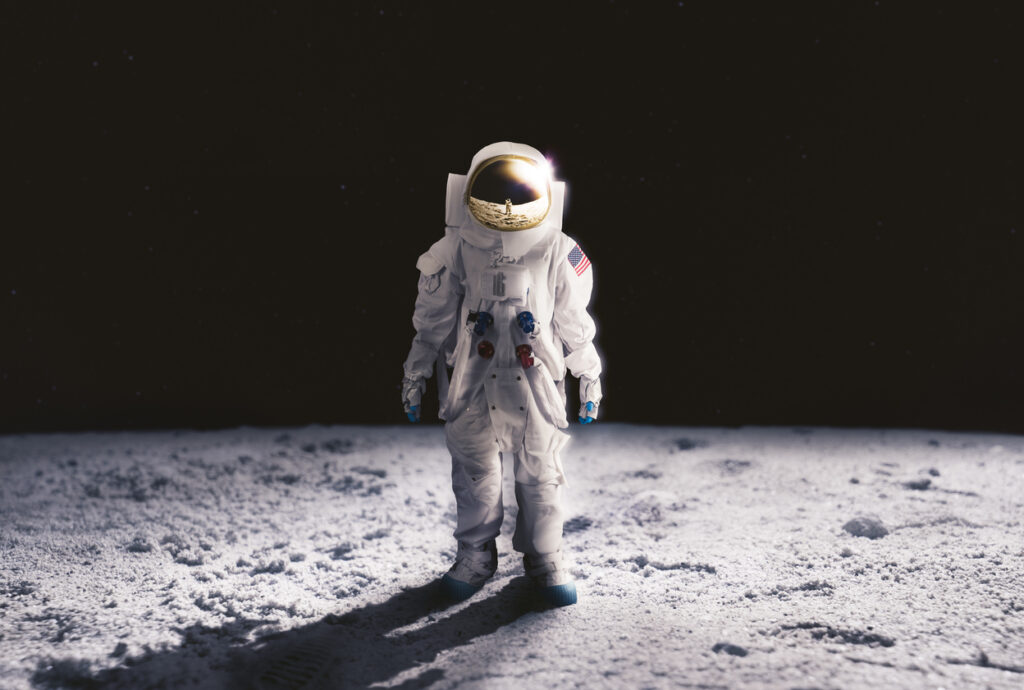
Lunar operations could contaminate pristine environments and destroy scientifically valuable sites before we fully understand them. The Moon’s geological record spans billions of years and could contain crucial information about early solar system history.
Industrial lunar development might permanently alter this scientific resource while providing questionable economic returns. Once lunar environments are disturbed by mining or construction, that scientific information is lost forever.
Timeline and funding realities make success uncertain.
Current lunar programs face the same political and funding challenges that nearly killed Apollo. Multi-decade projects requiring sustained government support are vulnerable to changing political priorities and economic pressures that could terminate programs before achieving goals.
Private funding offers more stability, but may not support the massive infrastructure investments required for meaningful lunar development. The gap between ambitious announcements and actual sustainable funding remains substantial for most proposed lunar programs.