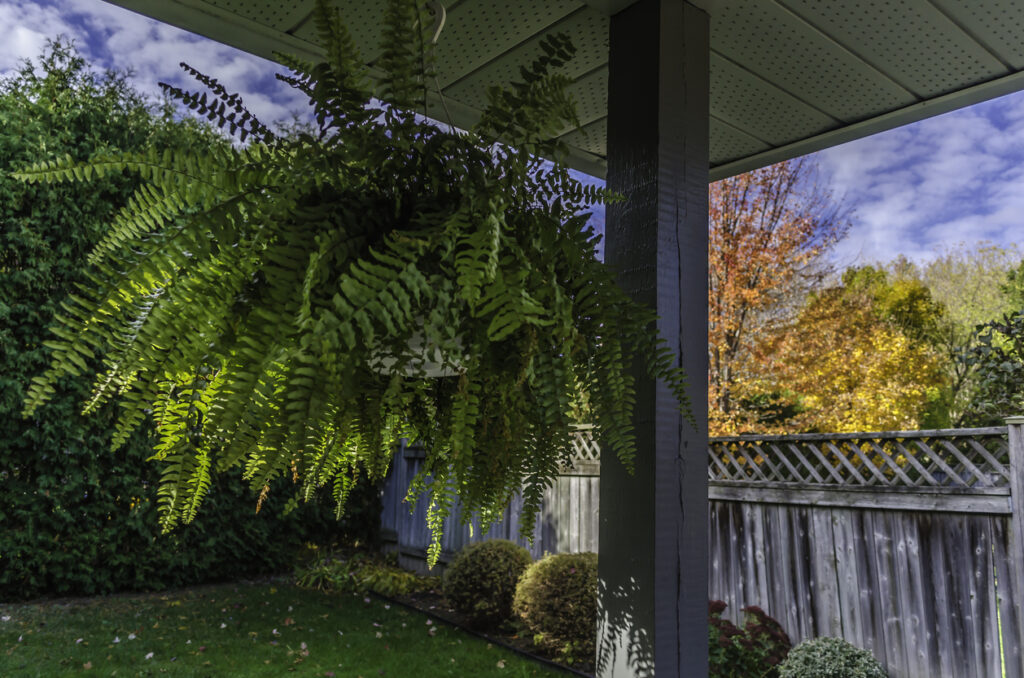
Ferns have a way of making any space feel lush, cool, and effortlessly elegant. When you hang them, that natural beauty multiplies, turning dull corners, porches, or balconies into living displays that feel alive and refreshing. Their soft fronds spill over the edges like green waterfalls, adding texture and depth in a way few other plants can match.
Creating impact with hanging ferns doesn’t require overcomplicating things; it’s all about choosing the right varieties, giving them the conditions they love, and letting their natural shape do the rest. With a little care and clever placement, they can completely transform your space, indoors or out.
They look full and dramatic straight away.
Most plants take months to fill out a hanging basket properly, but ferns come already looking massive and lush. Stick one in a basket, and it instantly looks like you’ve been nurturing it for years when really, you just bought it yesterday.
The fact that there’s such an immediate impact is what makes them brilliant for impatient gardeners. You’re not waiting around watching sad little stems slowly grow, you’re getting instant gratification with something that looks properly established from day one.
Boston ferns are the classic choice.
Boston ferns are what most people think of when they picture hanging ferns. They’ve got those gorgeous arching fronds that cascade down beautifully, and they’re relatively easy to keep alive if you don’t completely forget about them.
The cascading effect is perfect for height. Hang them from a porch ceiling or a bracket, and you get this waterfall of green that fills space in a way normal potted plants just can’t. They soften hard edges and make everything look more relaxed.
They’re brilliant for shady spots.
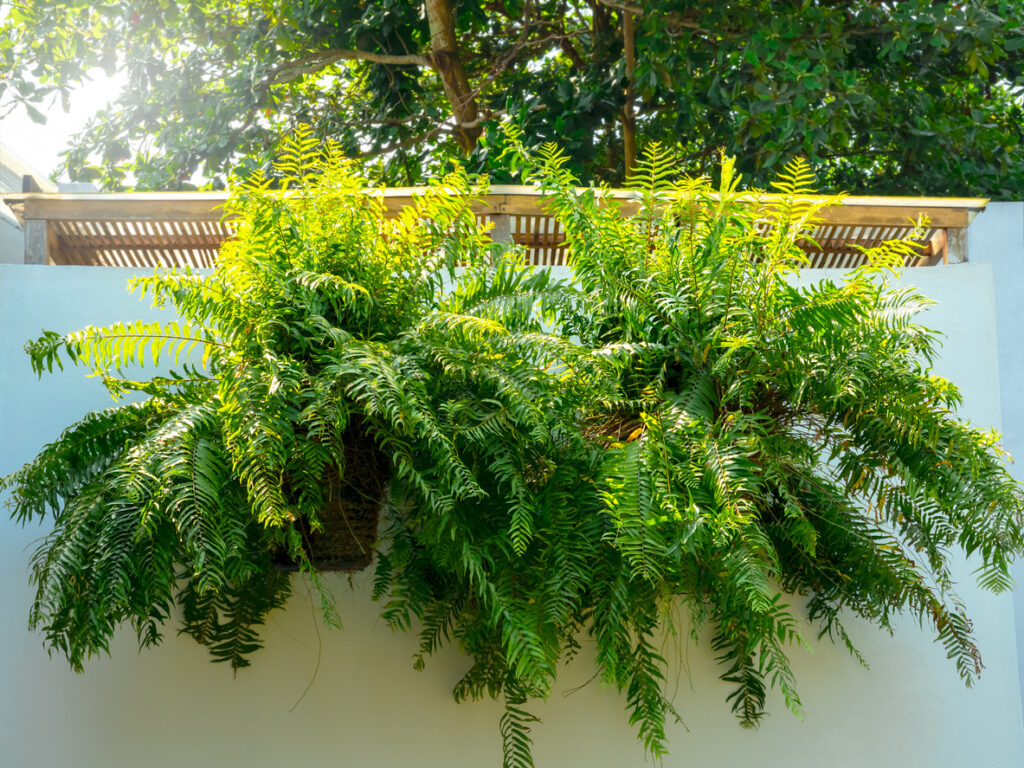
Most flowering plants need loads of sun, which is useless if you’ve got a north-facing balcony or a shaded porch. Ferns actually prefer shade, so they’re perfect for those spots where everything else just sulks and refuses to grow.
Ferns’ shade tolerance opens up options. Instead of staring at a bare, dark corner thinking nothing will grow there, you can stick a fern basket up and suddenly that dead space looks intentional and lush. They actually thrive where other plants would struggle.
Asparagus ferns add a different texture.
Asparagus ferns aren’t technically ferns, but they look similar and work brilliantly in hanging baskets. They’ve got this feathery, delicate look that’s a bit more romantic and less prehistoric than Boston ferns, and they’re actually quite forgiving.
That lighter texture works well if you want something that looks softer. They don’t get as massive as Boston ferns, but they still fill out nicely and create this lovely, airy effect that’s less “jungle” and more “cottage garden.”
Water them consistently or they’ll punish you.
Ferns are dramatic about water. Let them dry out and they’ll go crispy and brown basically overnight. But keep them consistently moist, and they’ll be lush and happy. Hanging baskets dry out faster than regular pots, so you’ll need to check them often.
The moisture requirement is the main challenge. In summer, you might need to water them every day, which sounds like a faff, but once you’re in the routine it’s fine. Just don’t go away for a week and expect them to survive without someone checking on them.
Mist them if you can be bothered.
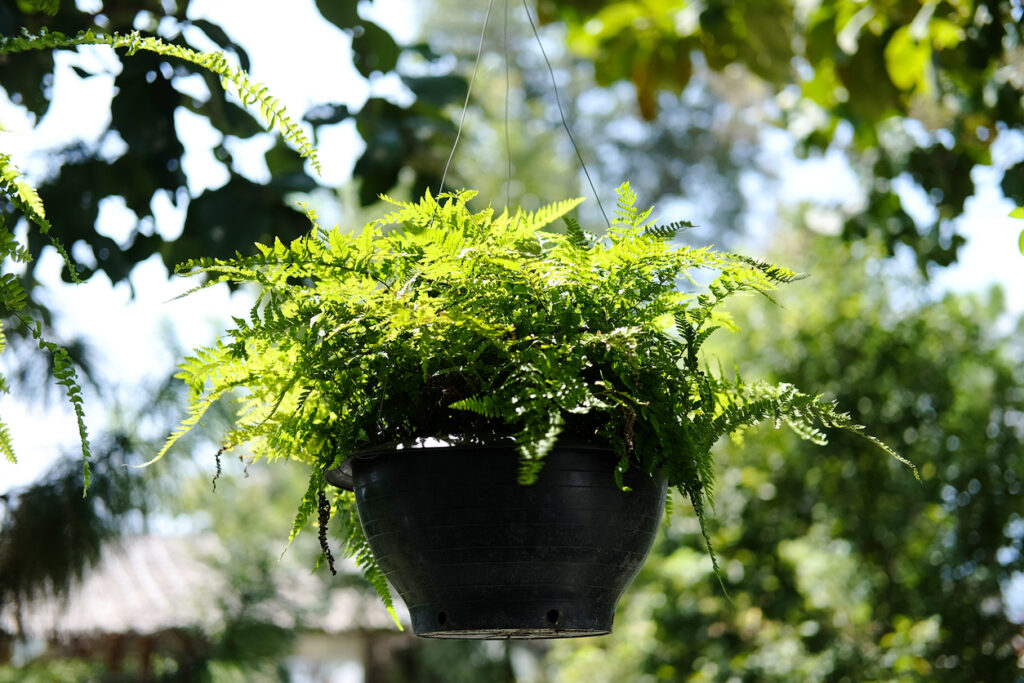
Ferns love humidity, which is why they look so good but can be a bit precious. If you’ve got time and remember, giving them a spray with a water mister every few days keeps them extra happy and prevents the tips going brown.
The whole misting thing sounds high maintenance, but it’s honestly optional. They’ll survive without it, especially if you keep them well watered. However, if you want them looking absolutely pristine, a quick spray helps replicate their natural humid forest environment.
Hanging them at eye level works best.
You want to hang ferns where you can actually see them properly and appreciate all that lovely cascading foliage. Too high and you’re just looking at the bottom of a basket, too low, and you’re walking into them constantly.
Placing them at eye level makes them a feature rather than an afterthought. Around doorways, on porches, or from pergolas where you can see them as you sit outside are all ideal spots. They become part of the view rather than something stuck in a corner.
They fill awkward vertical spaces.
Got a boring wall or fence that needs something, but you’ve got no room for pots on the ground? Hanging baskets with ferns fill that vertical space and create layers in your garden. They make everything feel more three-dimensional and designed.
For small spaces, that vertical gardening trick is especially good. When you can’t spread out, you go up, and ferns in baskets are perfect for that. They add greenery without taking up precious floor or table space.
They’re basically zero maintenance beyond watering.
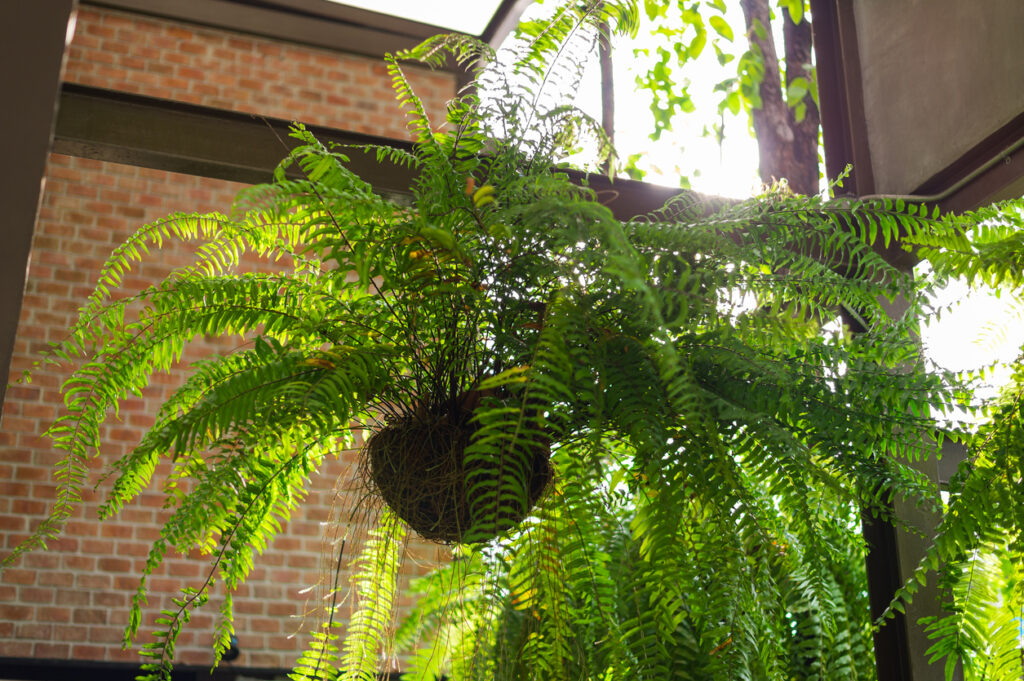
Once you’ve got the watering sorted, ferns don’t need much else. You don’t need to deadhead flowers, they don’t get leggy, you’re not constantly trimming them back. Just water them, and they do their thing, looking lush with barely any input from you.
The low maintenance aspect is brilliant for lazy gardeners who want impressive results. Apart from the occasional brown frond you can snip off, they pretty much look after themselves. No feeding schedules or complicated care routines, just consistent watering.
Bring them inside for winter.
Most ferns can’t handle frost, so as soon as temperatures drop, bring your hanging baskets indoors. They’ll happily live in a bathroom or kitchen through winter, where the humidity from showers and cooking keeps them happy.
Being able to transition them indoors means they’re not just a summer thing. You get year-round greenery, and in winter, when everything outside looks dead, having lush ferns indoors makes your house feel more alive. They’re basically free houseplants for half the year.