If you’ve ever been to a seaside town, you know just how much of a menace the local seagull population can be.
However, it’s not just the ones cruising the UK’s shorelines that are causing mayhem. Urban seagulls have evolved into something entirely different from their coastal cousins, and they’re using sophisticated tactics to exploit city life that would impress any wildlife researcher. Here are some of the things they’re doing that are actually pretty impressive.
1. They’ve mastered the art of chip shop timing.
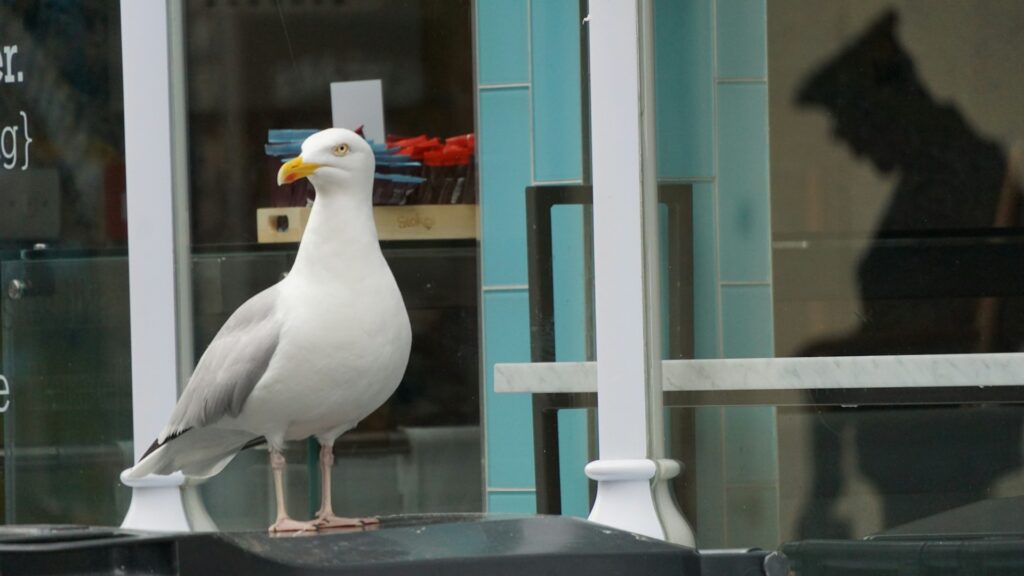
Seagulls have learnt to recognise the specific times when chip shops and takeaways dispose of their oil and leftover food, and they gather in anticipation like clockwork. These birds have memorised the schedules of dozens of different food establishments and position themselves strategically to intercept waste before bin lorries arrive.
Their timing is so precise that many shop owners report seeing the same seagulls appearing minutes before closing time, suggesting these birds have developed an internal clock calibrated to human food service patterns. Needless to say, their behaviour represents a level of planning and memory that goes far beyond simple scavenging and shows genuine intelligence.
2. They use teamwork to raid bins and steal food.
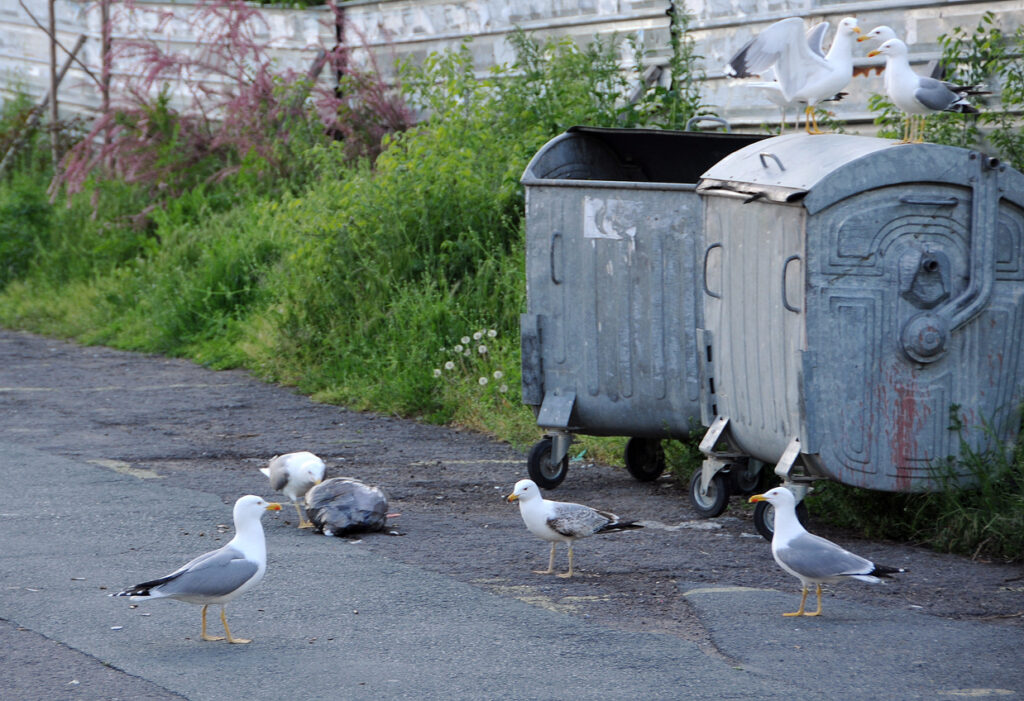
Urban seagulls have developed coordinated hunting strategies where one bird acts as a lookout whilst others work together to tip over bins or open food containers. These group tactics are particularly sophisticated around outdoor dining areas, where seagulls assign roles like military units to maximise their success rate.
The teamwork extends to distraction techniques, where one seagull draws human attention whilst accomplices sneak in from different angles to grab food. This coordinated behaviour is largely absent in coastal seagull populations, suggesting that city living has forced these birds to evolve more complex social strategies.
3. They’ve learnt to recognise individual humans and their habits.
Seagulls can remember specific people and learn their routines, particularly targeting individuals who regularly eat lunch in the same outdoor spots or carry shopping bags from certain supermarkets. Some birds have been observed following the same humans for weeks, learning their patterns and preferred routes through the city.
This recognition ability extends to identifying which humans are likely to feed them versus those who shoo them away, and seagulls adjust their approach accordingly. Office workers report being “stalked” by the same seagulls who wait for them at specific benches or building entrances, demonstrating remarkable individual recognition skills.
4. They exploit rush hour and commuter patterns.
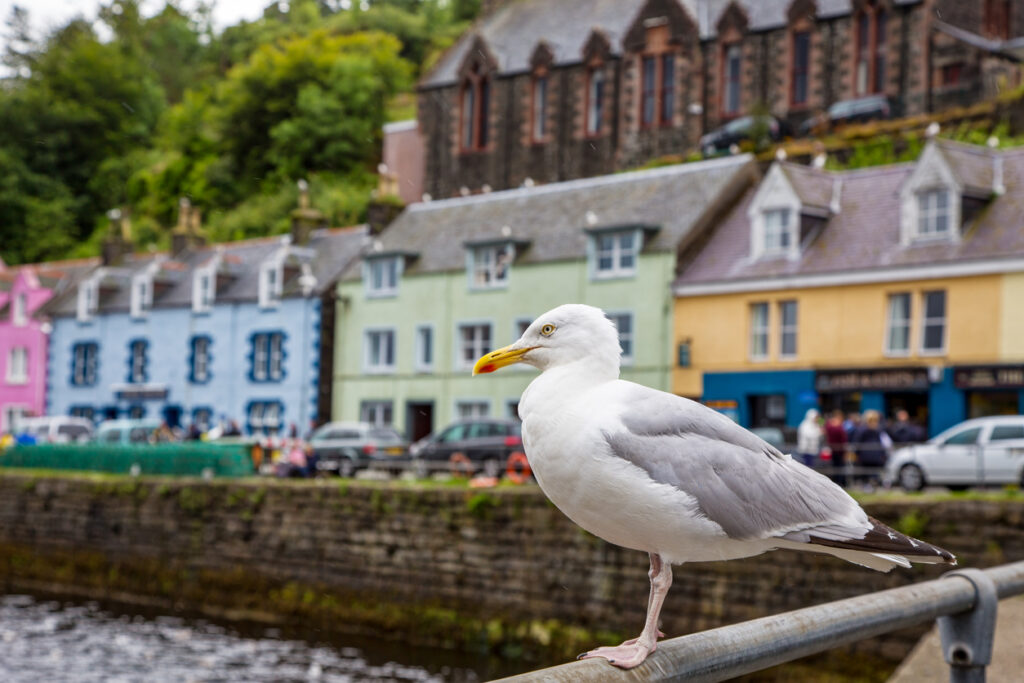
Seagulls have adapted their daily routines to coincide with human commuter patterns, knowing that rush hours bring the highest concentration of people carrying food and drinks. They position themselves at bus stops, train stations, and pedestrian areas during peak times when people are most likely to drop or abandon food.
These birds have also learnt that outdoor café tables are most vulnerable during the morning coffee rush and lunch hours, and they time their raids accordingly. Their ability to predict human behaviour patterns and adjust their own schedules shows a level of strategic thinking that rivals urban wildlife specialists.
5. They’ve developed new nesting strategies for urban environments.
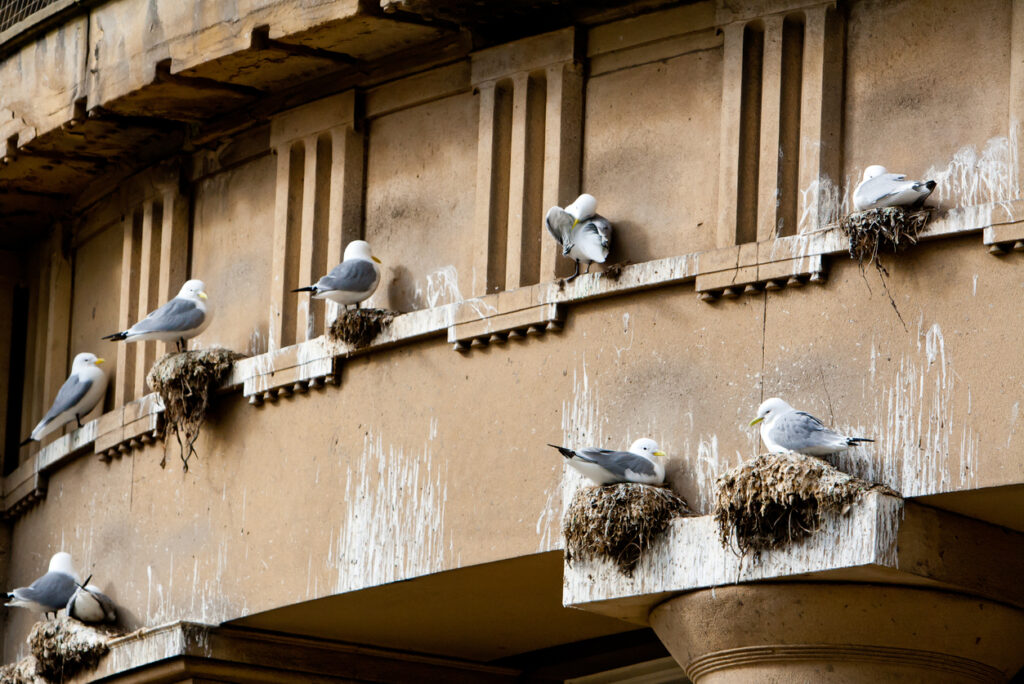
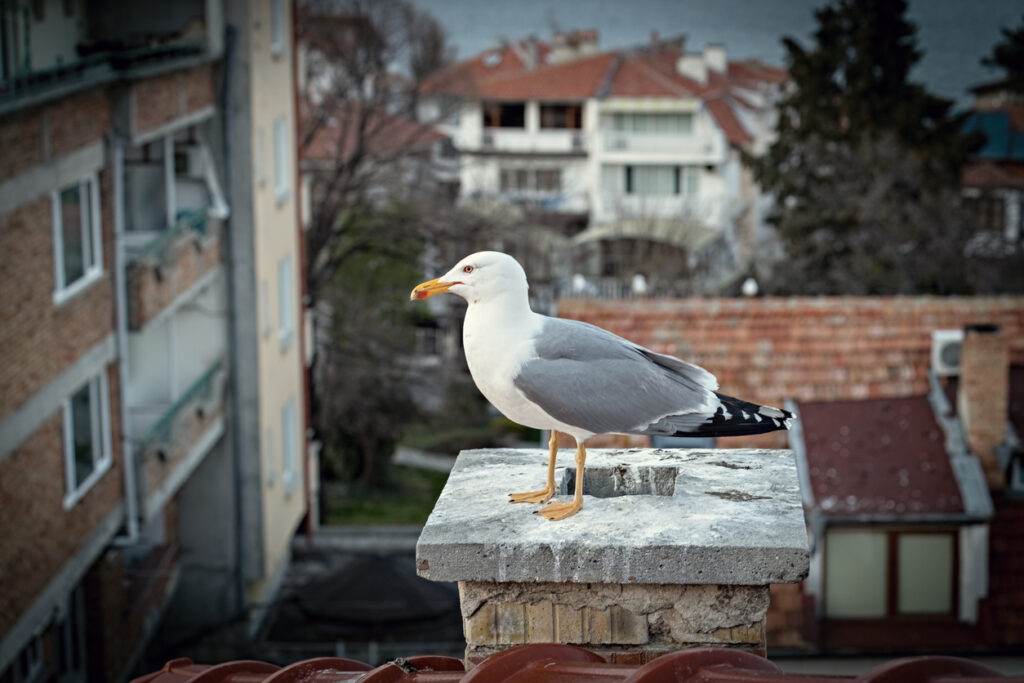
City seagulls have abandoned traditional cliff nesting sites in favour of building rooftops, which provide similar elevation and protection but with the added benefit of proximity to food sources. These urban nests are often more elaborate than coastal ones, incorporating human-made materials like plastic bags, string, and fabric.
The transition to urban nesting has also changed their breeding patterns, with many city seagulls nesting earlier and producing more offspring than their coastal relatives. Rooftop nesting gives them territorial advantages and protection from ground predators, whilst keeping them close to the abundant food sources that cities provide.
6. They use traffic and infrastructure to their advantage.
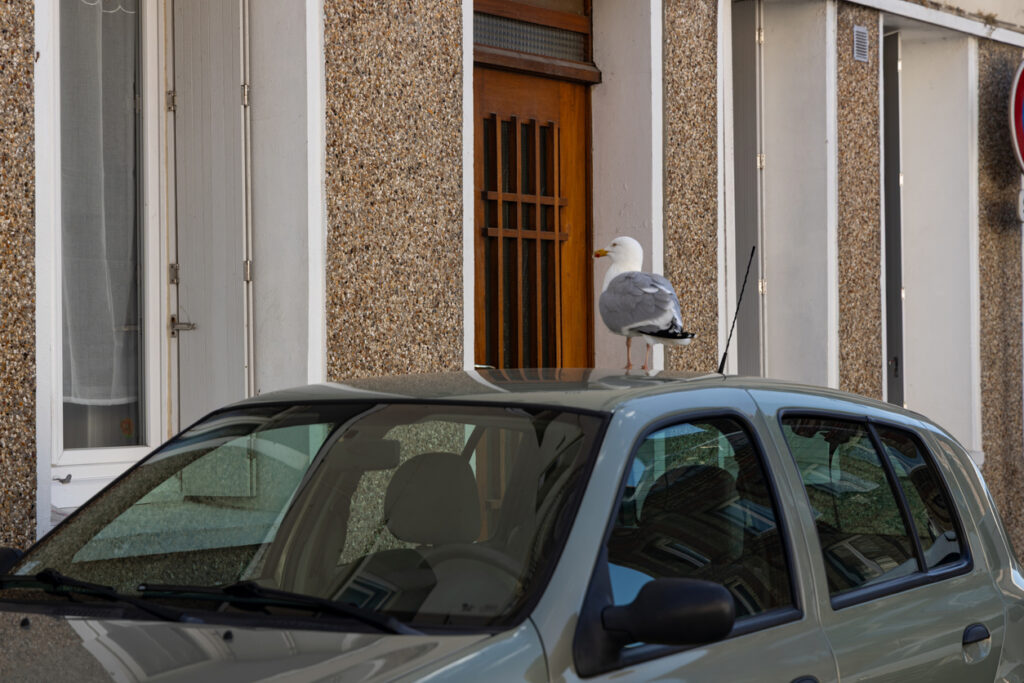
Seagulls have learnt to use car traffic as a tool, dropping hard-shelled foods like mussels and nuts onto busy roads, so vehicles crack them open. This behaviour has evolved specifically in urban environments, where cars provide a more reliable shell-cracking service than traditional methods like dropping food onto rocks.
They also use building ledges, signs, and street furniture as strategic perches for surveying potential food sources and escape routes. Urban seagulls have essentially turned the entire cityscape into a three-dimensional hunting ground that they navigate with remarkable skill and purpose.
7. They’ve adapted their diet to include processed human food.

Urban seagulls have developed digestive systems that can handle processed foods, sugary drinks, and other items that would be harmful to their coastal cousins. Their diet now consists largely of bread, chips, sandwiches, and other human food waste, representing a significant evolutionary adaptation in just a few decades.
That dietary change has also changed their nutritional requirements and feeding behaviours, with city seagulls becoming larger and more aggressive than coastal populations. The abundance and calorie density of human food has enabled them to support bigger populations and longer breeding seasons than traditional marine diets would allow.
8. They use psychological warfare against humans.
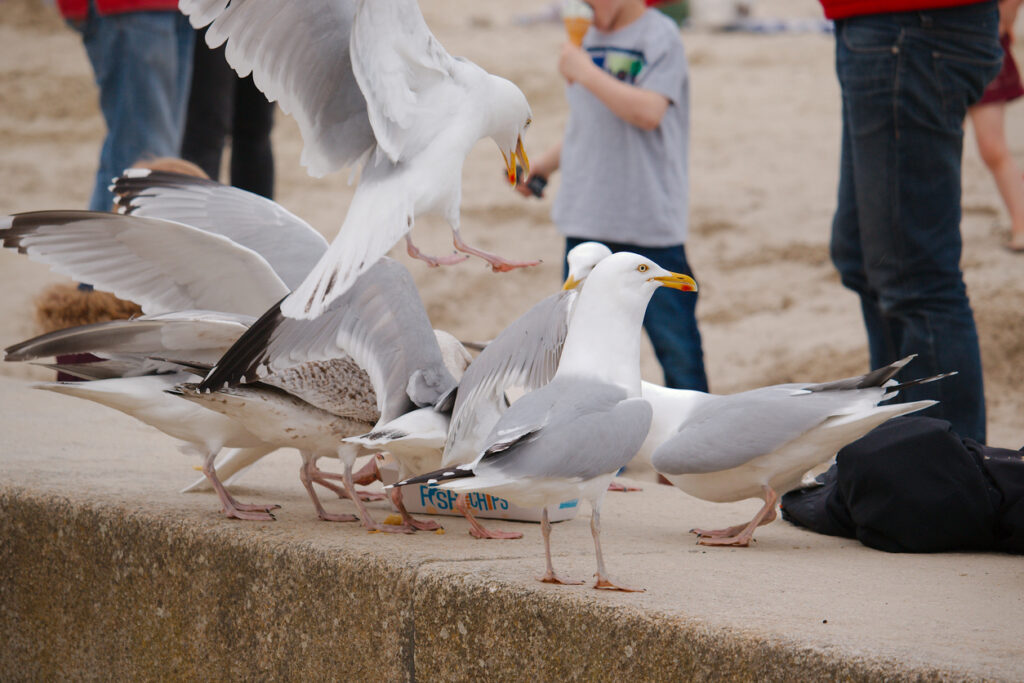
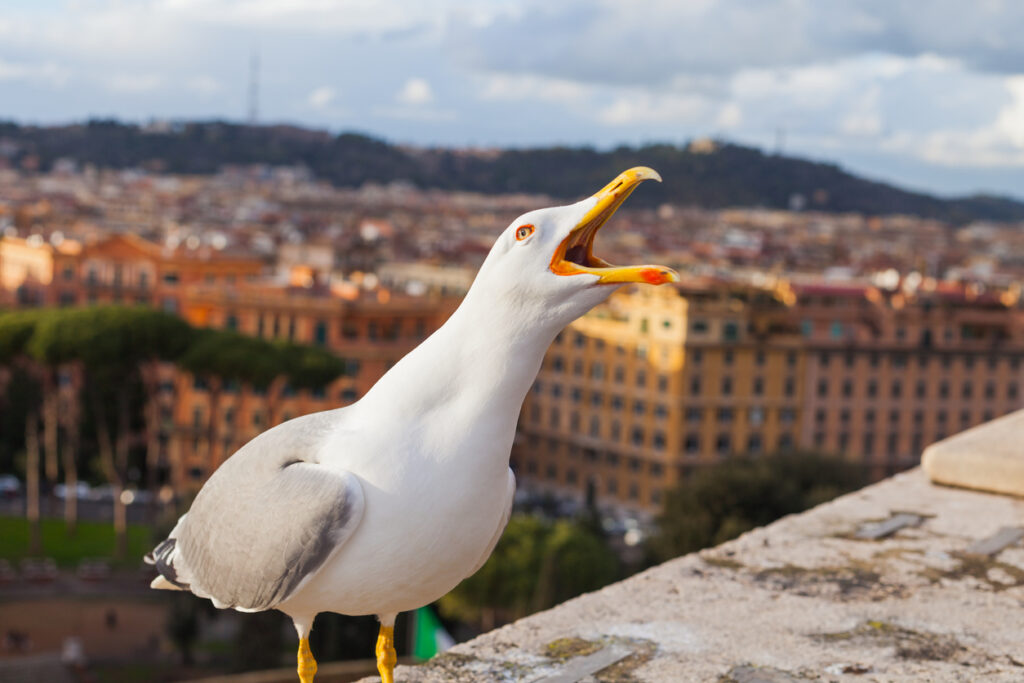
Seagulls have learnt that aggressive posturing, loud calling, and intimidating behaviour often causes humans to abandon their food, and they’ve refined these tactics into sophisticated psychological strategies. They deliberately target children, elderly people, and tourists who are most likely to be frightened into dropping food.
The birds have also developed persistence tactics where they follow and harass specific individuals until they give up their food, using a combination of aerial swooping and ground stalking that most people find unbearable. Their newfound psychological approach is far more energy-efficient than physical confrontation and shows remarkable understanding of human psychology.
9. They communicate danger and opportunities to other seagulls.
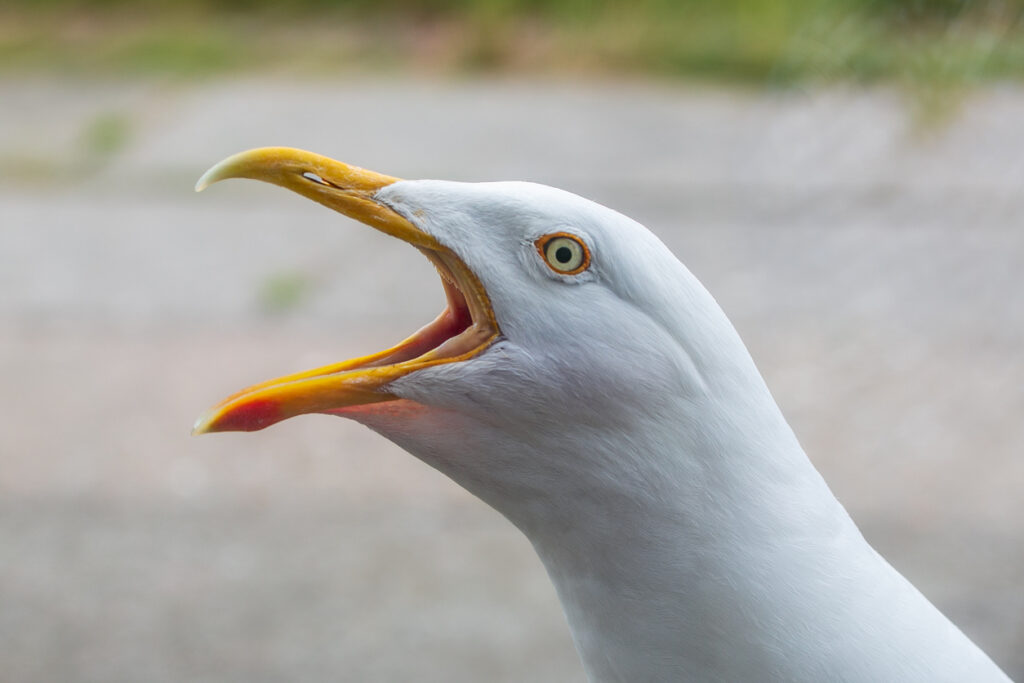
Urban seagulls have developed complex calling systems that alert other birds to food sources, threats, and opportunities, creating a city-wide communication network that spans multiple flocks. These calls are distinctly different from coastal seagull vocalizations and appear to have evolved specifically for urban environments.
The communication system includes specific alarm calls for different types of threats like dogs, aggressive humans, or bird control measures, allowing other seagulls to respond appropriately. This information sharing gives urban seagull populations a significant advantage and helps explain their rapid adaptation to city life.
10. They’ve become immune to most deterrent methods.
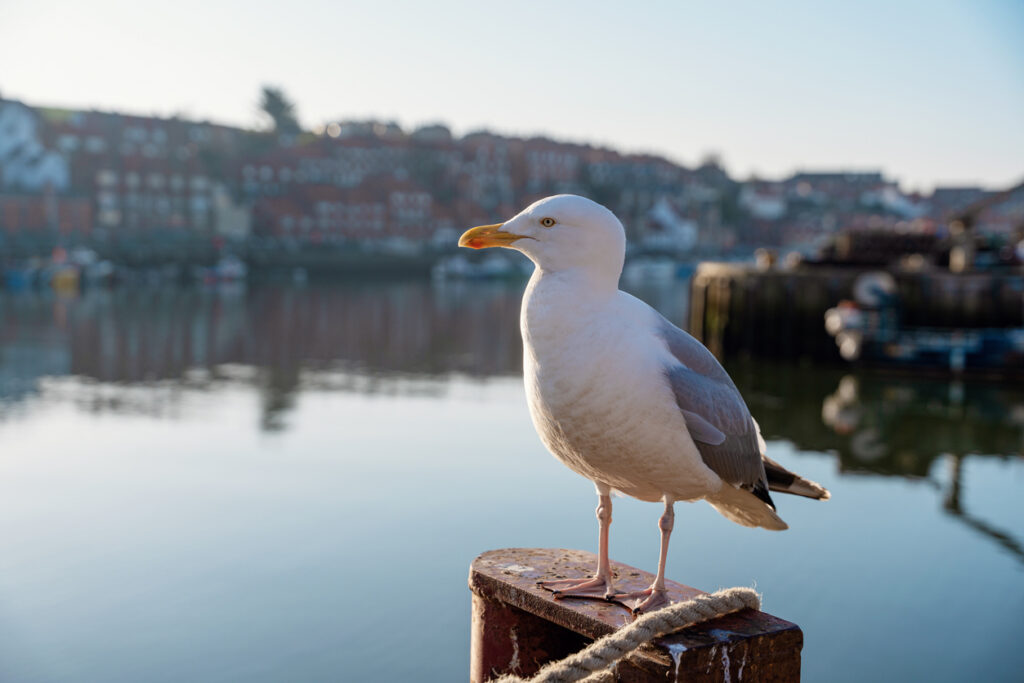
Seagulls have developed resistance to traditional bird deterrents like fake owls, noisemakers, and reflective tape, learning to ignore these methods within days of their installation. Their ability to adapt to new control measures is so rapid that many businesses and councils struggle to find effective long-term solutions.
The birds have also learnt to recognise bird control equipment and adjust their behaviour accordingly, often returning to previously deterred areas as soon as the equipment is removed. This adaptability, combined with their intelligence and social learning, has made urban seagulls virtually impossible to control using conventional methods, cementing their position as permanent city residents.