
Spiders might not be everyone’s favourite garden guest, but they’re undeniably fascinating once you look past the legs. From how long they live to how they build webs or survive the winter, there’s a lot more going on with these eight-legged creatures than most people realise. Whether you’re curious, creeped out, or a little of both, here are some spider facts worth knowing, including how long they actually stick around.
1. Most spiders only live for a year or two.
Despite how long it might feel when one’s taken up residence in your bathroom corner, most spiders only live for about one to two years. Many die off after breeding, especially those that hatch, grow, and reproduce all within a single season. That said, some species can surprise you. Larger, slower-growing spiders, like tarantulas, can live for well over a decade in the right conditions, especially in captivity. However, for your average UK house or garden spider, their time is usually short and seasonal.
2. Some female spiders live much longer than males.
In many species, females significantly outlive the males. That’s partly because males often die after mating, or are eaten in the process. Once their job’s done, nature isn’t exactly kind to them. Females, on the other hand, often go on to lay eggs, guard them, and in some species, live to reproduce again. In long-living spiders like trapdoor or tarantula species, it’s almost always the females reaching those impressive age milestones.
3. Not all spiders spin webs.
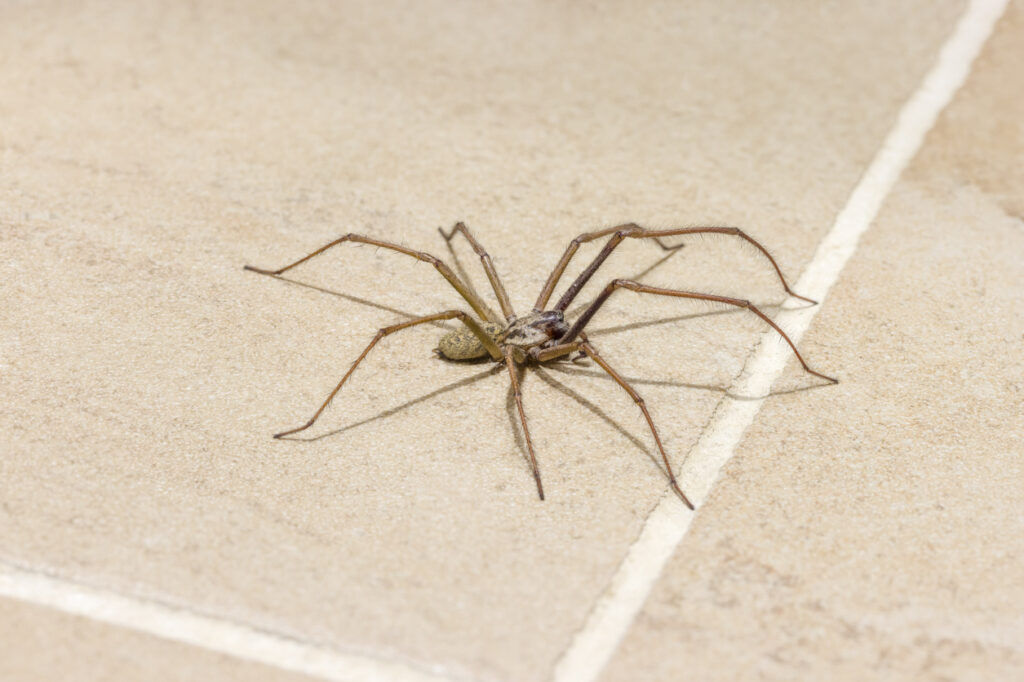
It’s easy to assume that all spiders build webs, but that’s not actually true. While many do use silk to create webs for trapping prey, others hunt actively without any web at all. These include wolf spiders, jumping spiders, and crab spiders. These spiders use speed, stealth, and in some cases, incredible vision to stalk and catch their food. They’ll still use silk for other purposes, like wrapping prey or laying eggs, but you won’t find their dinner hanging in a web.
4. Spider silk is stronger than steel (by weight).
Spider silk has an incredible strength-to-weight ratio. If you had a strand as thick as a pencil, it could potentially stop a speeding plane, at least in theory. It’s light, stretchy, and absurdly strong for what it is. Scientists have tried for years to replicate spider silk synthetically because of its strength and flexibility. So far, no one’s quite cracked it, but they’re getting closer, and the potential uses are massive.
5. Spiders don’t get stuck in their own webs.
It’s a fair question—why doesn’t a spider get tangled in the very trap it’s built? The answer lies in both technique and design. Spiders walk carefully, using only certain parts of their legs to step over sticky threads. Also, not all parts of the web are sticky. Many webs include non-sticky anchor lines or pathways that spiders use to move safely. They know exactly which bits to avoid and how to navigate with precision.

6. The UK has hundreds of spider species.
While only a handful are regularly seen in homes or gardens, there are more than 600 species of spider in the UK alone. Some are tiny and barely noticed, while others, like the garden orb-weaver, are familiar summer sights. Most of them are harmless to humans and quietly go about their lives keeping insect populations in check. Whether you love them or not, they’re doing some low-key pest control right under your nose.
7. Some spiders care for their young.
It’s easy to think of spiders as cold, instinct-driven creatures, but some species show surprising parental behaviour. Wolf spider mothers, for example, carry their egg sacs and even their spiderlings on their backs until the little ones are ready to go it alone. In some cases, the mother will even feed her young or defend them from threats. It’s not common across all spiders, but in the species that do it, it shows a level of care that people rarely associate with arachnids.
8. Spiders taste through their legs.
It sounds bizarre, but spiders have sensory hairs on their legs that help them “taste” their surroundings. This lets them detect chemicals in prey, surfaces, or even mates by walking over them. They also use their legs to sense vibrations in webs or on the ground, which is how many detect danger or locate food. In a way, their legs are a bit like an all-in-one toolkit—used for movement, sensing, and sometimes even communication.
9. Most UK spiders can’t bite through human skin.
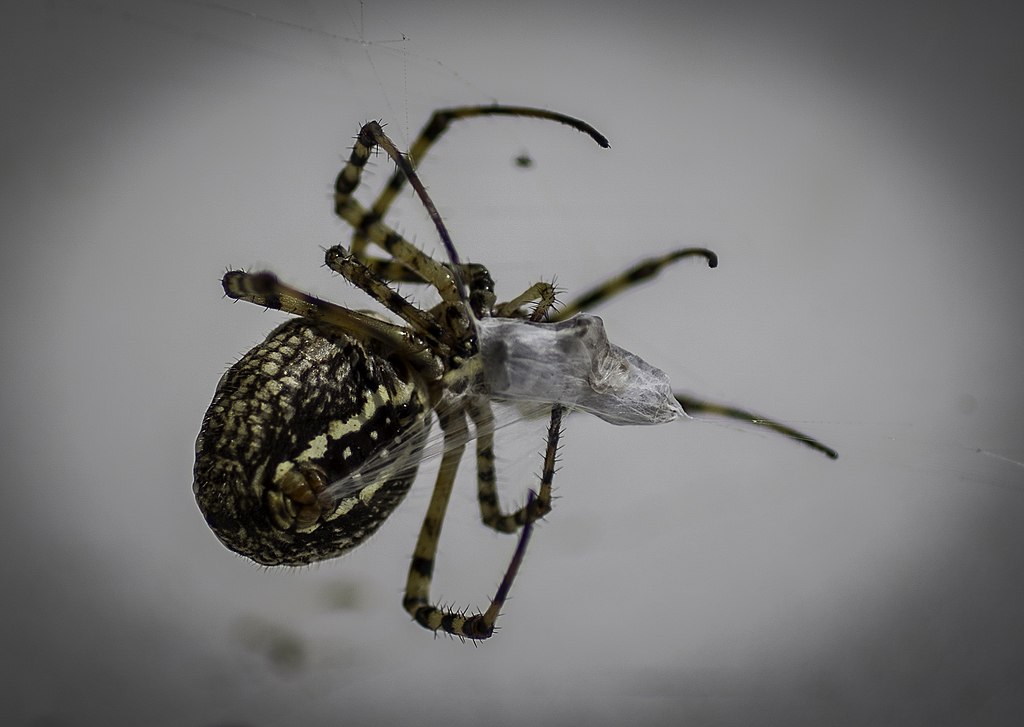
There’s a lot of fear around spider bites, but in reality, most UK spiders either aren’t strong enough to pierce human skin or simply have no interest in doing so. They’re shy and tend to retreat rather than attack. The few that can bite, like the noble false widow, might leave a mild sting, but serious reactions are rare. Most of the time, you’re far more dangerous to the spider than it is to you.
10. Spiders help control garden pests.
If you’ve got a healthy garden, chances are you’ve got a few spiders lurking about. They eat flies, aphids, beetles, and even other spiders, keeping pest numbers in check naturally and for free. So while it might be tempting to sweep them away or knock down webs, letting them stay actually helps your plants. They’re one of the best under-the-radar allies you’ve got in a balanced garden.
11. They can regrow lost legs.
Young spiders that lose a leg to predators or accidents can sometimes regrow it during their next few moults. This ability fades with age, but it’s a clever survival trick while they’re still developing. It’s part of why moulting is such a vulnerable and important process. During those early growth stages, they can heal and rebuild, not just grow bigger but sometimes even fix what’s been broken.
12. Some spiders balloon through the air.
Tiny spiders, especially hatchlings, can use a technique called “ballooning” to travel. They release a strand of silk into the wind and float off, sometimes for miles, riding air currents to new locations. This is how spiders colonise new areas, spread across fields, or end up in odd places like on boats or high-rise buildings. It’s a surprisingly common sight if you know to look for floating silk strands on warm, breezy days.
13. Spider eyes are surprisingly varied.
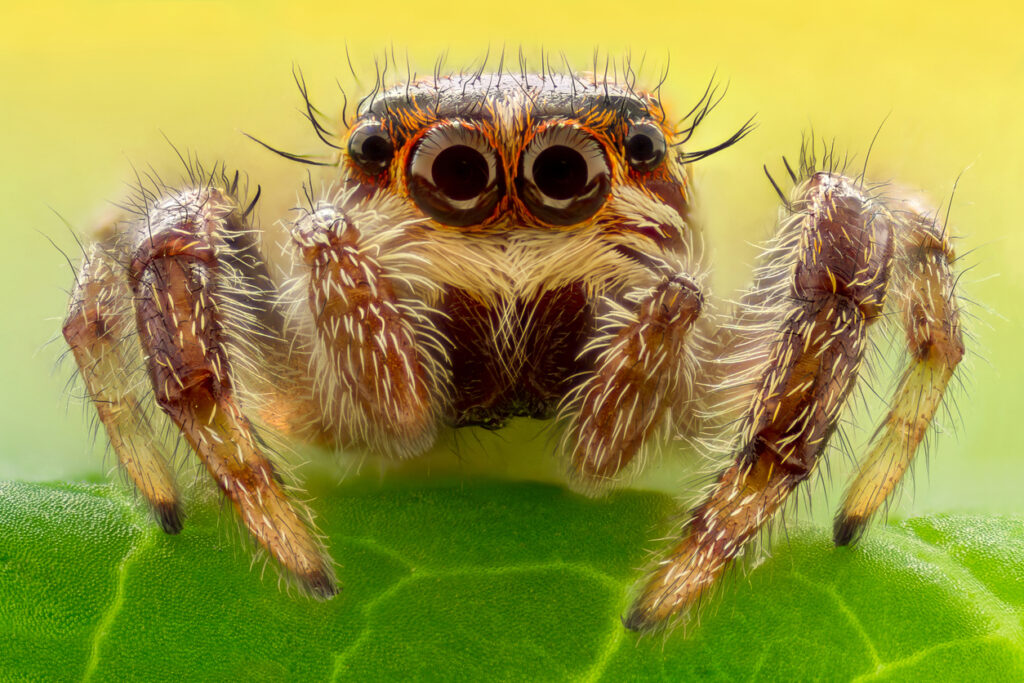
Most spiders have eight eyes, but the layout and size vary wildly depending on their lifestyle. Jumping spiders have large, front-facing eyes that give them great vision, while cave-dwellers might have small or no eyes at all. These differences reflect how each spider hunts or navigates. Some rely heavily on sight, others on vibrations or chemical cues. So while they all look like spiders, their senses and strengths can be completely different.
14. They’ve been around for hundreds of millions of years.
Spiders have been creeping around since before the dinosaurs. Fossils show that they’ve existed in more or less their current form for over 300 million years. That’s some serious evolutionary staying power. Part of what makes them so successful is their adaptability. Whether it’s weaving webs in a hedgerow or living under a shed roof, they’ve found ways to thrive just about everywhere, and probably will long after we’re gone.