Many local councils have rules about when you can fire them up, especially in residential areas where noise carries easily.

These rules aren’t always well known, which means plenty of people end up annoying their neighbours (or worse, breaking noise regulations) without even realising it.
Understanding the limits around leaf blower use isn’t just about keeping the peace. It’s also about respecting shared spaces and being aware of how small things can affect the people around you. Knowing the rules makes it easier to get the job done without causing unnecessary tension.
Check your local council’s noise regulations first.

Different councils across the UK have different rules about noisy garden equipment. Many prohibit loud tools before 8 a.m. on weekdays and 9 a.m. on weekends, though some are stricter. Breaking these regulations can result in fines or formal noise complaints.
These aren’t just guidelines, they’re enforceable by-laws. If a neighbour reports you, and you’re violating local noise restrictions, environmental health officers can take action. Look up your specific council’s regulations before you start blowing leaves at dawn.
Generally, 9 a.m. or later is appropriate.
Starting at 9 a.m. or later keeps you safe from most complaints and regulations. It’s late enough that most people are awake, even on weekends, and early enough that you’re not wasting your whole day waiting to start.
If a neighbour specifically asks you to start later, agree graciously. Being flexible about timing costs you nothing and maintains good relationships. Consider what time you’d want to hear someone else’s leaf blower, and don’t start earlier than that.
Weekends require more consideration than weekdays.

Using a leaf blower early on weekend mornings is almost certain to annoy neighbours who are trying to sleep in. People tolerate some noise on weekday mornings because everyone’s getting ready anyway, but Saturday and Sunday mornings are different.
If you must use your blower on weekends, wait until at least 9 a.m., preferably 10 a.m. Weekend mornings are when people finally get to rest, and blasting leaves at 8 a.m. on a Sunday makes you the neighbour everyone complains about.
Stop by 9 p.m. at the latest.

Evening leaf blowing should finish by 9 p.m. or earlier to avoid disturbing people who go to bed early or have young children. Many places are dark by then in autumn anyway, making it difficult to see what you’re doing. Working any later than early evening is both impractical and inconsiderate. People trying to wind down or get children to sleep don’t need the racket of a leaf blower outside their windows.
Choose the quietest blower that does the job.

Pick an electric or battery-powered leaf blower instead of a gas powered one. Battery models are significantly quieter for your neighbours and don’t produce harmful fumes. They’re also easier for you because you don’t need to mess about with mixing petrol and oil.
It’s ridiculous and rude for someone with a tiny garden to use a massive, noisy gas-powered blower. Match your equipment to your actual needs. If a quieter electric model can handle your leaves, there’s no justification for choosing something louder.
Work smarter to reduce noise time.

Wait until leaves are completely dry before blowing them. Wet leaves require much more effort and create far more noise than dry ones. You’ll get the job done faster and quieter if you wait for a dry day.
Pick up piles as you go rather than waiting until the end. One gust of wind can scatter everything you’ve collected, forcing you to start over and keeping the noise going longer. Deal with smaller sections at a time to minimise total blowing time.
Control where you’re blowing to avoid making it worse.
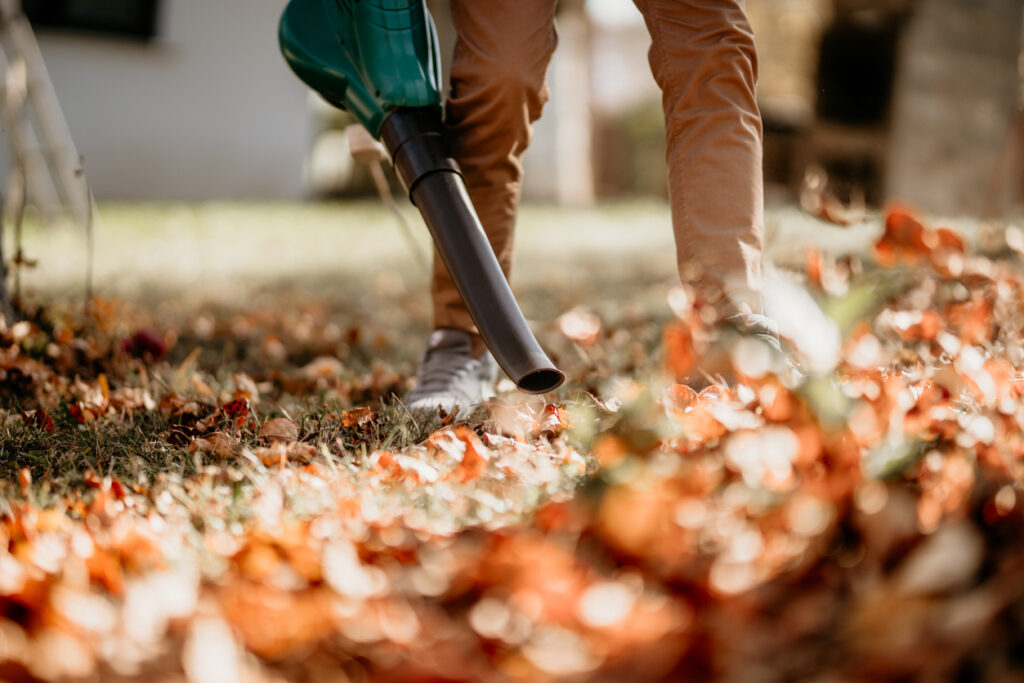
Blow leaves in the same direction as any breeze to work faster and prevent them scattering into neighbours’ gardens or onto shared pavements. Keep the blower nose pointed down close to the ground to work more precisely and avoid blowing dust everywhere.
Never use a leaf blower to remove dirt or cement dust. Blowing dirt creates a mess for neighbours and makes it harder for you to breathe. Leaf blowers are for leaves and grass clippings, not for cleaning paths or driveways.
Consider using a rake instead.

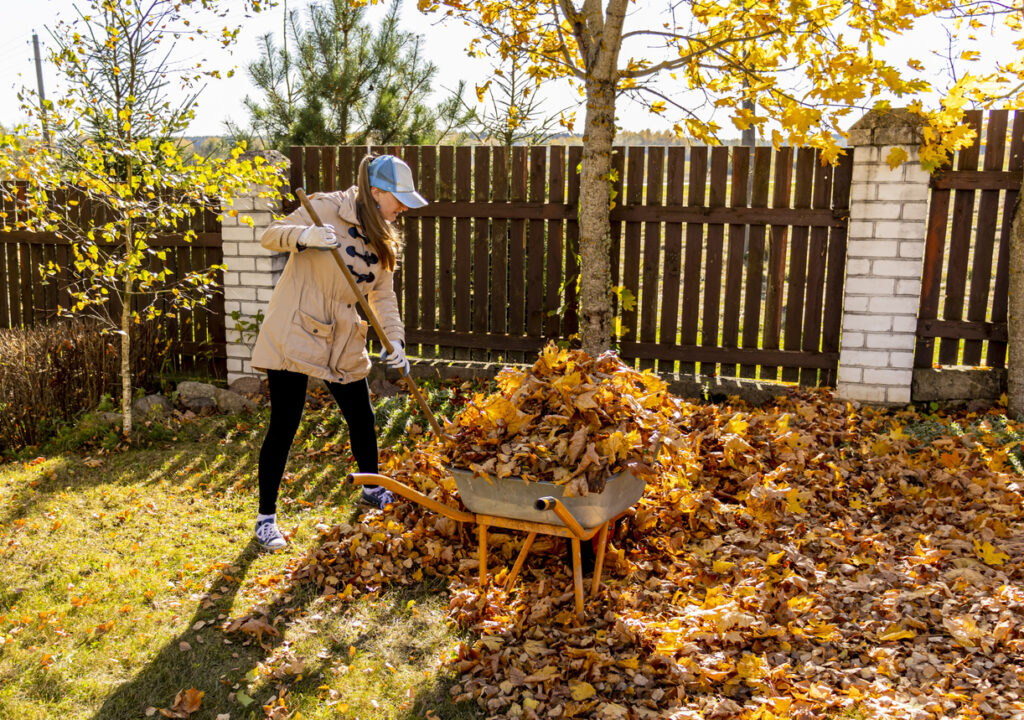
A good old-fashioned rake is completely silent and gives you a bit of exercise. If you’re not dealing with a massive property, raking might take slightly longer, but it won’t annoy anyone, and you can do it at any hour without worrying about regulations or complaints.
Raked leaves can go straight onto your compost pile or be used as mulch in garden beds. You’re getting the job done quietly while creating useful material for your garden, instead of just making noise to move leaves around.
Leave the leaves in some areas.

You don’t need to clear every single leaf from your entire property. Leave them in flower beds, under hedges, and in wilder areas of your garden where they’ll break down naturally and benefit the soil and wildlife.
This approach means less total blowing time, which means less noise for neighbours and less work for you. Only clear leaves from lawns, paths, and areas where they’re actually a problem, rather than treating your whole garden like it needs to be spotless.
Talk to your neighbours before starting big jobs.

If you know you’ll need to use your leaf blower for an extended period, knock on doors and give neighbours a heads-up. Most people appreciate being warned and will be far more tolerant if they know it’s coming rather than being surprised by sudden noise.
This communication prevents complaints and shows you’re being considerate. Even if you’re within your legal rights regarding timing, getting consent from affected neighbours makes everything smoother and maintains good relationships rather than creating feuds over garden maintenance.