Dinosaurs are well-known for their massive size, with some species growing larger than anything that walks the Earth today. The question of how they managed to reach such incredible proportions is one that has fascinated scientists and the public alike. It turns out there was no single reason, but rather a mix of biology, environment, and luck that allowed them to thrive at such scales. Here are just some of the factors that help explain how dinosaurs got so massive.
1. They had unique bone structures.
Dinosaur bones were strong yet surprisingly light because many of them were hollow and filled with air sacs. That meant they could support huge bodies without being weighed down by overly heavy skeletons. The lighter design allowed them to grow larger than most mammals can today. It gave them strength without the penalty of carrying massive, solid bones that would have slowed them down or made them collapse under their own weight.
2. Their efficient breathing systems helped them grow.
Unlike mammals, many dinosaurs had bird-like lungs with air sacs that pushed oxygen through their bodies more effectively. This system was far more efficient than the one we use. Better oxygen delivery meant their bodies could grow larger without running into the problem of organs struggling to keep up. Their breathing gave them an edge that made huge size possible and sustainable.
3. The climate supported them.
During the Mesozoic era, Earth was much warmer and more humid than it is today. Plants grew in abundance, and there were no long, cold winters to slow down growth. The climate provided endless opportunities for large plant-eaters to find food year-round. With so much fuel available, they could sustain massive bodies without struggling to survive lean seasons.
4. Food was plentiful.
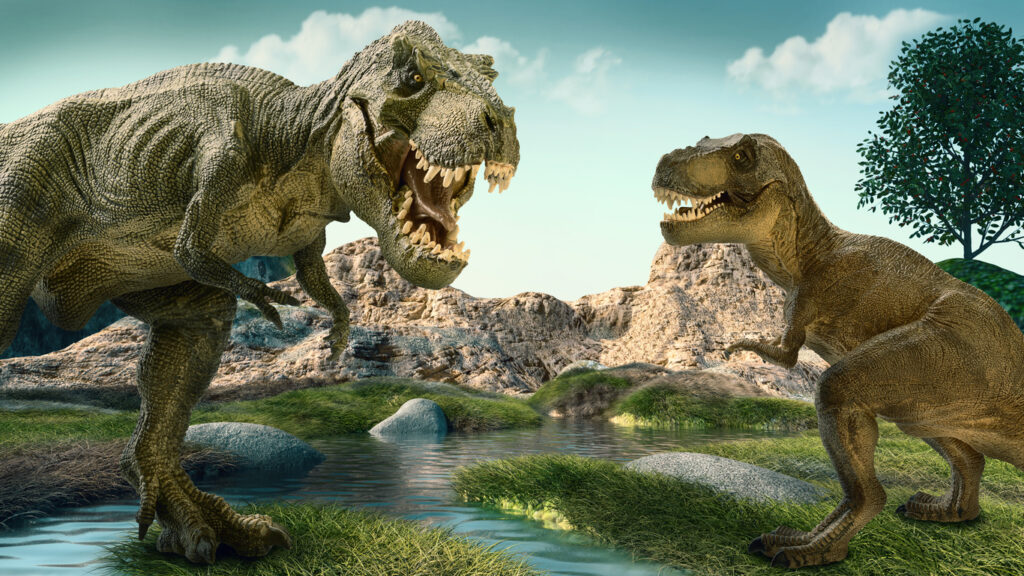
Vegetation was not only abundant but also spread widely across their environment. Ferns, conifers, and other prehistoric plants created endless grazing opportunities. Because the food supply was steady, herbivores could grow large without running out of resources. And with large herbivores thriving, predators had reason to grow big too in order to hunt or dominate them.
5. They laid eggs instead of giving birth.
Mammals today are limited in size, partly because carrying and giving birth to enormous young is totally impractical. Dinosaurs avoided the problem by laying eggs. Egg-laying meant even the largest dinosaurs could reproduce without size holding them back. It allowed populations of giant animals to thrive in ways mammals never could.
6. Growth was continuous.
Dinosaurs didn’t stop growing once they reached maturity. They grew quickly when young and then carried on slowly increasing in size for much of their lives. That meant older individuals had the chance to become enormous if they lived long enough. Their potential for growth set them apart from many animals today that stop once adulthood is reached.
7. Size offered protection.
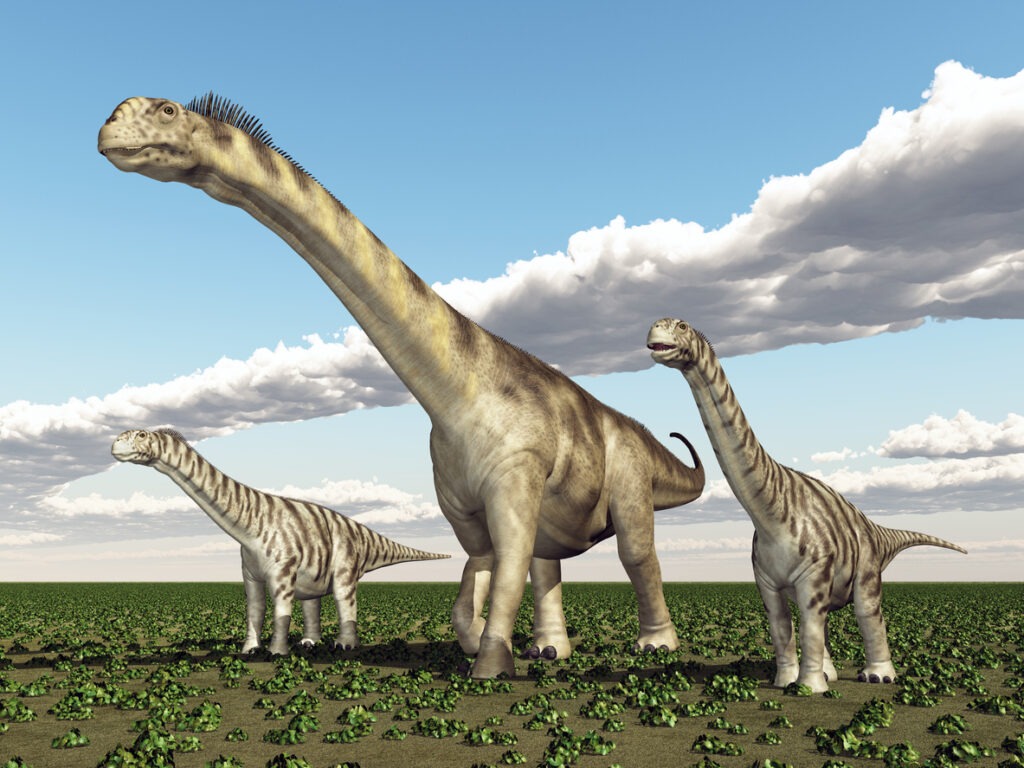
Growing bigger was a natural defence strategy. Large herbivores had fewer predators willing to take the risk of attacking them, and predators themselves needed size to compete for food. Their evolutionary advantage kept the cycle going. The bigger dinosaurs became, the more survival benefits they gained, which encouraged further growth across generations.
8. Their metabolism was unusual.
Dinosaurs may not have been strictly cold-blooded like reptiles or warm-blooded like mammals. Instead, many scientists believe they had a mix of both, sometimes called mesothermy.
Their in-between metabolism gave them the energy to grow fast while not needing as much food as warm-blooded animals of the same size. That balance made extreme growth possible in a way that worked for their environment.
9. Competition drove size.
In ecosystems full of large animals, being small was often a disadvantage. Dinosaurs grew big to outcompete rivals for food, territory, or mates. The pressure to dominate pushed certain species toward ever larger sizes. Over millions of years, the evolutionary arms race shaped giants that dwarfed almost everything else alive at the time.
10. They had long necks for efficient feeding.
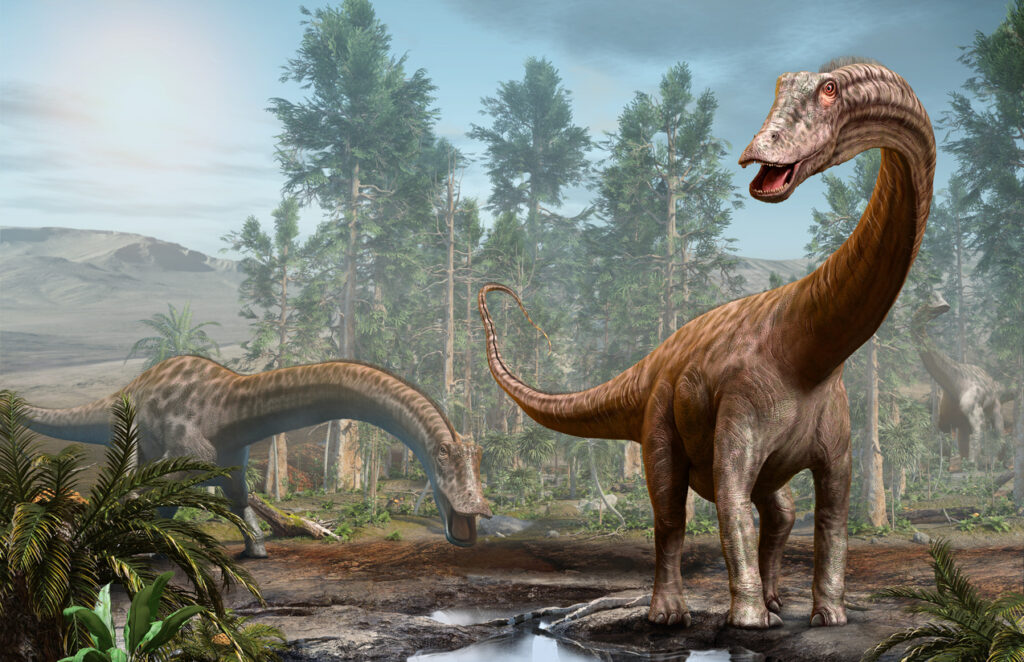
Many herbivores, like sauropods, evolved long necks that allowed them to graze over wide areas without moving their bodies constantly. It reduced the effort needed to find food. With such an efficient way to feed, they could eat enough to support their enormous size. Their bodies were built not only to grow big, but to sustain that scale through clever adaptations.
11. Predators adapted alongside prey.
As plant-eaters grew larger, carnivores had to keep up. A predator too small wouldn’t be able to take down prey effectively or compete for resources. That pushed some meat-eating dinosaurs to evolve into giants themselves. The balance between predator and prey meant both sides drove each other to extremes in size.
12. Evolution favoured survival of giants.
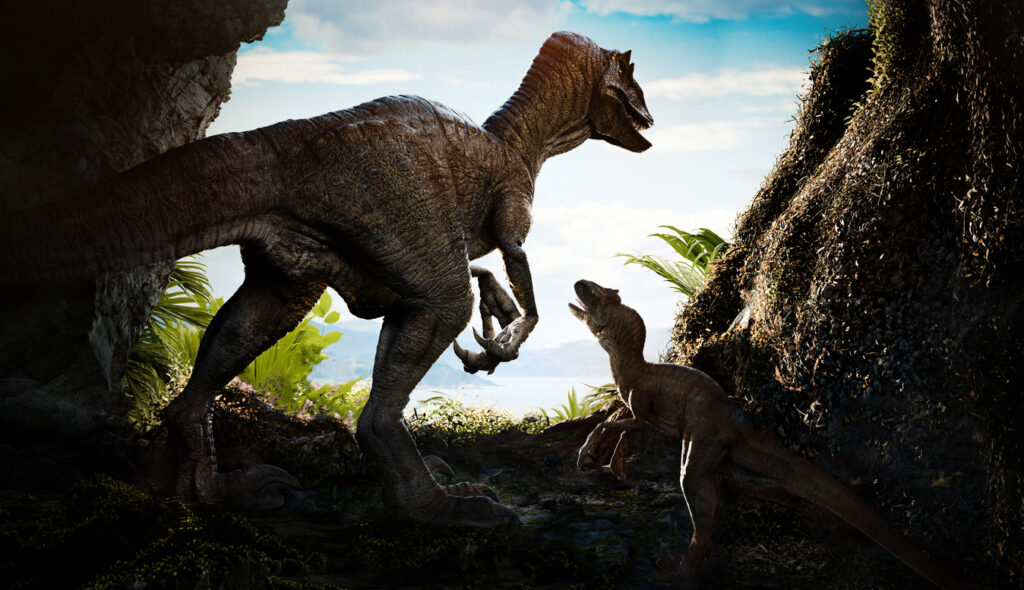
Dinosaurs that reached bigger sizes often lived longer, reproduced more successfully, and were less vulnerable to predators. These advantages meant large individuals passed on their genes more often. Generation after generation, traits that encouraged growth kept being selected. Over millions of years, that consistent advantage made gigantic dinosaurs more common.
13. They had time on their side.
Dinosaurs dominated Earth for over 160 million years, far longer than humans have existed. That much time gave evolution room to experiment and refine traits that supported massive size. With stable ecosystems and few competitors, their world created the perfect conditions for giants to emerge. Their incredible scale wasn’t just chance, but the result of time, adaptation, and opportunity aligning.