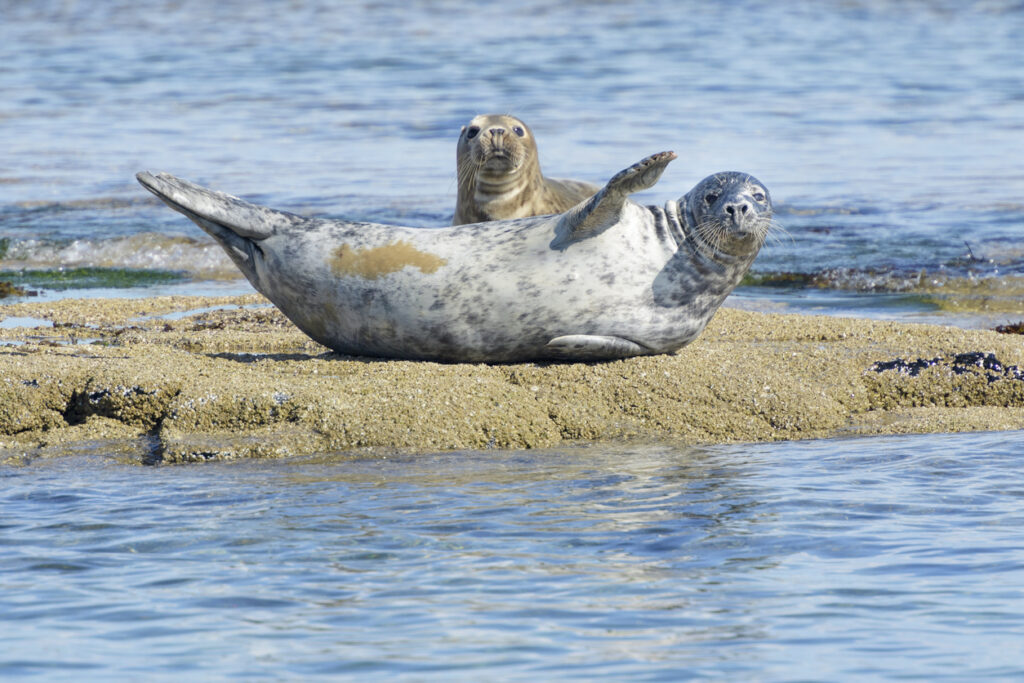
Britain’s coastlines host two distinct seal species that have carved out their own territories and lifestyles around our shores. Grey seals and common seals might seem similar at a glance, but they’re remarkably different animals with unique behaviours, appearances, and survival strategies. Understanding what sets these marine mammals apart reveals a fascinating dynamic playing out in British waters, where both species thrive yet maintain surprisingly separate existences.
Grey seals are actually the common ones in Britain.
Despite their names suggesting otherwise, grey seals vastly outnumber common seals around British shores. The UK hosts about 40% of the world’s grey seal population, with roughly 120,000 individuals calling our waters home. Common seals number only around 55,000 in Britain, making them considerably less common than their grey cousins.
The naming confusion stems from historical classification rather than actual abundance, and it means that the seal you’re most likely to spot on a British beach is probably a grey. The population imbalance has grown over recent decades as grey seals have flourished, and common seal numbers have declined in certain regions.
You can tell them apart by their nose shape.
The most reliable way to distinguish these species is by looking at their face profile. Grey seals have a distinctly Roman nose with a straight or slightly convex profile that creates an almost horse-like appearance when viewed from the side. Common seals have a much shorter snout with a concave dip, giving them a dog-like face that many people find more appealing.
That difference is visible even from a distance and remains consistent across all ages and both sexes. Once you know what to look for, you’ll never confuse the two species again because the profile difference is so pronounced.
Grey seals are significantly larger.
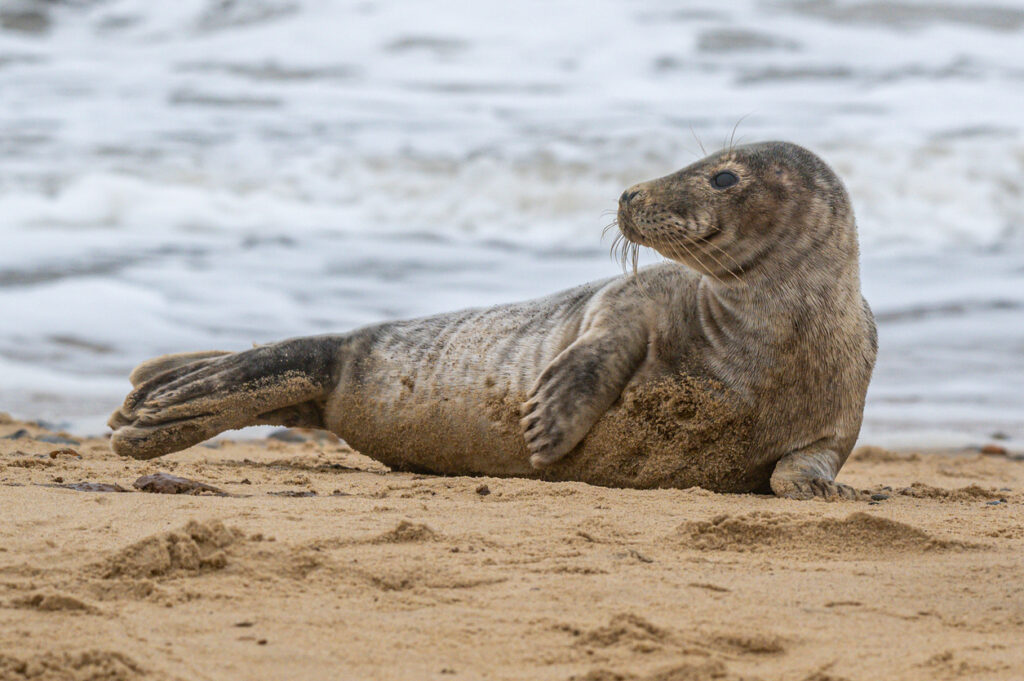
Size provides another clear distinction between these species, with grey seals being the true giants of British waters. Adult male grey seals can reach up to 2.5 metres long and weigh around 300 kilograms, while females are somewhat smaller at about 2 metres and 200 kilograms. Common seals are considerably more petite, with males reaching about 1.9 metres and 130 kilograms, and females around 1.7 metres and 100 kilograms.
Their size difference becomes obvious when you see both species hauled out together, with grey seals looking almost twice as bulky. The weight disparity means grey seals can dive deeper and stay underwater longer because they have more fat reserves to sustain them.
They prefer different coastlines.
These two species have divided Britain’s shores between them based on habitat preferences. Grey seals favour exposed rocky coastlines, remote islands and areas with strong Atlantic swells, which is why they’re abundant along Scotland’s west coast, Cornwall and the Welsh shores. Common seals prefer sheltered bays, estuaries, and sandbanks where the water is calmer, and they can haul out easily.
That habitat split means you’ll find grey seals in the more dramatic coastal landscapes, while common seals stick to quieter, more protected waters. The Wash and the Thames Estuary host significant common seal populations, whereas the grey seals dominate the Farne Islands and the Orkney archipelago.
Their breeding seasons are completely different.
Grey seals give birth in autumn and winter, typically between September and December, but common seals breed in summer between June and August. This seasonal difference means the two species never compete for breeding beaches, even in areas where their ranges overlap. Grey seal pups are born with white fluffy coats that they moult after a few weeks, and they’re born well above the tide line on beaches or in caves.
Common seal pups are born with their adult coat and can swim within hours of birth, which suits their summer breeding when tides are less extreme. These contrasting strategies reflect their different evolutionary adaptations to British coastal conditions.
Grey seals are better divers.
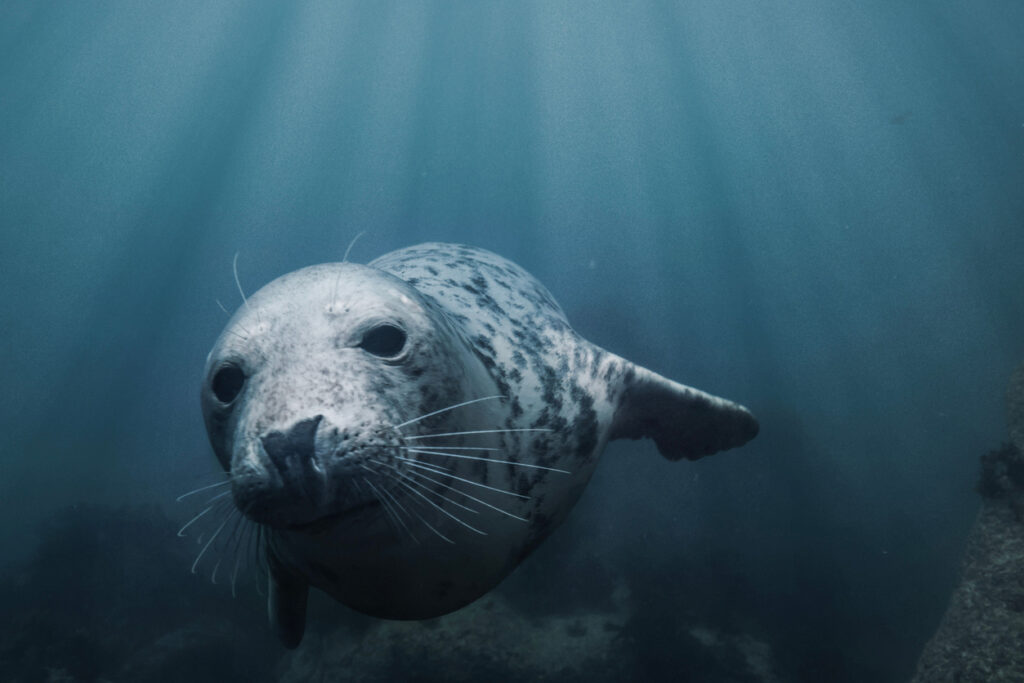
When it comes to diving ability, grey seals outperform their common cousins by a significant margin. Grey seals regularly dive to depths of 70 metres and can reach 300 metres when necessary, staying underwater for up to 30 minutes. Common seals typically dive to around 20 metres and rarely exceed 200 metres, with most dives lasting just a few minutes.
The difference affects what they eat and where they hunt, with grey seals accessing deeper fish stocks that common seals can’t reach. The grey seal’s superior diving comes from their larger body size and proportionally bigger oxygen stores, giving them access to a wider range of marine environments.
Common seals are more sociable.
Both species haul out in groups, common seals tend to be more tolerant of close company and form tighter clusters on beaches and sandbanks. Grey seals space themselves out more and can be quite aggressive towards neighbours, especially during breeding season when males defend territories fiercely. Common seals seem genuinely more relaxed around each other, and you’ll often see them piled together almost touching, whereas grey seals maintain more personal space.
Such different behaviour might relate to their habitat preferences, with common seals using limited sandbank space more efficiently. The social structures differ too, with grey seals forming temporary breeding colonies while common seals maintain more year-round associations.
Their spots and colours vary distinctly.
Beyond facial features, the coat patterns help identify each species once you know what to look for. Grey seals have irregular blotchy patterns that can range from dark grey to almost black on a lighter background, or occasionally light spots on dark fur. Common seals have smaller, more numerous spots distributed fairly evenly across their coat, giving them a distinctly dappled appearance.
The grey seal’s coat often looks more mottled and less uniform than the common seal’s spotted pattern. Both species can vary in base colour from grey to brown to almost blonde, but the pattern of marking remains species-specific regardless of overall shade.
Grey seals travel much further.
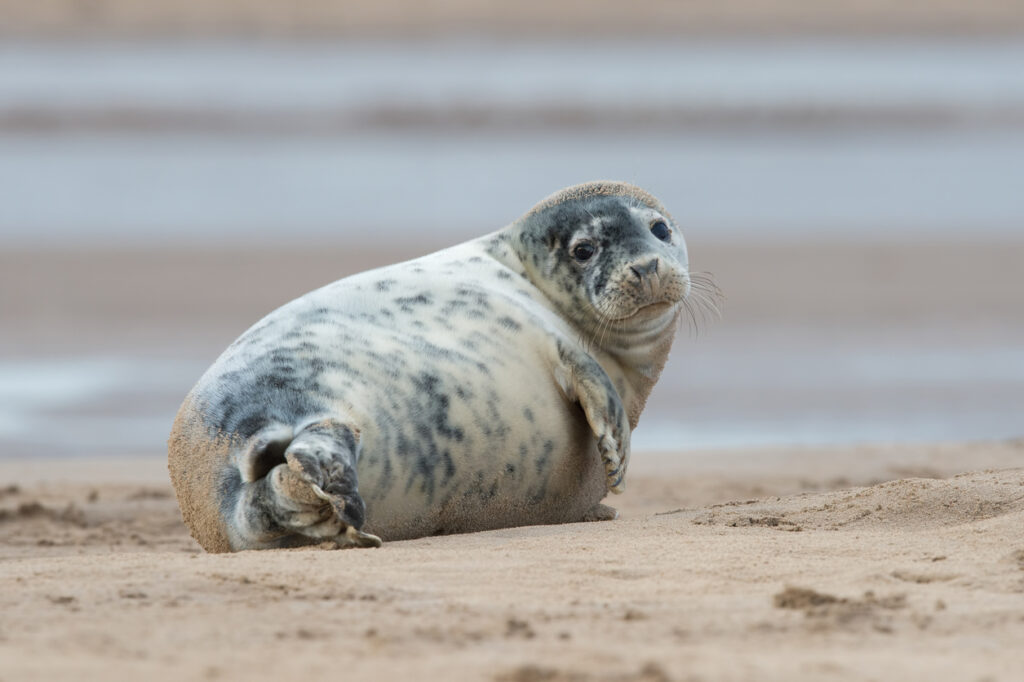
Tracking studies have revealed that grey seals are far more adventurous travellers than common seals. Grey seals regularly make journeys of hundreds of kilometres, with some individuals travelling between Scotland and England or crossing to Irish waters. Common seals tend to stay within a much smaller home range, often remaining within 50 kilometres of their birth site throughout their lives.
The contrast in ranging behaviour means grey seals can colonise new areas more readily and maintain genetic mixing across distant populations. Common seals’ sedentary nature makes them more vulnerable to localised threats because they can’t easily relocate if conditions deteriorate.
They face different conservation challenges.
Grey seals have rebounded spectacularly since receiving protection, growing from just 500 animals in the early 1900s to today’s thriving population. Common seals face more uncertain prospects, with populations declining in some regions, particularly around Scotland’s east coast and Orkney. Scientists aren’t entirely sure why common seals struggle in areas where grey seals thrive, but theories include competition for food, disease susceptibility and possibly predation by grey seals on common seal pups.
Climate change affects both species but in different ways, with grey seals potentially benefiting from milder winters while common seals may lose essential sandbank habitat to rising seas. The future likely holds continued grey seal expansion, as common seal populations require careful monitoring and protection.