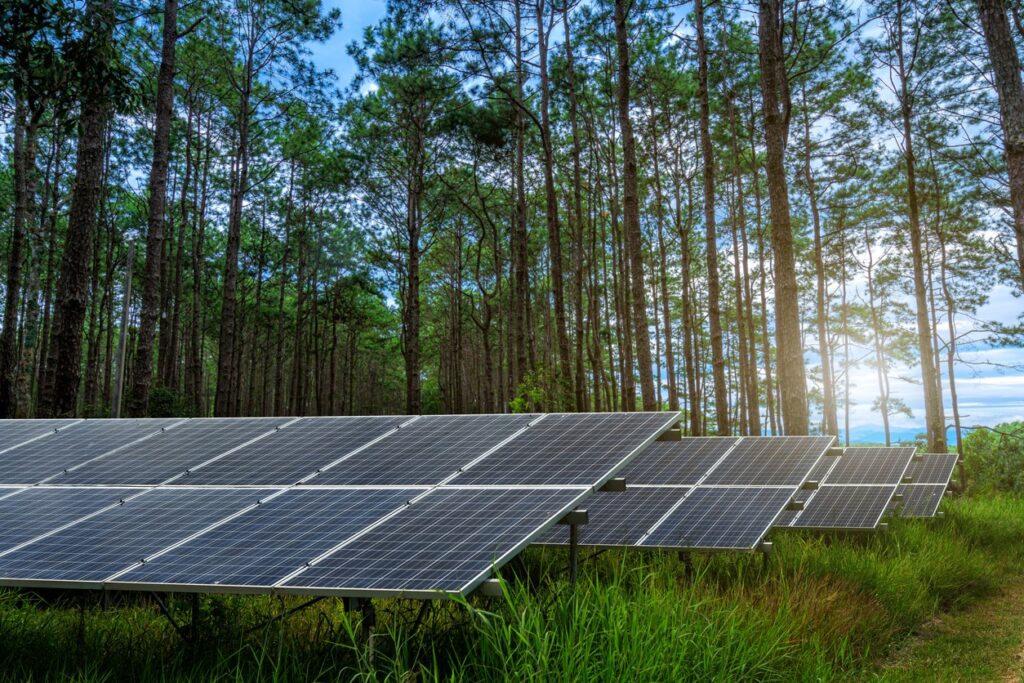
In Germany, solar parks are quietly becoming unlikely wildlife havens, especially for birds. Recent observations at sites like the Weesow‑Willmersdorf solar park near Berlin reveal that species such as larks, wheatears and corn buntings are not just surviving, they’re breeding successfully beneath the rows of solar panels. Conservation ecologist Timur Hauck of EnBW describes it as a structural diversity that’s rare in today’s landscape, and the numbers back it up.
Between 21 and 47 skylark breeding pairs per 10 hectares were recorded there, an all-time high in Germany. A wider survey reported by pv magazine found that larks and other birds are doing better in solar parks than in many conventional agricultural fields. These findings challenge the assumption that solar farms are sterile habitats. Instead, they suggest well-managed renewables can double as conservation landscapes.
Why solar parks are working as bird sanctuaries
The key is simple. Unlike intensive farmland or urban development, many solar parks are low-disturbance spaces. Part of the success comes down to landkeeping. At several sites, grazing sheep are used to manage vegetation naturally, keeping growth in check without heavy machinery or chemicals. This balance provides food, shelter and nesting sites, avoiding the damage monocultures and pesticides often cause.
Open areas under solar arrays also create a patchwork of habitats. Some parts remain short and sunlit, others grow grassy and shaded. That variation supports a range of species, from ground-nesting birds like skylarks and corn buntings to those that prefer scrubby fringes. According to researchers involved in the Cool Down report, it’s an ecological bonus that works without extra complexity.
Overall, the breeding success of birds in solar parks is reportedly exceeding that of traditional semi-natural areas, where grazing or seasonal tilling can disrupt nests and remove essential cover. Because solar farms avoid those pressures, they’ve become places where bird populations can genuinely thrive.
It’s important to balance clean energy with conservation goals.
@vogtland.tv Vor den Toren Plauens soll ein riesiger Solarpark entstehen. Dies ruft nun Protest und die Politik auf den Plan. Mehr dazu auf Spitzenstadt.de. #solarpark #Photovoltaik #oberlosa #vogtland #plauen ♬ Originalton – VOGTLAND TV
That said, not every solar farm will produce these results. The success seen in Brandenburg and elsewhere depends on thoughtful planning and cooperation between developers and ecologists. As noted in a LinkedIn commentary shared by pv magazine, solar parks can restore ecological health in regions dominated by monoculture farming, but only if biodiversity is built into the site design from the outset.
This model of combining clean energy with conservation efforts ties in with broader movements like agro-voltaics, where panels and farming coexist. That approach is catching on across Europe as farmers seek new revenue streams and climate-resilient landscapes. What matters is treating solar installations as usable land rather than off-limits zones.
A key takeaway from the German projects is that managing vegetation thoughtfully, avoiding frequent disturbances and allowing light grazing by livestock can create stable ecosystems. Solar power doesn’t have to be an ecological trade-off. Done right, it can offer habitat benefits while producing clean energy.
The UK should take note.
For the UK, where solar capacity is set to expand, Germany’s example shows what’s possible with the right mindset. Too often, solar parks here focus solely on efficiency and grid access. But as the German data suggests, there’s huge potential to turn solar farms into safe spaces for birds and other wildlife.
That could mean integrating sheep grazing schemes, maintaining wildflower-rich understoreys to support insects, or building in buffer zones with hedging and native scrub. It’s not about sacrificing power output, it’s about getting more from the same land.
Birds are just one part of the picture. Insects, small mammals, reptiles and fungi can all thrive in low-impact solar environments, especially where variety is built into the layout. With so much farmland already under pressure, this kind of dual-purpose land use could be a vital tool for rebuilding biodiversity.
Germany’s solar parks show it can be done. It doesn’t require major changes, just smarter design, better planning and a willingness to treat solar energy as part of the wider landscape. If the UK takes note, there’s every chance we could build a solar future that works for both people and nature.