The deep ocean is one of the harshest environments on Earth.
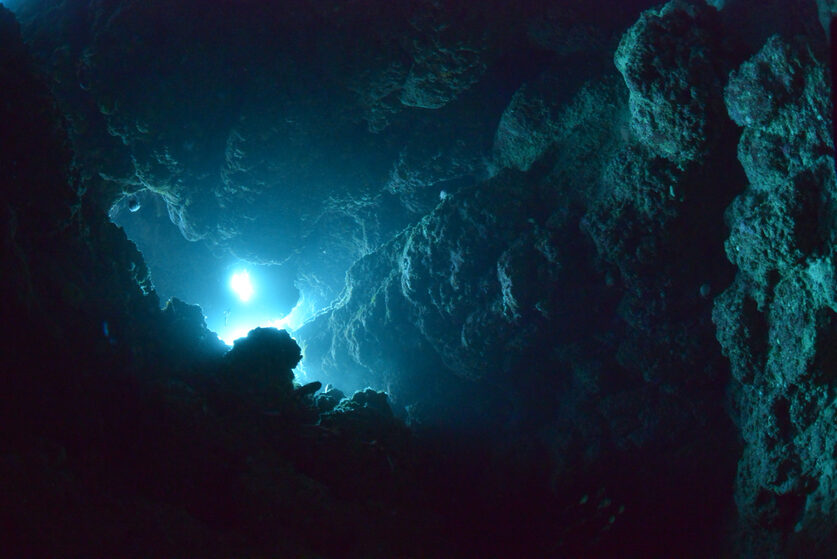
At a certain depth, the pressure is strong enough to crush submarines and sunlight that never reaches the seafloor. And yet, life persists there in astonishing ways. These are animals that survive where nothing should. More than that, they thrive!
1. The fangtooth fish looks terrifying, but is tiny.
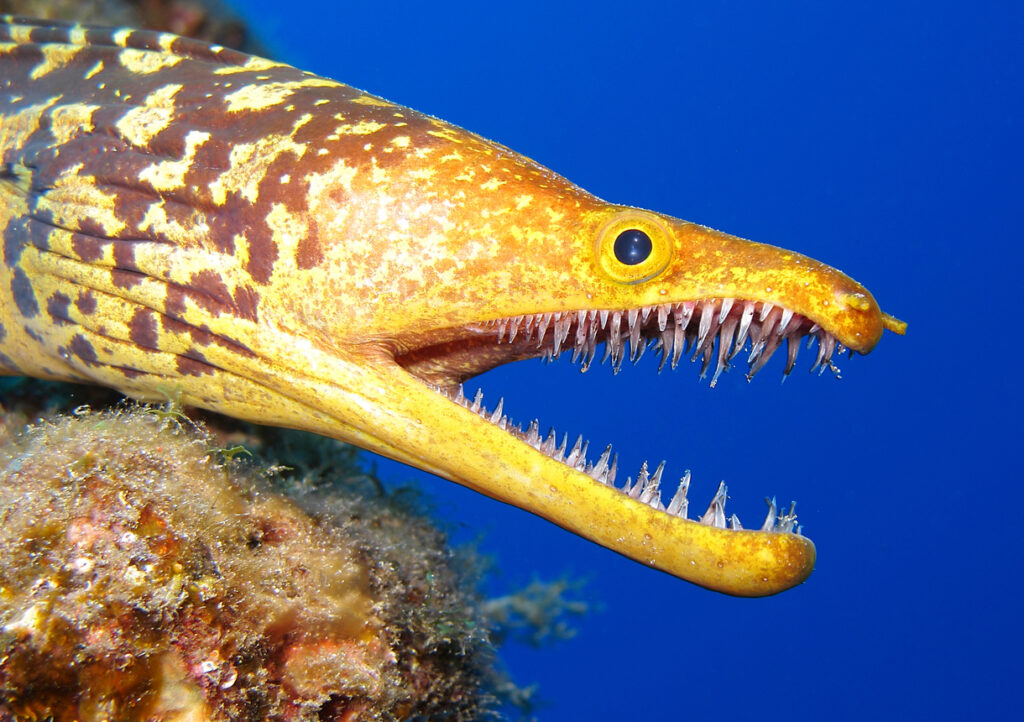
The fangtooth fish has one of the deepest recorded habitats of any fish, surviving at depths over 5,000 metres. Its massive teeth give it a fearsome appearance, but in reality it only grows to about 16 centimetres long. It uses those oversized teeth to catch prey in near-total darkness. Despite the intimidating look, it’s proof that size isn’t necessary for survival in such extreme environments.
2. The dumbo octopus thrives in the cold.
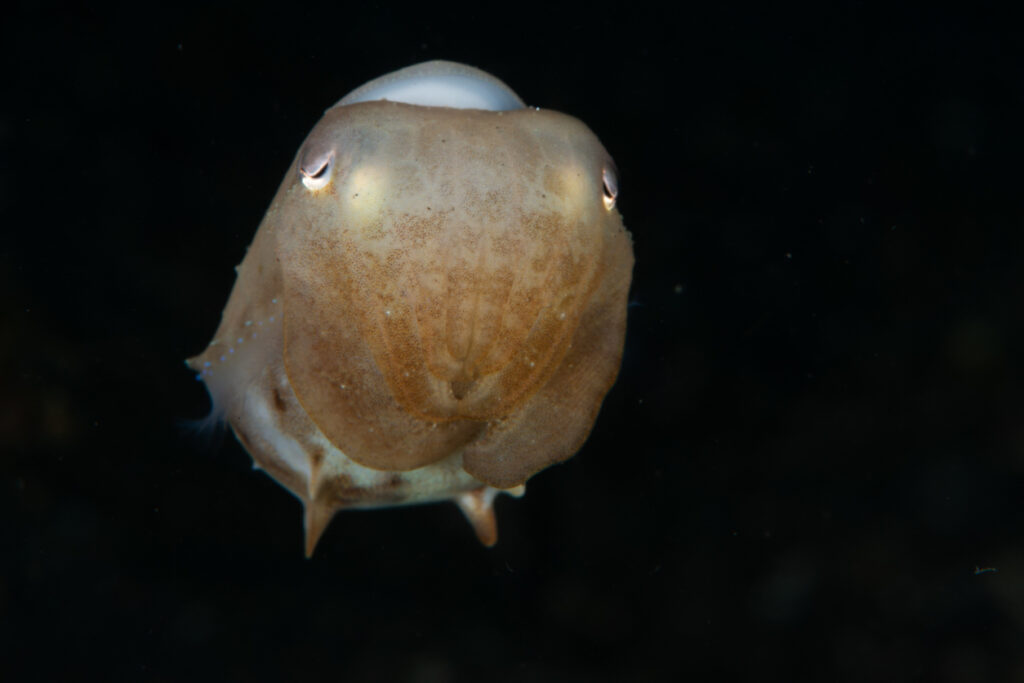
Named for the ear-like fins on its head, the dumbo octopus lives deeper than any other known octopus, often found at 3,000 to 4,000 metres. Its soft, gelatinous body helps it withstand intense pressure. It drifts gracefully through the water, flapping its fins like wings. With no need for speed in its low-energy environment, its survival depends on conserving energy and being adaptable.
3. The gulper eel has a giant expandable mouth.
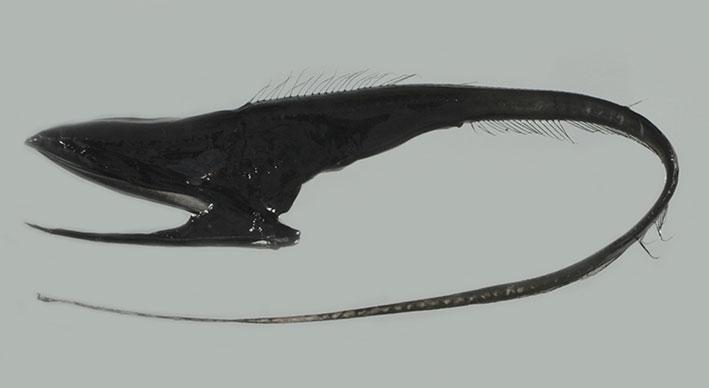
The gulper eel’s most striking feature is its enormous mouth, which can open wide enough to swallow prey almost as big as itself. This adaptation allows it to take advantage of any food it encounters in the deep sea. Its body is long and ribbon-like, helping it float with little effort. The gulper eel is rarely seen by humans, but its bizarre shape makes it one of the deep ocean’s most fascinating creatures.
4. The anglerfish carries its own light.
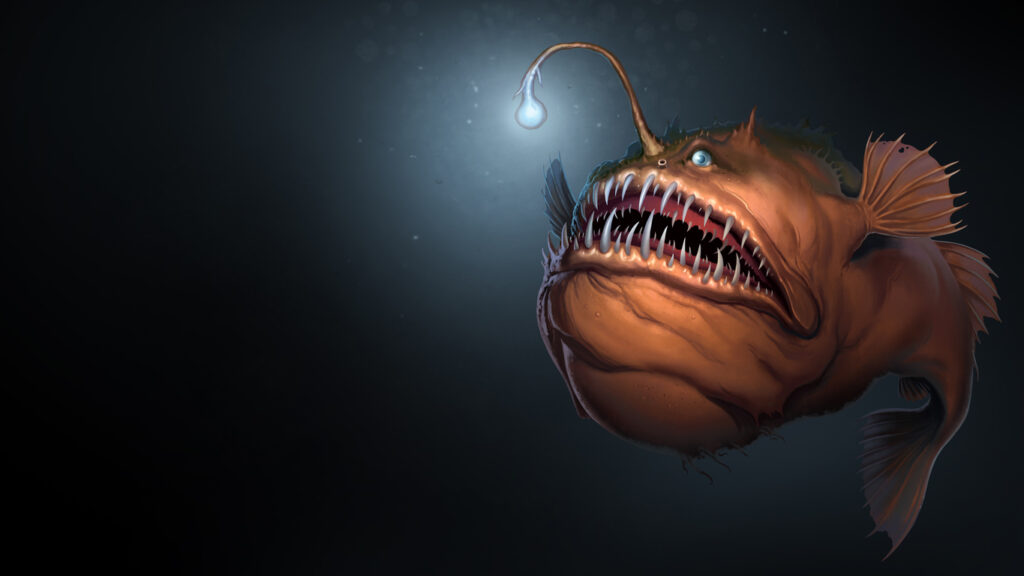
In the absence of sunlight, the anglerfish uses bioluminescence to attract prey. A glowing lure extends from its head, drawing curious animals close enough to be snapped up in its powerful jaws. Some species also have an unusual reproductive strategy, with tiny males fusing permanently to much larger females. This ensures survival in an environment where finding a mate is almost impossible.
5. The tripod fish balances on the seafloor.
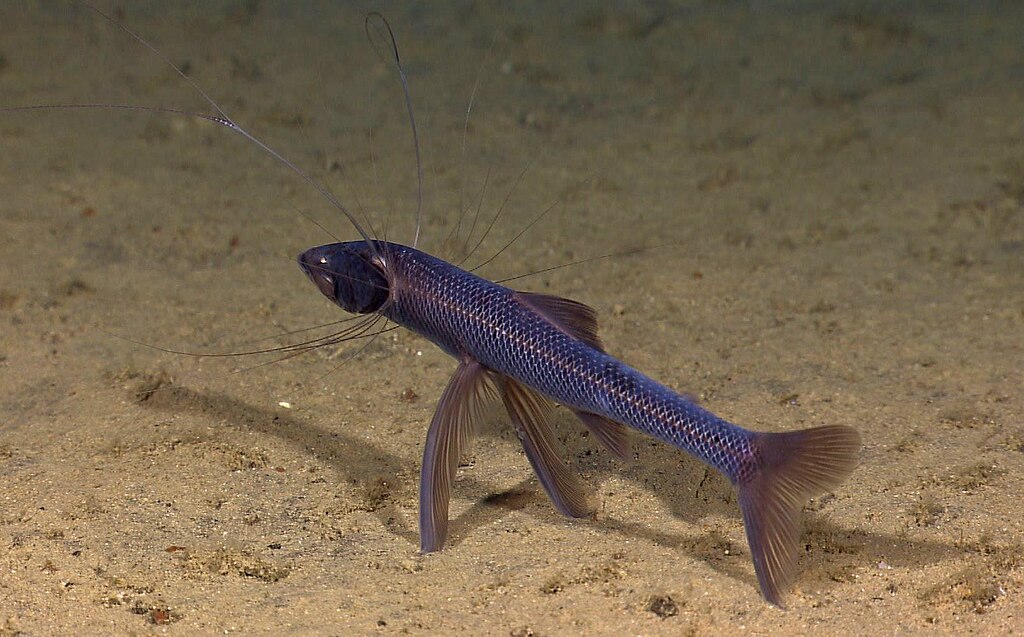
Unlike many deep-sea fish that drift, the tripod fish uses long, bony fins to stand on the ocean floor like stilts. It waits motionless for prey to drift by in the current. This strategy conserves precious energy. At depths around 4,000 metres, food is scarce, so waiting rather than chasing helps the tripod fish survive in an unforgiving environment.
6. The snailfish holds a world record.
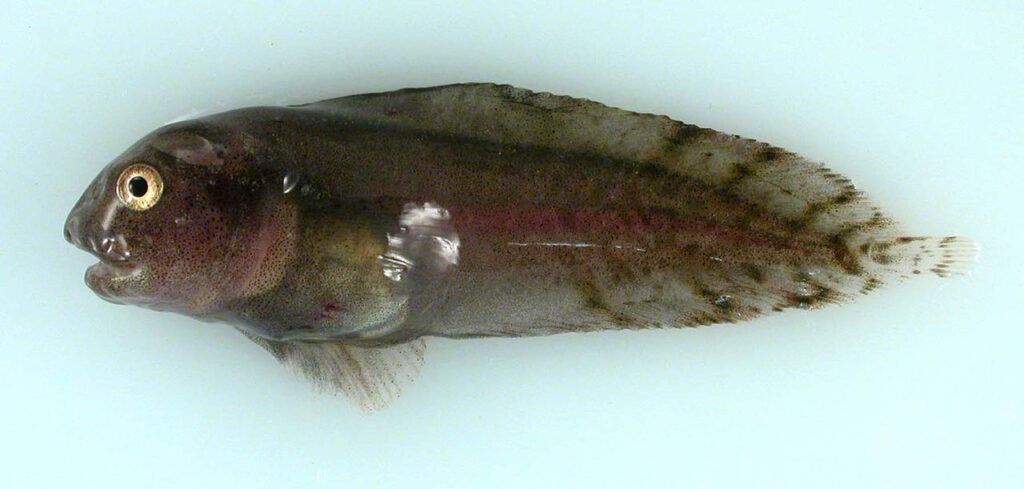
Snailfish have been recorded at depths over 8,000 metres, making them the deepest-living fish known. Their bodies are soft and flexible, which prevents them from being crushed under enormous pressure. Instead of heavy bones, their jelly-like structure allows them to adapt to the crushing forces. Despite their fragile appearance, they’re among the most resilient animals on Earth.
7. The vampire squid is a master of survival.
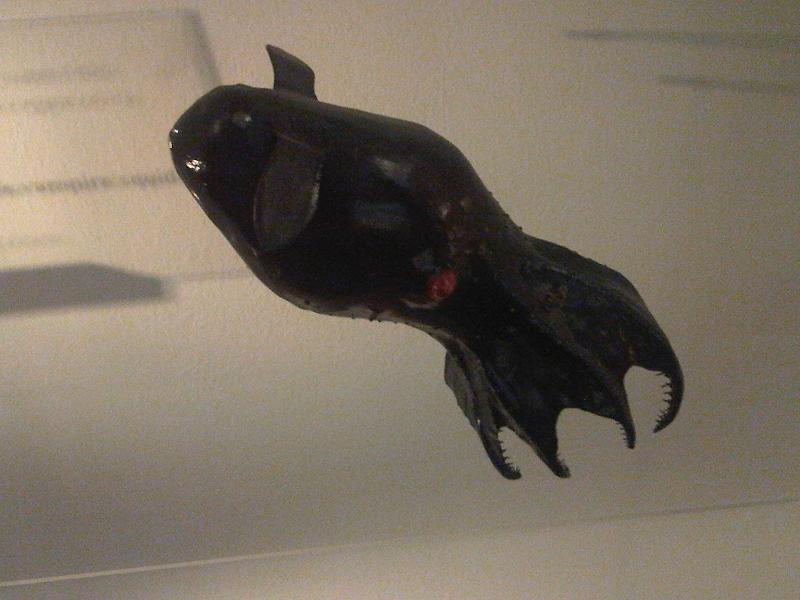
Despite its sinister name, the vampire squid doesn’t feed on blood. Instead, it gathers drifting particles of organic matter — known as “marine snow” — using sticky filaments to survive in nutrient-poor waters. It lives in oxygen-depleted zones where few other animals can survive. Its ability to thrive in such low-oxygen conditions makes it uniquely suited to one of the most hostile parts of the ocean.
8. The giant isopod is a deep-sea scavenger.
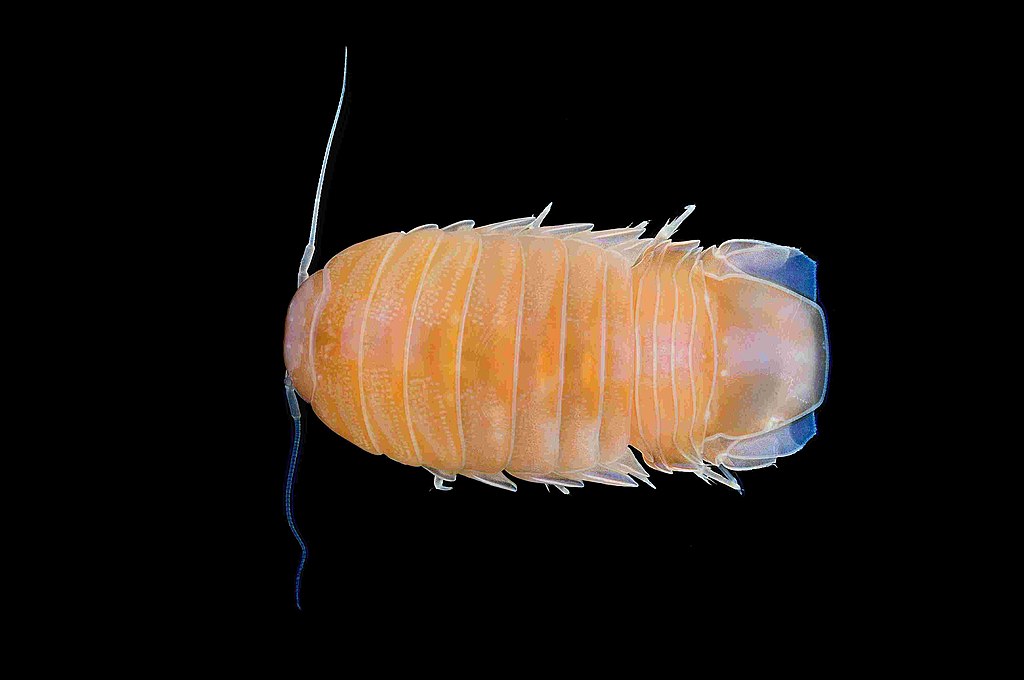
Looking like an oversized woodlouse, the giant isopod can reach half a metre in length. It scavenges on the ocean floor, feeding on the remains of dead whales, fish, and other animals that sink to the depths. Its ability to survive long periods without food is key. In an environment where meals are unpredictable, endurance is the giant isopod’s greatest strength.
9. The barreleye fish has a transparent head.
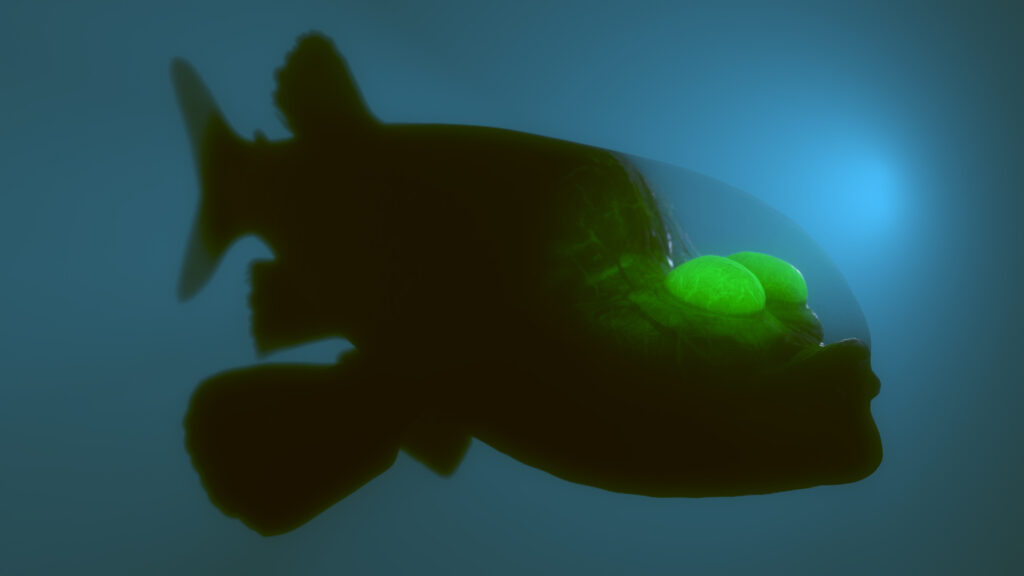
The barreleye fish may be one of the strangest-looking deep-sea creatures. Its head is transparent, allowing its upward-facing eyes to peer through its skull and spot prey silhouetted against faint light above. That unusual adaptation helps it detect the tiniest glimmers in the deep ocean. With a body only a few centimetres long, it relies on ingenuity rather than size to survive.
10. The hydrothermal vent crab lives in extremes.
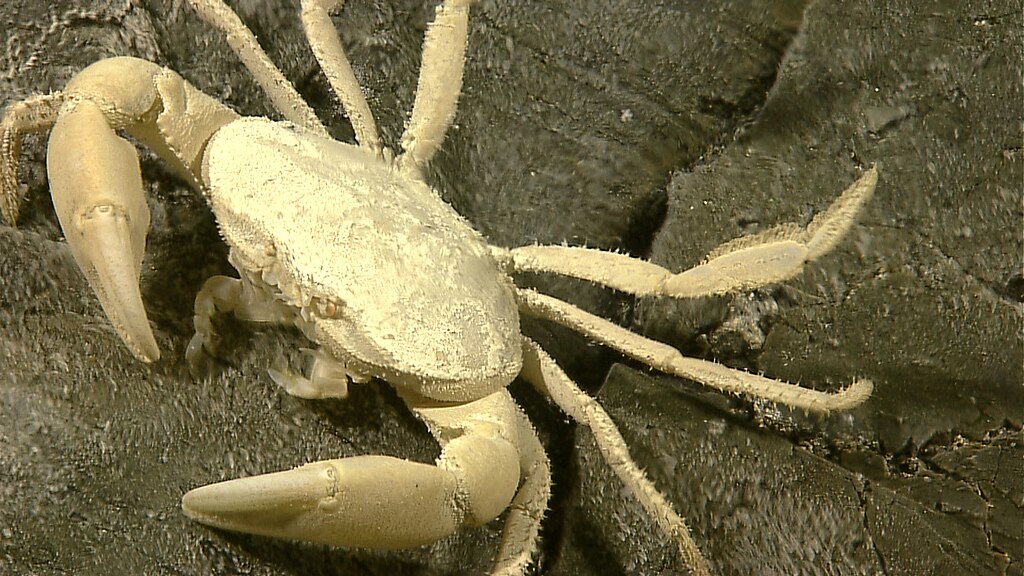
Some deep-sea animals live not only under pressure but also near hydrothermal vents, where boiling water rich in chemicals gushes from the seafloor. The vent crab thrives in these extreme conditions, feeding on bacteria and other organisms that cluster there.
These ecosystems are completely independent of sunlight, relying on chemical energy instead of photosynthesis. The crab’s survival here proves that life can adapt to conditions once thought impossible.
The deep sea may seem uninhabitable, but these creatures show otherwise. Adaptations like bioluminescence, flexible bodies, and unique feeding strategies allow them to survive where pressure is crushing and food is scarce. Life, it seems, finds a way even in the darkest depths.