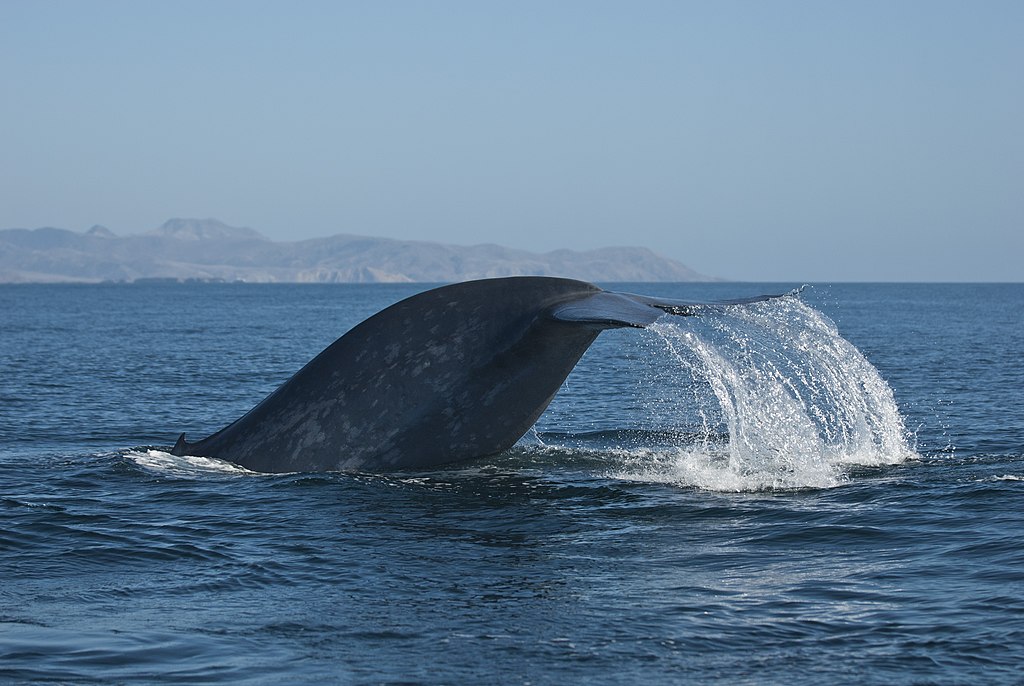
Blue whales don’t just hold the title for the biggest animal on the planet today. The truth is that they’re the biggest animal to ever exist, full stop. Bigger than any dinosaur, bigger than anything swimming or walking right now, and somehow still managing to glide through the ocean like it’s no big deal. For something so massive, they move with a kind of calm that feels completely at odds with their size.
What makes them so fascinating is how every part of their lives has evolved around sheer scale. Their feeding habits, their calls, their migration patterns, even the way they raise their young — it’s all built around a body that’s almost impossible to comprehend until you hear the numbers. Here’s what makes blue whales such astonishing creatures, and why they remain one of the ocean’s greatest mysteries.
They’re genuinely bigger than any dinosaur that ever lived.
Most people assume dinosaurs hold the record for largest animals because they’re often portrayed as absolute giants in films and museums. The assumption is that nothing could possibly be bigger than a Tyrannosaurus Rex or those long-necked sauropods we see in Jurassic Park.
Blue whales can reach lengths of 29.9 to 30.5 metres and weigh up to 190 to 200 tonnes, making them the largest animal known to have ever existed. While some dinosaurs like Argentinosaurus might’ve weighed around 100 tonnes, even the biggest estimates don’t match the blue whale’s confirmed weight. The ocean allows them to grow bigger than land ever could because water supports their massive bodies.
A blue whale’s tongue weighs as much as an elephant.
When you think about a whale’s tongue, you probably don’t imagine it being particularly remarkable or heavy. It’s just a tongue, after all, and surely, it can’t be that different from other large animals’ tongues in terms of relative size.
A blue whale’s tongue alone can weigh as much as an elephant, coming in at around 2.7 to 3.6 tonnes. The tongue is so big that a whole football team could stand on it. That’s not just heavy for a tongue, that’s heavier than most entire animals you’d see at a zoo.
Their heart is the size of a small car.
People often use heart size as a way to talk about courage or emotion, but they don’t usually think about the actual physical size of hearts. You’d probably imagine that even a whale’s heart would fit comfortably in a large box or maybe a wheelbarrow at most.
The heart of a blue whale can weigh 180 kilograms, and it’s about the size of a Volkswagen Beetle. The heart beats just once every ten seconds when the whale dives, pumping about 220 litres of blood throughout that massive body with each beat. You could genuinely fit inside a blue whale’s heart if you were small enough to crawl in.
Baby blue whales are born bigger than most adult animals.
When people think about newborn animals, they picture tiny, fragile creatures that need protecting and nurturing to survive. Even large animals like elephants have relatively small babies compared to their adult size, starting life quite vulnerable and dependent.
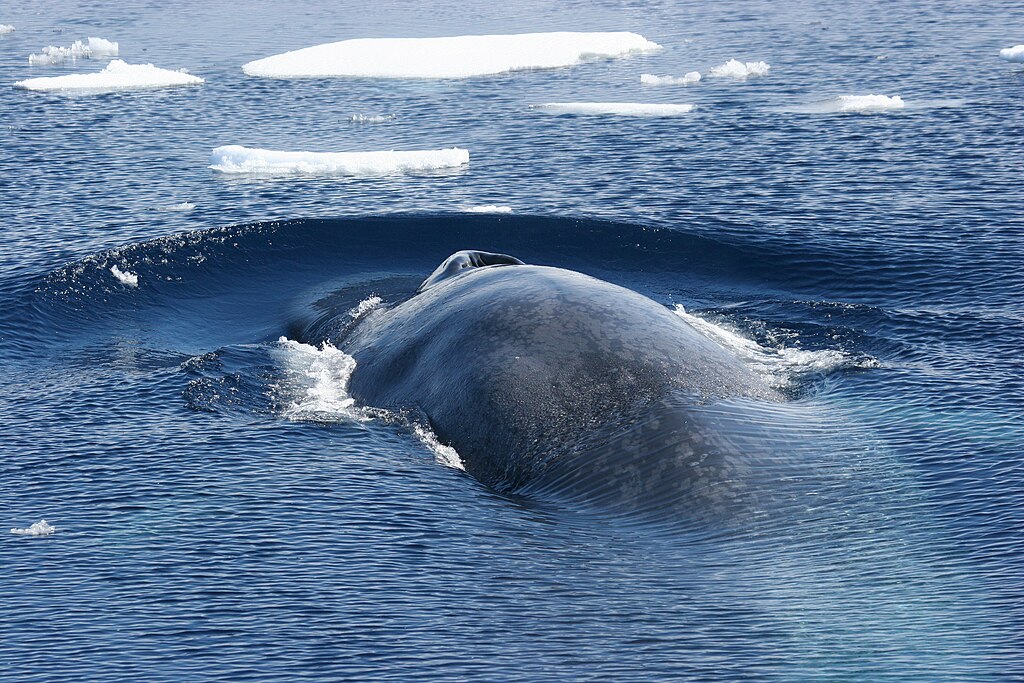
A baby blue whale emerges weighing up to 3 tonnes and stretching to 25 feet after about a year inside its mother’s womb. That’s already longer than a killer whale and heavier than most cars. Blue whale calves gain about 200 pounds every day for their first year by gorging on nothing but mother’s milk, which is the fastest growth rate of any animal on Earth.
They eat four tonnes of food every single day.
You’d think an animal this massive must eat other large creatures like sharks or seals to sustain itself. It seems logical that the biggest animal would need to hunt sizeable prey to get enough calories to power that enormous body.
Blue whales reach their mind-boggling dimensions on a diet composed nearly exclusively of tiny shrimplike animals called krill, consuming about 4 tonnes of krill a day during feeding season. They filter-feed by gulping enormous mouthfuls of water and pushing it back out through baleen plates, trapping thousands of tiny krill to swallow. It’s mad that the largest animal survives on one of the smallest.
Blue whales are louder than jet engines.
Most people know whales make sounds and sing, but they probably imagine it as relatively gentle whale songs you’d hear on nature documentaries. The calls seem peaceful and melodic, rather than anything particularly loud or intense that would damage your hearing.
Blue whales are the loudest animals on Earth, even louder than a jet engine, with their calls reaching 188 decibels while a jet reaches 140 decibels. In good conditions, blue whales can hear each other up to 1,000 miles away. These low-frequency calls travel incredible distances through water, allowing whales to communicate across entire ocean basins.
They’re as long as three buses parked end to end.
Numbers like 30 metres don’t really mean much to most people without proper context. You might know it’s big, but can’t properly visualise just how massive that actually is when you’re trying to picture the animal in your mind.
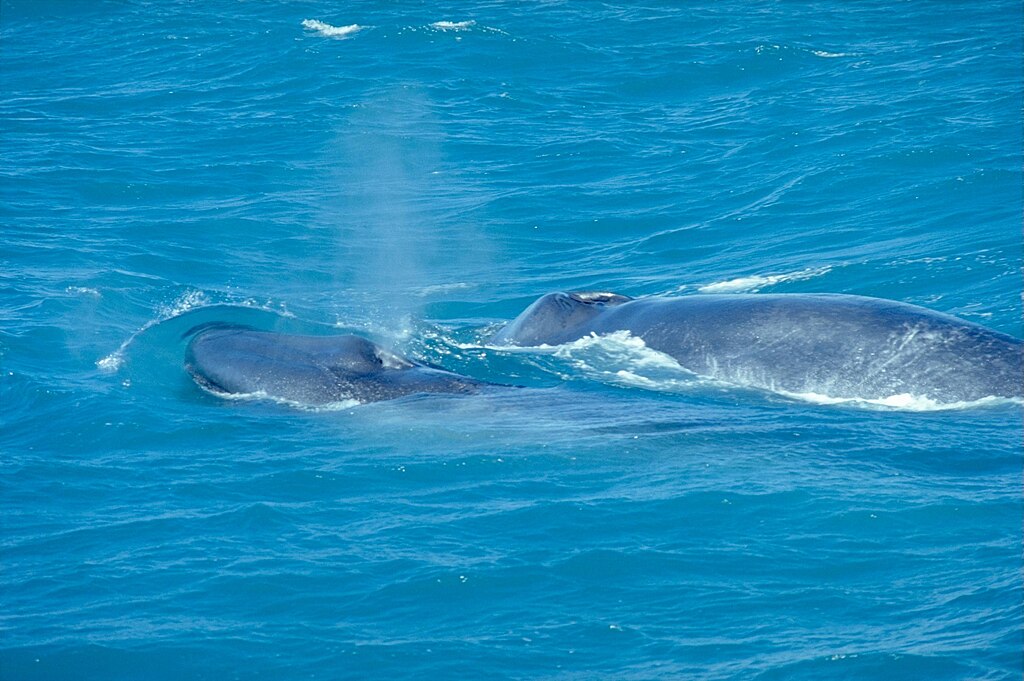
Blue whales can stretch over 30 metres in length, which is roughly the length of three school buses parked bumper to bumper. Standing next to one would be like standing beside a building lying on its side. The largest blue whale ever recorded was a female measuring 33.58 metres, which is longer than a basketball court.
A blue whale mother produces more than 225 litres of milk daily.
Nursing seems like such a normal mammal thing that you don’t really think about the mechanics when it comes to whales. You’d probably assume whale milk is fairly similar to other mammals’ milk, just produced in slightly larger quantities to feed their bigger babies.
A nursing blue whale mother produces over 225 litres of milk a day, with the milk containing 35 to 50% milk fat. That’s enough to fill a bathtub every single day. This rich milk allows the calf to gain weight at a rate of up to 10 pounds an hour or over 250 pounds a day, which is absolutely mental when you think about it.
They nearly went extinct from whaling.
People know whaling happened historically, but probably don’t realise quite how devastating it was for blue whale populations. They might think some whales were hunted but assume the species was never in genuine danger of complete extinction.
Blue whale whaling peaked between 1930 and 1931 with 30,000 animals taken, and 350,000 to 360,000 whales were killed in the Antarctic alone in the first half of the 20th century. The International Whaling Commission banned all hunting of blue whales in 1966, but populations still haven’t recovered. There are only an estimated 10,000 to 25,000 blue whales left worldwide.
Blue whales can live as long as humans.
Most people don’t think about how long whales actually live, perhaps assuming they’ve got lifespans similar to other large mammals like elephants. The idea that a whale could live through multiple human generations seems unlikely for a creature living in the harsh ocean environment.
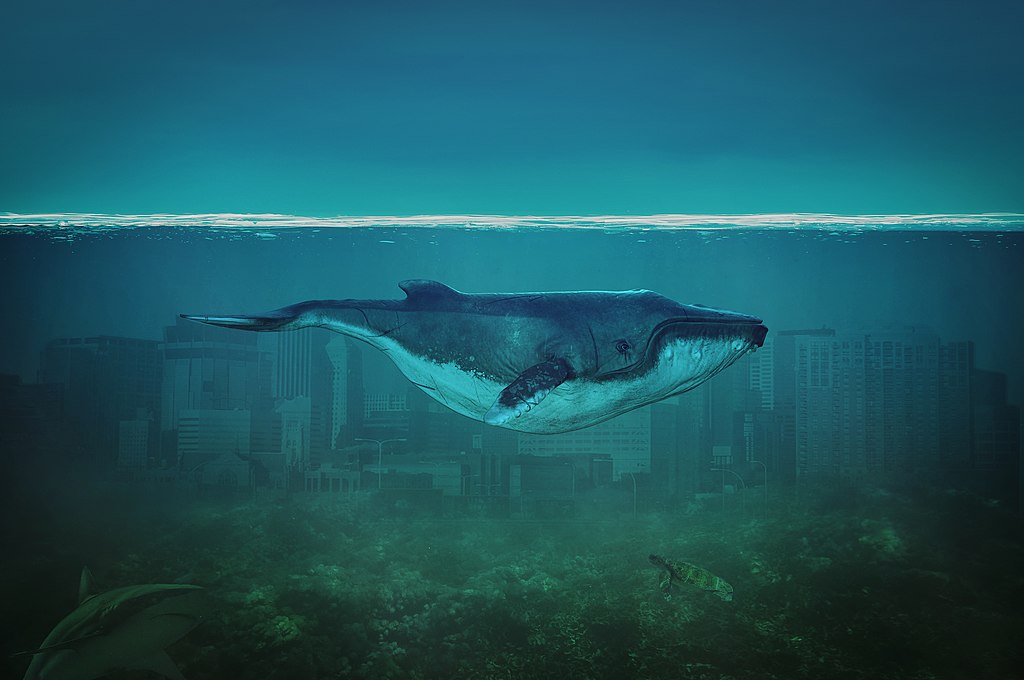
The oldest blue whale found was determined to be 110 years old, and scientists estimate blue whales can live between 80 and 90 years on average. They work out a whale’s age by counting layers in their earwax, similar to counting rings in a tree trunk. Some blue whales alive today were born before World War II.
They can swim surprisingly fast for their size.
An animal this massive seems like it would move slowly through the water, lumbering along at a gentle pace. You’d expect something weighing 200 tonnes to be sluggish and unable to pick up much speed, regardless of how streamlined its body shape might be.
Blue whales cruise the ocean at more than five miles an hour but can accelerate to more than 20 miles an hour when they’re agitated. That’s properly fast for something so enormous, showing just how powerful their tail flukes are. When they need to move quickly, these giants can absolutely shift.
Ship strikes are now their biggest threat.
With commercial whaling largely stopped, you’d think blue whales would be recovering well and facing few serious threats in modern times. The assumption is that once hunting ended, whale populations would naturally bounce back without humans causing problems anymore.
Ship strikes are a significant mortality factor for blue whales, with 17 killed or suspected to have been killed by ships between 1998 and 2019 off the U.S. West Coast alone. These collisions happen because ships travel through the same waters where whales feed, and the whales can’t always get out of the way fast enough. Climate change affecting their food supply also threatens their recovery.