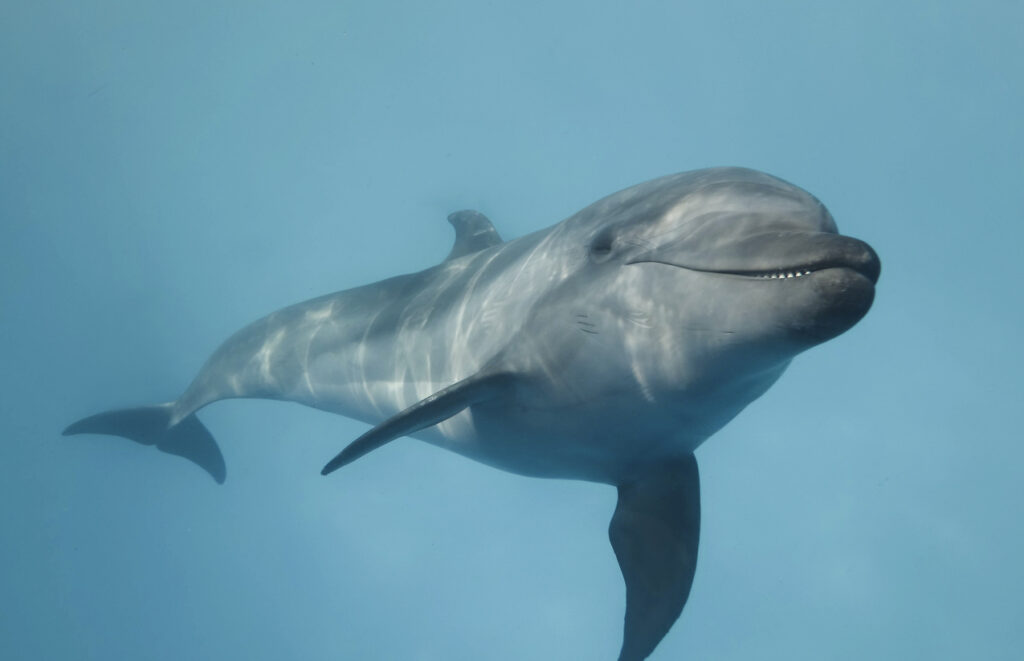
We’ve all heard dolphins are smart, but what does that really mean? It’s not just about doing tricks at marine parks. Out in the wild, dolphins show levels of intelligence that go way beyond what you’d expect from an animal with flippers. From team strategies to social games and even passing down knowledge, their brains are constantly at work. Here are some of the clearest, most fascinating behaviours that prove just how clever dolphins really are.
1. They give each other names.
Dolphins use unique “signature whistles” to identify themselves, sort of like how we use names. Each dolphin has its own sound, and they recognise and respond to others by using theirs too. It’s one of the only examples in the animal world where individuals label each other with learned, consistent vocal tags, like an underwater version of, “Hey, Sarah!”
2. They teach their young specific hunting tricks.
In some regions, dolphins have passed down hunting techniques for generations. One example? Using sponges to cover their snouts when foraging on the seafloor, protecting themselves from cuts and stings. This isn’t instinct; it’s taught behaviour. Mums show their calves how it’s done, and the knowledge sticks. Rather than just being a survival method, it’s actual culture.
3. They work together to herd fish into traps.
Dolphins use coordinated group strategies to trap fish. They’ll form a tight circle or create mud rings to confuse and contain prey, then take turns darting in to feed. It takes timing, communication, and trust. Instinctive chasing is part of it, but it’s also organised teamwork with shared goals and unspoken signals.
4. They understand pointing (even if you don’t have fingers).
Dolphins can follow where humans point, even using their rostrums (beaks) or eyes to do the same for each other. That’s a big deal because not many species understand that kind of non-verbal cue. Recognising intent behind a gesture means dolphins don’t just see, they interpret. They understand the idea behind a direction, not just the motion itself.

5. They play games for fun, not food.
Dolphins love to play. They pass objects like seaweed back and forth, surf waves just because they can, and play chase with other animals, including humans at times. This type of playful behaviour isn’t about survival. It’s about curiosity, joy, and bonding. They enjoy themselves, and that in itself is a marker of higher intelligence.
6. They solve problems on the fly.
Dolphins have been seen figuring out new ways to get food or avoid danger without training. In one case, they blew bubble rings and then swam through them for fun, and pure invention for the sake of experience. When faced with challenges, they don’t just repeat old tricks; they adapt, think it through, and test out new strategies.
7. They have complex social lives.
Dolphin pods aren’t just loose groups; they have layers. Alliances, rivalries, babysitting arrangements, and long-term friendships all exist within dolphin communities. They even use these relationships strategically, forming coalitions to gain access to mates or outwit other groups. It’s like a soap opera, but underwater and with more clicking noises.
8. They understand themselves in mirrors.
One of the rarest traits in the animal kingdom? Self-awareness. Dolphins have passed the mirror test, meaning they can recognise themselves in a reflection rather than thinking it’s another dolphin. This puts them in a small group of animals (alongside great apes, elephants, and magpies) that show signs of true self-recognition and awareness of their own identity.

9. They help injured pod members.
Dolphins have been observed supporting sick or injured friends by keeping them afloat or swimming slowly to stay nearby. They don’t just move on and leave the weak behind. This level empathy and care suggests an emotional intelligence that goes well beyond survival instinct. It also shows loyalty, memory, and deep social bonding.
10. They mimic human actions with eerie accuracy.
In captivity studies, dolphins have copied human behaviours on cue, even if they’ve never done them before. That includes things like spinning, waving, or splashing in sync. What’s impressive isn’t just the mimicry; it’s how fast they learn. They watch, process, and repeat, often without needing repeated instruction. That’s high-speed observational learning at work.
11. They use tools.
That sponge trick we mentioned? That’s tool use. Dolphins have also been seen using coral to rub their skin (possibly as self-care or to treat irritation), showing they’re not just reacting. They’re using the environment thoughtfully. Tool use is rare in nature, and dolphins are one of the few marine species known to do it regularly. It shows creativity and foresight, not just basic intelligence.
12. They even seem to “talk” in different dialects.
Dolphins from different regions use distinct vocal patterns and sounds, almost like dialects. They vary in pitch, tone, and rhythm depending on where the pod is located. It’s not just noise. It’s communication shaped by culture and geography, and it suggests that dolphin language might be more complex than we’ve even begun to understand.