Spotting a snake in the UK can feel like a rare surprise, but they’re out there, especially in the warmer months.
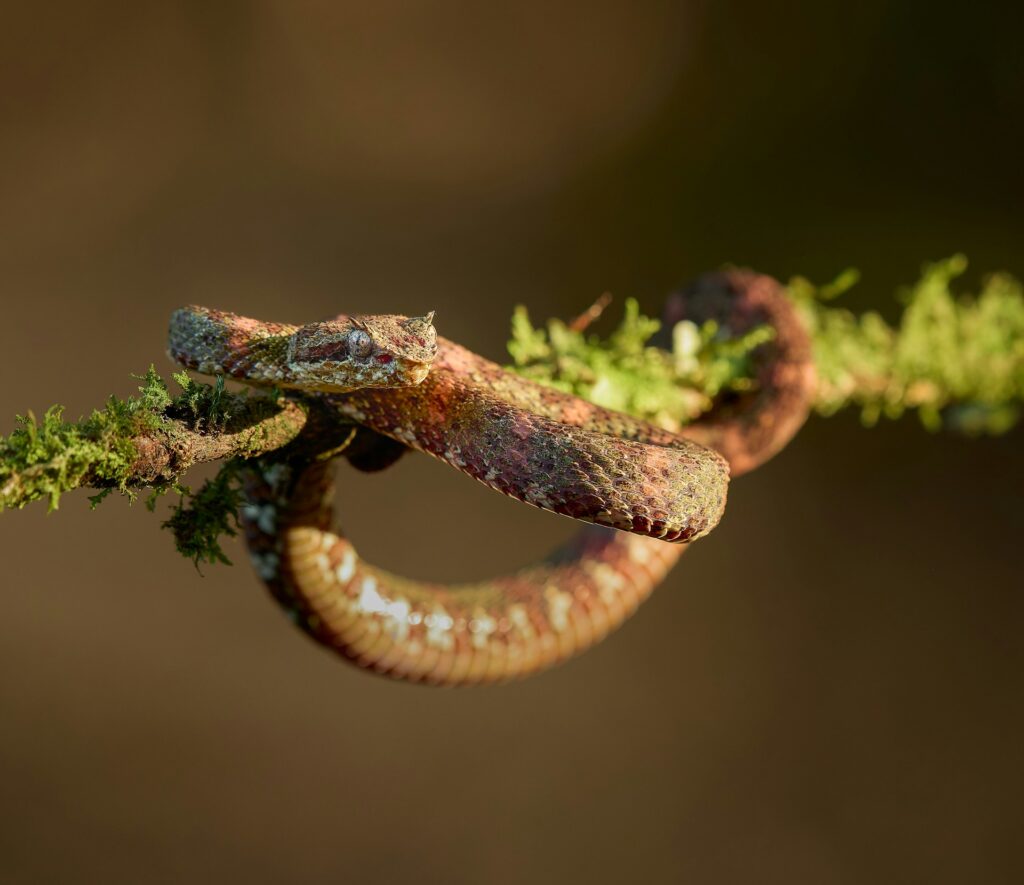
While we don’t have the dangerous species you’ll find abroad, we do have a few native reptiles that turn up in gardens, heathlands, and woodland edges. The trick is knowing what’s what. Not every slither is a snake, and not every snake is a threat. Here’s a quick breakdown of what you might have seen, and whether it’s best to admire from a distance or just carry on with your day.
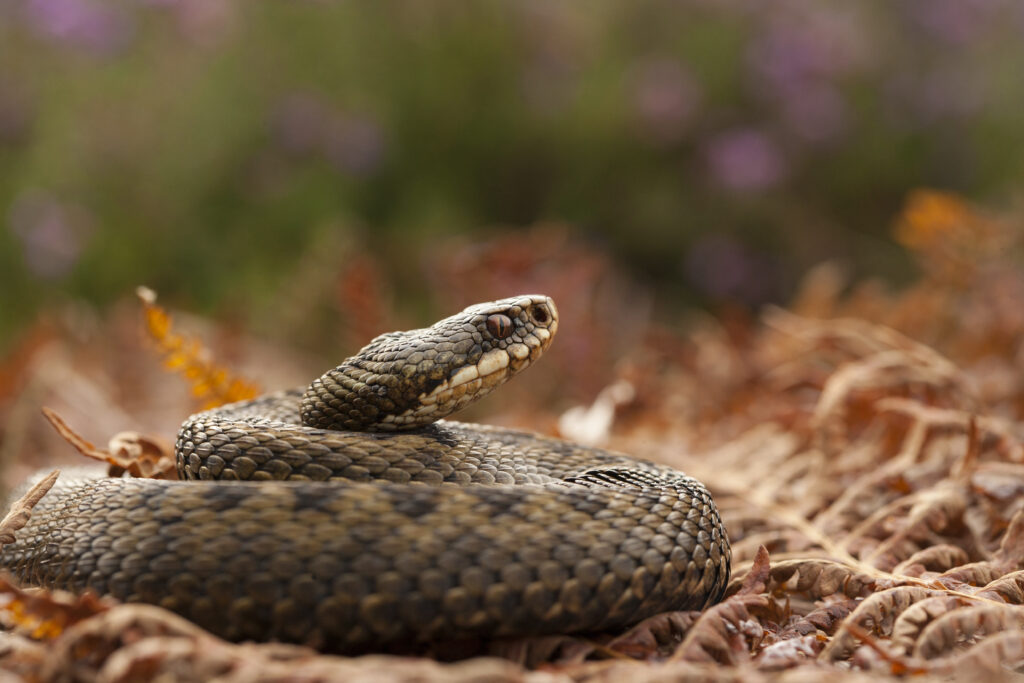
1. Adder (Vipera berus)
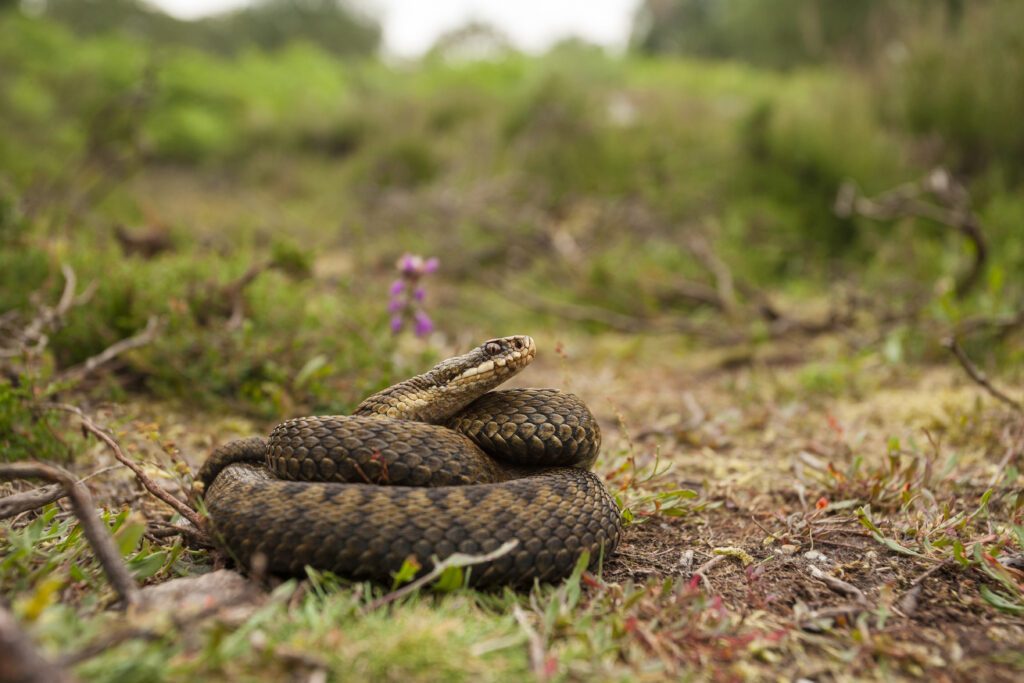
If the snake you saw had a bold zigzag pattern along its back and was sunning itself somewhere open, it was likely an adder. They’re the UK’s only venomous snake, but they’re shy and rarely bite unless cornered or stepped on.
Adders vary in colour; males are usually grey with black markings, while females tend to be more brown. You’ll often see them in heathland, rough grass, or sand dunes. If you see one, give it space and let it be. It’s protected by law and plays a key part in the ecosystem.
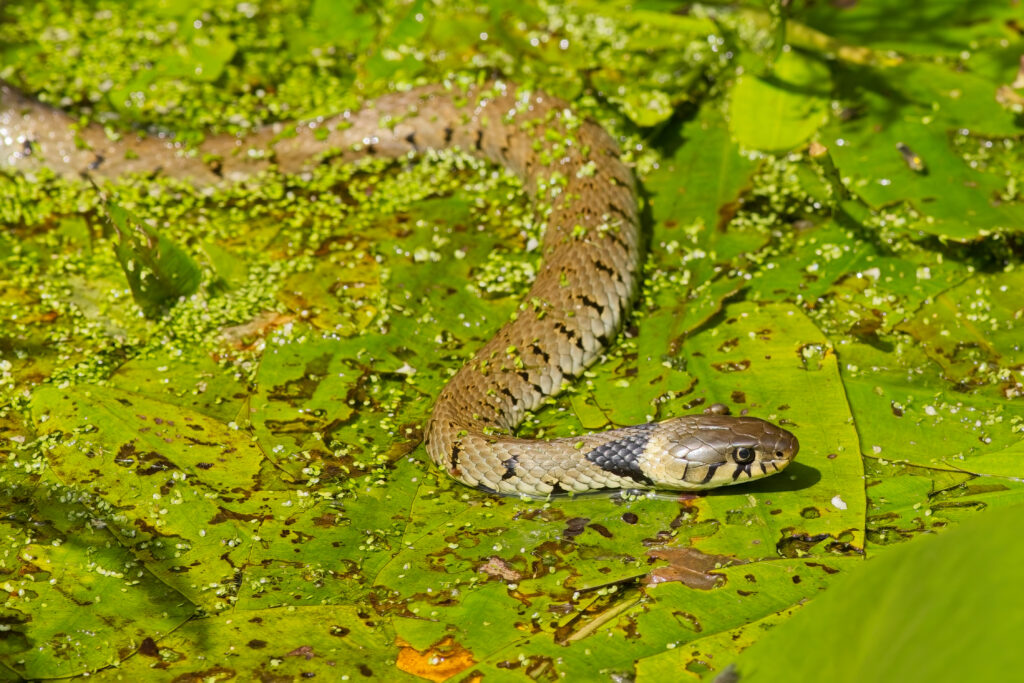
2. Grass snake (Natrix helvetica)
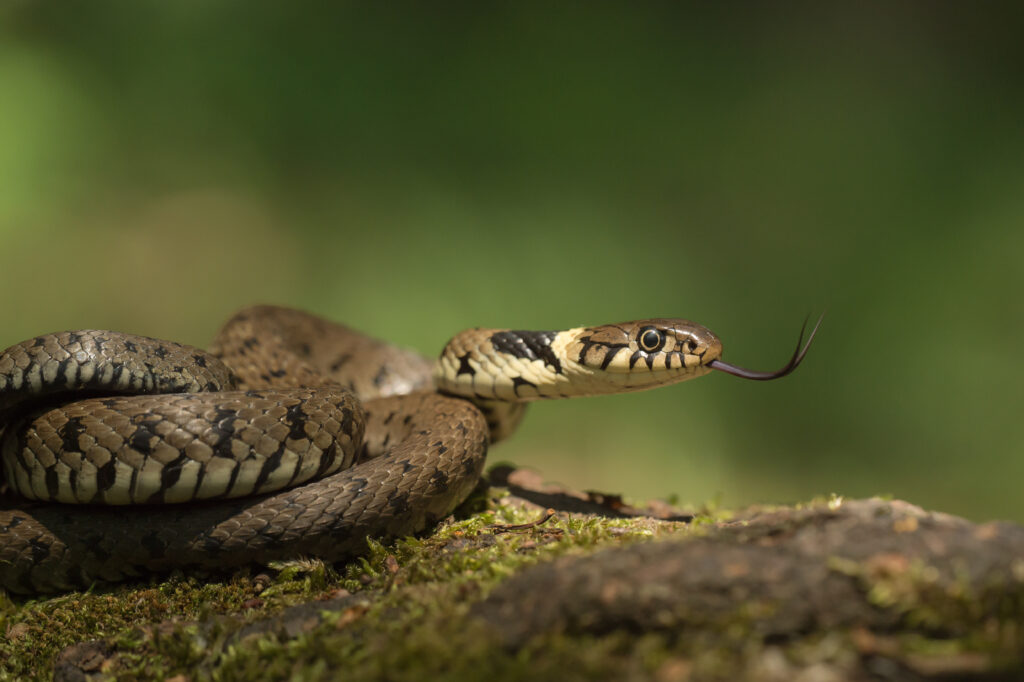
Large, long, and olive-green with a pale yellow collar behind the head, grass snakes are completely harmless. They love water, so if you saw one near a pond, river, or damp meadow, this was probably it. They’re the UK’s biggest snake, sometimes reaching up to 1.5 metres, and they’re brilliant swimmers. You’re more likely to spot them slinking away fast than basking. Tey’ll flee before confrontation every time.
3. Smooth snake (Coronella austriaca)
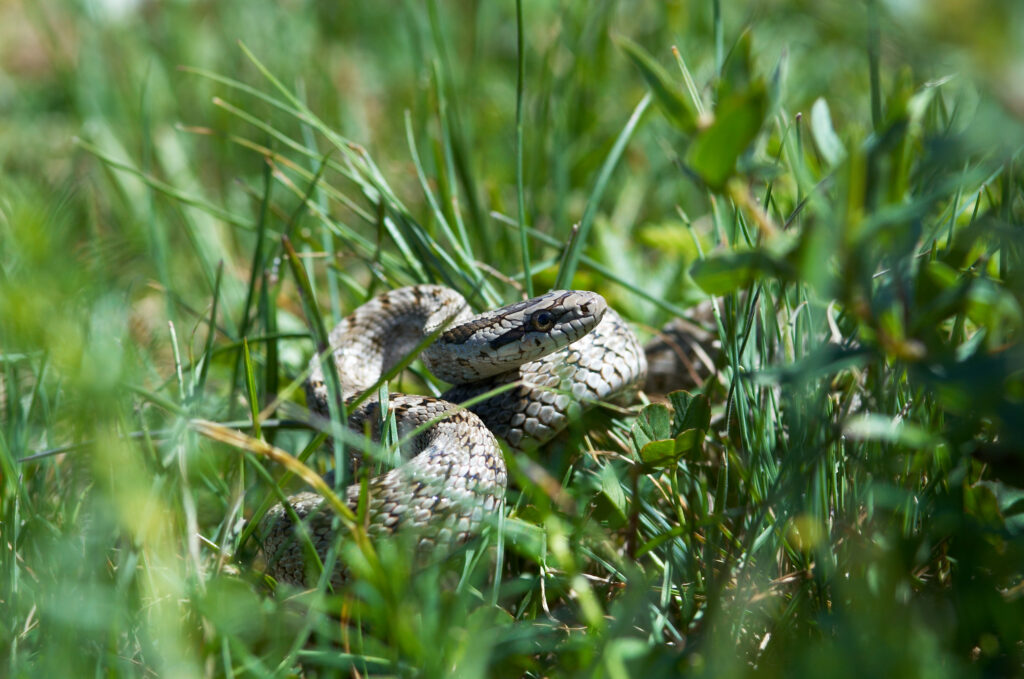
This one’s rare and hard to spot. The smooth snake is slender, grey or brown with two subtle lines running down its back, and usually confused with young adders or slow worms. It’s non-venomous and only found in a few heathlands in southern England. If you think you saw one, you’re probably lucky. It’s one of our most secretive reptiles. They tend to hide in undergrowth or bask quietly, and unless you’re in Dorset or Surrey, it’s unlikely you’ve run into one.
4. Slow worm (Anguis fragilis)
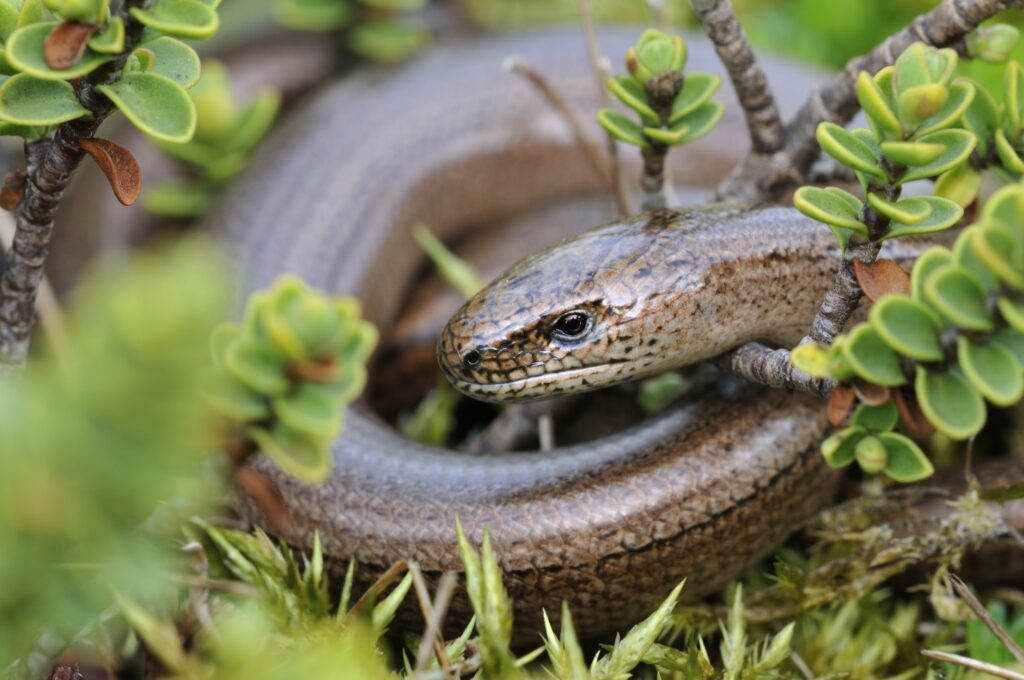
Technically not a snake at all, slow worms are legless lizards. They have smooth, shiny bodies, small heads, and a more metallic bronze look than snakes. You’ll often find them under rocks, compost heaps, or sunning themselves in the garden. They’re completely harmless and incredibly useful, eating slugs, insects, and other garden pests. If you’ve seen something small, glinty, and not very fast, it was probably a slow worm. They’re protected, so no touching or relocating.
5. A juvenile or mistaken identity
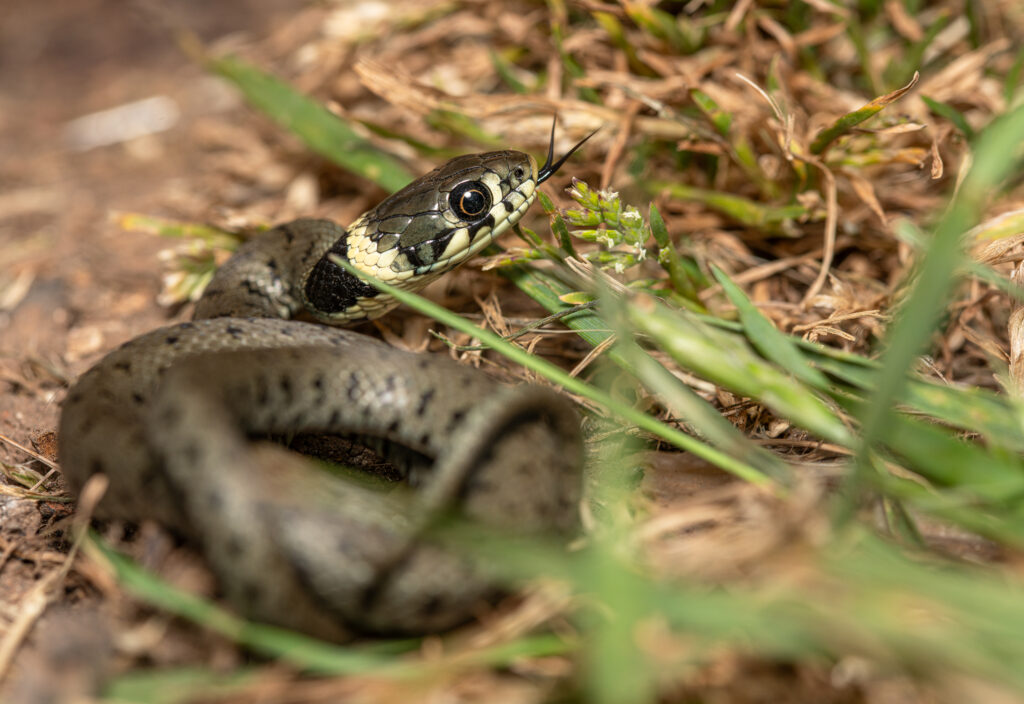
Young snakes, especially adders and grass snakes, can be confusing. Juveniles are much smaller and often have sharper markings. Adders tend to be more patterned from birth, while young grass snakes already show that signature collar.
Sometimes, people mistake lizards, eels, or even black plastic piping for snakes. Movement is often the clue; real reptiles have a smooth, purposeful glide rather than a twitchy wriggle. If it darted off quickly into the undergrowth, chances are it was the real thing.
6. Check the habitat
Where you saw the snake matters. Grass snakes like damp spots, ponds, and reedbeds. Adders stick to heathlands, moorlands, and dry grasslands. Smooth snakes are rare and limited to protected southern heaths. Slow worms love compost bins and long grass. Knowing the type of environment you were in can help narrow it down. If you’re in a dry field on a hot day in Cornwall or Dorset, it’s likely an adder. If you’re by a stream or marshland? Probably a grass snake.
7. Size and movement tell you a lot
If the snake was big and seemed to glide effortlessly, it’s likely a grass snake. If it was small and stocky, maybe with that zigzag, it could’ve been an adder. Slow worms are usually under 50 cm and move in shorter, more robotic bursts. You’re unlikely to see more than a flash of tail unless you sit very still or catch one basking early in the morning. They’re not social creatures; if you’ve seen one, it was probably already on its way out.
8. Should you be worried?
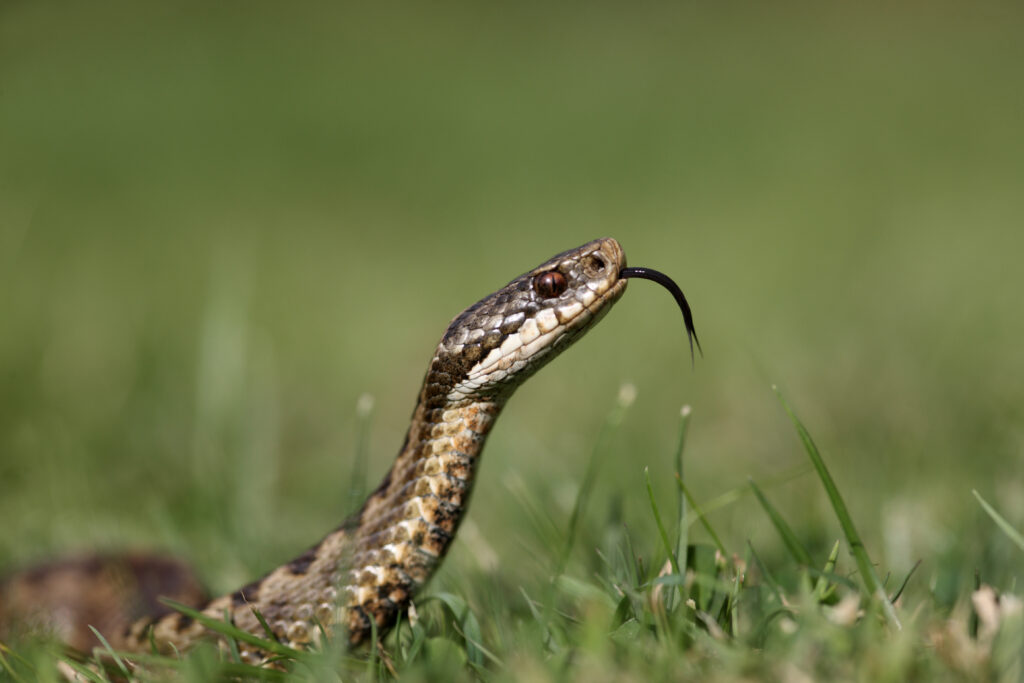
In short: no. UK snakes aren’t aggressive and won’t come after you. Adder bites are rare and usually happen when someone accidentally steps on one. Even then, it’s very rarely serious and treatable with hospital care. Most of the time, snakes will avoid you long before you even spot them. They’re more afraid of humans than we are of them, and all native snakes are protected species, so it’s illegal to harm or disturb them.
9. What not to do
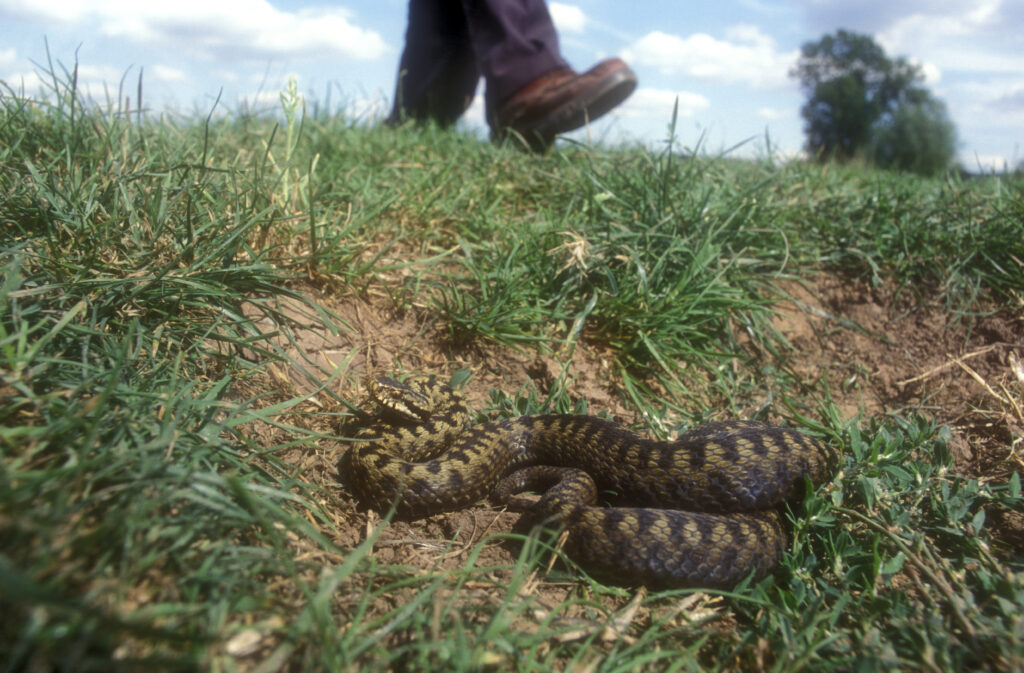
Don’t try to catch it, poke it, or move it. Snakes don’t need relocating unless they’re in immediate danger (which is rarely the case). Also, don’t spray it, trap it, or post dramatic Facebook statuses calling for extermination. If you’re concerned about kids or pets, just teach them to admire from a distance. Most snakes will vanish before you get close enough to worry.
10. How to report a sighting

If you think you’ve seen a smooth snake or you’re not sure what you’ve spotted, it’s helpful to report it to your local wildlife trust or Amphibian and Reptile Conservation (ARC). A photo (from a distance) is useful, but don’t put yourself or the animal at risk to get one. Reports help track how reptile populations are doing, especially as habitats shift with climate change and development. Every sighting helps build the bigger picture.