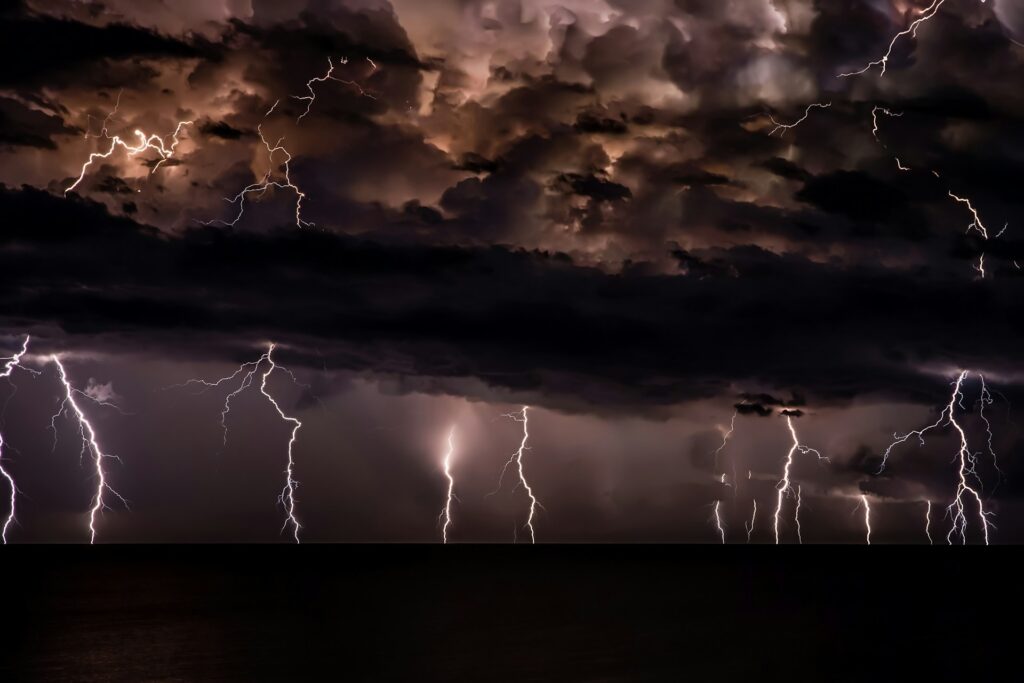
We’ve all heard the phrase “lightning never strikes the same place twice,” usually said to reassure someone that something bad won’t happen again. But when it comes to actual lightning, that old adage couldn’t be more wrong. In reality, lightning absolutely does strike the same spot more than once, and some places are hit dozens or even hundreds of times. Here’s what’s really going on, and why lightning keeps going back for round two (or twenty).
The phrase is just a myth.
It might be popular, but it’s not scientifically true. The idea that lightning avoids previously struck places is more of a comforting saying than a fact. In reality, it’s common for lightning to strike the same point again and again, especially if it’s tall or isolated. Lightning doesn’t keep track of where it’s been. It simply takes the easiest path to the ground. If the same location makes that easy again, it’ll happily strike twice, no hard feelings.
Tall structures are lightning magnets.
Lightning is attracted to the highest points in a landscape. Tall buildings, towers, and trees often get struck multiple times during a storm season because they provide a direct line to the clouds. Famous examples include the Empire State Building, which gets hit around 20–25 times a year, and various skyscrapers in storm-prone areas. The taller the structure, the better the target.
Metal doesn’t attract lightning, but height does
A lot of people assume metal objects attract lightning, but it’s not really about the material—it’s about elevation and isolation. Metal conducts electricity well, sure, but that just helps it carry the current if struck. So while holding a metal rod in an open field is definitely dangerous, it’s not because it’s metal—it’s because you’ve made yourself the tallest point in the area.
Lightning is looking for the easiest path.
Lightning isn’t random, it’s just wildly energetic. It looks for the fastest, most direct route to discharge into the ground. That’s why mountaintops, towers, and even trees in open spaces are hit more than once. It’s a question of electrical resistance. If the air above a certain object provides a low-resistance path, lightning will follow that path again and again until conditions change.
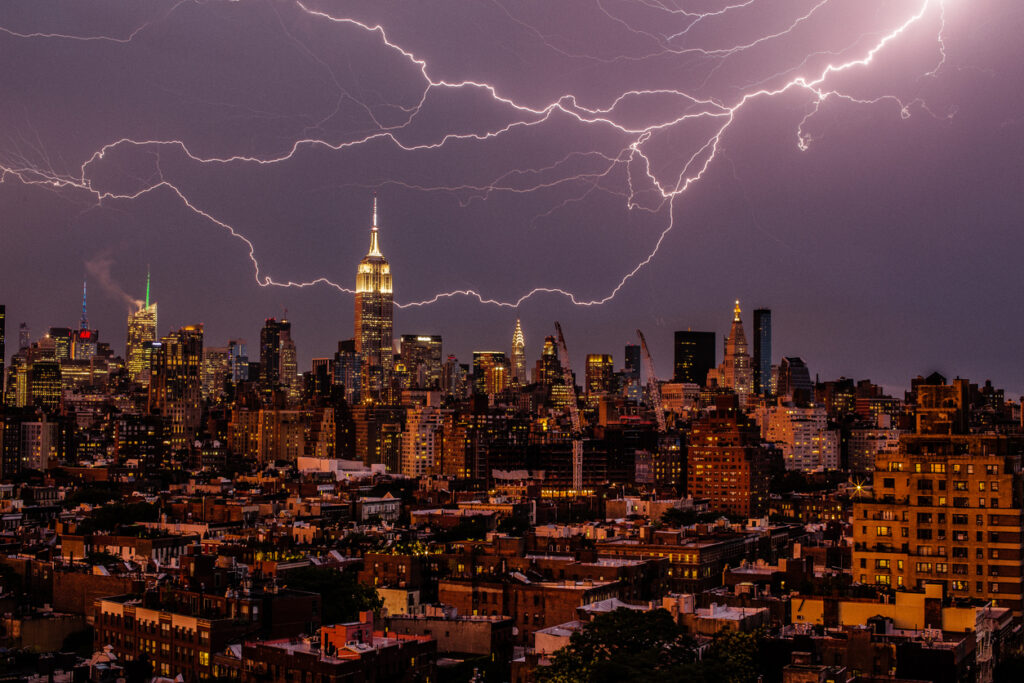
The Empire State Building proves it.
One of the most well-known examples is the Empire State Building. It gets struck so frequently that it actually helps scientists study lightning patterns and behaviour. Its lightning rods are designed to absorb and safely conduct the energy away, which is why it doesn’t burst into flames each time. It’s living proof that lightning can, and does, strike the same place over and over.
Volcanoes can trigger their own lightning.
During a volcanic eruption, ash clouds can create their own lightning strikes, and guess what? Those bolts often hit the same area repeatedly as the ash plume builds static charge. It’s like a lightning storm born out of fire and rock—and even in this natural chaos, lightning tends to follow the same basic rules: find the most direct discharge path, and go for it again and again.
Trees often suffer repeat strikes.
Large, solitary trees in open fields are commonly hit by lightning, sometimes multiple times across different storms. They stand out in the landscape and often become the default pathway for strikes. That’s why older trees sometimes have deep scars or split trunks—lightning has literally torn through them more than once. And if the tree survives one hit, it’s not immune to the next.
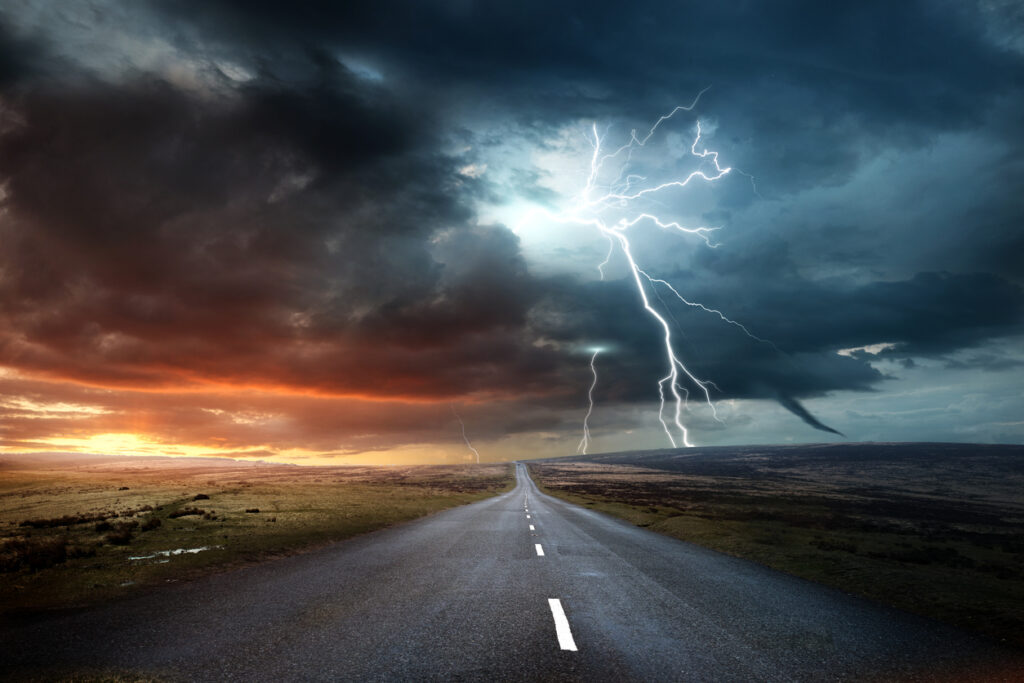
Lightning rods are meant to be struck.
Lightning protection systems are designed with repeat strikes in mind. The point of a lightning rod is to safely attract and carry the current into the ground, preventing damage to buildings or people. If lightning only ever struck once, there’d be no need for such systems to be so robust. Engineers build them specifically to handle multiple hits, sometimes even in the same storm.
Some places are struck hundreds of times.
There are spots on Earth that are hit by lightning so often it becomes part of the local identity. Lake Maracaibo in Venezuela, for example, experiences lightning storms on as many as 300 nights a year. That’s not just a one-time thing, it’s a lightning hotspot. The same cloud systems and environmental conditions create strike after strike in the same area, night after night.
Pilots have seen planes hit more than once mid-flight.
Planes are built to withstand lightning strikes, and many are hit more than once in their lifetime, sometimes during the same flight. Thankfully, their metal shells safely conduct the current without harming passengers. Seeing it from a cockpit can be dramatic, but it’s just another reminder that lightning doesn’t follow poetic rules. If the plane remains the easiest path, lightning won’t hesitate to repeat itself.
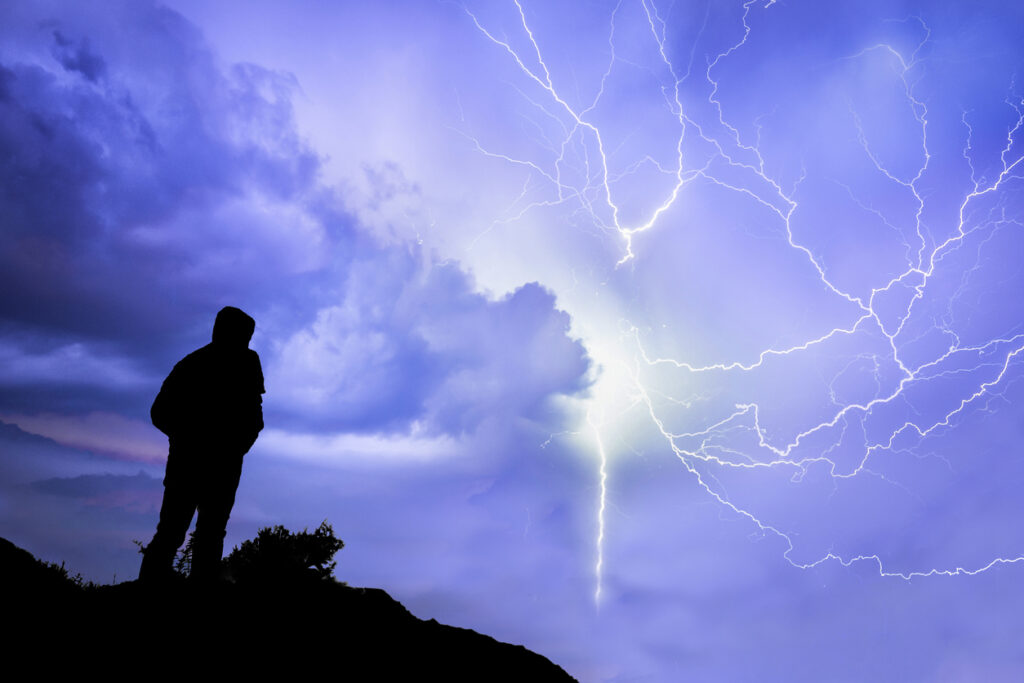
Survivors have been struck more than once.
As wild as it sounds, there are real cases of people being struck by lightning more than once. Roy Sullivan, a US park ranger, survived seven lightning strikes during his lifetime and became a living legend (with some serious luck). It’s rare, of course, but not impossible. Being in storm-prone areas, working outdoors, or simply being unlucky can lead to repeat encounters, even with something as dramatic as lightning.
The bottom line? Lightning can and occasionally does strike the same place twice.
Whether it’s a tall building, a tree, or even a person, if the conditions are right, it’s fair game for another hit. So next time someone throws out the old saying, you’ll know better. Lightning isn’t sentimental; it’s just physics doing its thing, no matter how many times it’s been there before.