Ospreys are some of the UK’s most dramatic and awe-inspiring birds of prey.
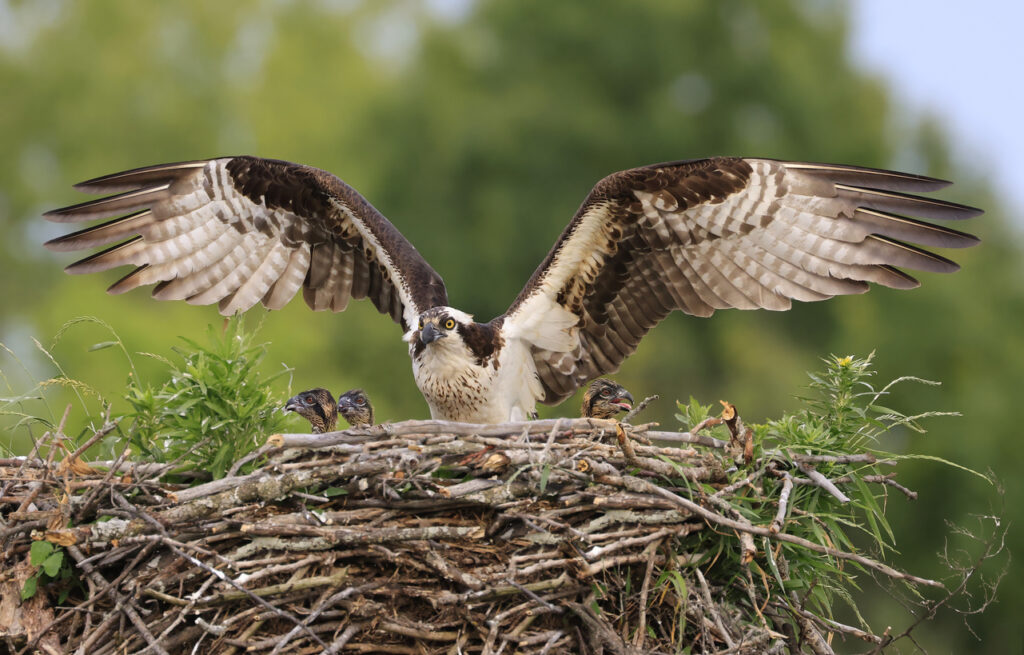
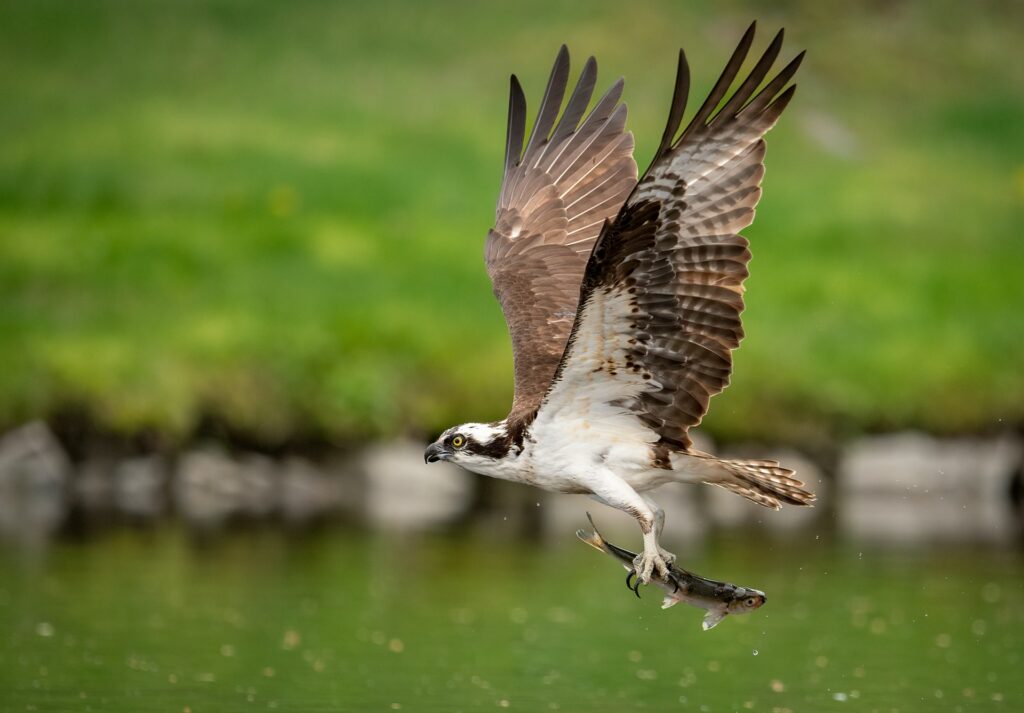
Watching one dive feet-first into water to snatch a fish is the kind of moment that sticks with you, that’s for sure. But if you’ve ever spotted one and wondered whether it was male or female, you’re not alone. Telling them apart isn’t always straightforward, especially at a distance, but there are a few physical differences and behaviour clues that can help you figure it out. Here’s how to start recognising who’s who in the osprey world.
Females are generally bigger.
As with many birds of prey, female ospreys are noticeably larger than males. They often have a broader wingspan, deeper chests, and chunkier legs. The difference can be subtle when one’s flying solo, but clearer when the pair is together. The size gap helps during breeding season. Females spend more time guarding the nest, while males handle most of the fishing. Bigger bodies also mean better protection for eggs and chicks during chilly spells.
Males have narrower wings.
Male ospreys tend to have slimmer, more angled wings compared to the wider, bulkier wings of females. This sleeker wing shape makes them faster and more agile flyers, which is perfect for those high-speed hunting dives. When you see an osprey gliding with a more elegant, almost falcon-like profile, it’s likely a male. In contrast, a bird with a flatter glide and more powerful flaps might be a female conserving energy near the nest.
Females usually have a darker “necklace.”
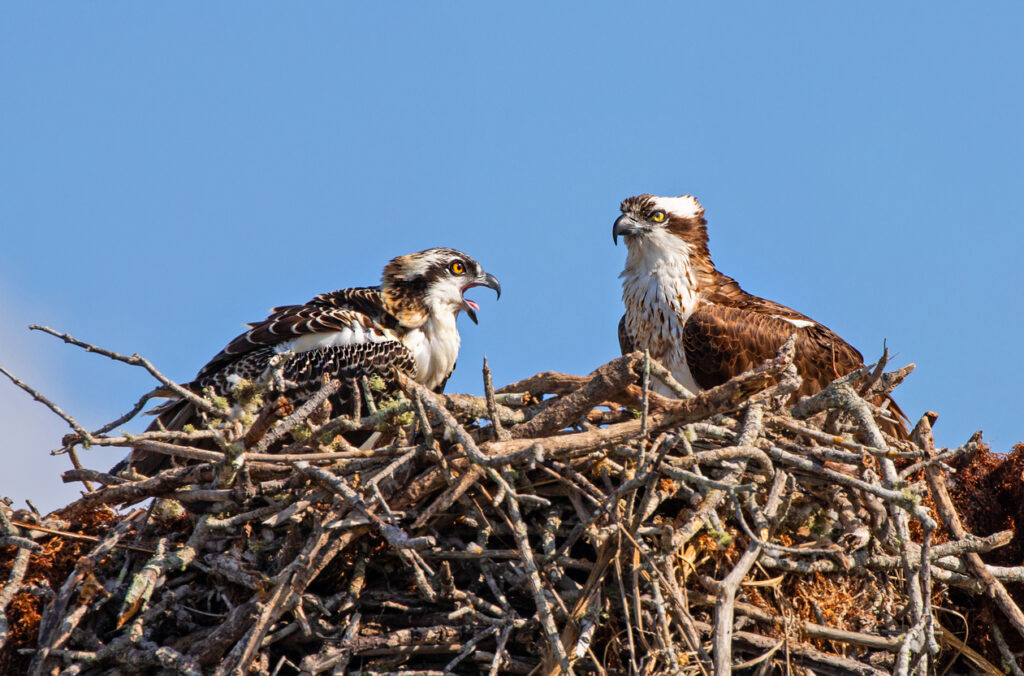
One of the easiest visual clues lies in the chest feathers. Female ospreys often have a dark, speckled line of feathers across their chest, sometimes called a “necklace.” It can be thick and bold or light and scattered, but it’s usually there. Males, on the other hand, tend to have cleaner, paler chests with little or no marking. If you spot a bird with strong mottling on its breast while it’s perched, it’s likely a female. It’s not foolproof, but it’s one of the more reliable traits.
Males have whiter heads.
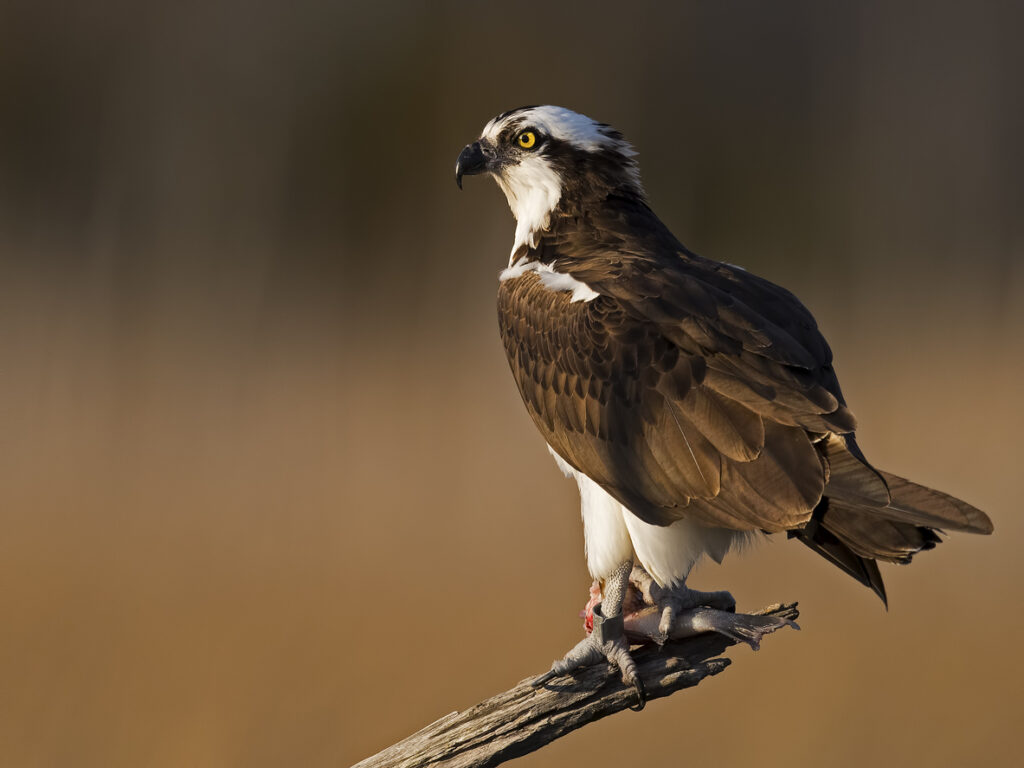
Male ospreys often appear brighter overall, especially around the head. Their crowns and cheeks tend to be whiter and cleaner-looking, giving them a sharper contrast with their dark eye stripe. Females might have more brownish tones on the top of the head or around the sides of the face. So if the bird looks strikingly bright-headed, you’re probably looking at a male. A darker, earthier tone hints at a female.
Behaviour during nesting offers big clues.
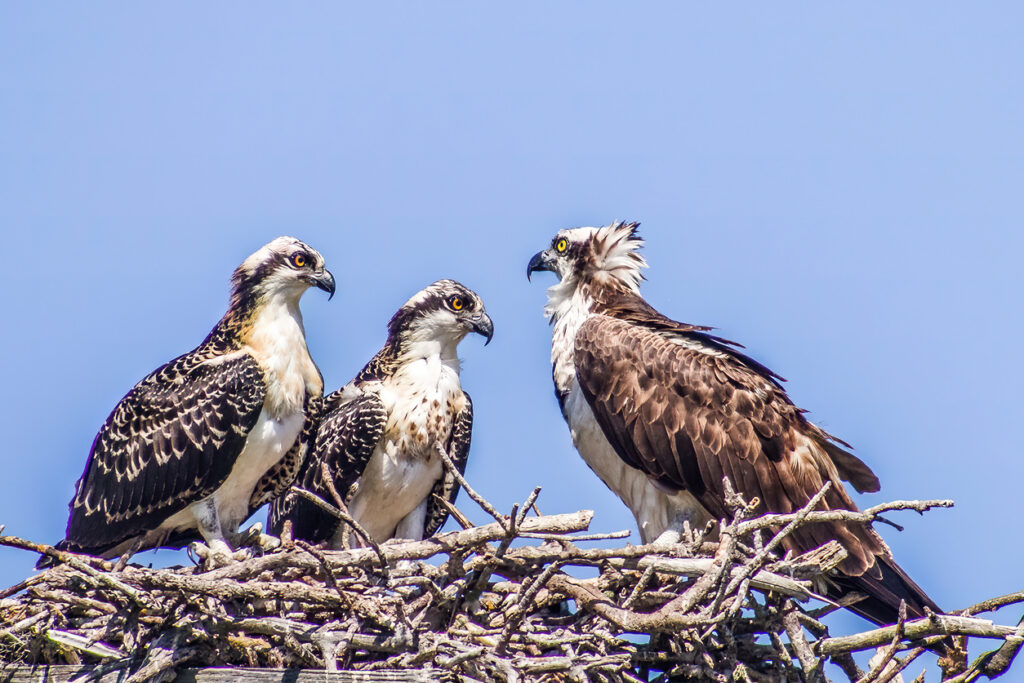
During breeding season, females typically spend most of their time on or near the nest. They’re responsible for incubating eggs and shielding the chicks when they’re young, so they’re more stationary and territorial during this period. Males, by contrast, are constantly on the move, fishing, bringing in food, and occasionally defending the territory from intruders. If you see a bird doing the heavy lifting and disappearing off for long periods, it’s likely the male.
Males are more vocal, especially when landing.
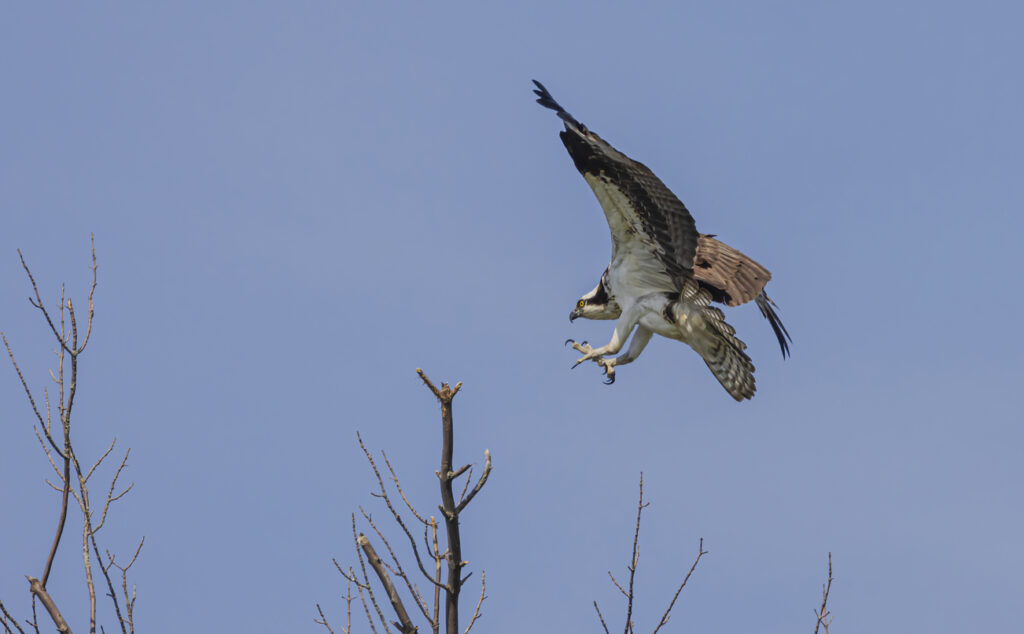
Both sexes call, but males tend to be chattier, particularly during landing and feeding. They often announce their arrival with a high-pitched whistle or rapid chirps, especially when bringing food to the nest. Females are generally quieter and save their calls for when they’re begging for food or warning off threats. If you hear regular, repetitive calling from a flying bird, there’s a good chance it’s the male trying to make an entrance.
Nest-building behaviour is male-led.
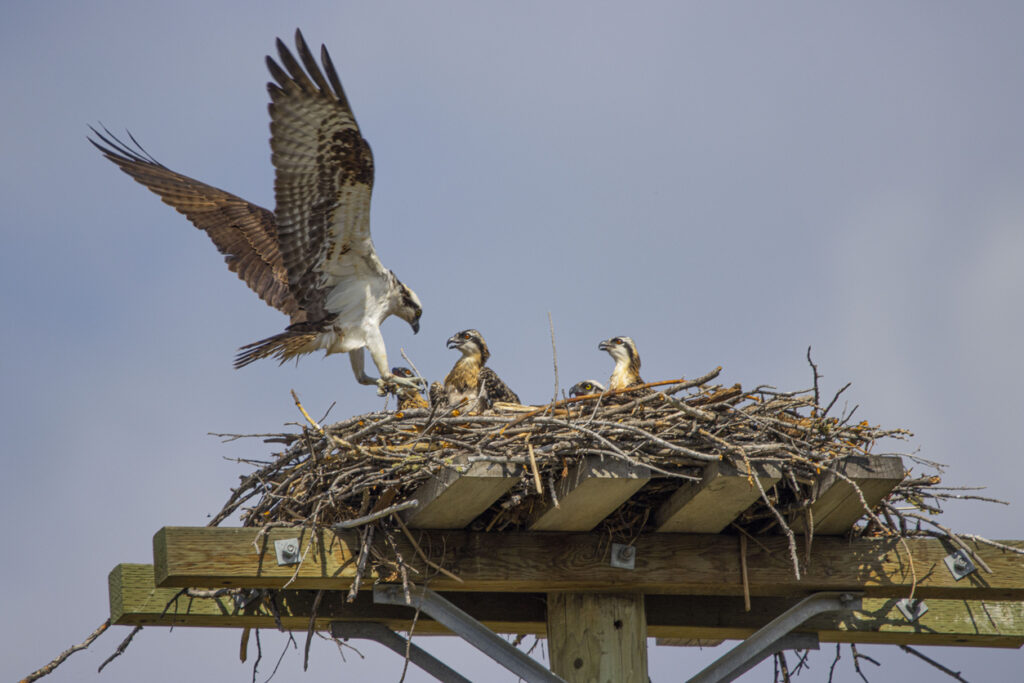
In most pairs, the male does the bulk of the stick gathering for the nest. He’ll bring back branches, twigs, and odd bits of greenery, while the female stays at the nest arranging them, or rejecting his choices entirely. This can be quite entertaining to watch. You might see the male proudly bring in a stick, only for the female to move it somewhere else immediately. It’s one of those subtle dynamics that hints at who’s who during nesting season.
Males typically catch smaller fish.
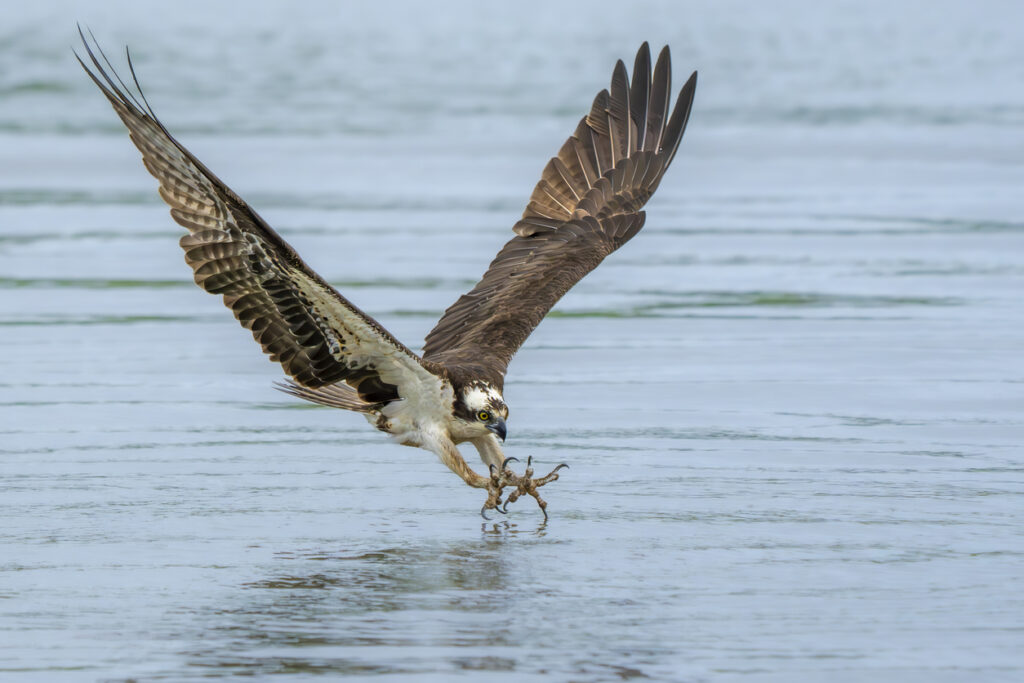
Male ospreys are the hunters during breeding season, and they usually go for smaller, more manageable fish, partly because they need to carry them long distances back to the nest. This is a good behavioural clue if you’re watching a bird fishing. Females don’t often fish while the chicks are young, but when they do, they can manage larger prey due to their bulk. So if you see an osprey with a modest-sized fish flying swiftly and low, it’s likely the male doing his rounds.
Wing shape during flight helps at a distance.
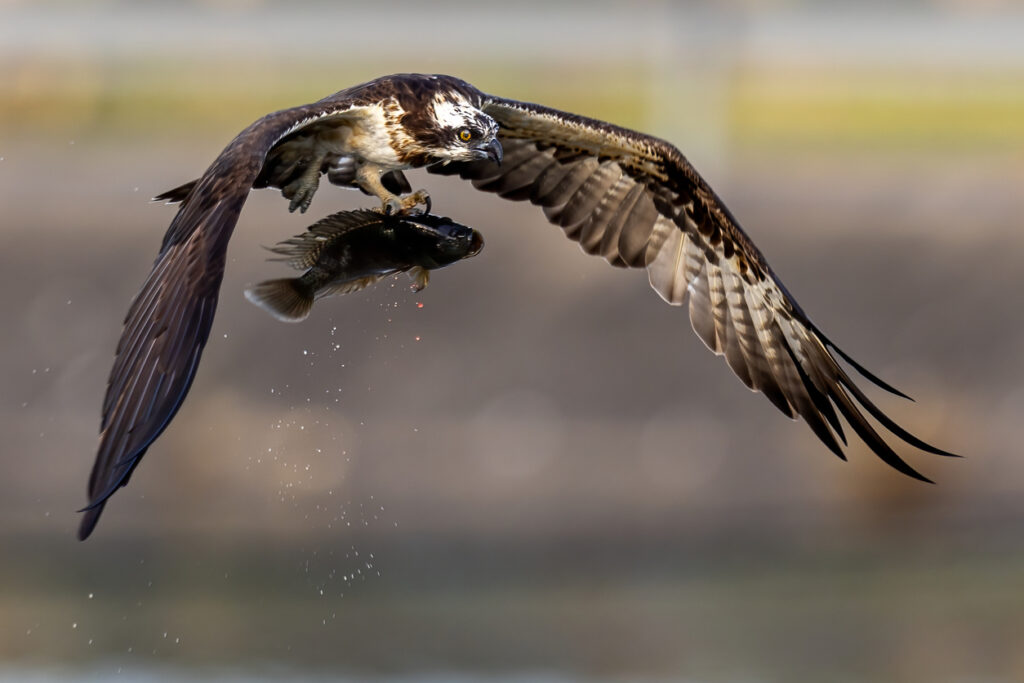
When seen from below, the difference in wing structure can really stand out. Males tend to have narrower, almost M-shaped wings with sharp angles. They often look more aerodynamic and speedy in flight. Females, being bulkier, often appear more level-winged or even a bit laboured when carrying weight. It’s not a perfect science, but with practice, the silhouette alone can give you a good indication of gender.
Females are bolder near the nest.
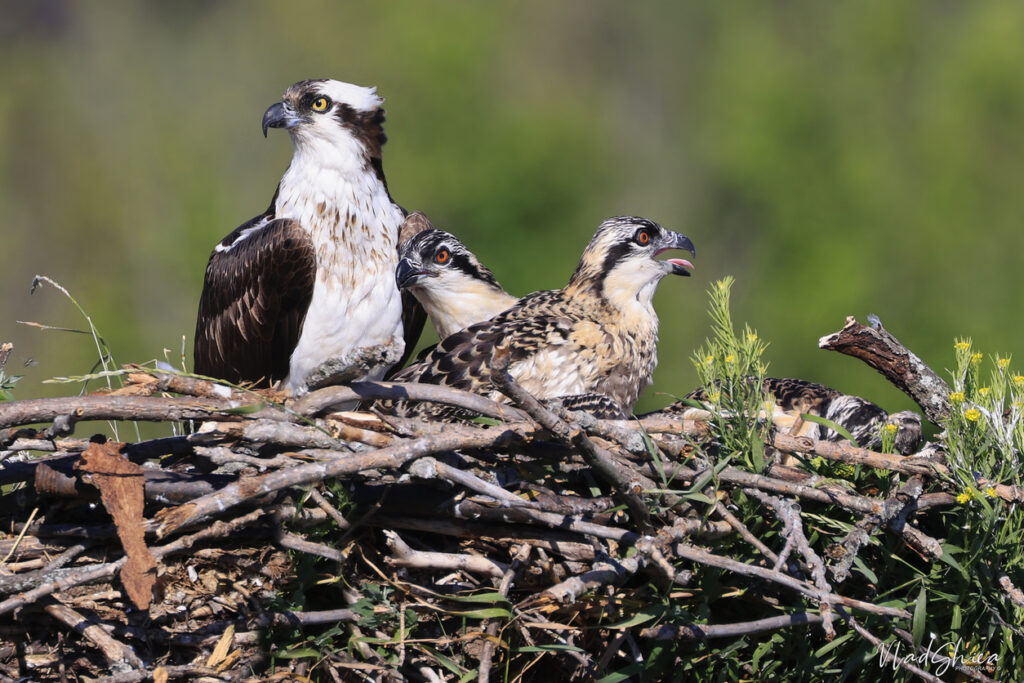
If you’re watching a nest site and a bird swoops in to challenge a nearby crow, gull, or other intruder, there’s a good chance it’s the female defending her chicks. She’s the main protector of the nest once the eggs are laid. Males will help fend off threats too, but they’re often more focused on provisioning. If a bird hangs back or flies in tight circles overhead without diving in, it may be the male keeping watch from a distance.