
The animal world is full of adorable faces that hide some seriously strange features, but few creatures pull off this combo quite like the axolotl. With its cartoonish grin, feather-like gills, and ability to regrow just about anything, the axolotl is equal parts charming and bizarre.
Native to a handful of lakes in Mexico, these aquatic salamanders have fascinated scientists and animal lovers alike—not just because they look like a Pokémon, but because they completely defy what we think we know about biology. Here’s why one of the world’s cutest animals is also one of the absolute weirdest.
They stay babies forever.
Axolotls are what’s known as “neotenic,” which means they reach adulthood without going through a typical metamorphosis. Most amphibians grow out of their aquatic larval stage and become land-dwellers, but axolotls skip that entirely. They keep their gills, fins, and watery lifestyle for life.
This strange twist of nature makes them look perpetually youthful. It’s part of their appeal—big heads, little smiles, and no sign of growing up. But it’s also incredibly rare in the animal kingdom, making them a scientific curiosity for researchers studying development and regeneration.
They can regrow almost anything.
One of the axolotl’s most famous superpowers is its ability to regrow lost limbs, and not just limbs. They can also regenerate spinal cords, parts of their heart, and even bits of their brain. Most animals can’t even dream of that level of healing.
This incredible ability has made them a top subject in medical research, particularly in studying nerve damage and tissue regeneration. Scientists still don’t fully understand how they do it, but the axolotl might just hold the key to future medical breakthroughs.
They never leave the water.
Despite being amphibians, axolotls live entirely underwater. They don’t crawl out onto land or need to bask in the sun like frogs or toads. Everything they need happens in the water, from breathing to eating to laying eggs. This lifestyle, combined with their gills and soft bodies, gives them a truly alien appearance. It also means keeping them as pets requires a fully aquatic setup—more like a fish tank than a terrarium. No climbing rocks or heat lamps here.
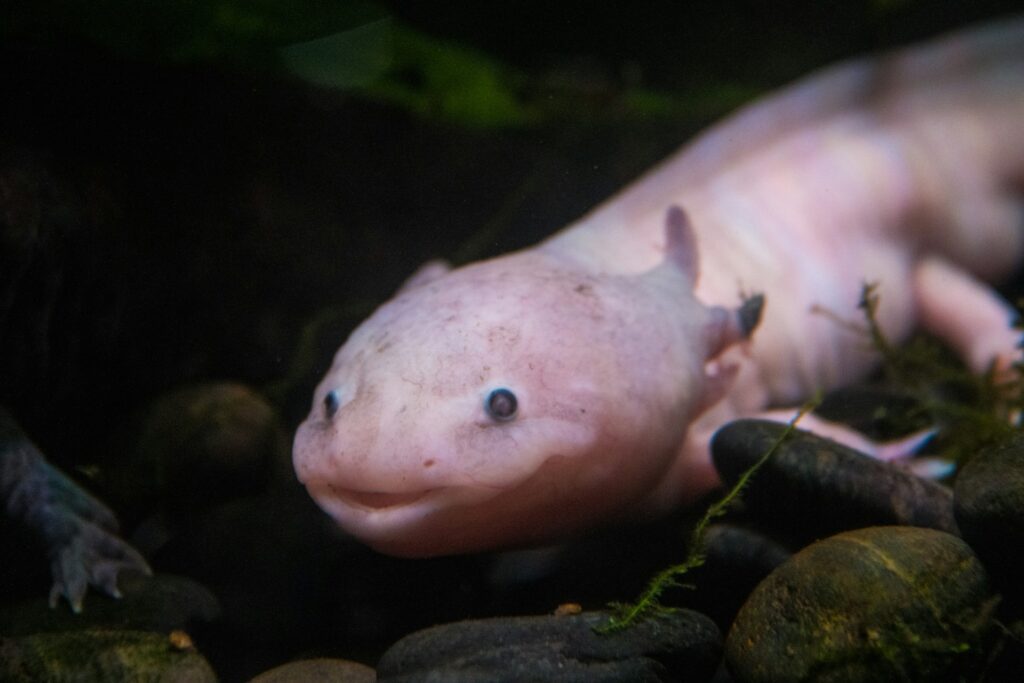
Their smiles are deceptive.
That constant smile? It’s not really a smile—it’s just how their faces are built. But it does give them a charming, content look that’s hard not to love. It’s one of the reasons axolotls have become so popular online and in memes. Despite their happy appearance, they’re solitary creatures who prefer to be left alone most of the time. They’re not social, cuddly pets—just strangely serene little beings with big heads and blank stares.
They’re colour-changing oddballs.
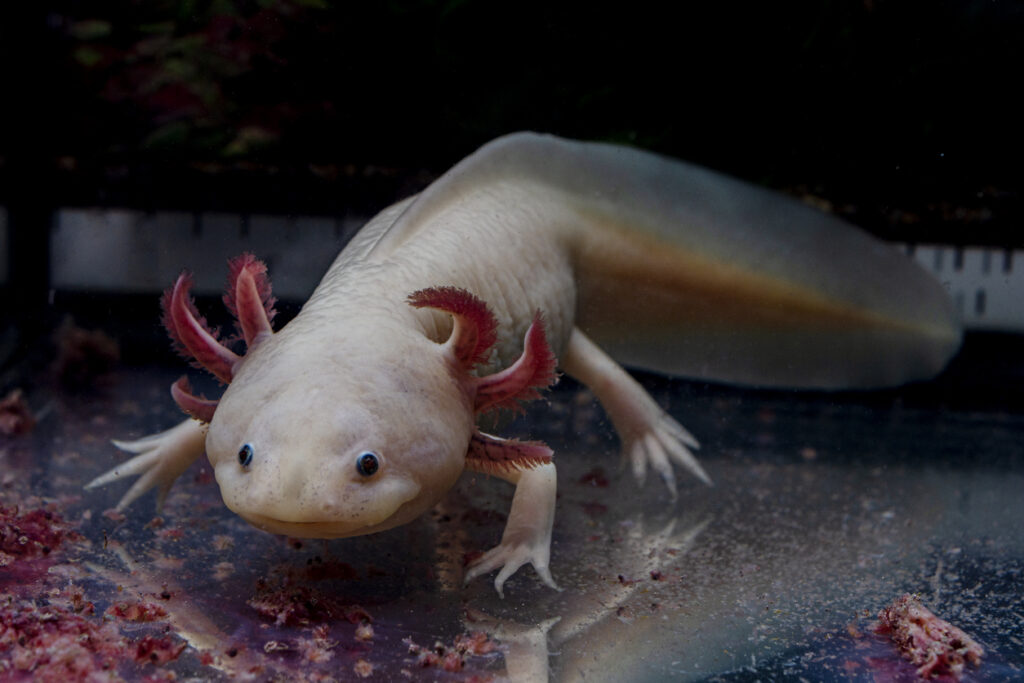
In the wild, axolotls are usually a dark brown or greenish-grey, helping them blend into muddy lake bottoms. But in captivity, they’ve been selectively bred to show off wild colours—pink, gold, white, or even shimmering blue and black. Their pale, leucistic variety with pink gills is the most recognisable, and probably what you picture when you think “axolotl.” It’s not how they look in the wild, but it’s become the face of their cuteness, and their weirdness.
Their tongues are glued down.
Unlike most amphibians, axolotls can’t flick out their tongues. That’s because their tongues are actually attached to the bottom of their mouths. They suck in food with a sudden gulp of water rather than catching it mid-air. It’s a strange eating style, but it works. They’ll slurp up worms, small fish, and even bits of meat in captivity. Just don’t expect them to lick you—they physically can’t.
They breathe in two different ways.
Those feathery fronds sticking out of their heads? That’s not just decoration. They’re external gills, and axolotls use them to breathe underwater. However, they also have lungs, which they can use if oxygen levels drop. It’s this dual-breathing ability that lets them survive in all kinds of aquatic conditions. Sometimes they’ll even rise to the surface to take a gulp of air, like a little amphibious snorkeller. Cute and versatile.
They’re surprisingly clumsy.
Despite their mythical appearance, axolotls aren’t exactly graceful swimmers. They sort of wiggle and drift more than anything else. Their limbs are short and not very strong, so they rely on their tails to propel themselves. This gives them an odd, floaty vibe in the water, almost like they’re hovering rather than swimming. Watching one move is part of what makes them so bizarrely endearing.
They’re critically endangered in the wild.
Here’s the sad part. While axolotls are thriving in aquariums and labs, their wild cousins are in deep trouble. Habitat loss, pollution, and invasive species have devastated their native lakes in Mexico City. Conservationists are working to protect what’s left of their natural environment, but wild axolotls are now critically endangered. It’s a sharp contrast to their global popularity as pets and internet icons.
Their name means “water monster.”
“Axolotl” comes from the Nahuatl language of the Aztecs and roughly translates to “water monster” or “water dog.” It’s a bit dramatic for something so cute, but it reflects the creature’s mythological roots and unusual appearance. In Aztec mythology, the god Xolotl transformed into an axolotl to escape being sacrificed. That story, mixed with their eerie look, helped cement their status as something more than just a salamander.
They’re always watching (but not really).
Axolotls don’t have eyelids, so they never blink. Their beady little eyes are always open, giving them that wide-eyed, innocent stare. It’s part of what makes them look so constantly surprised, or slightly haunted. They can still sleep, of course, but their resting face doesn’t change. If you’ve ever wondered why they always look like they’re staring directly into your soul, that’s why.
They’ve starred in video games.
If you’ve played Minecraft recently, you might’ve noticed that axolotls are now in the game. They were added because of their unique look and endearing weirdness—and it’s helped make them even more popular with younger audiences. They’ve also made appearances in Pokémon, Animal Crossing, and various animated shows. Their appeal crosses over into pop culture effortlessly, even if most people don’t realise just how strange they really are.
They don’t have vocal cords.
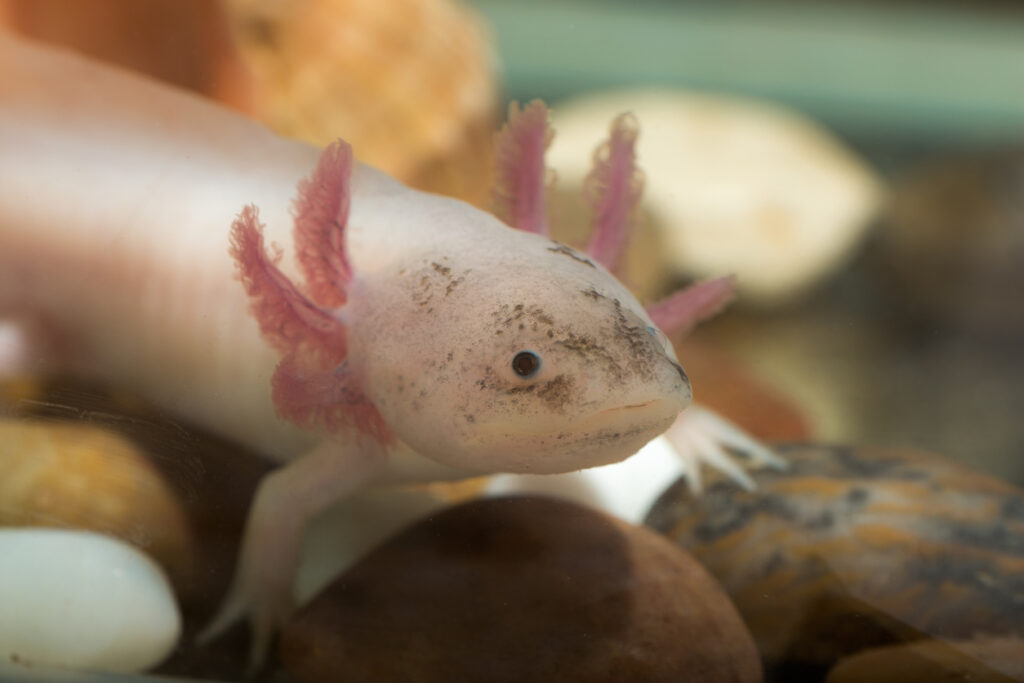
Axolotls don’t make noise. No croaking, no chirping, no squeaks. They’re completely silent. This makes them feel even more otherworldly, like little ghosts just floating around the tank. In fact, they communicate mostly through body language and movement. It’s subtle, but they can flare their gills or twitch to show stress, interest, or hunger. You just have to pay close attention.
Scientists have tried to make them grow up.
Under experimental conditions, scientists have tried forcing axolotls to undergo metamorphosis—giving them hormones to make them turn into more typical salamanders. When this happens, they lose their gills, grow lungs, and head to land. Of course, it doesn’t always go well. Many don’t survive the transition, and even when they do, they’re much more fragile. It turns out the axolotl’s best life is one spent underwater, in all its weird, smiling, regenerative glory.