Most of us grew up thinking pterodactyls were just flying dinosaurs—basically T. rex with wings.

But while they shared the same general time period and a prehistoric vibe, they weren’t actually dinosaurs at all. Pterodactyls belonged to a completely different group of reptiles called pterosaurs. So, what were they exactly? Here’s what sets them apart, and why they’re still pretty cool.
Pterodactyls were pterosaurs, not dinosaurs.
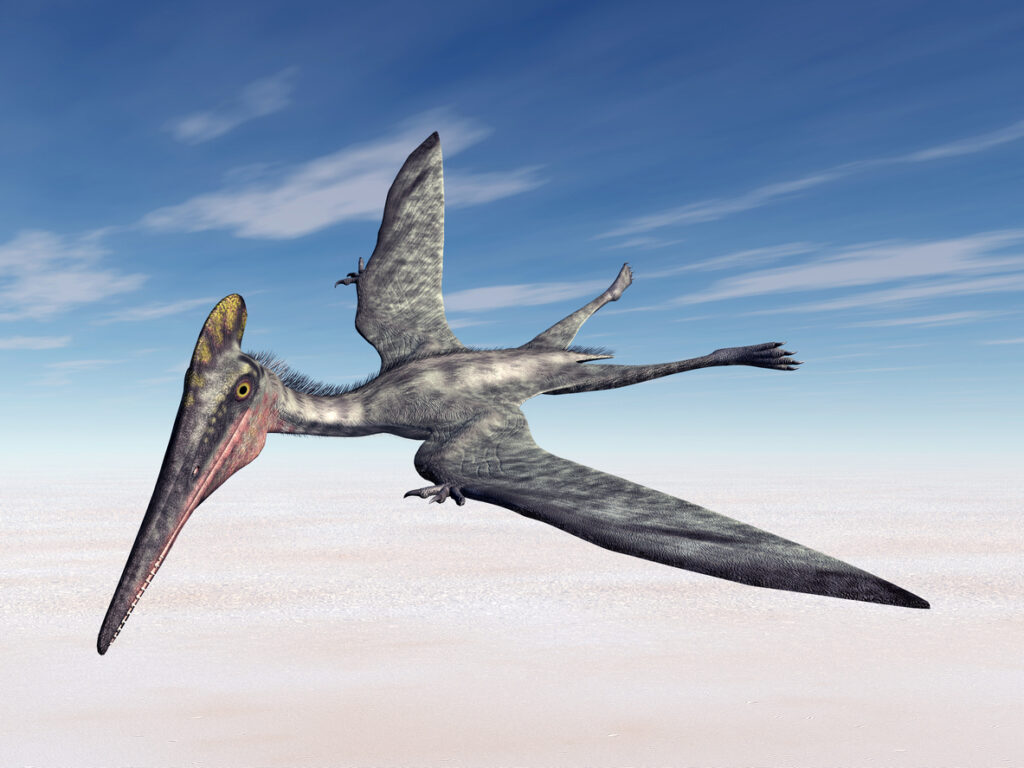
Let’s get this straight: pterodactyls weren’t dinosaurs. They were flying reptiles that lived alongside them but belonged to a separate group altogether: pterosaurs. Dinosaurs, by definition, are land-dwelling creatures that walked upright with legs positioned directly beneath them. Pterosaurs, on the other hand, had their limbs stretched out to the sides and adapted into wings. So, while they were related to dinosaurs in the broader reptile family tree, they were more like weird cousins than direct siblings.
They were the first vertebrates to achieve powered flight.
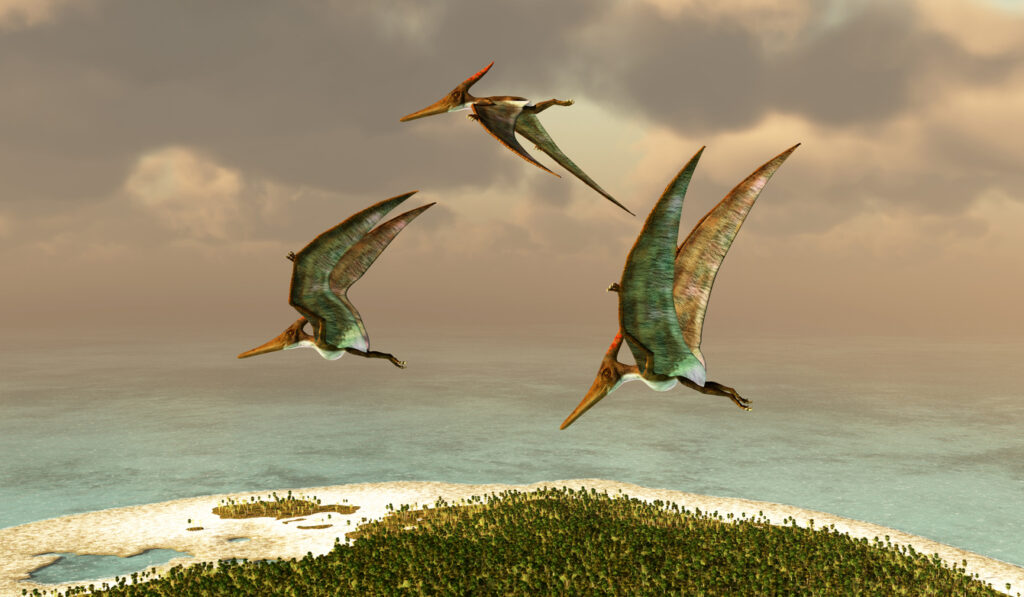
Before birds or bats ever took to the skies, pterosaurs had already figured it out. They were the first vertebrates (animals with backbones) to master true powered flight, meaning they didn’t just glide, they could flap and control their movement through the air. This gave them a massive advantage in the prehistoric skies, and their wingspan varied hugely between species, from the size of a pigeon to over 30 feet across in giants like Quetzalcoatlus.
“Pterodactyl” isn’t really a scientific term anymore.
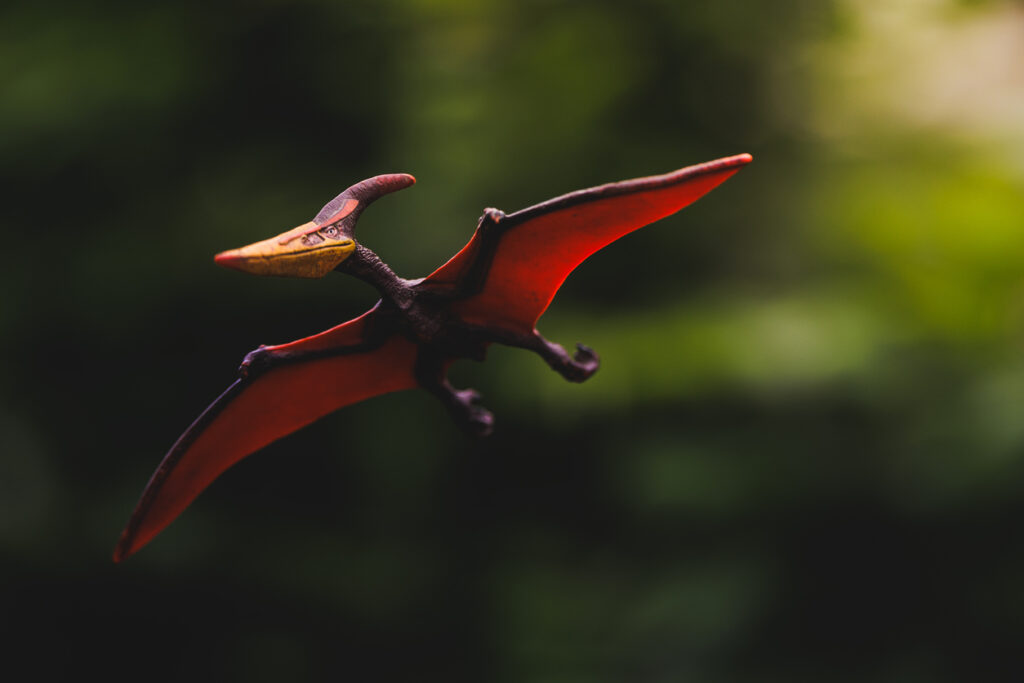
People often use “pterodactyl” to refer to all flying dinosaurs, but technically, it only applies to a specific genus of pterosaur called Pterodactylus. These were small, short-tailed pterosaurs that lived in what’s now Europe. Scientists now prefer to use the word “pterosaur” to cover the whole group, which includes hundreds of species with very different sizes, shapes, and lifestyles. So next time you say “pterodactyl,” just know it’s a bit like calling all dogs “beagles.”
They had wings made from skin and muscle.
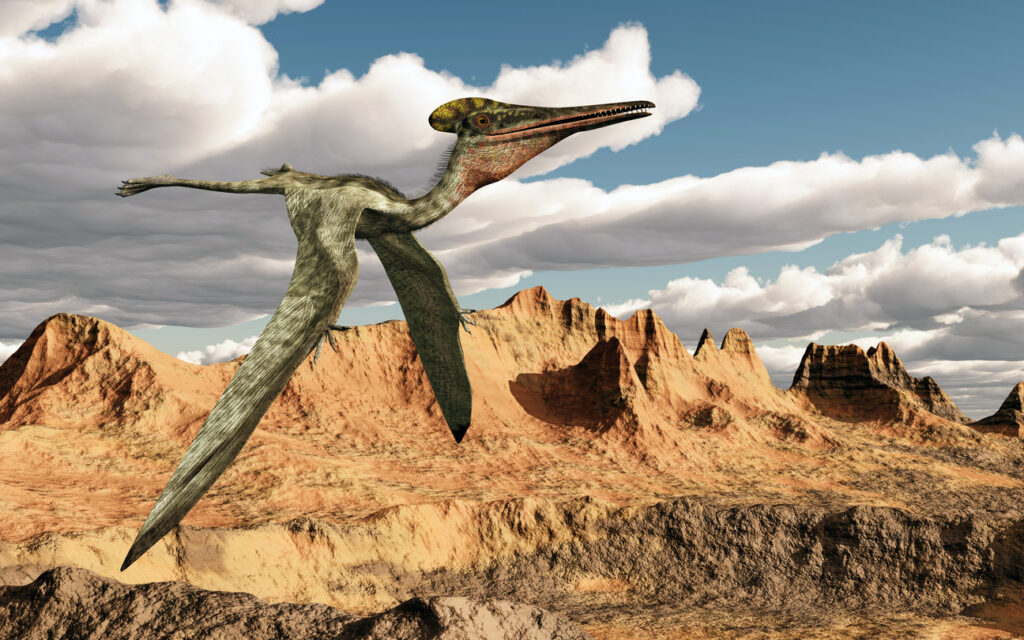
Unlike birds, whose wings are made from feathers, pterosaurs had wings formed by a membrane of skin, muscle, and other tissues stretched between a hugely elongated fourth finger and their body. This gave them a very different look, and likely a different flying style, more like a bat than a bird. Some species even had stiffening rods in their wings to help control their flight mid-air.
Some had fur-like coverings.
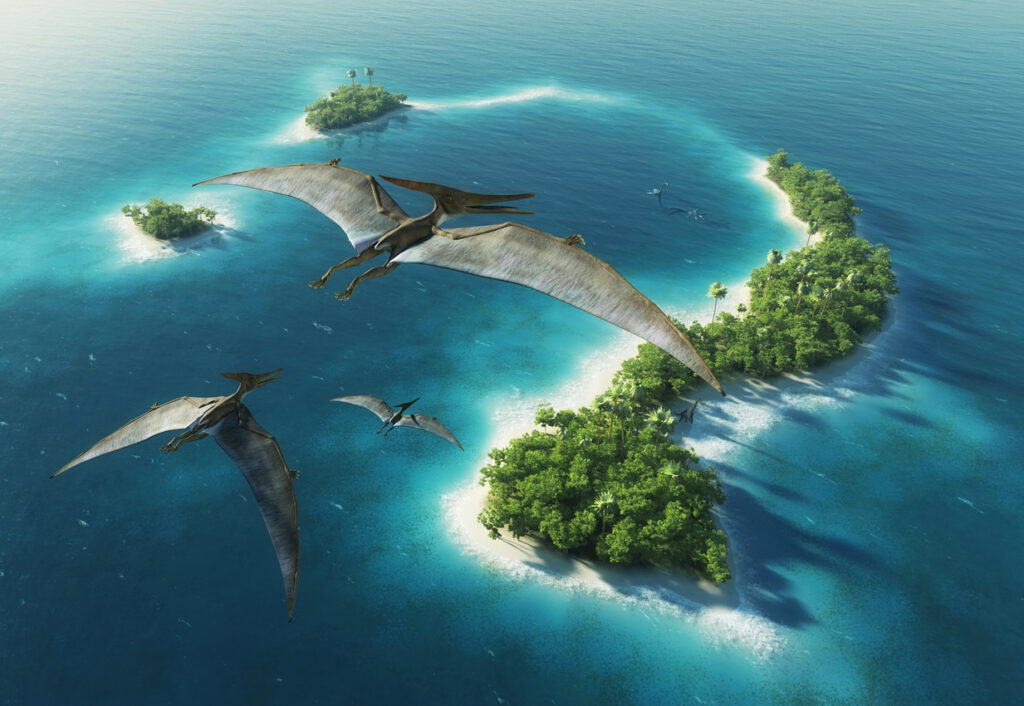
Fossils show that many pterosaurs were covered in a fuzzy layer of hair-like filaments called pycnofibres. These weren’t feathers, but they likely served a similar purpose—keeping them warm and possibly helping with aerodynamics. This has led scientists to rethink their appearance. Rather than scaly lizard-birds, many pterosaurs might’ve looked more like fluffy flying gremlins. Charming, in a prehistoric sort of way.
Their lifestyles were incredibly diverse.
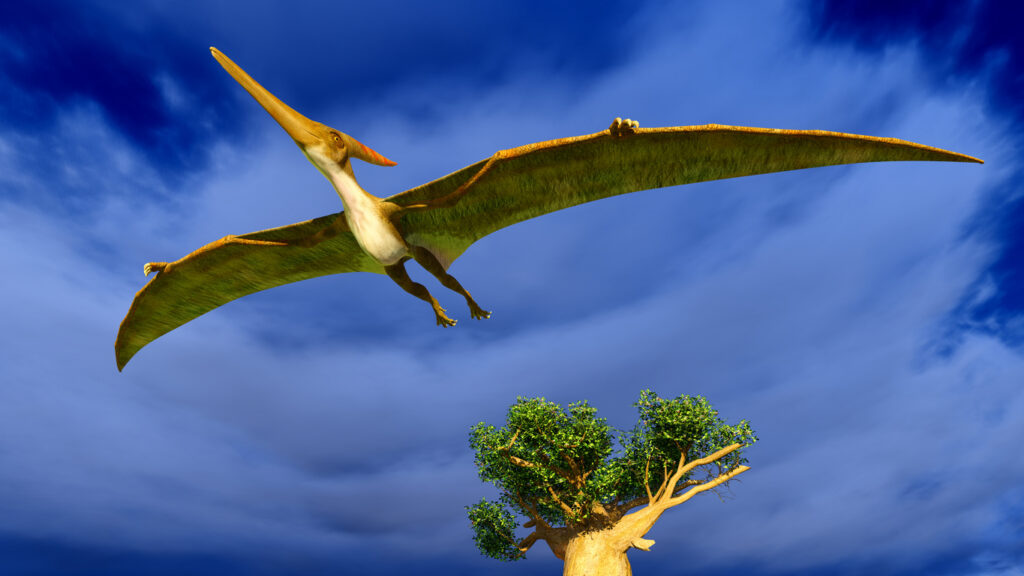
Not all pterosaurs were fish-eating sea hunters. Some skimmed lakes, others soared high like vultures, and a few may have stalked prey on foot. They filled all kinds of ecological niches, just like birds do today. That variety makes it tricky to pin them down as one type of creature. Some were small and agile, others were enormous and awkward on land but majestic in the sky. It was a full prehistoric air force.
They lived for over 150 million years.
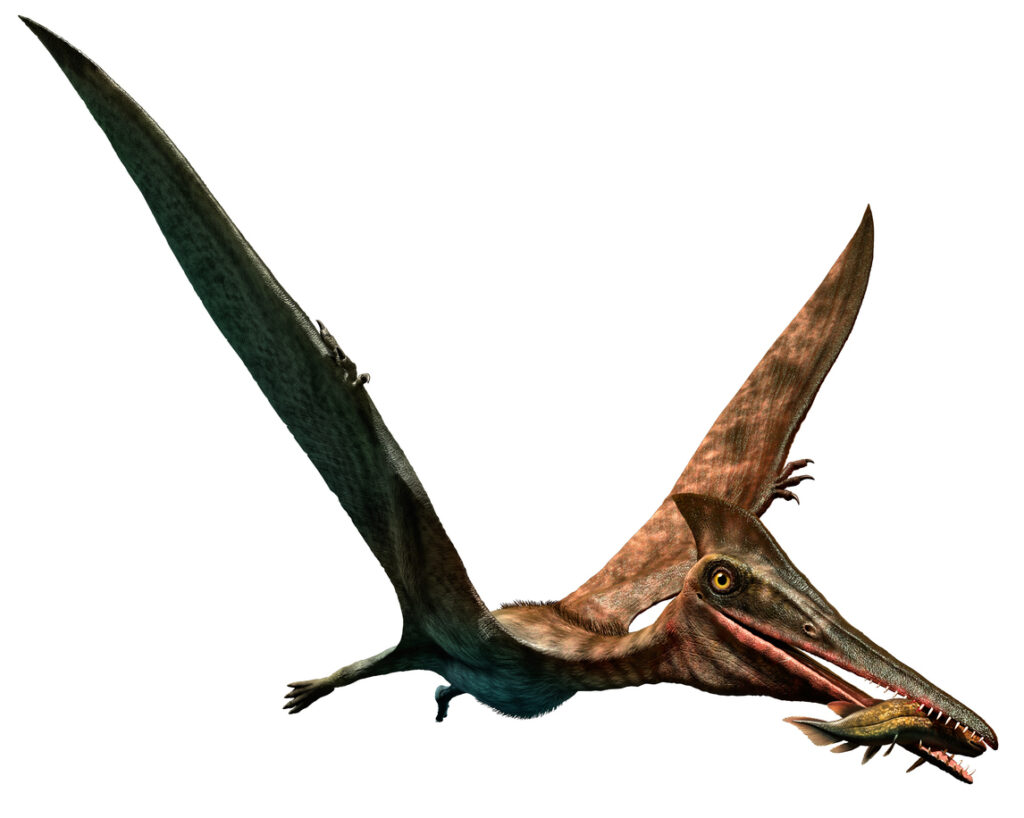
Pterosaurs showed up in the Triassic period and stuck around until the end of the Cretaceous. That’s a longer run than the entire existence of modern mammals, including us. They weren’t just a passing experiment in flight. Despite being wiped out in the same mass extinction that ended the dinosaurs’ reign, pterosaurs dominated the skies for a vast stretch of time and evolved into an astonishing variety of forms.
They didn’t evolve into birds.
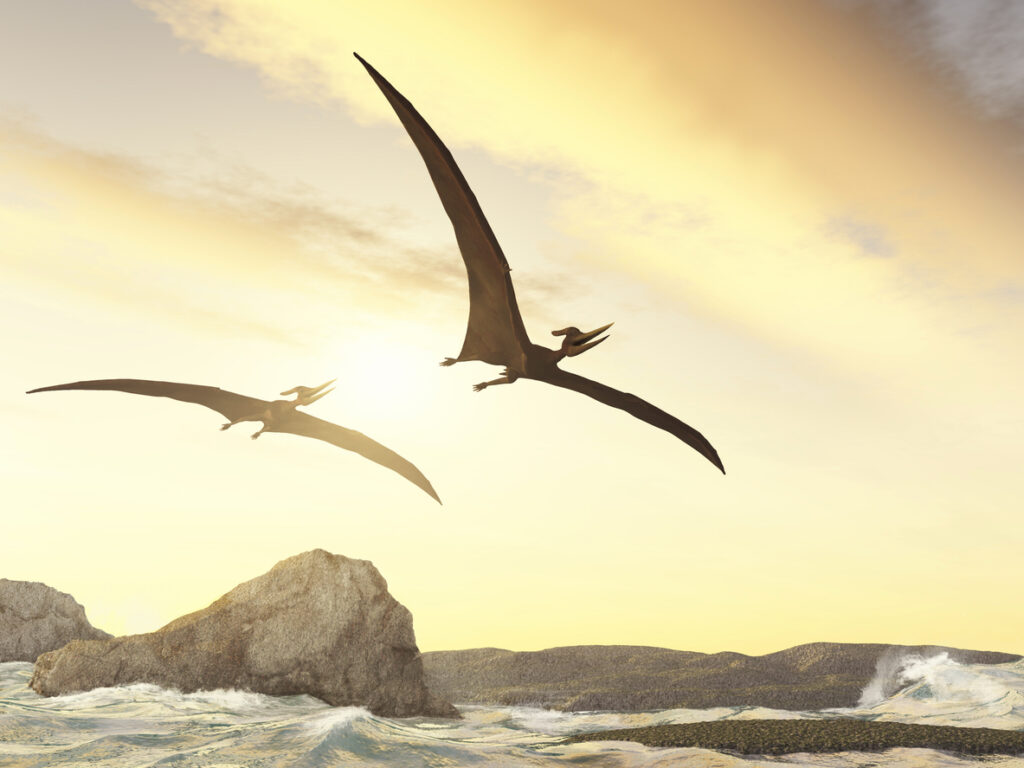
This is a common mix-up. Birds are descended from theropod dinosaurs (think Velociraptor with feathers). Pterosaurs, despite their wings and flight, left no living descendants. When they went extinct, their whole lineage ended with them. Birds just happened to figure out a completely different way to fly, using feathers, not skin membranes. Two totally separate evolutionary paths with surprisingly similar results.
Their bones were super lightweight.
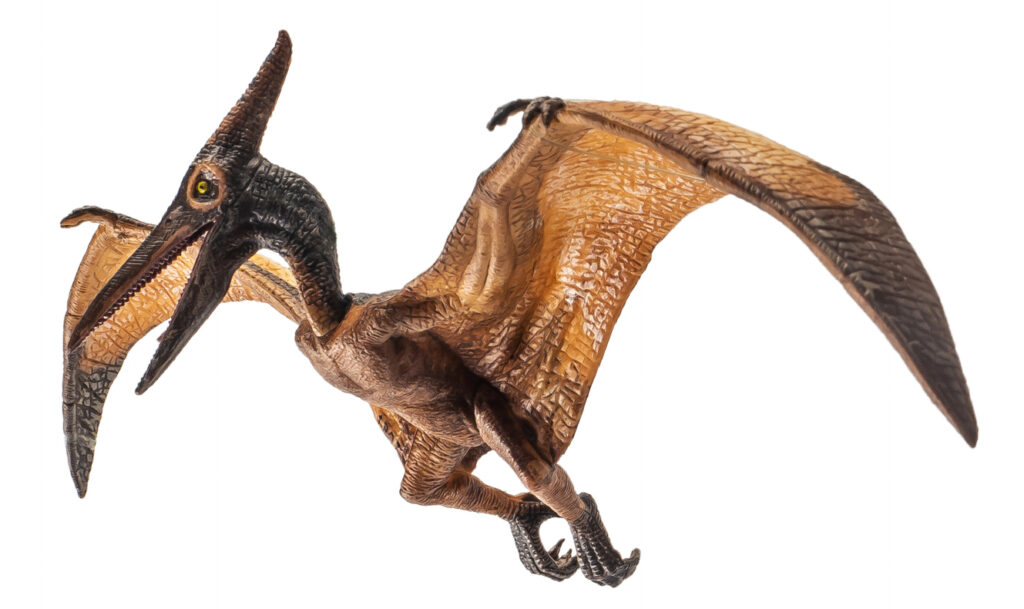
To fly, you need to be light. Pterosaurs had incredibly thin, hollow bones, much like birds, which helped them stay airborne. This lightness also makes fossilising tricky, which is why we don’t find as many complete skeletons. However, when we do, the detail is stunning. Some fossils even preserve wing textures, skin impressions, and those fuzzy coverings that are rewriting how we imagine these creatures looked.
They were wiped out in the same disaster as the dinosaurs.
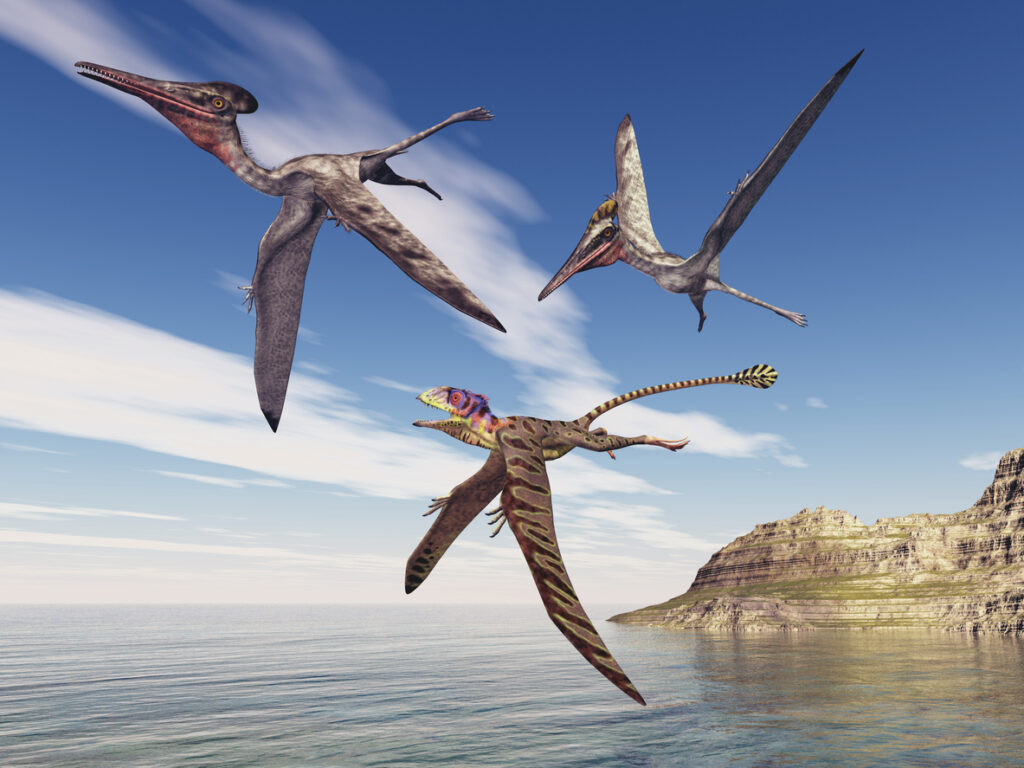
When the asteroid struck 66 million years ago, it didn’t just take out T. rex and triceratops. The skies went dark, ecosystems collapsed, and pterosaurs were wiped out too. They simply couldn’t survive the dramatic changes in climate and food supply. However, during their reign, they were the undisputed kings of the air, and they deserve just as much fascination as their more famous dinosaur cousins. Just remember: they were something else entirely, and no less spectacular for it.