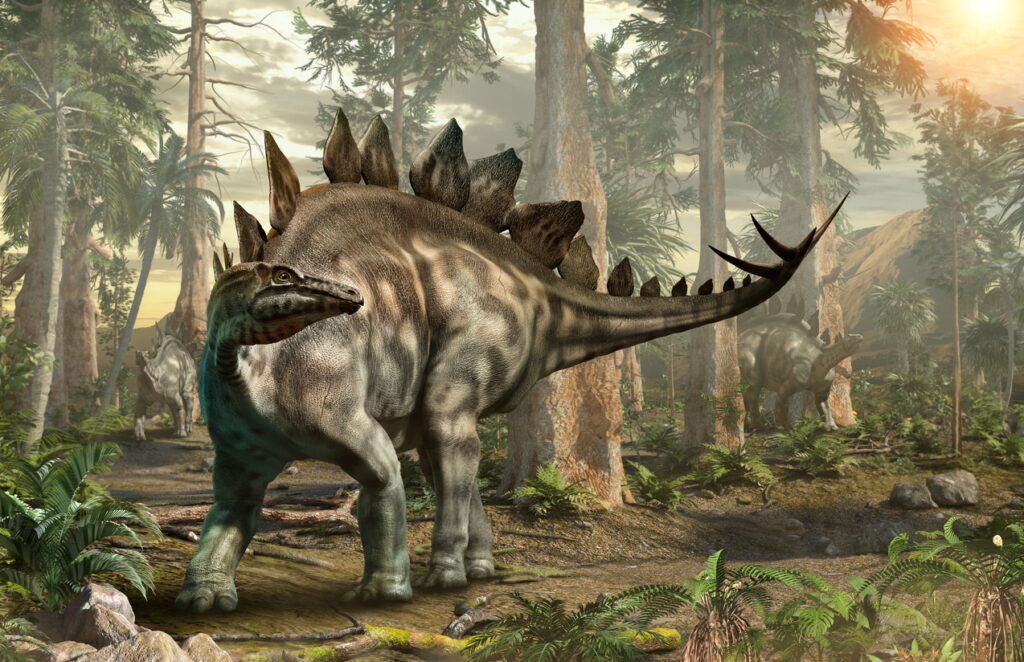
Stegosaurus is one of those dinosaurs we all recognise straight away—big, slow, covered in plates, and dragging a spiky tail like it means business. But for decades, there’s been a running joke about this prehistoric giant: that it had a brain no bigger than a walnut. It sounds ridiculous, especially for something the size of a small bus. But is it true? Or just one of those exaggerated dinosaur facts that got stuck in pop culture? Here’s what scientists actually know—and what’s still just dino gossip.
Yes, its brain was small, but not that small.
Stegosaurus did have a tiny brain compared to its body. Its brain was roughly the size and shape of a bent hot dog—about 3 cm long, weighing around 70–80 grams. For an animal that could grow up to 9 metres long, that’s not a lot of brain power. The walnut comparison is mostly for dramatic effect, but it’s not far off in volume. Still, it wasn’t literally the size of a walnut, and it definitely wasn’t rattling around in its skull with loads of extra room.
Brain size isn’t everything.
It’s easy to assume a small brain equals a dim-witted creature, but that’s not always how it works, especially in reptiles. Brain-to-body ratio (called the encephalisation quotient, or EQ) is useful, but it doesn’t tell the whole story. Stegosaurus didn’t need to solve complex problems or learn tricks. It just needed to eat, move, reproduce, and not get eaten. For that, its brain size was probably perfectly adequate, even if it wouldn’t win any dinosaur spelling bees.
It had a surprisingly complex nervous system.
While the brain was small, the nervous system as a whole may have been a bit more interesting. Stegosaurus had an enlarged section of its spinal cord near the hips—so large, in fact, that early scientists once thought it was a second brain. This was later proven false, but that area probably helped coordinate leg and tail movement, acting like a kind of processing hub. It wasn’t thinking or planning, but it may have taken some pressure off the brain for basic motor control.
The “second brain” myth came from that spinal bulge.
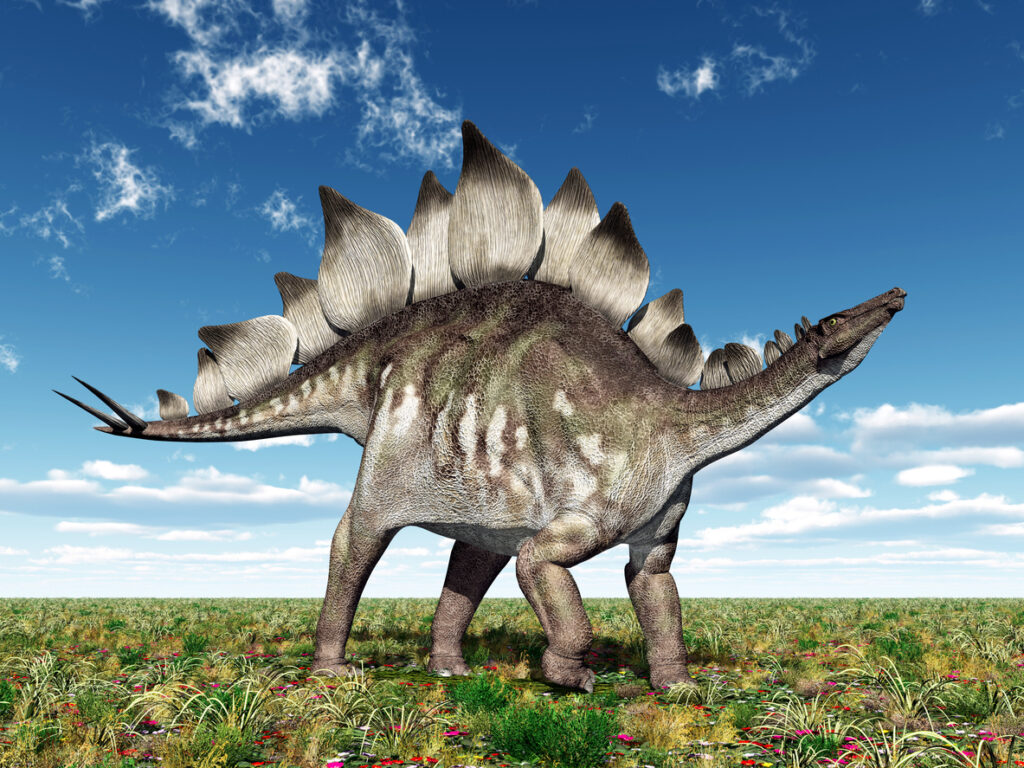
In the 19th century, palaeontologists were baffled by how such a massive animal could function with such a tiny brain. So when they discovered that the spinal canal was unusually wide in the pelvic region, they jumped to conclusions.
Some early scientists suggested Stegosaurus had a “second brain” near its hips to help it function. Modern research says nope—it was just a glycogen body, common in birds and some reptiles, likely used for energy storage or basic movement coordination.
It didn’t need high-level thinking to survive.
Stegosaurus was an herbivore. It didn’t need to hunt, strategise, or stalk prey; it just needed to find plants and avoid predators. That doesn’t take a big brain; it takes instinct, a strong sense of smell, and decent reflexes. Much like cows or turtles today, Stegosaurus likely relied on ingrained behaviour rather than learning or intelligence. It lived slowly, didn’t migrate far, and didn’t need to outthink much of anything.
The brain was shaped to fit the skull cavity.
CT scans of Stegosaurus skulls show that its brain filled the available space quite snugly. In other words, it wasn’t just bouncing around in there. The walnut myth makes it sound like the brain was comically small in a giant empty skull, but that’s not how anatomy works. Its brain was elongated and fit neatly within the braincase. It had distinct regions for smell, sight, and movement—basic, yes, but functional. Think more “simple but serviceable” than “comically useless.”
It had decent senses, especially smell.
For such a small brain, Stegosaurus still had some useful features. Its olfactory bulbs (the part of the brain that processes smells) were relatively well-developed, suggesting it had a good sense of smell. This would’ve helped it detect food, sense danger, and maybe even recognise other stegosaurs. It probably wasn’t solving puzzles, but it wasn’t completely unaware of its surroundings either.
It relied more on instinct than learning.
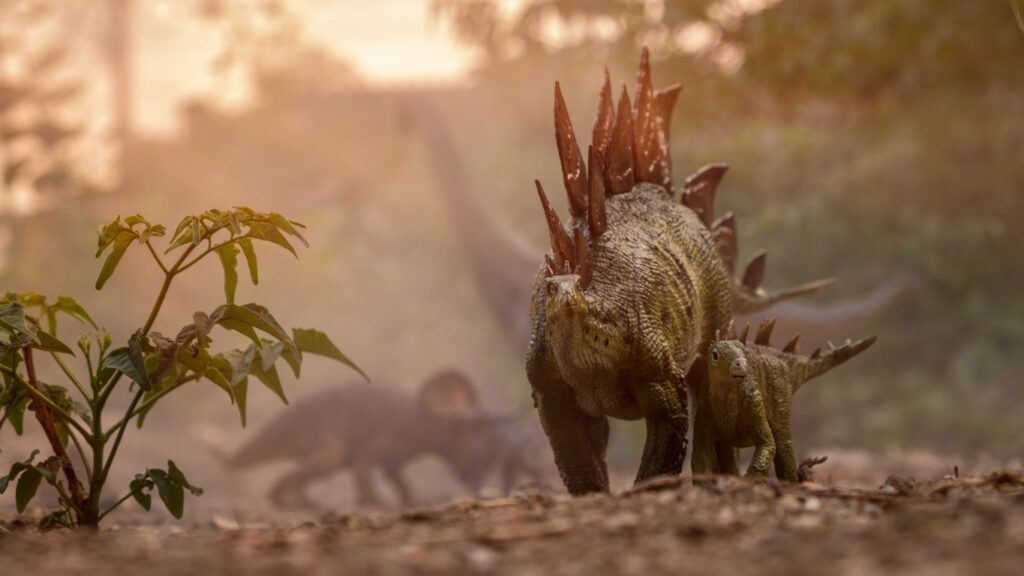
Modern animals with small brains, like crocodiles and fish, still manage just fine because they’re hardwired to survive. They’re not big learners; they just do what they’re born to do, on repeat, without needing much thought. Stegosaurus was probably much the same. It didn’t need to evolve a complex brain because its lifestyle didn’t demand one. Bigger brains take more energy, and for this creature, that would’ve been wasted resources.
It likely had limited social behaviour.
There’s no strong evidence that Stegosaurus was especially social. Unlike some other herbivores that may have lived in herds, Stegosaurus seems to have been more solitary or loosely grouped. That might also explain the small brain. Social complexity often drives brain development in modern animals. If you’re not part of a group dynamic, you don’t need the extra processing power to handle it. Stegosaurus just kept things simple.
Its tail weapon was impressive, but not high-tech.
The thagomizer, or the spiked tail, was an effective defensive weapon, and evidence suggests Stegosaurus used it with decent accuracy. That might sound like it needed complex coordination, but instinct and basic muscle memory can go a long way. Even with a small brain, animals can develop highly effective physical responses. A bull doesn’t need brains to charge. A Stegosaurus didn’t need strategy to swing its tail, just timing and reflexes.
Modern reptiles give us decent comparisons.
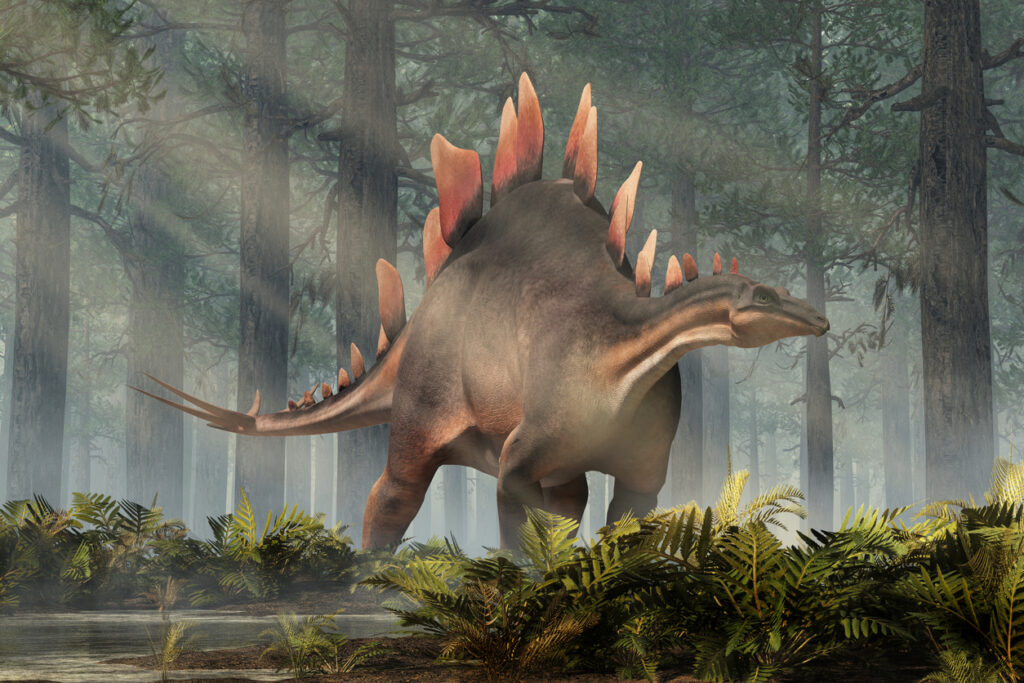
If you’re trying to picture how a low-EQ animal moves and behaves, look at modern reptiles. Crocodiles, for example, are ancient, brain-efficient survivors. They’re not geniuses, but they’re incredibly well-adapted to their environments. Stegosaurus likely had a similar energy—slow, steady, functional. Its body did the work, not its brain. And clearly, it worked well enough to keep the species going for millions of years.
“Stupid” doesn’t mean “unsuccessful.”
It’s easy to laugh at the idea of a walnut-brained dinosaur, but Stegosaurus was a successful species. It survived the Late Jurassic, coexisted with massive predators, and clearly reproduced enough to leave a strong fossil record. Evolution doesn’t reward cleverness; it rewards survival. Stegosaurus wasn’t solving problems or planning ahead, but it was perfectly adapted to its world, and that’s all that really mattered.
The myth sticks because it’s funny, but outdated.
“Brain the size of a walnut” is a fun visual, and it’s been repeated in everything from cartoons to museum exhibits. However, it oversimplifies what we now know about dinosaur biology, and it gives the wrong impression of a well-adapted animal. Stegosaurus didn’t need a big brain to thrive. It was slow, spiky, and low-maintenance. And while it might’ve been near the bottom of the dino intelligence ladder, it wasn’t clueless; it just didn’t need to be clever to survive.