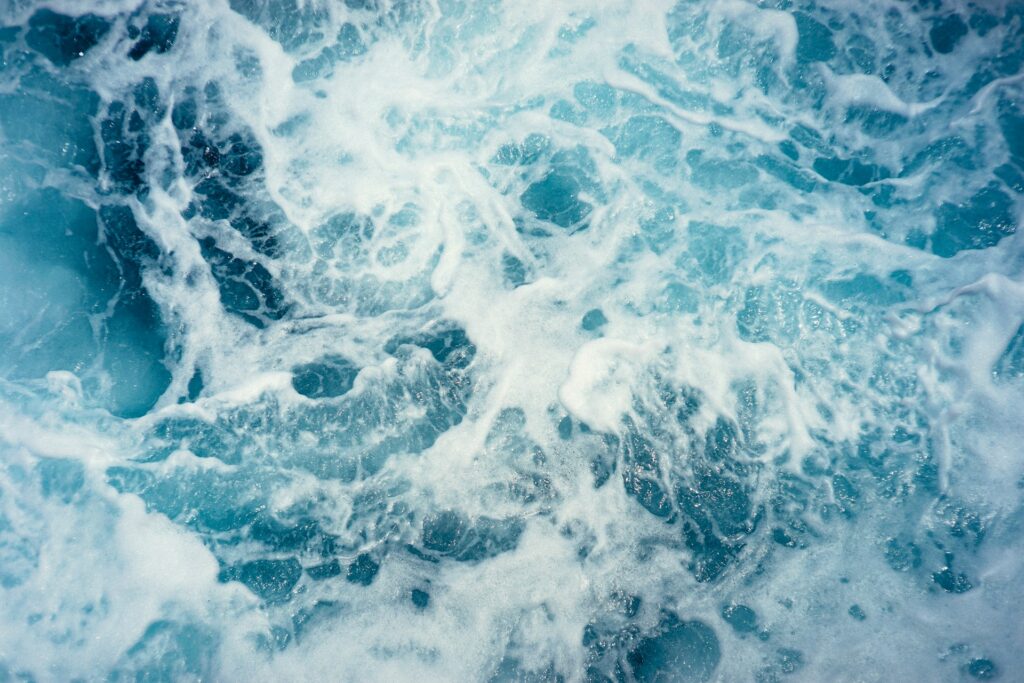
We’re all taught that water is clear, so why does the ocean look so strikingly blue when we’re staring out at it? It turns out the colour isn’t about the water itself being blue, but about how light behaves, how water absorbs and reflects it, and what’s floating around in the sea. Here’s a breakdown of what’s really going on beneath that deep, blue surface.
Sunlight contains all colours of light.
White sunlight is actually a combination of all the colours in the visible spectrum—reds, oranges, yellows, greens, blues, and violets. When sunlight hits the ocean, each of these colours interacts with the water in different ways. Some get absorbed quickly, while others hang around a bit longer.
That scattering and absorption of different wavelengths is the starting point for understanding why the ocean appears blue. It’s not that the ocean generates colour; it’s reflecting and bending what’s already in the sunlight that reaches it.
Water absorbs red, orange, and yellow light.
Water is really good at absorbing the longer wavelengths of light—specifically red, orange, and yellow. This absorption happens quickly, even in the first few metres of water, so those warmer tones disappear almost immediately as sunlight enters the sea.
Without those colours bouncing back, the dominant hues that remain are the shorter wavelengths—mainly blue and a bit of green. That’s why deeper areas of the ocean look cooler in colour and lack the warm tones you’d expect if the water reflected the full spectrum.
Blue light penetrates deepest.
Unlike red or yellow, blue light can travel much deeper into the water before it’s absorbed. This is why open ocean and deep water areas tend to look deep blue rather than murky or colourless. The water doesn’t just let blue in. It lets it go furthest.
That deeper penetration means more of that blue light gets reflected back to your eyes at the surface. So when you look out at the sea, especially on a sunny day, the most dominant colour making its way back up is blue. That’s the colour you end up seeing.
Scattering plays a big role.
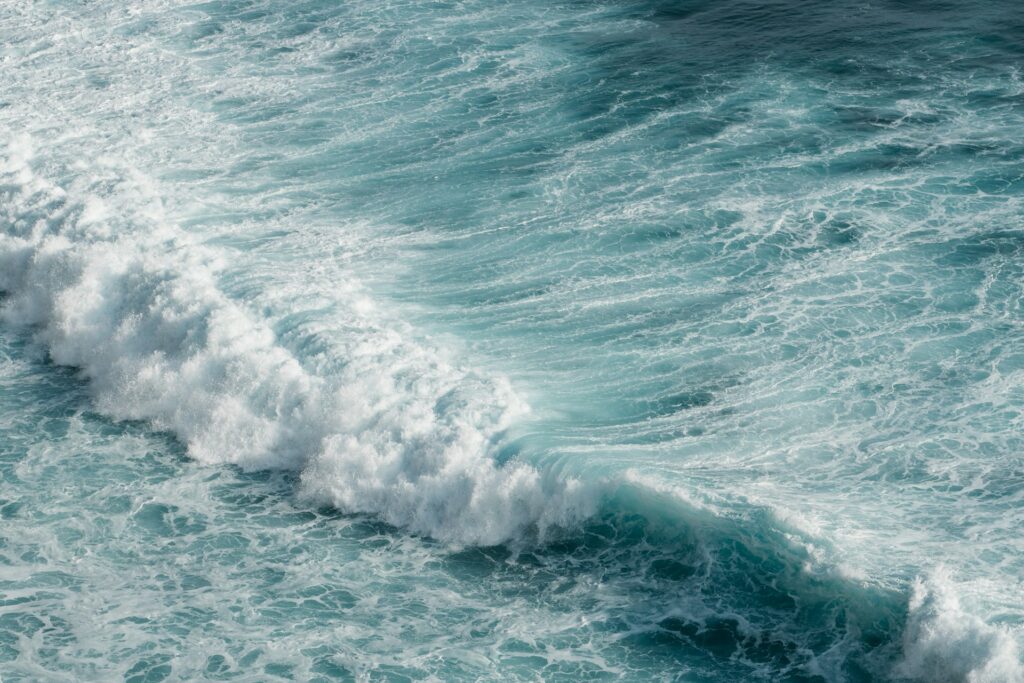
When light hits water molecules, it doesn’t just stop, it scatters in all directions. This is especially true for the shorter wavelengths like blue, which are more easily bounced around by tiny particles and water molecules in the ocean.
This process, known as Rayleigh scattering, is the same reason the sky looks blue. In water, it enhances the effect by boosting the visibility of blue tones while dimming out the rest. The more scattering that happens, the more blue we perceive.
Deeper water exaggerates the blue.
The further light travels into the ocean, the more red, orange, and yellow wavelengths it loses. This makes deep water look intensely blue, especially when viewed from above or far away. In really deep parts of the ocean, the effect can make the water look almost navy.
Shallow water, on the other hand, allows more of the full spectrum to reflect back. That’s why tropical beaches with clear, shallow seas often look turquoise or green rather than deep blue. They reflect more light from the sea floor and capture other colours that would be lost at depth.
The sea reflects the sky, but not entirely.
Many people assume the ocean looks blue simply because it’s reflecting the sky. While that does play a role, it’s not the full story. Water does reflect some light from above, especially when it’s calm and still, but that’s just a surface effect.
The ocean still looks blue on cloudy days and in areas where the sky is grey, which tells us something else is going on beneath the surface. Reflection adds to the blue, but it doesn’t create it. The colour is primarily coming from the water itself and how it scatters and absorbs light.
Plankton and particles change the colour.
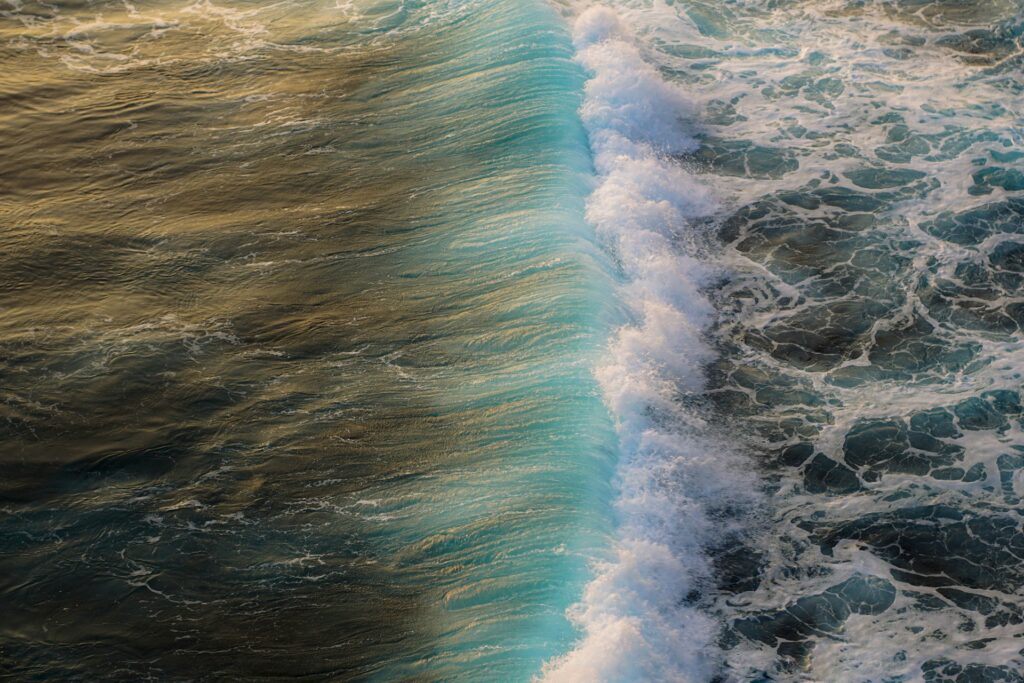
In some parts of the ocean, especially near the coast, the water can look more green or brown than blue. That’s because microscopic life forms like phytoplankton and suspended particles change how light is absorbed and scattered.
Phytoplankton, for example, contain chlorophyll, which absorbs blue and red light but reflects green. So areas rich in plankton tend to look greener. That explains why some nutrient-rich waters are emerald-toned, while clearer, less productive areas appear more vivid blue.
Sand and seabeds reflect light too.
In shallow, clear areas, the colour of the seabed plays a big role. Light can hit the bottom and bounce back through the water, adding tones depending on what’s underneath. White sandy bottoms reflect more light and can make the water look pale blue or even turquoise.
Darker seabeds, like those made of mud or volcanic rock, tend to absorb more light, giving the water a deeper, sometimes murkier look. That’s why the same patch of sea can appear different in colour just a few metres away, depending on what’s below.
Angle of sunlight affects the shade.
The way sunlight hits the ocean makes a difference to how we see it. When the sun is high overhead, light penetrates deeper, intensifying the blue. During sunrise or sunset, when the sun is lower in the sky, the light hits the water at a sharper angle, reflecting more red and gold tones instead.
This explains why the sea can look different colours at different times of day, even if the water itself hasn’t changed at all. Lighting conditions have a big influence on what our eyes perceive as “blue,” “green,” or “grey” ocean.
Polarised light enhances the effect.
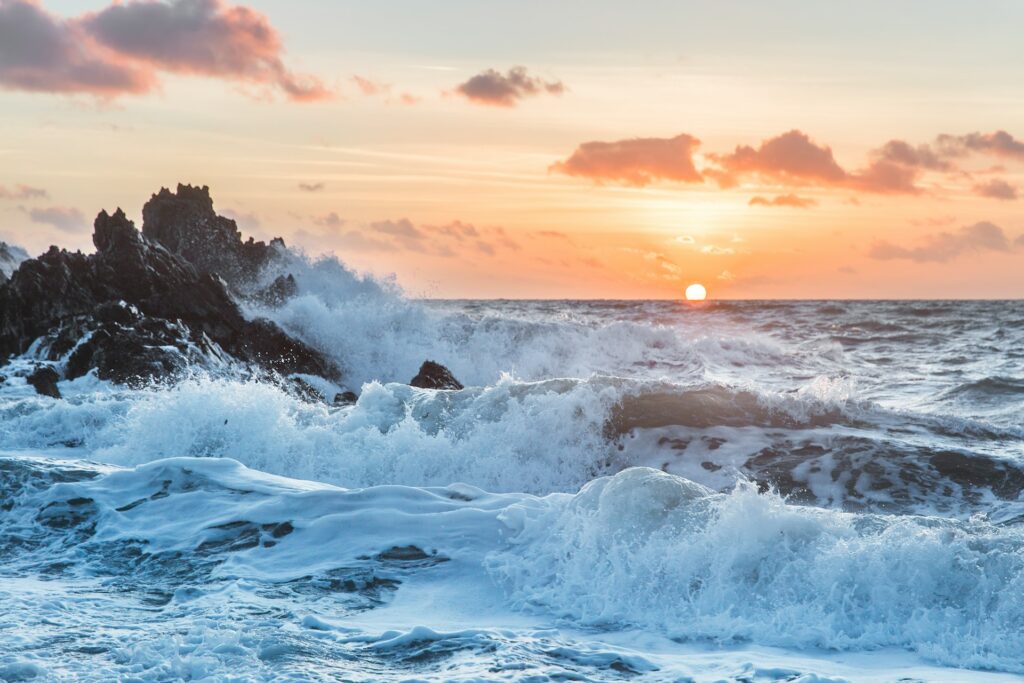
Water naturally filters light in ways that can intensify certain colours, especially when viewed through polarised sunglasses or from certain angles. Polarisation helps cut surface glare, making the true blue of the ocean more visible and rich to our eyes.
This is why the ocean often looks more vibrant in holiday photos or when you’re wearing polarised lenses. You’re seeing less of the surface reflection and more of the colour being scattered and sent back up from within the water itself.
Floating debris changes how light behaves.
Pollution, silt, or organic matter suspended in the water can drastically change its colour. These materials scatter and absorb light in ways that reduce the amount of blue reaching the surface. Instead, they reflect more green, brown, or grey depending on their density and composition.
That’s why rivers flowing into the sea often bring plumes of differently coloured water with them. In those areas, the classic ocean blue gives way to muddier tones, not because the water is chemically different, but because the light can’t travel or scatter the same way.

Ice and bubbles change the palette.
In polar regions, where ice floats on the sea surface, the colour of the ocean changes again. Ice can reflect more light or block it from entering the water altogether, creating silvery or deep steel-blue hues depending on conditions.
Similarly, air bubbles in the water, caused by waves or turbulence, scatter light differently. More bubbles mean more white light reflecting back, often giving choppy water a frothy, lighter appearance. So wave activity can influence how blue (or not) the ocean looks, even hour to hour.
Your eyes fill in some of the colour.
Lastly, how we see the ocean is partly shaped by how our eyes and brain process colour. Our vision is especially sensitive to blue and green tones in bright daylight, and we naturally associate the ocean with those shades because of past experience and expectation.
This means that even if the sea isn’t that blue, our minds may interpret it that way. The brain filters and balances colours automatically, giving us a consistent sense of ocean “blueness” even when other factors are subtly changing the actual light coming off the water.