If you’ve ever spotted a bouncing marsupial and wondered whether you were looking at a wallaby or a kangaroo, you’re definitely not alone.
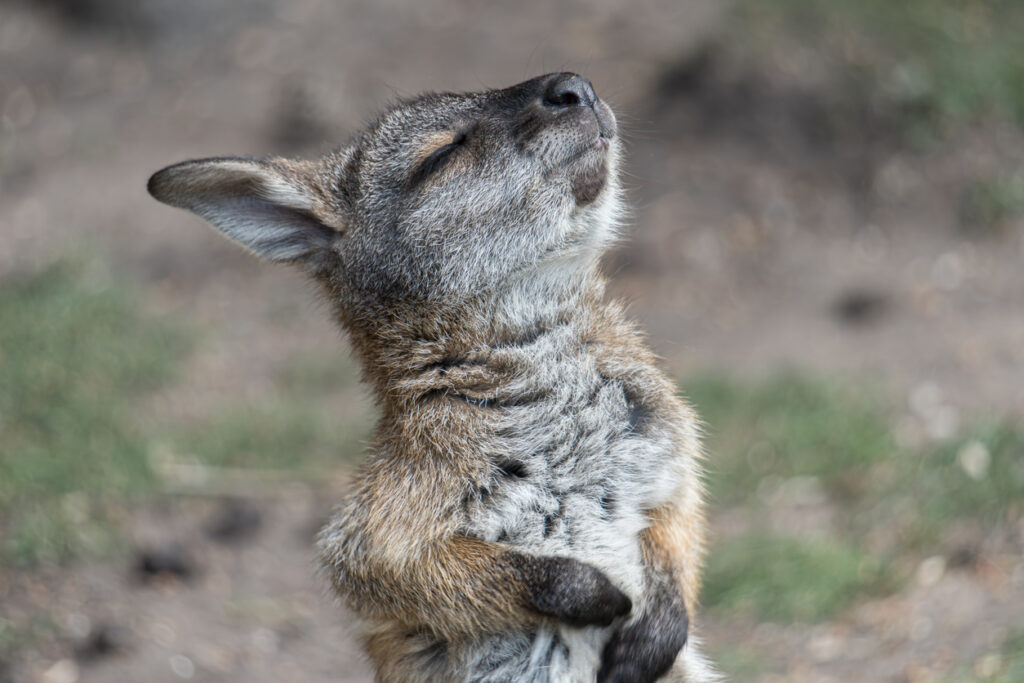
These two animals are incredibly similar at first glance—same upright stance, same giant feet, same powerful tail. But look a little closer, and there are clear signs that tell them apart. From the way they hop to how they interact, here’s how to know whether you’ve just seen a wallaby or a kangaroo.
Wallabies are smaller—much smaller.
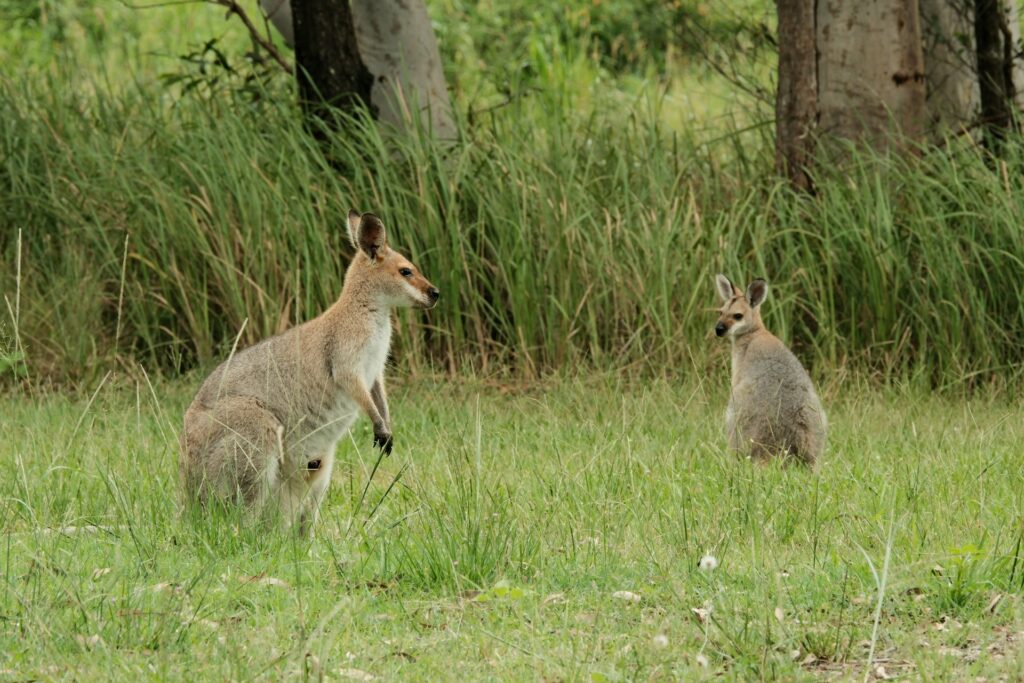
The easiest way to tell the difference is by size. Kangaroos are big. Some can grow over 6 feet tall, while most wallabies are closer to 2 to 3 feet in height. If the animal looks huge and intimidating, chances are it’s a kangaroo. Wallabies have a more compact build and a slightly squatter appearance. They’re small enough that you’d comfortably compare them to a medium-sized dog, while a kangaroo might rival a human in height and weight.
Kangaroos have longer legs.
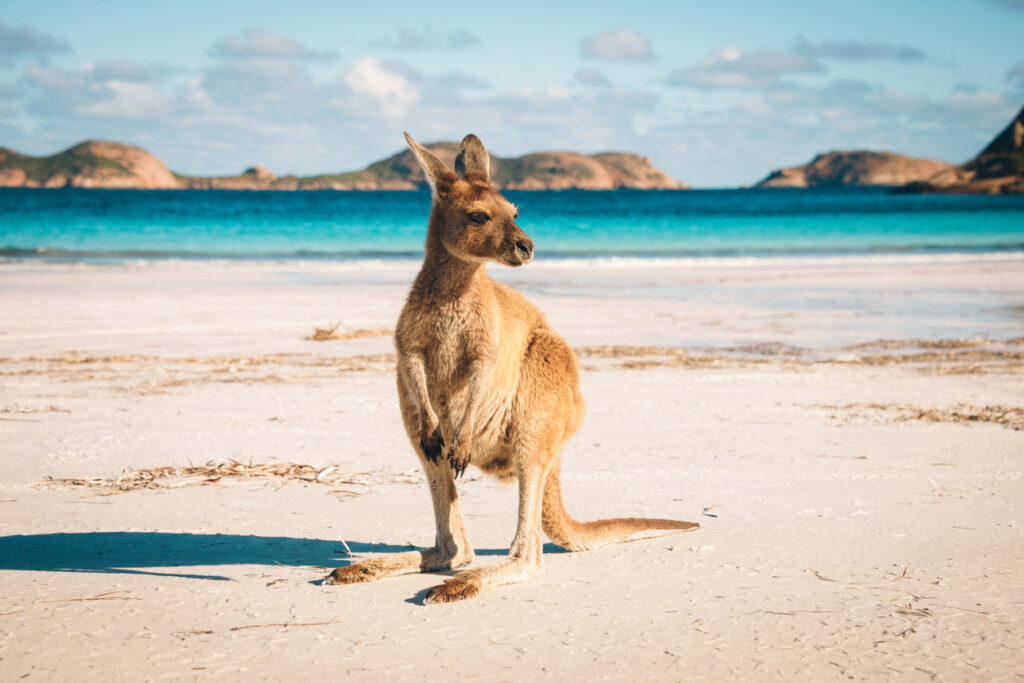
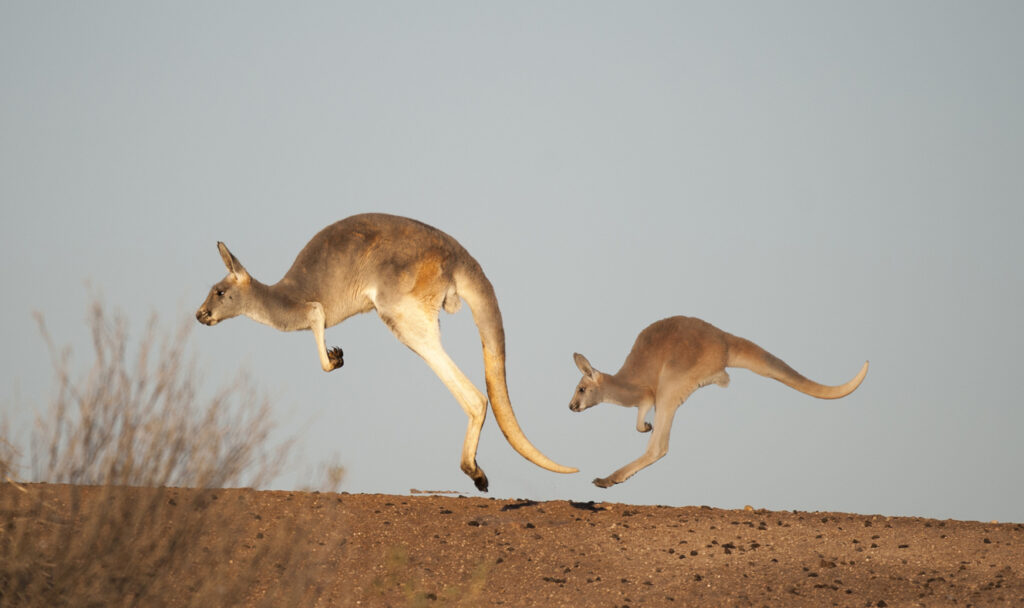
Another giveaway is the legs. Kangaroos are built for covering massive distances, so their legs are long and lean, built for speed and distance. Their hops are wider and more powerful than a wallaby’s. Wallabies, on the other hand, have shorter, stockier legs. They still hop, but their movement is more suited to wooded, uneven terrain than wide-open plains. They look more bouncy and less smooth in motion compared to a kangaroo’s long, gliding strides.
The tail is longer on a kangaroo.
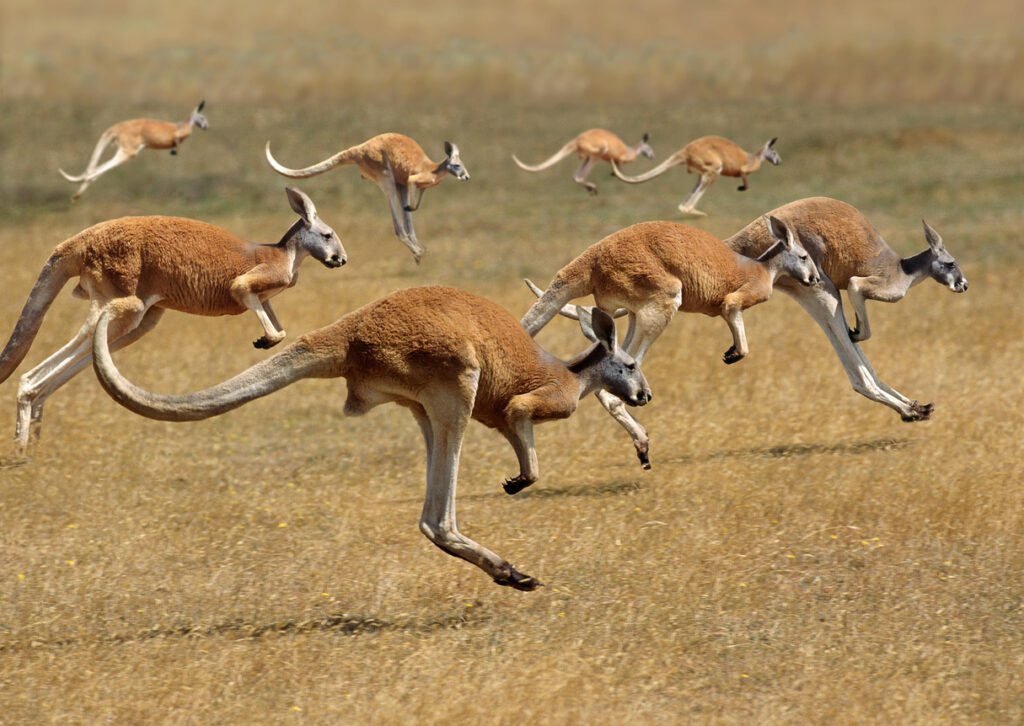
Kangaroos rely heavily on their long, muscular tails for balance and movement. Their tails are thick at the base and long enough to act almost like a third leg, helping them stabilise when standing or hopping. Wallaby tails are shorter in comparison and not quite as robust. They still use them for balance, but it’s not as much of a defining feature as it is for kangaroos. If you spot a creature with a tail that looks unusually long for its body, you’re likely looking at a kangaroo.
Look at the colour and markings.
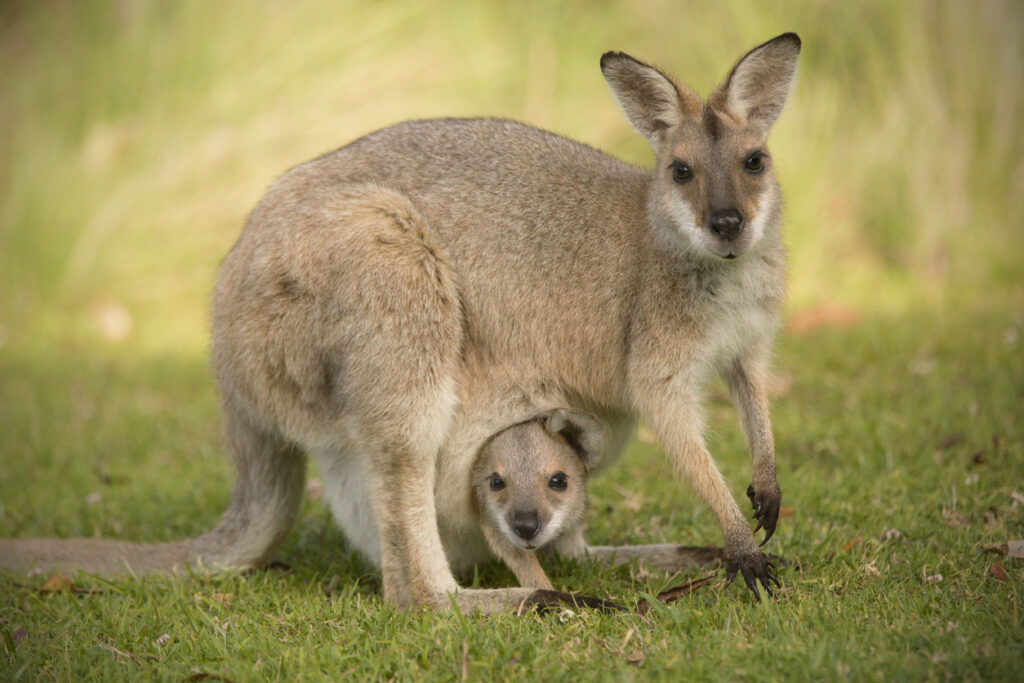
Wallabies often have more colourful or patterned coats than kangaroos. They can be reddish, greyish, or brown with markings on their face or limbs. Some even have pale cheek stripes or black-tipped paws. Kangaroos are usually more uniform in colour—shades of grey or reddish-brown depending on the species. Their plainer coat helps them blend into open grasslands, where camouflage is crucial.
Check the ears—kangaroo ears are longer.
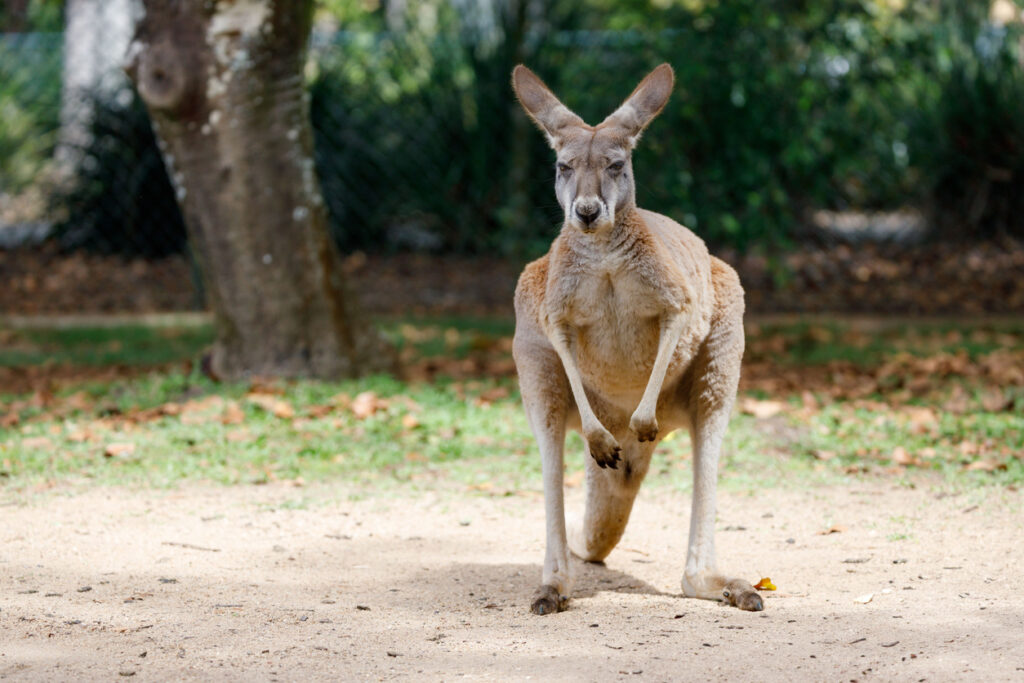
Both wallabies and kangaroos have large ears, but kangaroo ears tend to be longer and more pointed. They stick up more and often swivel to pick up sounds from all directions, especially in the wild. Wallaby ears are slightly rounder and shorter, and they usually look a bit more compact on the head. While not a foolproof method, ear shape is a handy backup clue if you’re not sure what you’re looking at.
Their environment gives it away.
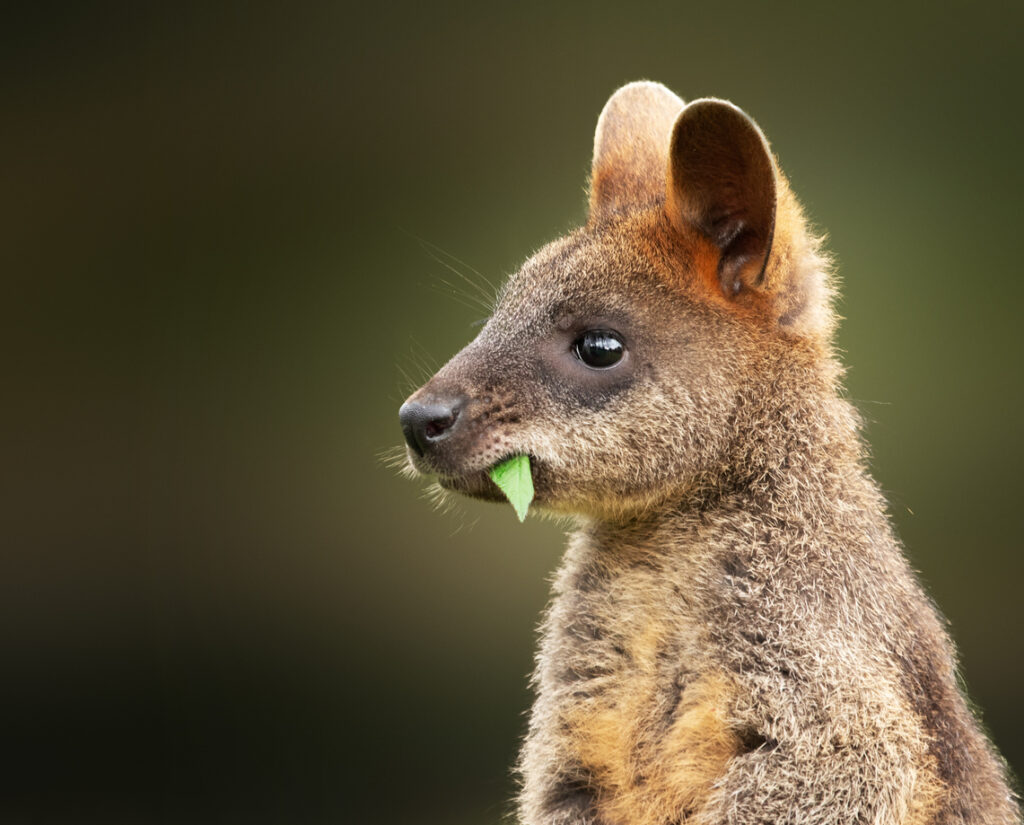
Kangaroos are more commonly found in open plains, grassy fields, and wide savannas. They need space to roam and room to run. If you’re seeing one in the wild and the landscape is flat and open, it’s probably a kangaroo. Wallabies prefer more dense, forested areas or rocky outcrops. They’re built to dart through trees and leap over logs, not to sprint across open ground. Their smaller size makes them perfect for environments where agility matters more than speed.
Wallabies look cuter and more delicate.
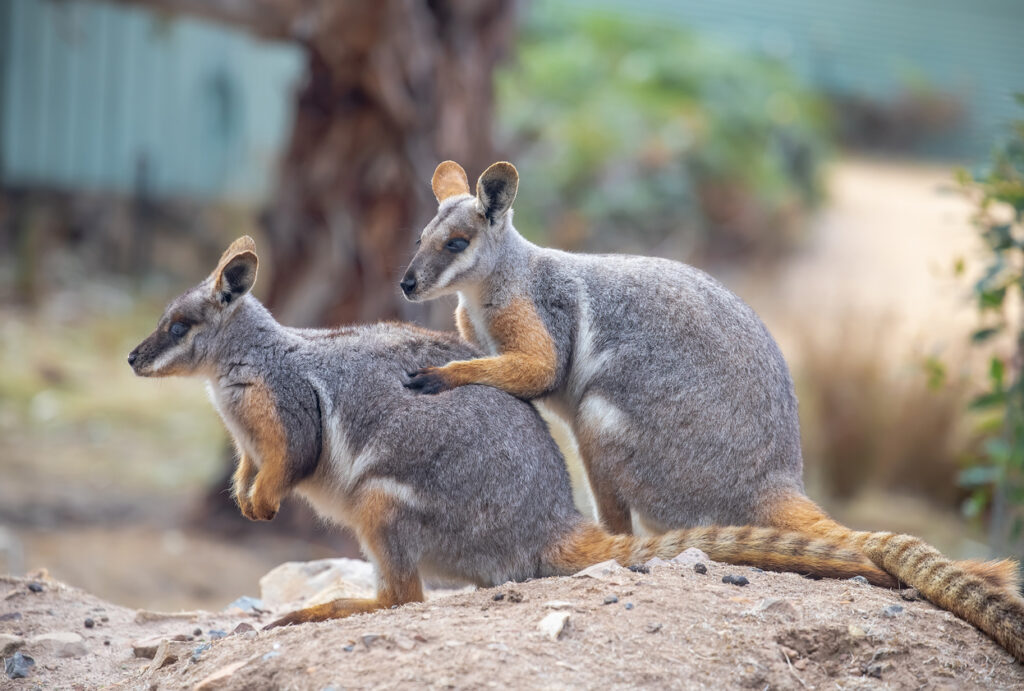
It’s not a scientific method, but if the animal looks more “adorable” than impressive, you might be looking at a wallaby. Their rounder faces, smaller stature, and expressive eyes often make them look softer and more delicate. Kangaroos, while still charming in their own way, have a more rugged appearance. Their large size and muscular build give them a more intimidating vibe—especially when they stand upright and flex those surprisingly strong arms.
They hop differently.
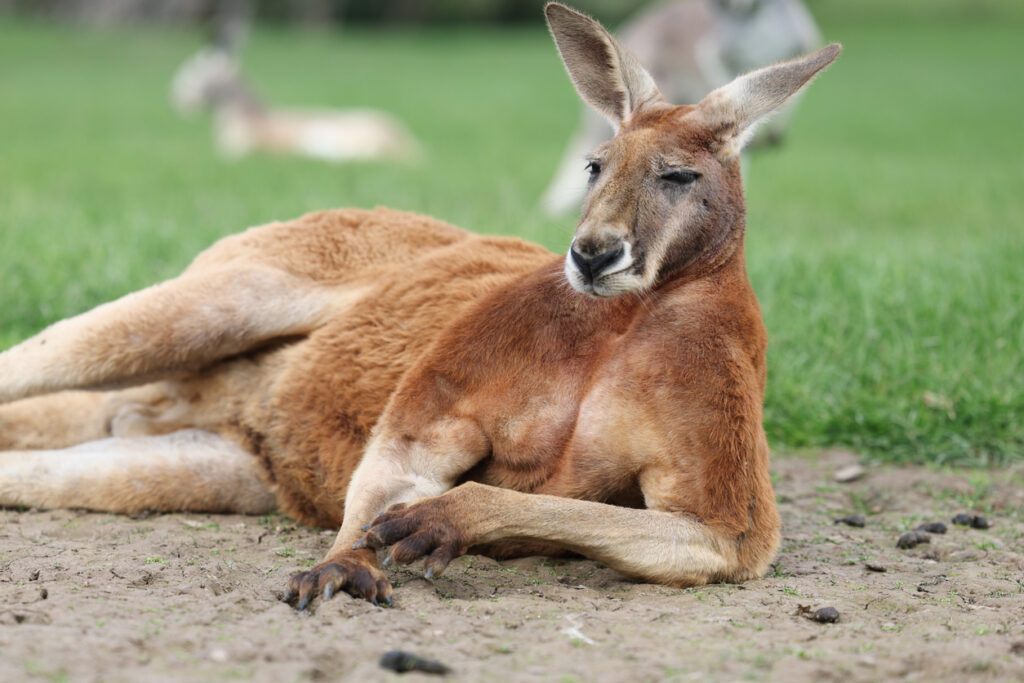
Kangaroos cover serious ground when they hop—each bound can be several metres long. Their hops look effortless and smooth, especially when they’re moving at full speed across flat land. Wallabies hop in a much more upright, energetic way. Their shorter legs and lighter frame mean they’re a bit more jerky or “bouncy” in motion, and they often dart rather than glide across space.
Their diet is slightly different.
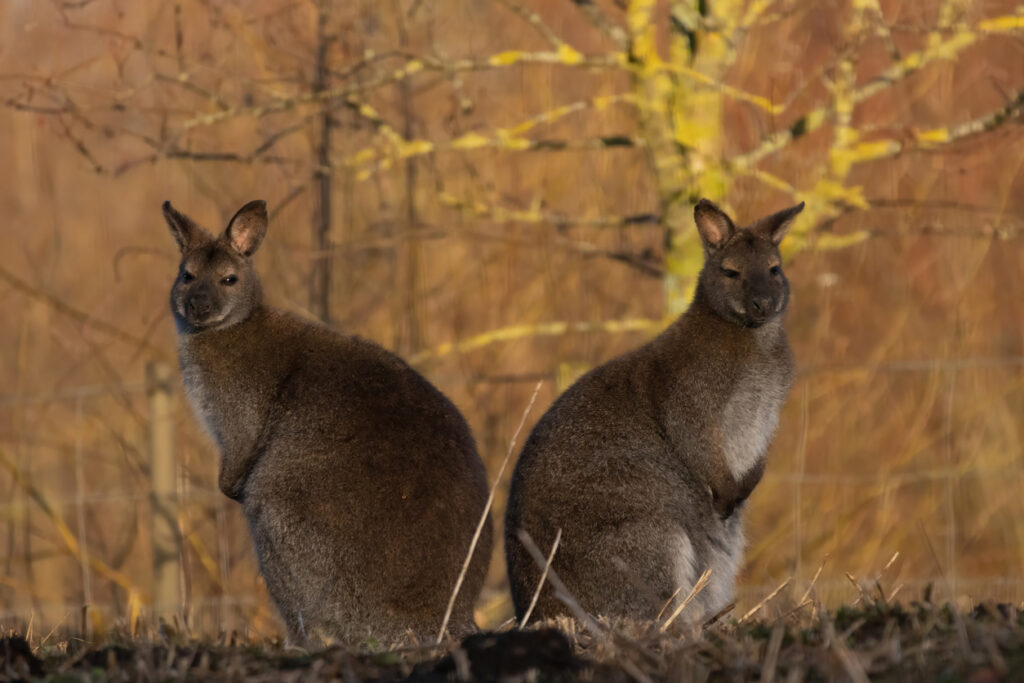
Both wallabies and kangaroos are herbivores, but wallabies tend to be browsers—they prefer leaves, fruits, and shrubs, especially in forested areas. They’re more selective in their feeding habits and often pick at plants low to the ground. Kangaroos are grazers. They eat grass, lots of it, and their diet suits their open environment. You’re more likely to find a kangaroo head-down in a wide field of green than a wallaby munching under a tree canopy.
Behaviour around humans varies.
Wallabies are usually more skittish. They’re shy and tend to hop away if they sense people nearby. Even in wildlife parks, they can be a little standoffish and take time to warm up to humans. Kangaroos, particularly the ones used to tourists, can be surprisingly bold. Some will even approach people looking for food, though that’s not encouraged. Their size makes them less fearful, but also a bit more unpredictable if they feel threatened.
Wallabies are more common in captivity.
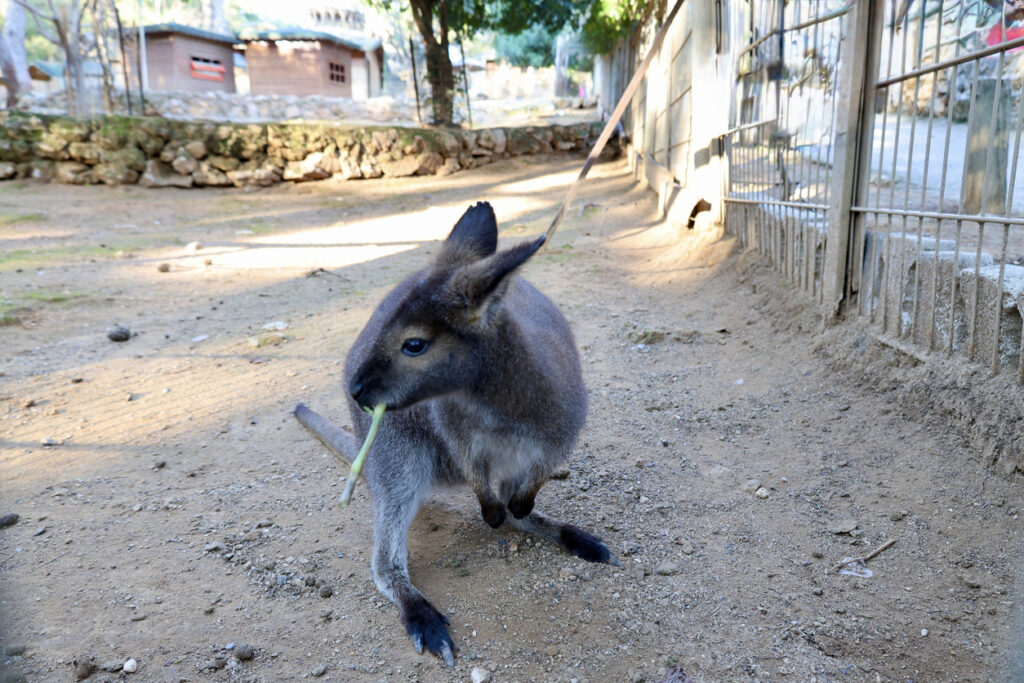
You’re more likely to see a wallaby in a UK wildlife park or petting zoo than a full-sized kangaroo. Wallabies are easier to care for due to their smaller size and more manageable space requirements. Kangaroos, on the other hand, need more room and stronger fencing. They’re usually kept in larger reserves or specialised facilities. So if you see one in a smaller enclosure, odds are it’s a wallaby rather than a roo.
There are more wallaby species.
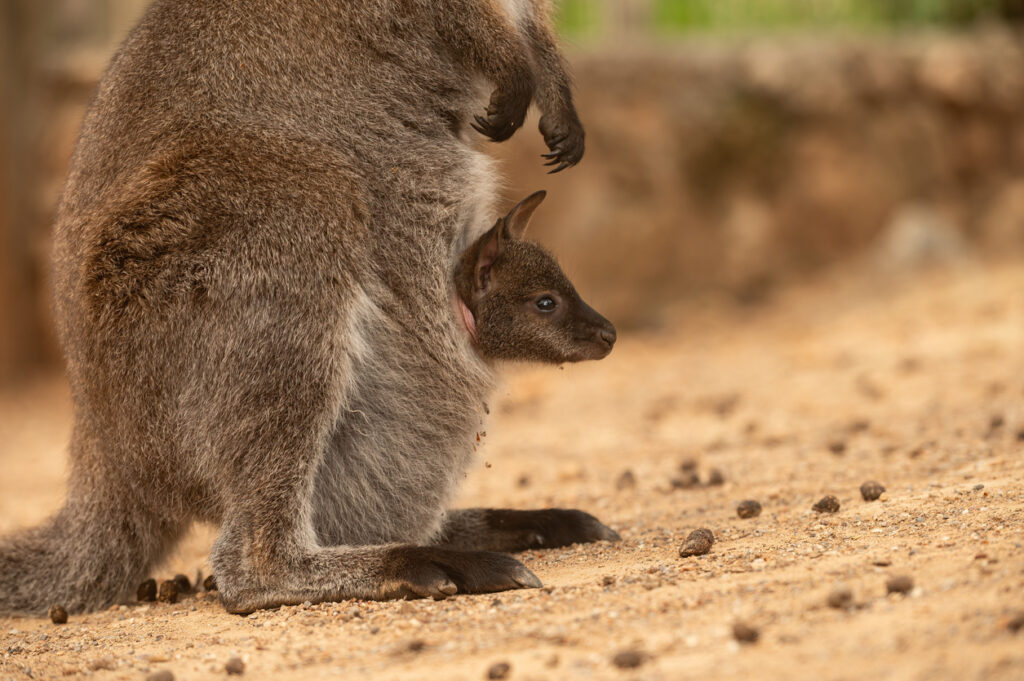
There are over 30 different species of wallaby, while kangaroos are generally split into just four main types. The diversity in wallabies means they vary widely in appearance, from rock wallabies to swamp wallabies to agile wallabies. This variety adds to the confusion, but it also means wallabies come in more shapes and sizes. If you’re struggling to ID a marsupial that doesn’t quite look like a kangaroo, it’s probably one of the many wallaby types out there.