Whether you’re nurturing veg beds, flower borders, or a lawn, weeds are going to turn up uninvited.
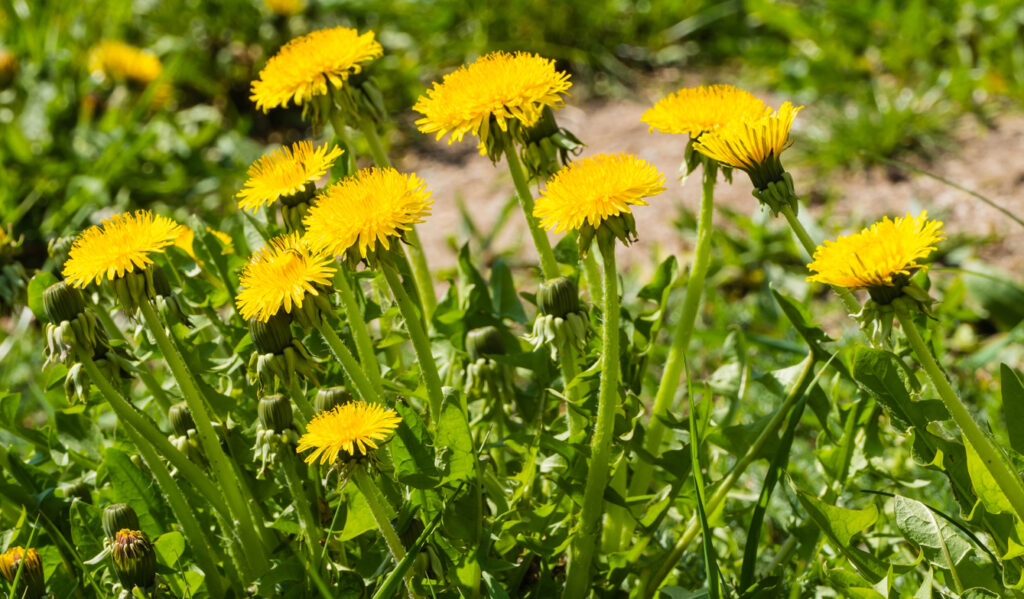
Some are pretty enough to confuse you. Others spread like wildfire if you ignore them for more than a week. And while not every weed is automatically the enemy, it helps to know what you’re looking at. Here are 20 of the most common garden weeds in the UK, how to spot them, and what makes each one a nuisance, or a surprise asset.
1. Dandelion (Taraxacum officinale)
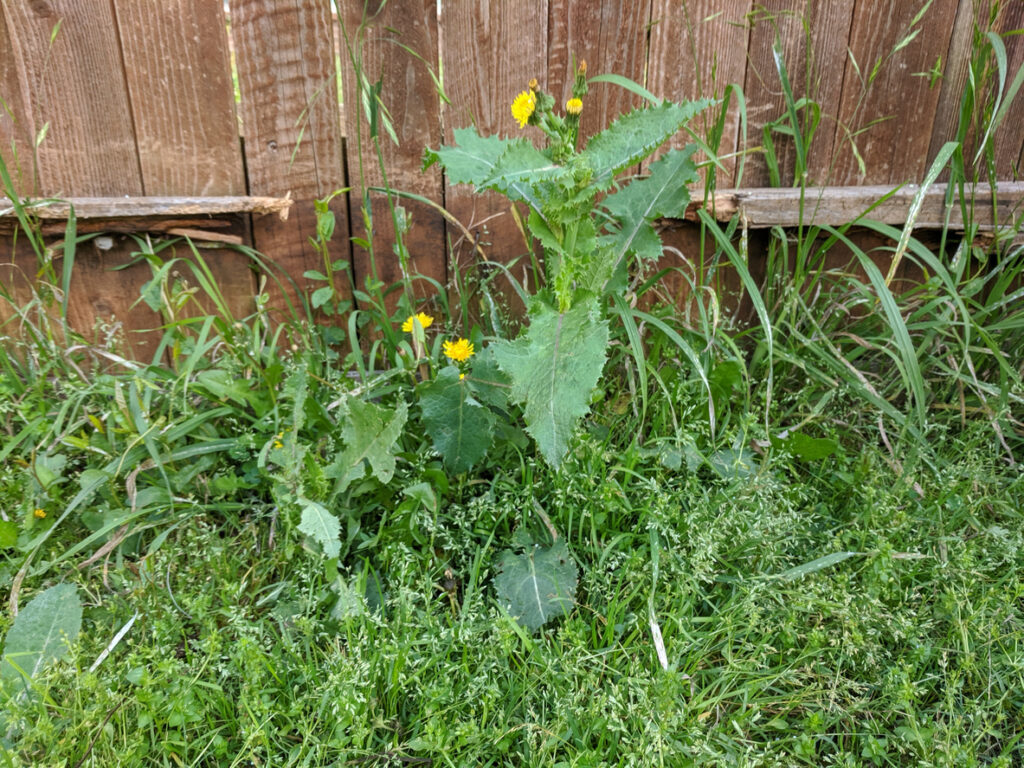
Easy to recognise with its jagged-edged leaves, bright yellow flowers, and puffball seed heads, the dandelion is a classic. It grows low to the ground in a rosette and has a long taproot that makes it tough to pull up cleanly once it’s established. You’ll often find it in lawns, paving cracks, and any disturbed soil.
Although a magnet for bees early in the season, it spreads quickly if left unchecked. The seeds float off in the breeze and settle just about anywhere. If you don’t get the entire root out, it will grow back stronger and more determined than ever.
2. Creeping buttercup (Ranunculus repens)
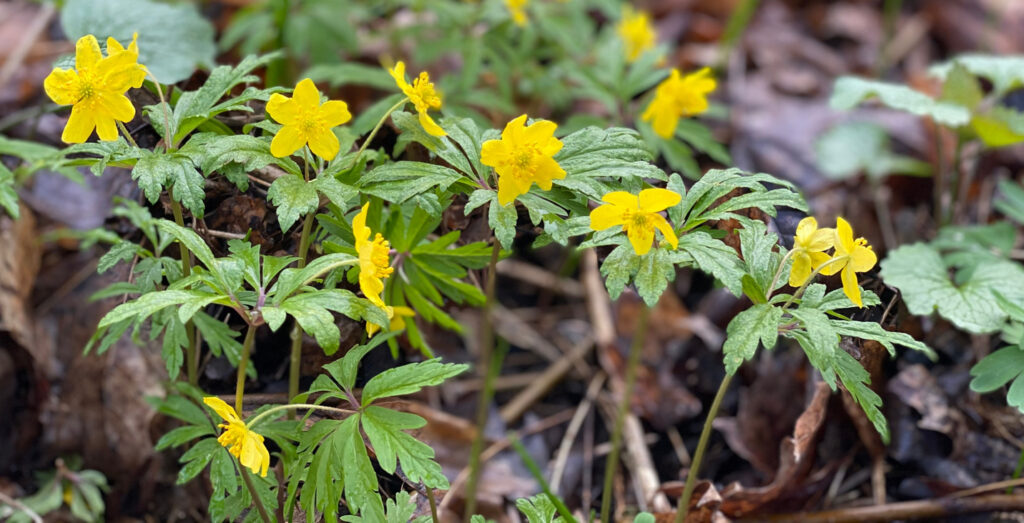
With glossy, three-lobed leaves and cheerful yellow flowers, creeping buttercup might seem harmless, but it’s a real pain in damp, compacted soil. It spreads through creeping runners that root at the nodes, forming dense mats that smother nearby plants. It’s one of those weeds that thrives in neglected corners and heavy clay. Once it’s in, it takes some serious digging or persistent hoeing to get rid of it. Don’t rely on pulling—it’ll just snap and return.
3. White clover (Trifolium repens)
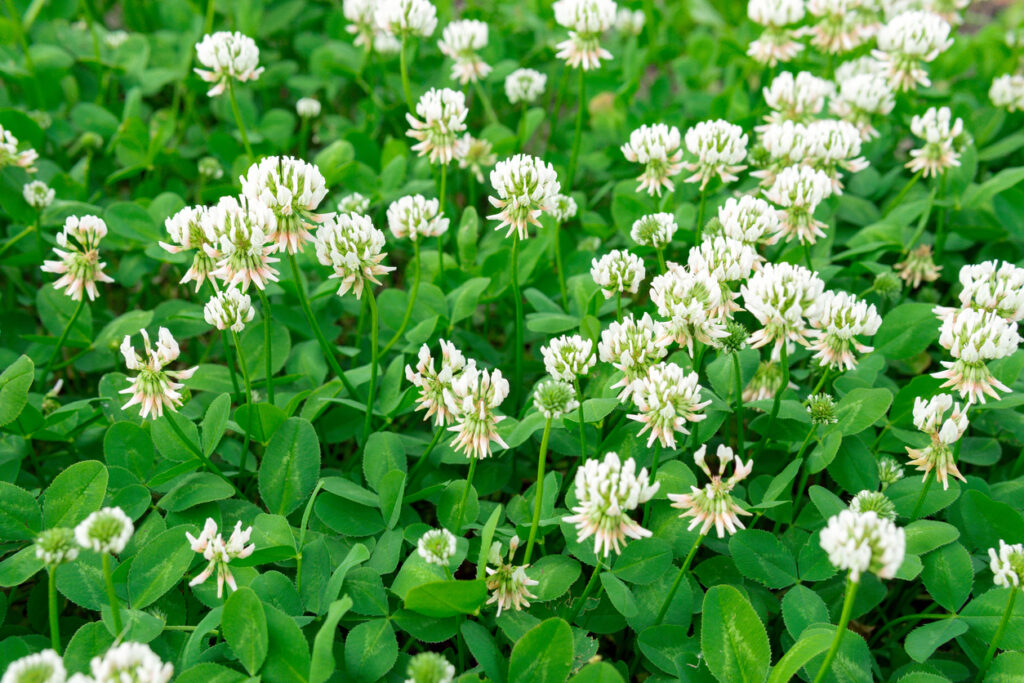
This low-growing weed has familiar three-leaf clusters (sometimes four, if you’re lucky) and small, white pom-pom flowers. It spreads quickly across lawns and bare soil through creeping stems called stolons. While clover fixes nitrogen in the soil and bees love it, it can take over weaker areas of lawn. If you’re after a tidy, uniform grass space, this little weed will test your patience.
4. Chickweed (Stellaria media)
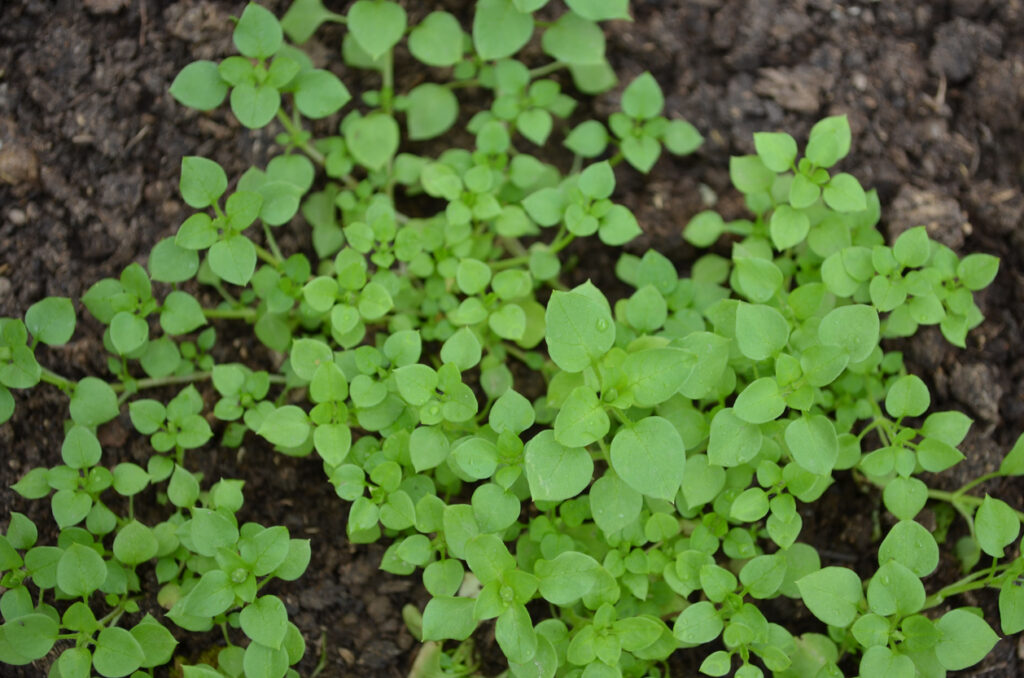
Chickweed is a low, sprawling annual with tiny white star-like flowers and delicate green stems. It grows fast and flowers young, producing thousands of seeds in a short space of time. Because it loves disturbed soil and mild weather, you’ll find it popping up all year. It’s not hard to remove by hand, but it grows back quickly if you let it flower even once.
5. Fat hen (Chenopodium album)
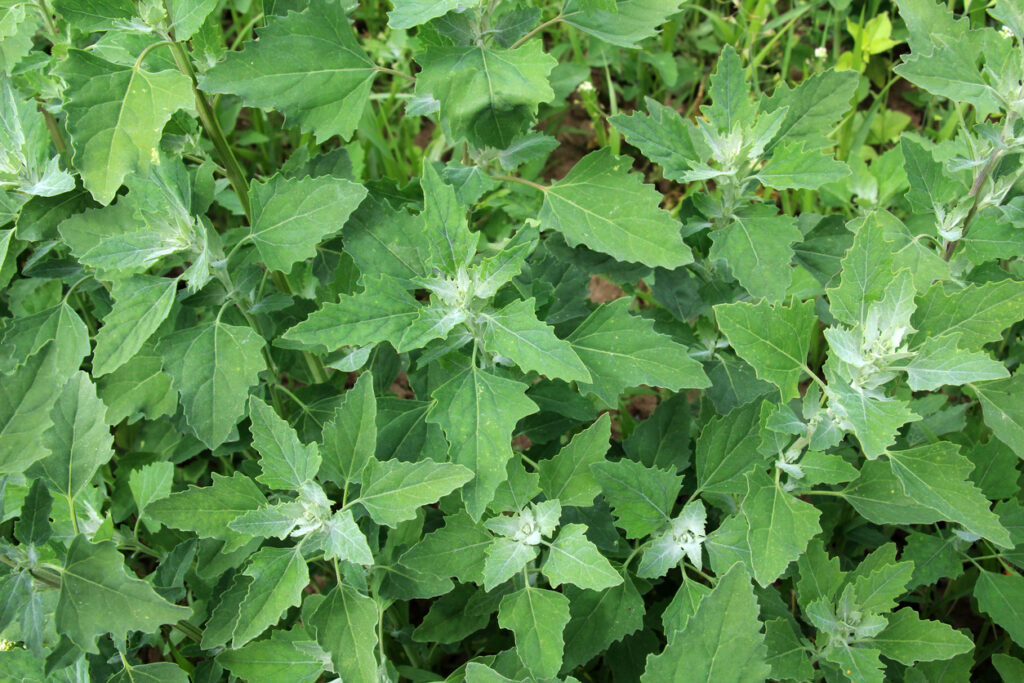
This bushy annual has diamond-shaped, dusty-looking leaves and often grows quite tall if left alone. It thrives in rich soils and compost heaps and is a common sight in vegetable patches. It might look leafy and soft, but it crowds out seedlings and competes for nutrients fast. Each plant can produce tens of thousands of seeds, so it’s one to pull early before it gets going.
6. Groundsel (Senecio vulgaris)
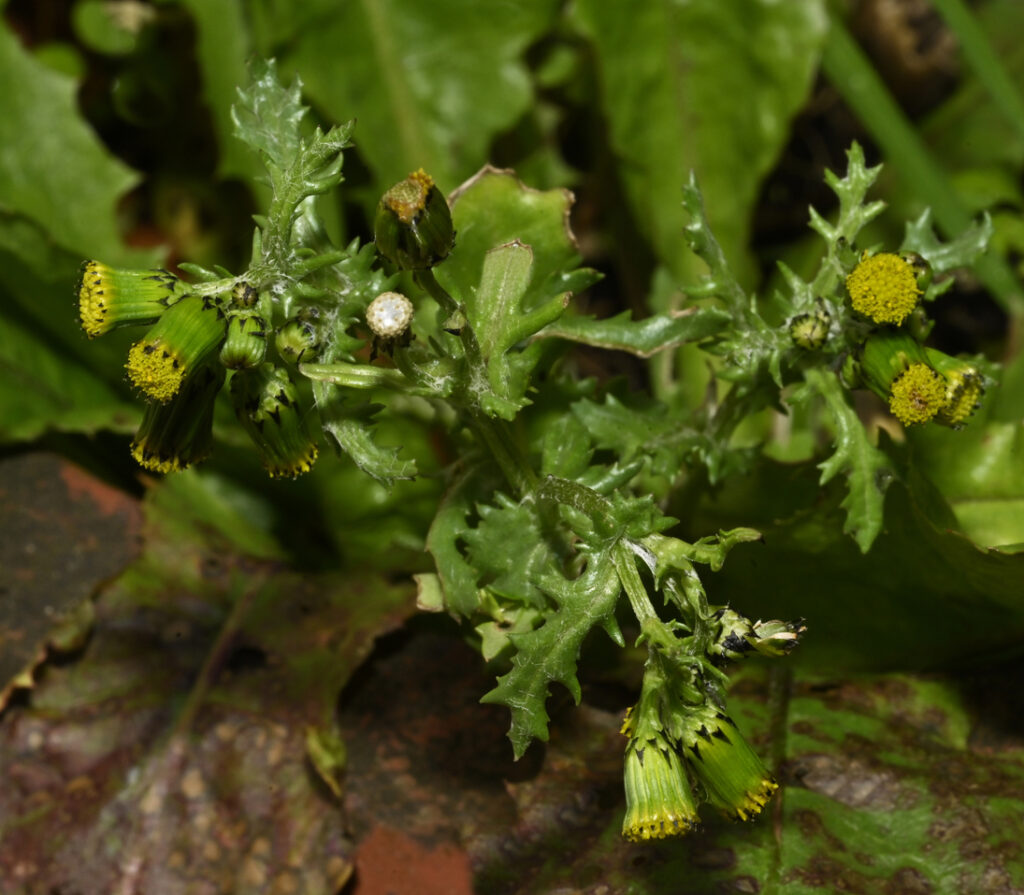
Groundsel is a soft, upright plant with ruffled leaves and small yellow flower clusters that quickly turn into fluffy seed heads. It prefers shady spots and poor soil, where it often goes unnoticed until it’s spread. This annual weed grows and reproduces rapidly, often before you even clock it’s there. It’s not particularly hard to remove, but it keeps coming back unless you hoe it down regularly.
7. Couch grass (Elymus repens)

At first glance, couch grass just looks like regular lawn grass. But dig below the surface and you’ll find a network of white, wiry rhizomes. These underground stems spread rapidly and can regenerate from the tiniest fragment. It’s a nightmare for borders and veg beds, especially if you break up the roots and leave pieces behind. Consistent digging and root removal is the only real way to keep it under control.
8. Bindweed (Calystegia sepium)

With large white trumpet-shaped flowers and fast-growing twining stems, bindweed is surprisingly pretty, but relentless. It wraps around anything vertical and shades out smaller plants as it climbs. Its fleshy white roots run deep and wide, and even tiny fragments will regrow. Regular cutting back helps weaken it, but it can take years of persistence to fully get rid of it.
9. Japanese knotweed (Reynoutria japonica)

Known for its bamboo-like stems, heart-shaped leaves, and rapid growth, Japanese knotweed is one of the UK’s most invasive weeds. It’s so problematic, it’s covered by law, and can damage buildings if left to spread. It’s nearly impossible to control without professional help. If you suspect you’ve got it, don’t dig or disturb it. Get expert advice before it takes over or creates legal headaches.
10. Ground elder (Aegopodium podagraria)

This plant has clusters of white flowers and broad, toothed leaves. It spreads aggressively via underground rhizomes and often pops up in older gardens or neglected borders. Pulling it out only works if you get every last bit of root, which is tricky. It’s one of those weeds that responds better to being completely smothered than to repeated digging.
11. Green alkanet (Pentaglottis sempervirens)
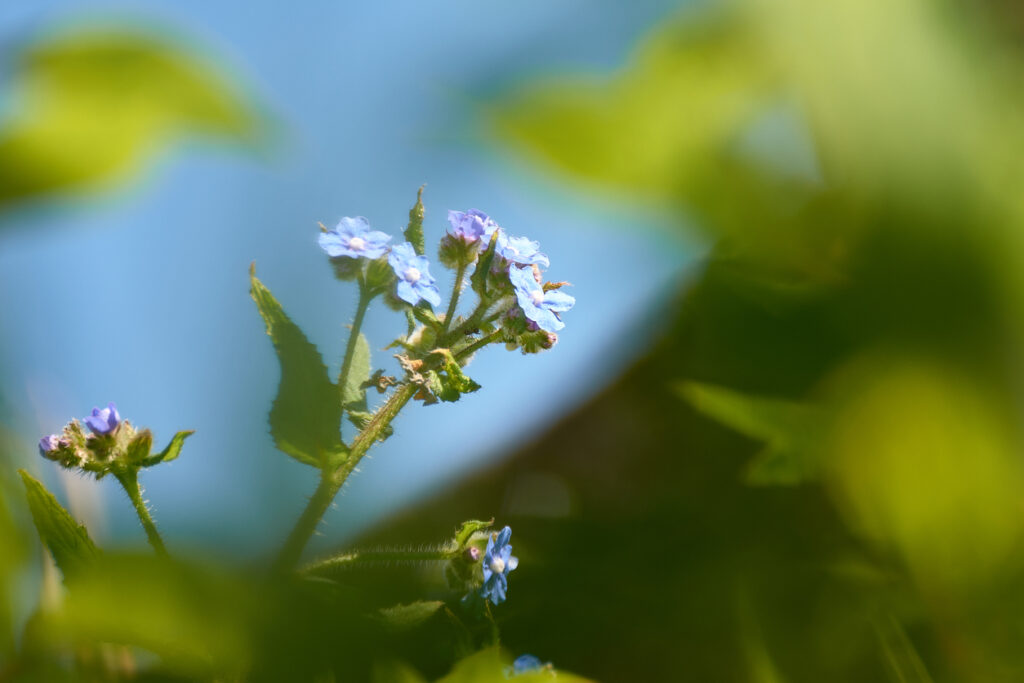
With its rough, hairy leaves and bright blue forget-me-not-like flowers, green alkanet is a striking plant that often sneaks into gardens via shady borders. It has a deep taproot and spreads by seed and root fragments. It’s not the worst offender, but it can form dense patches in the right conditions. If you’re not after its blue blooms, remove it before it sets seed—it’s a lot harder once it’s established.
12. Herb bennet (Geum urbanum)
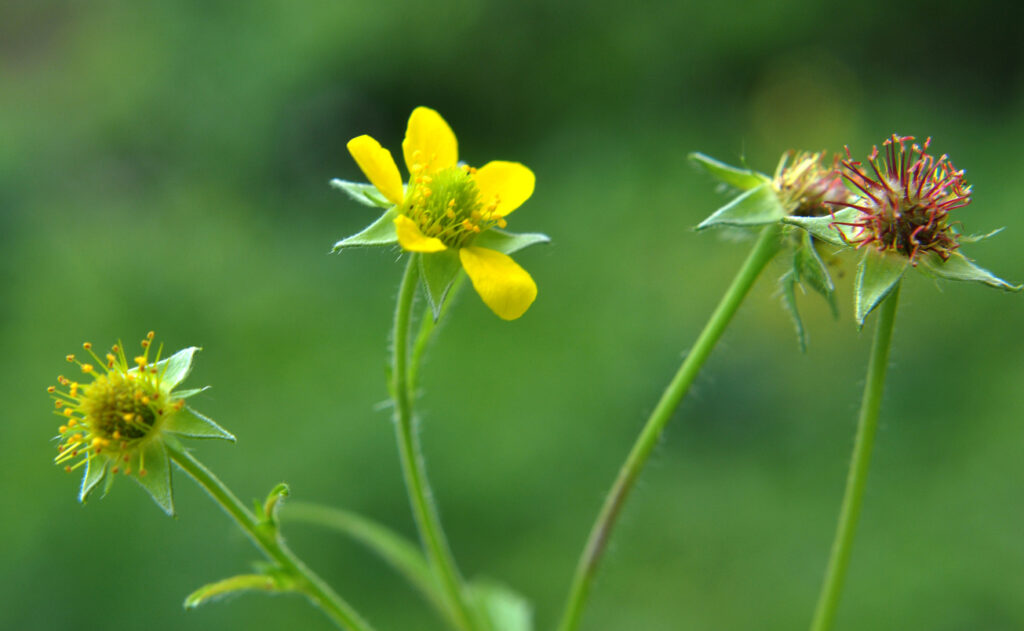
Also known as wood avens, this weed produces small yellow flowers and clusters of jagged leaves low to the ground. It’s a perennial that spreads both by seed and via short root runners. It’s fairly easy to pull when the soil is damp, but it tends to hide out in shaded, undisturbed areas and quickly forms a carpet if ignored.
13. Stinging nettle (Urtica dioica)

You’ll know this one if you’ve ever brushed past it in shorts. Nettle leaves are serrated and covered in tiny hairs that sting on contact. They grow in dense clumps and favour nutrient-rich soil. They’re useful to wildlife, particularly butterflies, and can even be composted, but they spread via both seed and creeping roots. Dig them out from the base or cut regularly to weaken them.
14. Common yarrow (Achillea millefolium)
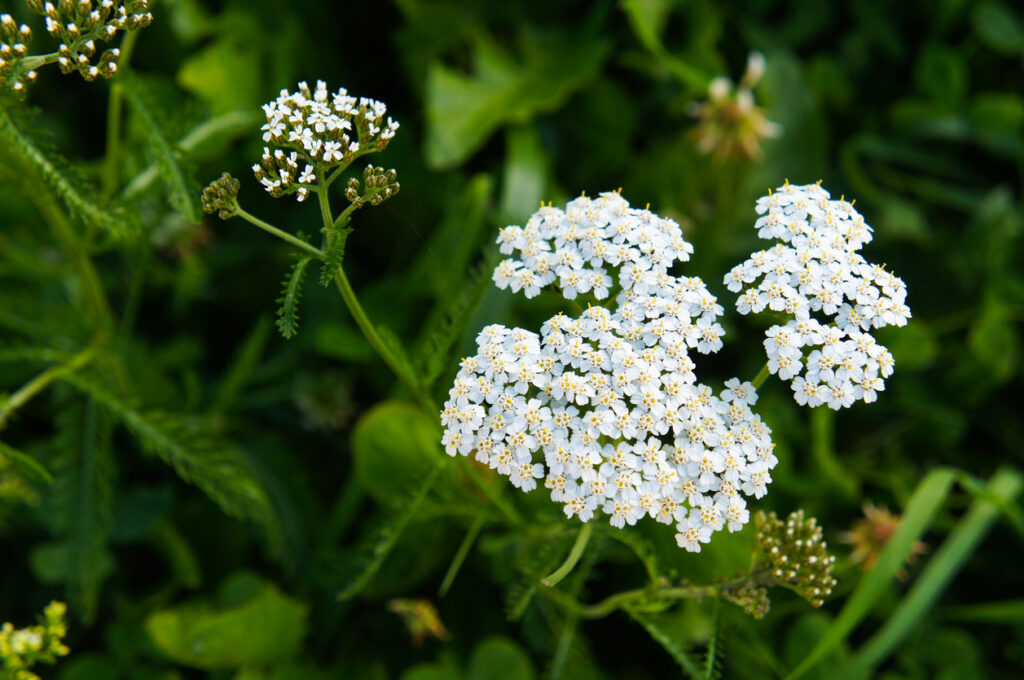
This fern-like weed has feathery leaves and flat-topped white flower clusters. It’s drought-tolerant and grows in thin, poor soil, often in dry lawns and roadside verges. Yarrow can actually improve poor soil, but it competes with other plants and spreads quickly. It’s best removed by pulling or hoeing before it flowers and spreads seeds.
15. Spear thistle (Cirsium vulgare)
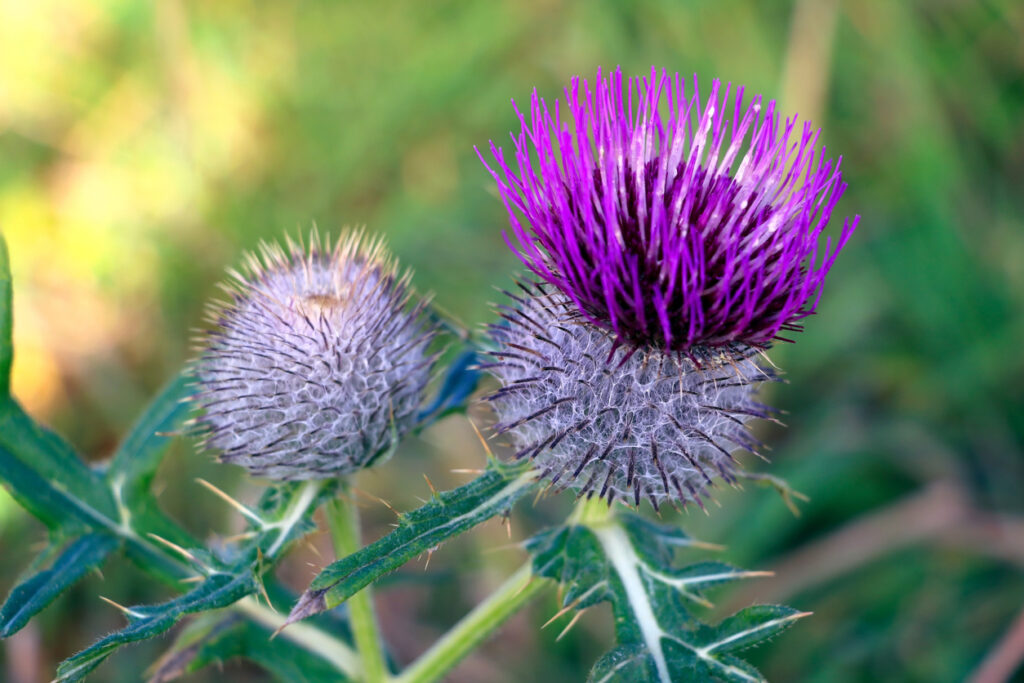
This spiny biennial has jagged, prickly leaves and purple flower heads on tall stems. It’s easily recognisable, but unpleasant to deal with if you’re bare-handed. It produces loads of fluffy seeds and has a tough taproot. Dig it out before flowering, and definitely before those seed heads start floating around your garden.
16. Scarlet pimpernel (Anagallis arvensis)
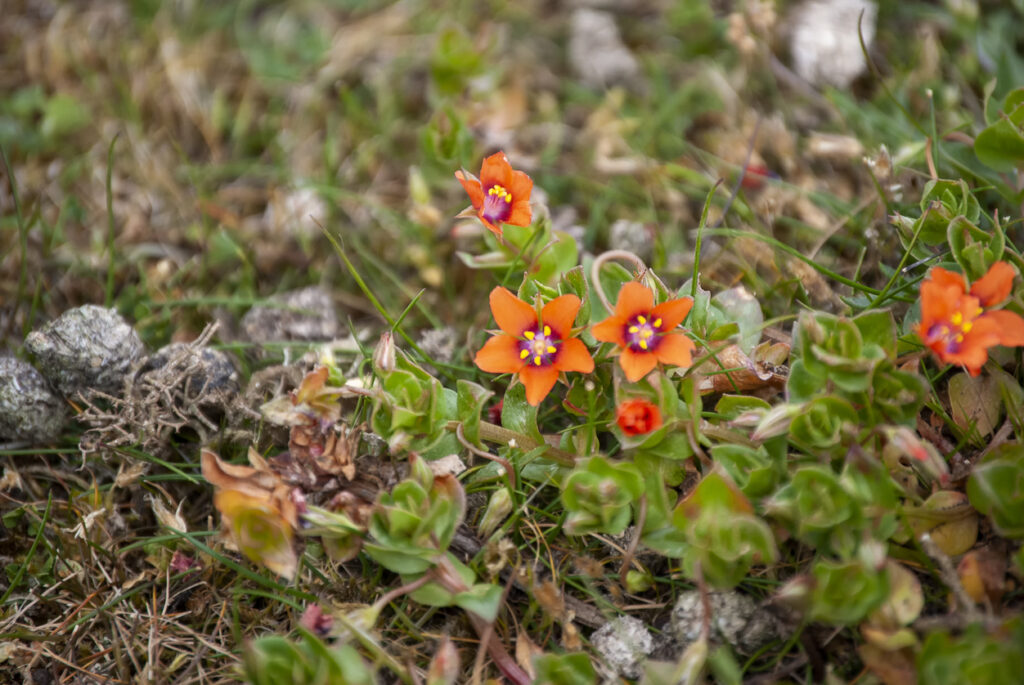
A low, sprawling plant with tiny red or orange flowers, scarlet pimpernel is easy to miss—until it forms a mat across beds and paths. It’s most common in sunny, dry soil. It doesn’t root deeply, so it’s easy to pull, but it seeds quickly. Regular weeding is the best approach to keep it in check before it spreads too far.
17. Cleavers (Galium aparine)

Also known as goosegrass or sticky weed, cleavers cling to clothing and fur thanks to their velcro-like stems and leaves. They sprawl across hedgerows, beds, and fences, smothering seedlings and perennials. It’s easy to pull when young, but becomes stringy and tangled as it grows. Clear it out early in the season and keep an eye out for new growth—it doesn’t need much time to return.
18. Dock
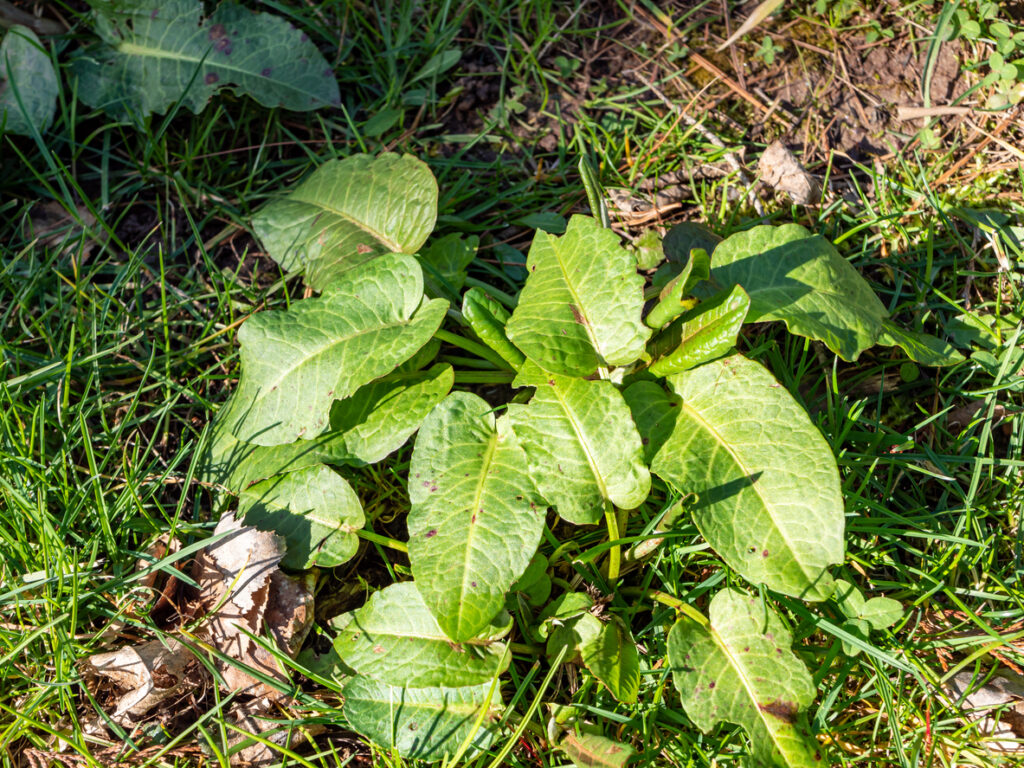
Dock plants have large, broad leaves and thick taproots. They favour heavy, compacted soil and often grow near nettles. The seeds form in clusters and spread widely. It’s not the hardest plant to dig, but the root goes deep. You’ll need to get the whole thing out or it will just keep coming back year after year.
19. Creeping thistle (Cirsium arvense)
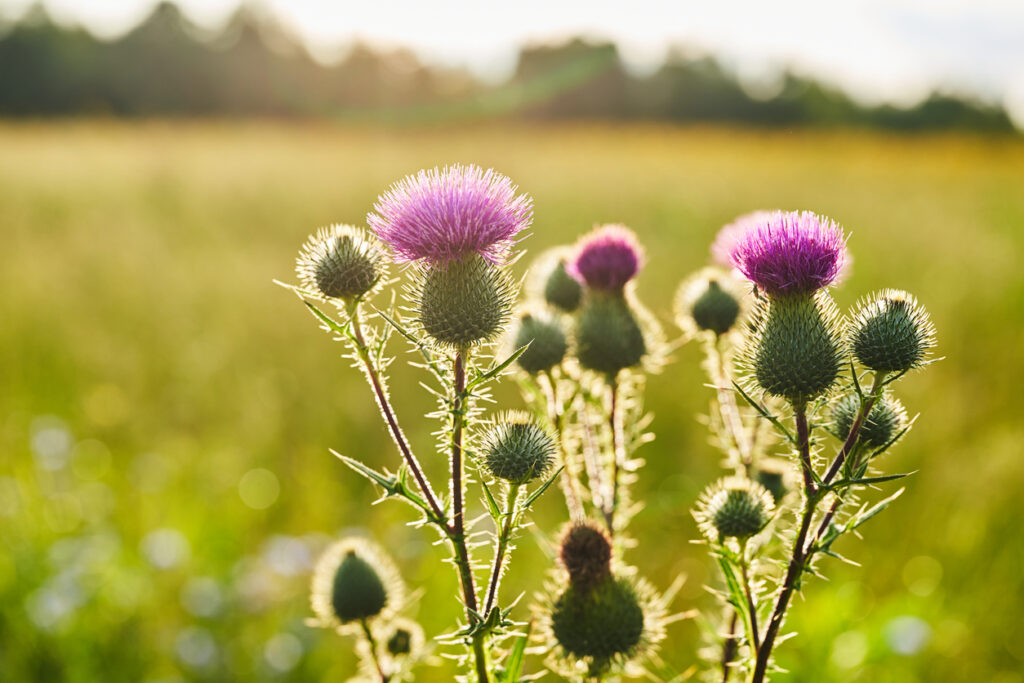
Unlike its taller cousin, creeping thistle forms spreading clumps with less dramatic flowers and more subtle leaves. It’s still spiny, though, and spreads aggressively underground. It’s a tough one to dig out completely—those roots snap easily and regrow fast. Regular cutting or smothering is more effective over time than trying to win the digging war.
20. Common ragwort (Jacobaea vulgaris)
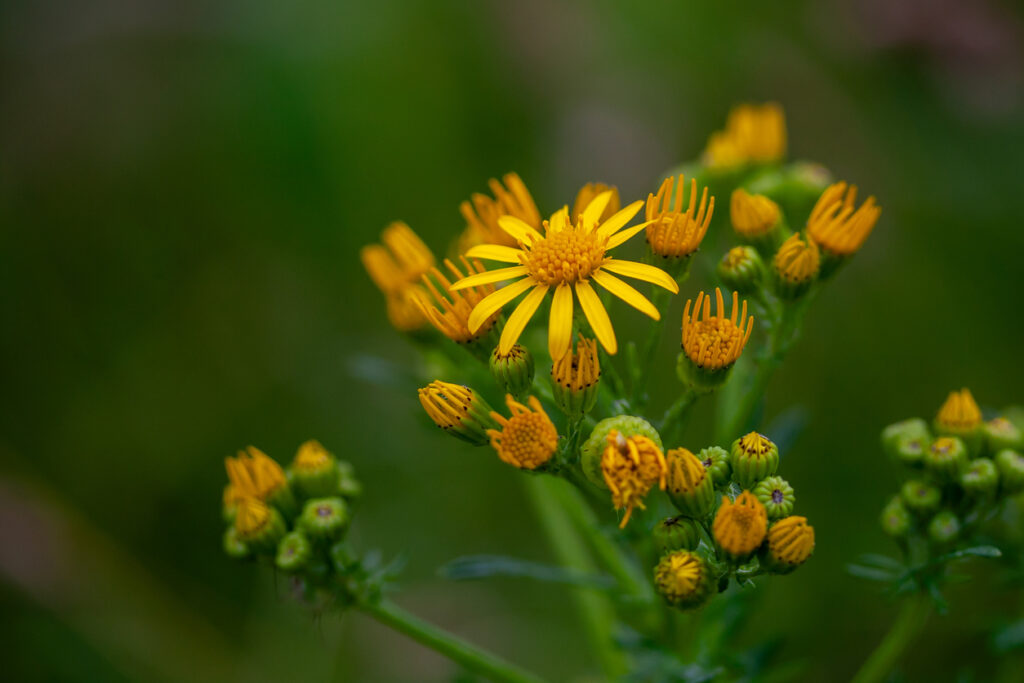
This bright yellow-flowered plant is controversial—it’s toxic to livestock but supports several species of pollinating insects. It has feathered leaves and thrives in disturbed or neglected soil. Because of its toxicity, it needs to be managed carefully, especially if you’re near grazing animals. Pull before it flowers and remove roots to stop it reappearing the next year.