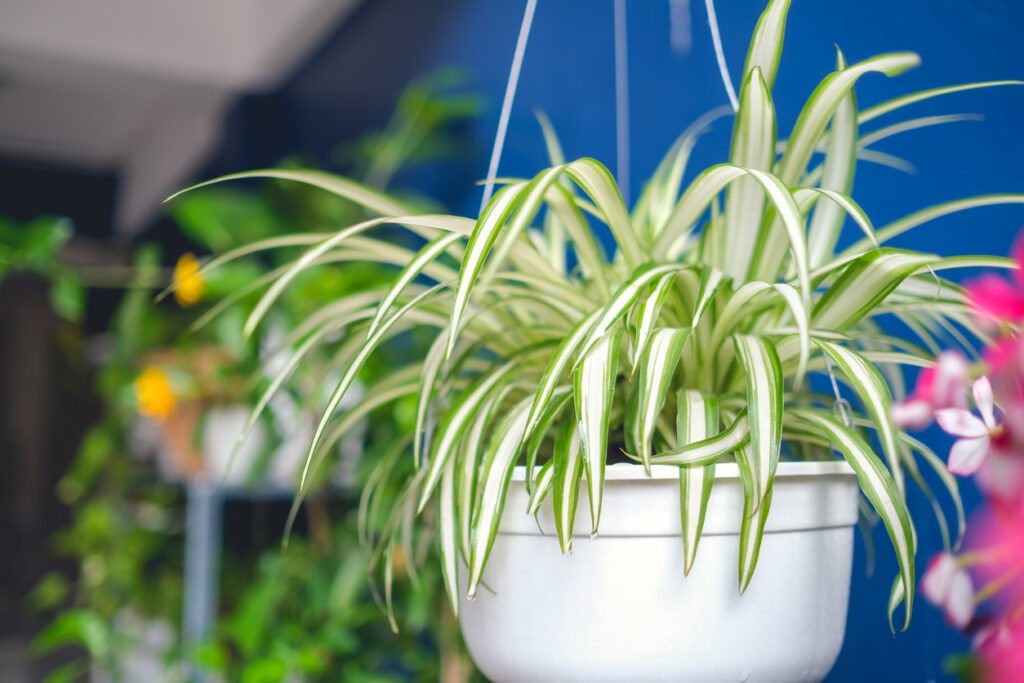
You’ve probably heard that keeping a few plants around the house is a bit like having a natural air filter, and the spider plant is usually at the top of that list. It’s one of those rare cases where something that looks decorative is actually doing some heavy lifting behind the scenes.
While most of us just like them because they’re nearly impossible to kill, they’re actually brilliant at scrubbing common household toxins like formaldehyde and carbon monoxide out of the air. It’s a bit of a win-win; you get a bit of greenery that survives even if you forget to water it for a week, and it’s quietly working away to keep the air in your living room a lot cleaner.
They were studied seriously by NASA.
The reason spider plants keep coming up in conversations about air purification isn’t just folk wisdom. NASA included them in a clean air study back in 1989 that looked at how common houseplants perform when it comes to removing pollutants from enclosed spaces. Spider plants came out well, which is largely why they’ve had such a strong reputation ever since. The study was designed with space stations in mind, but the findings translated naturally to homes and offices.
@mel_dub1Before you buy a spider plant, here’s what you need to know. 🌿 They’re thirsty, they need bright light to actually grow, they’re sensitive to salts in tap water, and that “air purifying” claim only works if you have dozens of them. Spider plants are great beginner plants — but only if they match your space and your habits. Save this before you bring one home. 🕷️💚♬ original sound – Melissa🪴 | Greenhouse Tips
They absorb formaldehyde from the air.
Formaldehyde is more present in the average home than most people realise. It off-gasses from furniture, flooring, certain glues and some household cleaning products, and it builds up in spaces that aren’t well ventilated. Spider plants have shown a genuine ability to absorb it through their leaves, breaking it down through a natural metabolic process. It’s not instant, but over time they do make a measurable difference in enclosed spaces.
Carbon monoxide is another pollutant they tackle.
Beyond formaldehyde, spider plants also absorb carbon monoxide, which can accumulate in homes from gas appliances, open fires and attached garages. They’re not a substitute for a carbon monoxide detector—that needs to be very clear— but as part of a well-ventilated space they do contribute to reducing low-level build-up over time.
They process xylene too.
Xylene is a solvent found in paints, varnishes, adhesives and some cleaning products. It’s not something most people think about, but it’s present in a lot of homes, particularly during and after renovation work. Spider plants absorb xylene through their leaves and break it down in a similar way to how they handle other volatile organic compounds, making them a useful plant to have around if you’ve recently decorated or moved into a newly finished space.
@sultana_1011 One of the best plants to purify the air#oxygen #health #lifestyle #foryou #foryoupage #fyp #fypシ゚viral #viralvideo #viraltiktok ♬ original sound – Sultana
The volume of plants matters more than most people expect.
One spider plant in a corner of your living room will do something, but it won’t transform your air quality on its own. Research suggests you’d need a meaningful number of plants per square metre to see a considerable effect. Some estimates put it at several plants per roughly nine square metres of space. That’s more than most people have, which is worth knowing if you’re keeping them primarily for purification rather than aesthetics.
Ventilation still does far more than any plant can.
This is the part that often gets left out of the conversation. Opening windows regularly, using extractor fans and maintaining good airflow through your home will do considerably more for your indoor air quality than any number of houseplants. Plants are a helpful addition to a well-ventilated space, not a replacement for one. If your home is very poorly ventilated, plants alone won’t compensate for that.
Their leaves are where most of the work happens.
Spider plants absorb pollutants primarily through tiny pores in their leaves called stomata. This means that the more leaf surface area a plant has, the more it can process. Healthy, well-grown spider plants with plenty of leaves will outperform smaller or struggling ones, which is a good argument for keeping them in decent light and watering them properly rather than just keeping them alive on neglect.
@kymbertalks Did you know you can use Spider Plants as an air purifier for your home? You get lovely decor and plant-life while keeping your air fresh and clean! It’s a two birds with one stone situation here! There are chemicals like formaldehyde in your wooden floors and sofas. So having spider plants throughout your home is an excellent, cost-effective options while giving your home a little cutesy decor! Will you be adding spider plants to your home? #spiderplant #naturalwellness #holistichealth #holistic #cleanliving #crunchy #crunchymoms #maha #homesteader #toxinfree #lowtoxliving #nontoxicliving #conservativesoftiktok ♬ original sound – kymber
The soil and roots play a role as well.
It’s not only the leaves doing the work. The soil microbes living around the roots of houseplants also contribute to breaking down certain pollutants, and spider plants support a reasonably active root microbiome. Some researchers argue the soil contribution is actually significant enough to factor in separately, though most of the headline purification figures tend to focus on what the leaves alone are doing.
They’re one of the safer options if you have pets or children.
A lot of air-purifying plants come with the catch that they’re toxic to animals or small children. Spider plants are non-toxic, which makes them a more practical choice for most households. The only mild caveat is that cats are sometimes drawn to them because the plants have a very slight hallucinogenic effect on felines. It’s nothing harmful, but worth knowing if you have a cat that tends to chew on things.
They’re worth having even if the purification benefits are modest.
There’s been some debate in the scientific community about whether the NASA findings translate as well to real homes as they do to sealed laboratory conditions. The honest answer is that the benefits are real, but probably more modest in a typical lived-in space than the original study implied. That said, spider plants are easy to grow, cheap to buy, non-toxic and genuinely do absorb pollutants to some degree. Even if they’re not quite the air-cleaning powerhouses they’re sometimes described as, they’re still a worthwhile thing to have around.