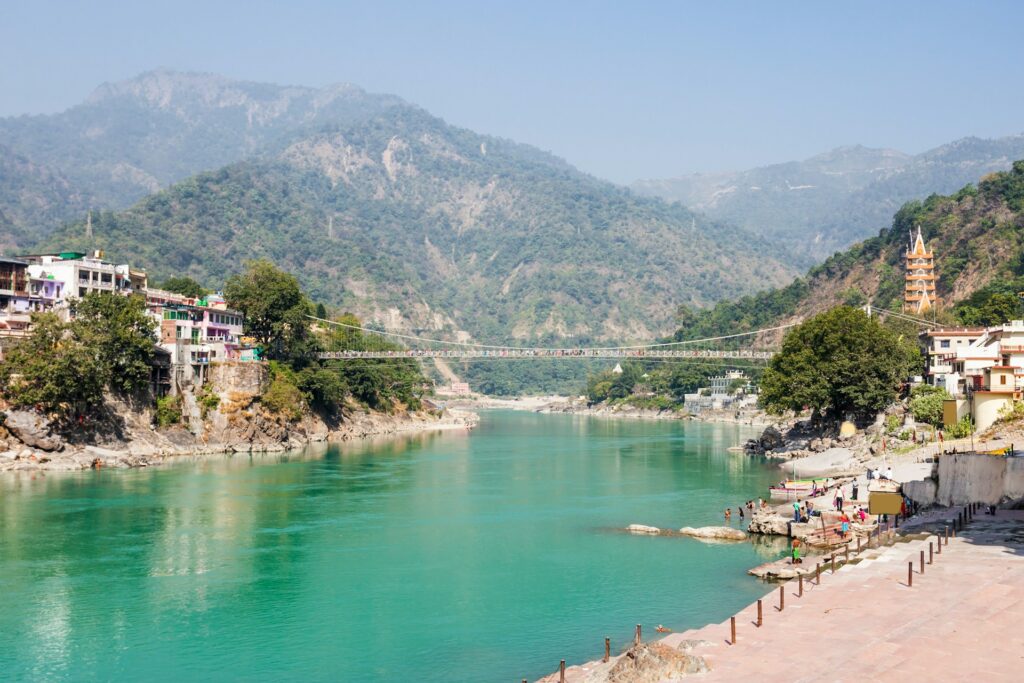
When we talk about the great rivers of Asia—the Ganges, the Yangtze, the Mekong, and the Brahmaputra—it’s easy to frame them as local lifelines. We think of them as the water source for the millions of people living on their banks, or the engine room for the massive economies of China and India. However, the truth is that these rivers are much more than just regional assets; they’re actually critical components of the entire planet’s plumbing and climate system
Not only is the way they move carbon out of the atmosphere vital, but there’s also the massive amounts of nutrients they dump into the oceans to feed global fish stocks, what happens in the Himalayas doesn’t stay in the Himalayas. If these rivers start to fail or become too polluted, the knock-on effects are felt in food prices, weather patterns, and ocean health thousands of miles away.
They feed more people than any other water system on earth.
The river basins of Asia, from the Ganges and Brahmaputra in South Asia to the Yangtze and Yellow River in China, irrigate farmland that feeds billions of people. The Indo-Gangetic plain alone supports somewhere between nine and fourteen percent of the world’s entire population, and without consistent river flow that agricultural output simply doesn’t happen. When these rivers run low or flood unpredictably, food prices and food security don’t just wobble locally, they ripple outward into global markets and supply chains.
The Mekong alone supports the world’s largest inland fishery.
Running through six countries including China, Thailand, Cambodia, and Vietnam, the Mekong supports 52 million people in its lower basin and generates a freshwater fishery worth billions of dollars annually. It hosts around 1,200 fish species, making it one of the most biodiverse river systems on the planet, and the communities built around it have depended on its rhythms for thousands of years. When dams upstream change those rhythms, the consequences travel the entire length of the river and affect food security across multiple nations simultaneously.
@bloombergopinion The #Mekong River’s resources have been vital for Southeast Asia’s #economy for centuries. Now, one of the world’s most valuable waterways is facing threats from all sides. Daniel Moss explains what is behind the river’s tragic makeover. #southeastasia #MekongRiver ♬ original sound – Bloomberg Opinion
They regulate the monsoon cycle that drives weather across half the world.
Asia’s major rivers are deeply connected to the monsoon systems that deliver rainfall not just across the continent but in ways that influence atmospheric patterns well beyond it. The moisture that evaporates from vast river deltas and floodplains feeds back into weather cycles that affect precipitation patterns across South and Southeast Asia, and disrupting the water balance of these systems has consequences that climate scientists are still working to fully understand. What happens in the Ganges basin doesn’t stay there.
Himalayan glaciers feeding these rivers are melting faster than expected.
Rivers like the Indus, Ganges, Brahmaputra, and Yangtze are partly fed by glaciers in the Himalayas, often called the third pole because of the volume of ice stored there. Those glaciers are retreating at an accelerating rate, which means river flows are currently higher than their long-term average but are heading towards a future of significantly reduced and more erratic supply. The communities, economies, and ecosystems that depend on that water have very little time and very few alternatives, and the scale of the problem is planetary.
They carry sediment that builds and maintains some of the most productive land on earth.
River deltas like the Ganges-Brahmaputra-Meghna, which is the largest delta on earth at over 100,000 square kilometres, are built from the sediment these rivers have deposited over millennia. That sediment creates and continuously replenishes some of the most fertile agricultural land in the world, and it also builds the natural defences that protect low-lying coastal communities from sea level rise and storm surge. Dam construction is dramatically reducing sediment flow downstream, and the long-term consequences for delta stability and the tens of millions of people living on them are serious.
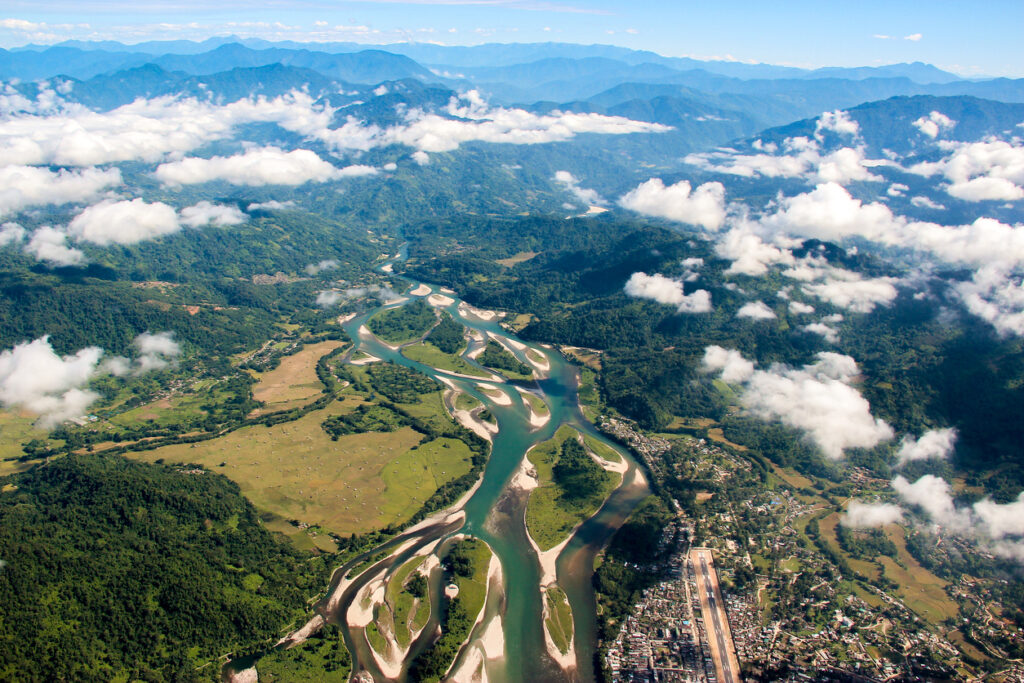
These rivers are increasingly being used as geopolitical leverage.
Transboundary rivers that flow through multiple countries are becoming flashpoints for political tension in ways that have global security implications. India temporarily suspended its engagement with the Indus Waters Treaty with Pakistan in 2025, a treaty that had survived decades of conflict between the two nations. China’s extensive dam building on upstream sections of rivers that flow into Southeast Asia has created significant friction with downstream nations. As water scarcity increases with climate change, the rivers of Asia are becoming some of the most contested resources on earth.
The biodiversity they contain is irreplaceable and largely still undiscovered.
Asia’s great rivers harbour extraordinary concentrations of freshwater species found nowhere else on earth, many of which haven’t even been formally identified yet. The Mekong is home to the giant freshwater stingray, one of the largest freshwater fish in the world, along with dozens of other critically endangered species. Freshwater biodiversity globally is declining faster than marine or terrestrial biodiversity, and Asia’s rivers are among the most threatened systems. Losing species from these ecosystems removes components of ecological networks whose full function science is still mapping.
They generate a significant share of Asia’s electricity.
Hydropower from Asia’s river systems powers enormous portions of the continent’s energy supply, with China’s Yangtze system alone accounting for a substantial share of the country’s electricity generation. As the region transitions away from fossil fuels, the pressure on rivers to generate more hydropower is increasing rather than decreasing, creating a tension between clean energy goals and the ecological and social costs of large-scale dam construction. How that tension gets resolved will shape both regional development and global emissions trajectories.
@zekedarwinscience Good news from the Yangtze River | Saving What’s Left #animals #conservation #china #learnontiktok #ecology ♬ original sound – Zeke Darwin
River pollution from Asia reaches the world’s oceans in significant volumes.
Several of the world’s most heavily polluted rivers are in Asia, and the plastic, agricultural run-off, industrial discharge, and sediment they carry eventually reaches the ocean. Research into ocean plastic consistently identifies Asian river systems among the largest contributors to marine pollution, which affects fisheries, marine ecosystems, and ultimately food chains that extend far beyond the continent. Addressing river health in Asia is therefore inseparable from addressing the health of the oceans that everyone on the planet depends on.
What happens to these rivers in the next decade will affect billions of lives.
Climate change, dam construction, glacial retreat, population growth, and political tension are all converging on Asia’s river systems at the same time, and the decisions made about managing them in the coming years will have consequences that stretch well beyond the region. Hundreds of millions of people face genuine water insecurity if current trends continue, and the knock-on effects for global food supply, migration, conflict, and economic stability are not a distant concern. These rivers have sustained human civilisation for thousands of years, but they’re under more pressure right now than at any point in recorded history.