Nature usually does a pretty good job of being understated, but every now and then, it puts on a show that looks like it’s been ripped straight out of a big-budget sci-fi film.
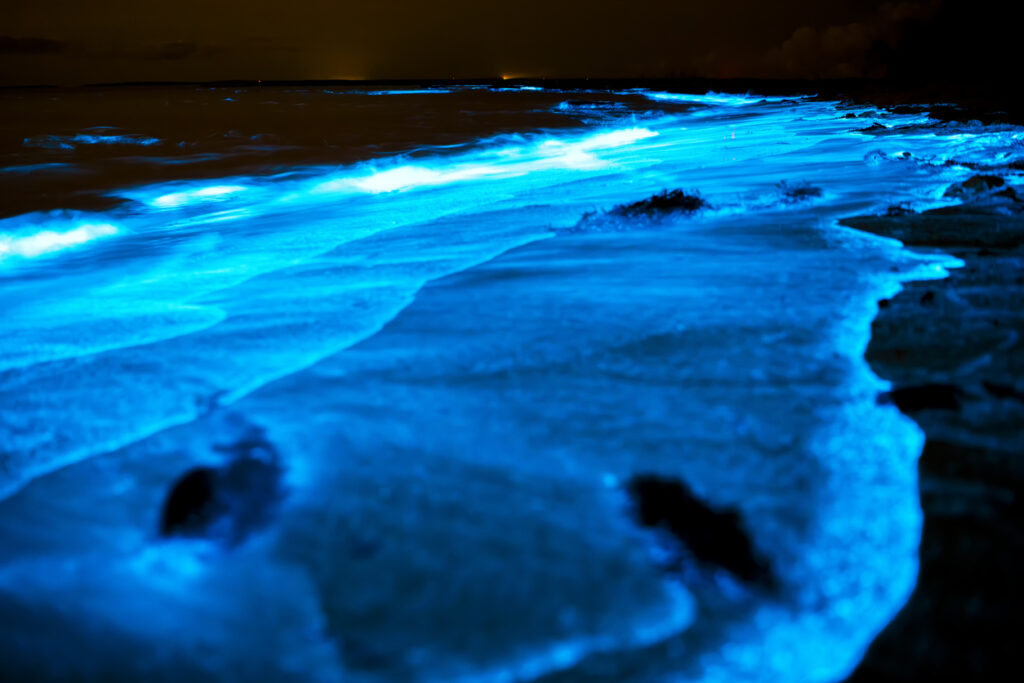
There are places on Earth where the water glows a neon blue, the clouds look like giant bubbles, and lightning stays pinned to a single spot for hours on end. It’s the kind of stuff that makes you want to check for a hidden projector or a film crew, but it’s actually just physics and chemistry doing something remarkably weird. Whether it’s frozen methane bubbles trapped under lake ice to hills that seem to glow in the dark, these events prove that the real world doesn’t need a CGI department to look completely impossible.
1. Bioluminescent waves turn the ocean electric blue at night.
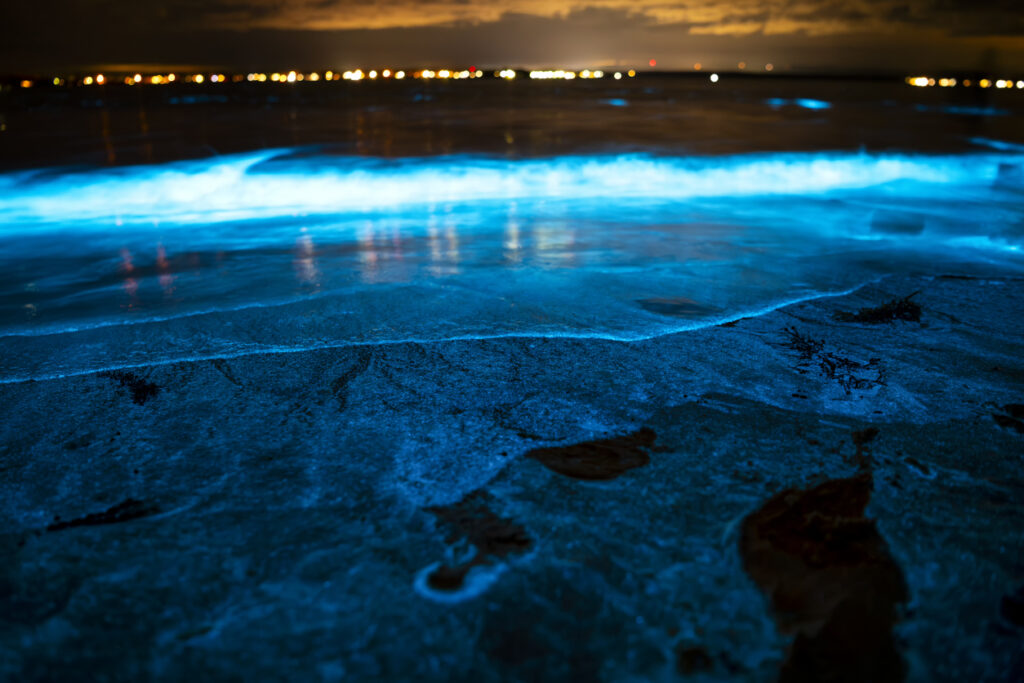
Along certain coastlines, particularly in California, the Maldives, and parts of Australia, the sea occasionally glows a vivid blue in the dark as waves break and disturb the water. The effect is caused by tiny marine plankton called dinoflagellates that emit light when agitated, and when conditions are right and their numbers are high enough the entire shoreline pulses and flickers like something from a science fiction film. People who’ve seen it in person consistently say photographs don’t come close to capturing how surreal it actually looks standing in front of it.
2. Fire whirls are exactly what they sound like.
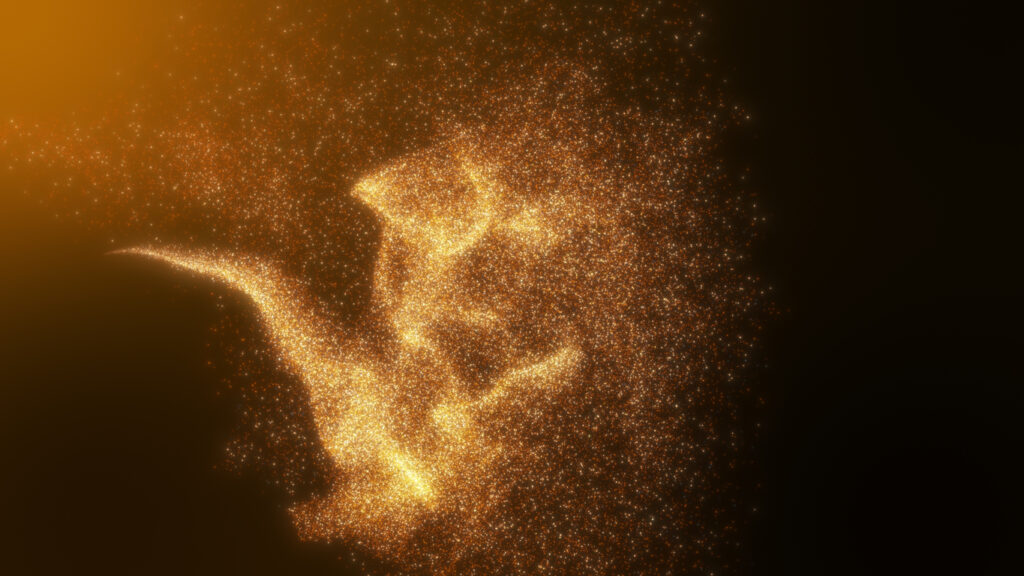
When the right combination of heat and turbulent wind conditions meet during a wildfire or in certain desert environments, spinning columns of fire can form that behave almost exactly like tornadoes. They can reach heights of several hundred metres, travel across the landscape, and produce a roaring sound that witnesses describe as deeply unsettling. The physics behind them are well understood but knowing the explanation doesn’t make watching a column of spinning fire move across open ground feel any less like a scene from a disaster blockbuster.
3. Mammatus clouds hang from the sky in bulging pouches.
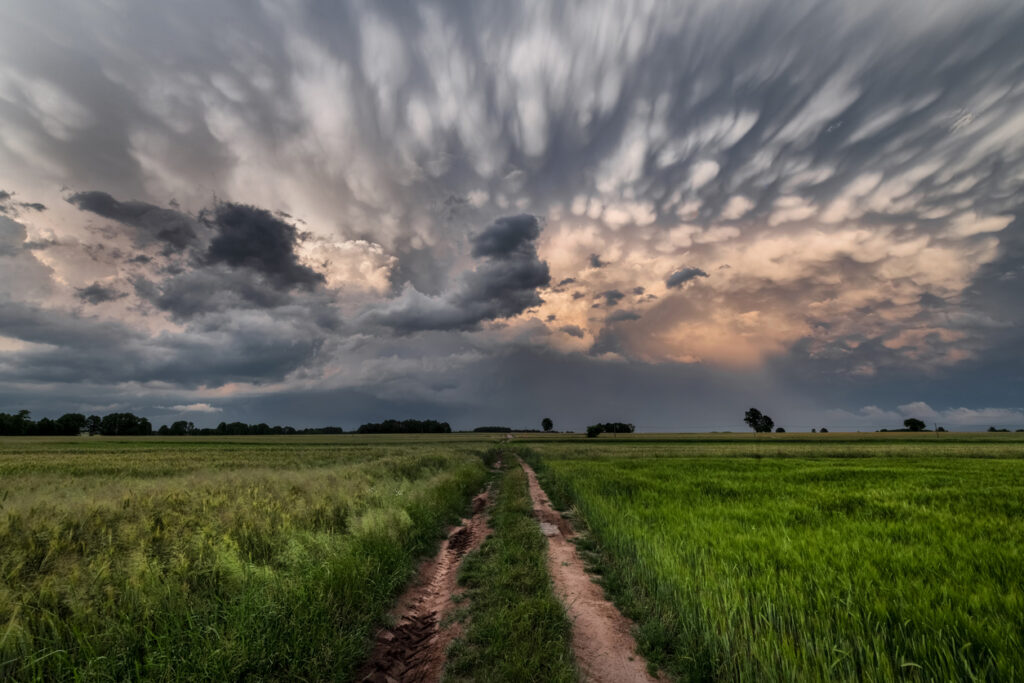
Most clouds build upward or spread outward, so the sight of a sky covered in smooth, rounded lobes hanging downward like clusters of soft bubbles stops people in their tracks. Mammatus clouds form beneath the anvil of large thunderstorm systems and can cover enormous areas of sky, lasting anywhere from minutes to a couple of hours. The light during and after the storms that produce them is often dramatic and golden, which makes the whole scene look so heavily filtered and composed that people frequently assume the photographs they see have been manipulated.
4. The Catatumbo Lightning storm in Venezuela almost never stops.
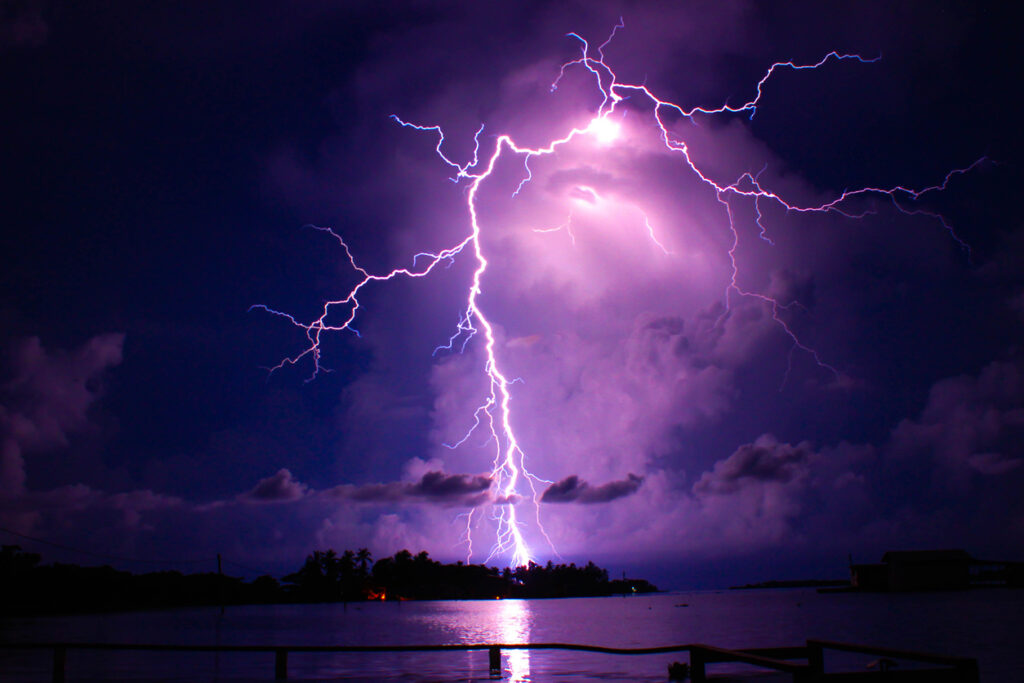
Where the Catatumbo River meets Lake Maracaibo in Venezuela, a near-permanent lightning storm has been crackling for as long as records exist. On roughly 260 nights a year, lightning strikes the same patch of sky up to 28,000 times in a single night, creating a continuous light show that’s been used as a navigational aid by sailors for centuries. The combination of specific geography, warm lake air, and cold winds coming off the Andes creates the conditions for a storm that just keeps running, and seeing it from the water on a dark night looks genuinely impossible.
5. Frozen methane bubbles are trapped under Canadian lakes.
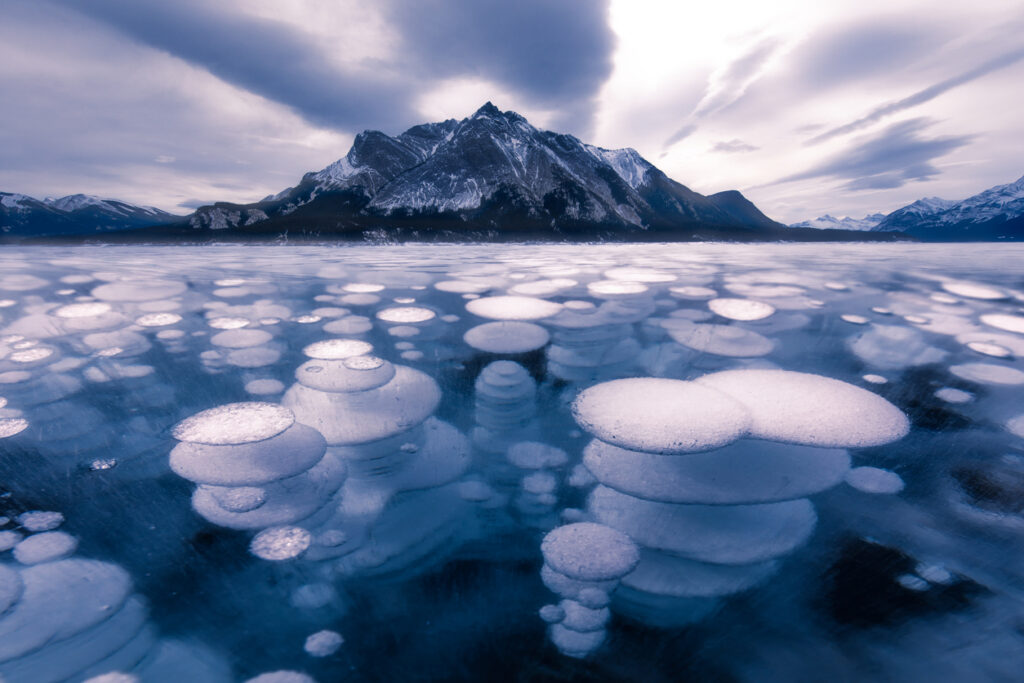
In certain lakes in Alberta and Alaska, methane released from organic matter decomposing on the lake bed gets caught as it rises and freezes into bubbles suspended at different depths within the ice. The result when the lake freezes over is a stack of white discs clustered beneath a clear surface, visible from above in a pattern that looks so deliberately artistic and perfectly arranged that it reads as installation art rather than a naturally occurring gas process. Abraham Lake in Canada is particularly famous for it and draws photographers from around the world every winter.
6. The Danakil Depression looks like another planet entirely.
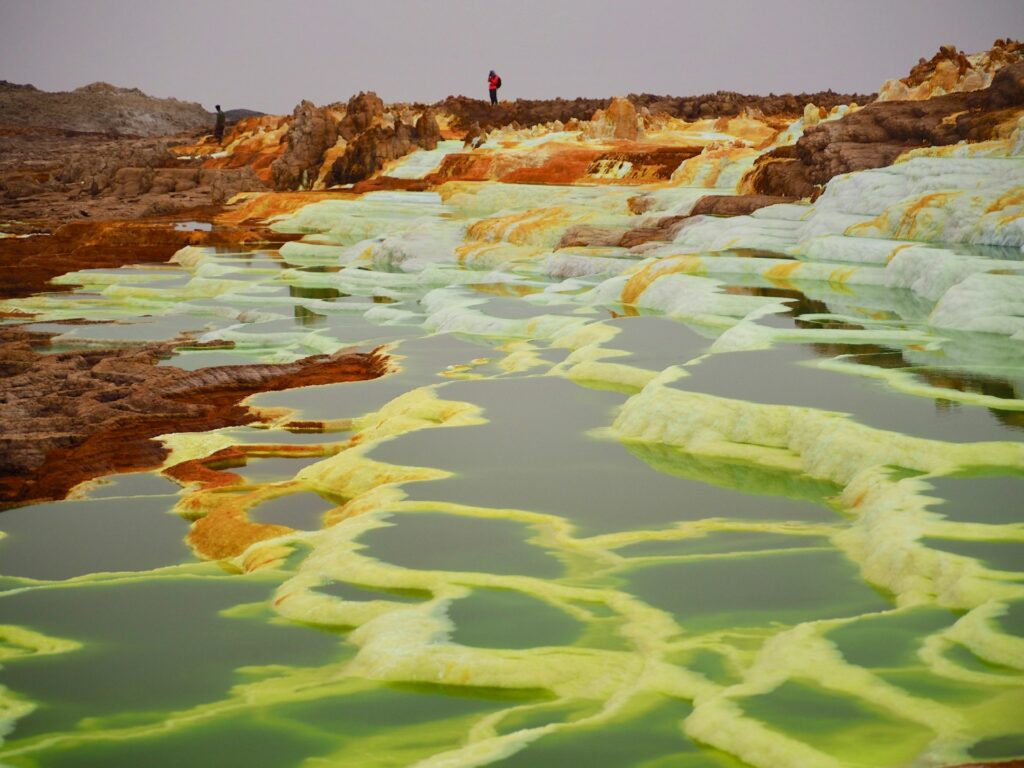
In the Afar region of Ethiopia sits one of the most hostile and visually extraordinary places on earth. Hydrothermal activity pushes acidic, superheated water to the surface where it pools in vivid yellows, greens, and oranges around bubbling vents and salt formations. The landscape is flat, alien, and so aggressively coloured that every photograph taken there gets accused of heavy editing. It’s also one of the hottest and lowest places on earth, which adds to the sense that you’re looking at somewhere that has no business existing on the same planet as ordinary countryside.
7. Sailing stones move across desert floors and nobody sees them do it.
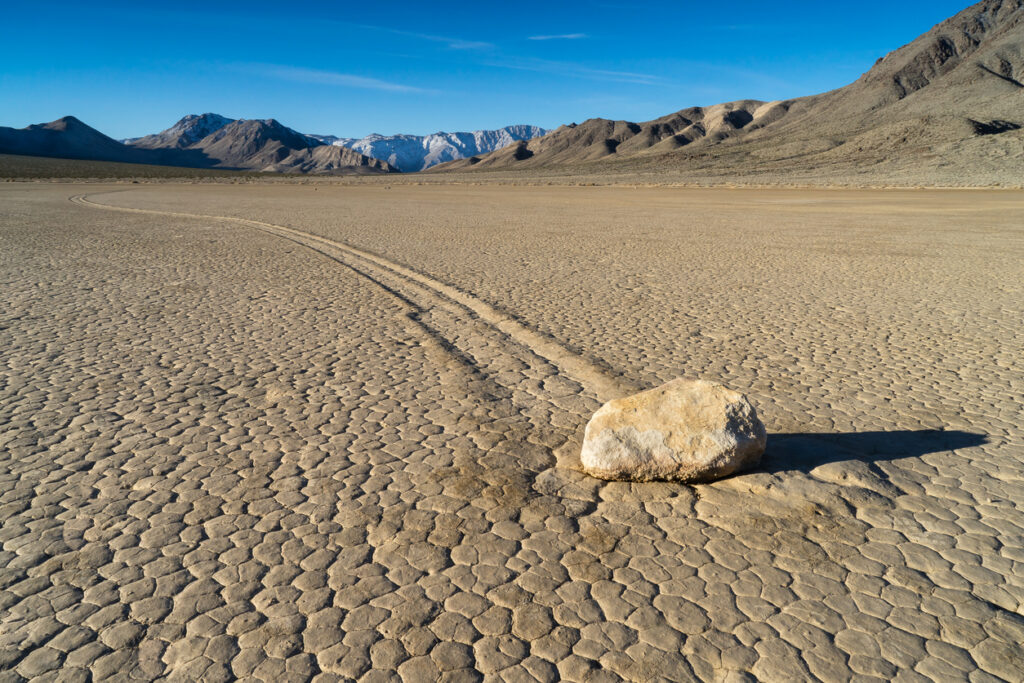
In the Racetrack Playa in Death Valley, California, large rocks leave long trails across the flat, cracked mud as though they’ve been dragged, but no human or animal has ever been observed moving them. Scientists eventually confirmed that thin sheets of ice forming around the rocks on cold nights allow wind to push them slowly across the surface, but the trails they leave, some stretching for hundreds of metres and curving in identical patterns, look so deliberate and mysterious that they went unexplained for decades and still look staged even with the explanation in hand.
8. Aurora borealis moves across the sky in real time like a living thing.
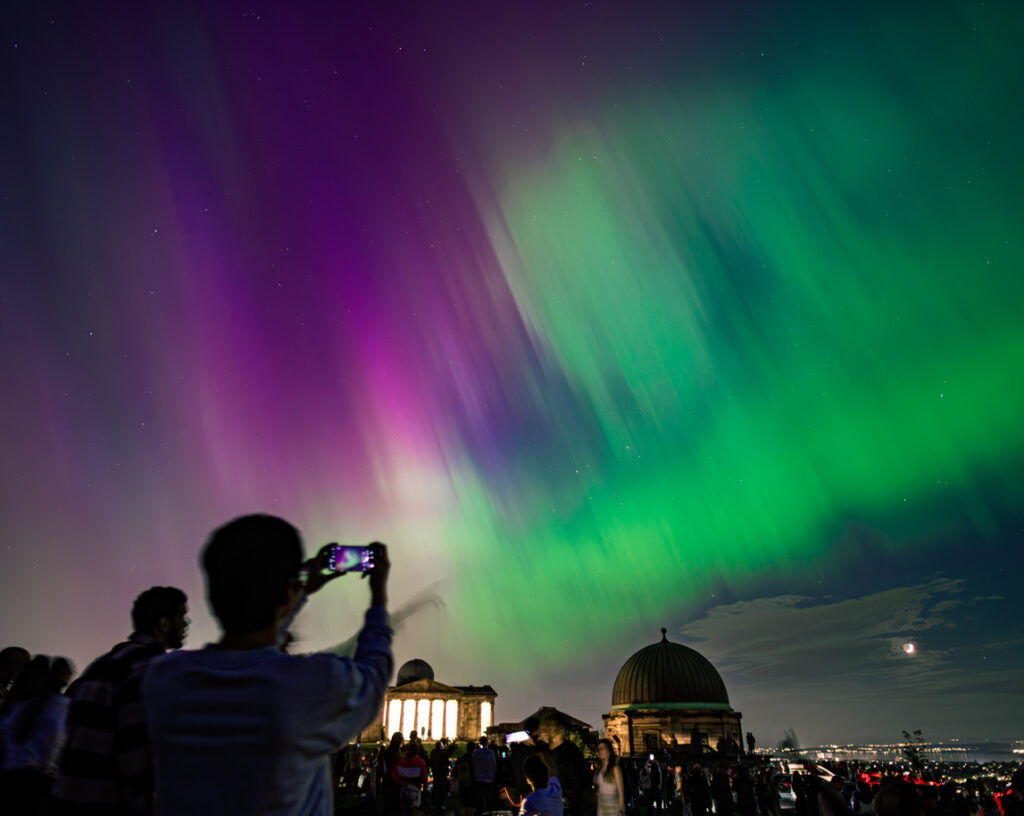
Still photographs of the northern lights are beautiful, but they don’t prepare you for what it actually looks like to watch them move. The curtains of green, purple, and white shift and ripple across the sky in ways that feel fluid and intentional, appearing and dissolving and reappearing in a different part of the sky within seconds. People who’ve stood under a strong aurora display consistently describe feeling like the sky is performing specifically for them, and the sense that something conscious is producing it is surprisingly hard to shake even when you know exactly what’s causing it.
9. Volcanic lightning crackles inside eruption clouds.
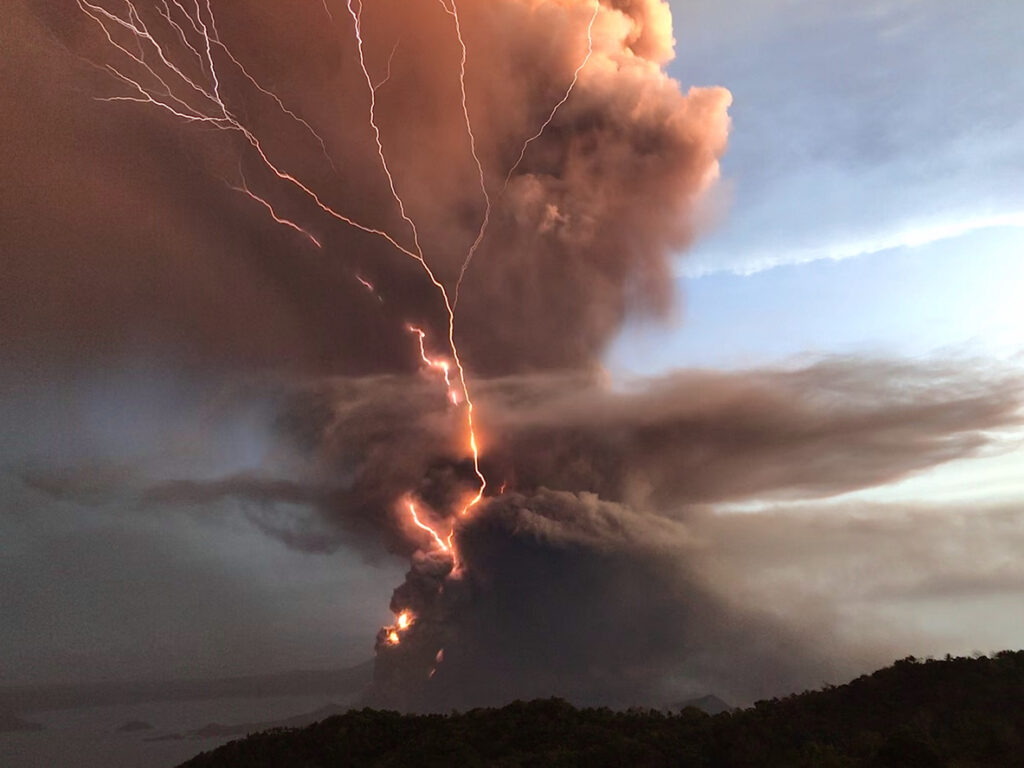
When a volcano erupts with enough force, the collision of ash particles, ice crystals, and charged material in the eruption column can generate lightning that fires repeatedly within the dark cloud of ash and smoke directly above the crater. The result is a storm happening inside a storm, with branching lightning illuminating a churning column of volcanic material from within while the eruption continues below it. It’s been captured on camera enough times now that the images are widely seen, and yet it still looks like a visual effect added in post-production every single time.