While Mars and Earth started out as similar watery worlds, Mars ended up as a frozen desert because it simply couldn’t hold onto its atmosphere.
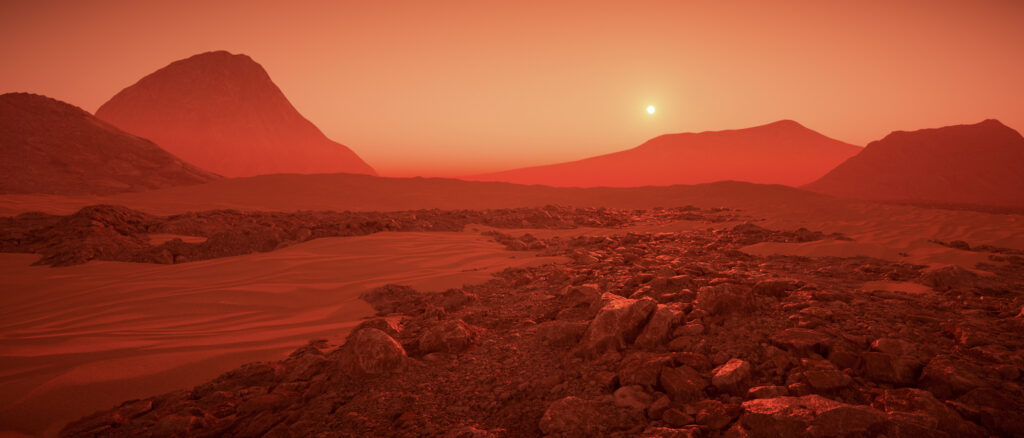
The planet is much smaller than Earth, which meant its core cooled down quickly and shut off its protective magnetic field. Without that shield, the solar wind spent billions of years stripping away the Martian air, allowing the water on the surface to evaporate and vanish into space.
Earth, on the other hand, has a massive, spinning iron core that’s still churning out a magnetic field today, keeping our water locked in and protecting us from the sun’s constant battering. It’s a stark reminder that having a habitable planet isn’t just about being in the right spot in the solar system, but about having the right internal engine to keep the atmosphere in place.
Mars is simply too small to hold onto things.
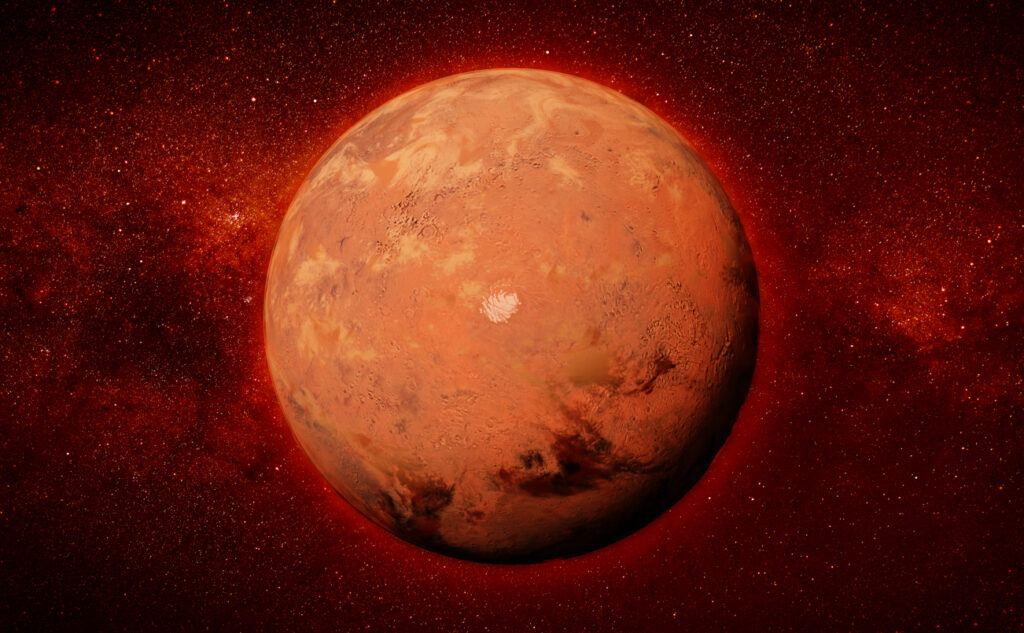
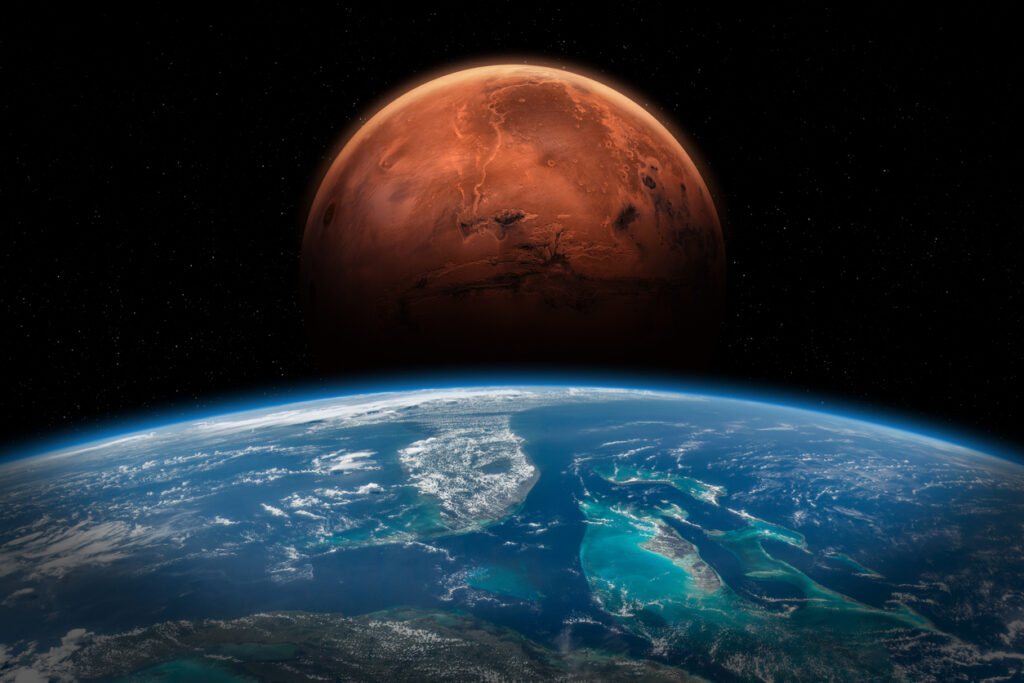
The red planet is about half the size of Earth, which means it has much weaker gravity pulling everything towards its centre. That weaker grip makes it easier for atmospheric gases and water vapour to escape into space. Earth’s stronger gravity acts like an invisible blanket that keeps our atmosphere pressed close to the surface.
Mars lost the battle early on because lighter molecules like hydrogen and oxygen could reach escape velocity more easily. The planet’s smaller mass also meant its interior cooled down much faster than Earth’s, which had consequences for everything else that followed.
Mars lost its magnetic shield early on.
Earth has a strong magnetic field generated by molten iron swirling around in its core, and this field deflects harmful solar wind away from our atmosphere. Mars once had a similar magnetic field, but it switched off about four billion years ago when the planet’s core cooled and solidified.
Without this protective shield, solar wind stripped away the Martian atmosphere directly. Charged particles from the sun slammed into the upper atmosphere and knocked molecules into space bit by bit over millions of years. Earth’s magnetic field still protects us from the constant bombardment, wrapping around the planet like an invisible force field.
The solar wind is constantly blowing atmosphere away.
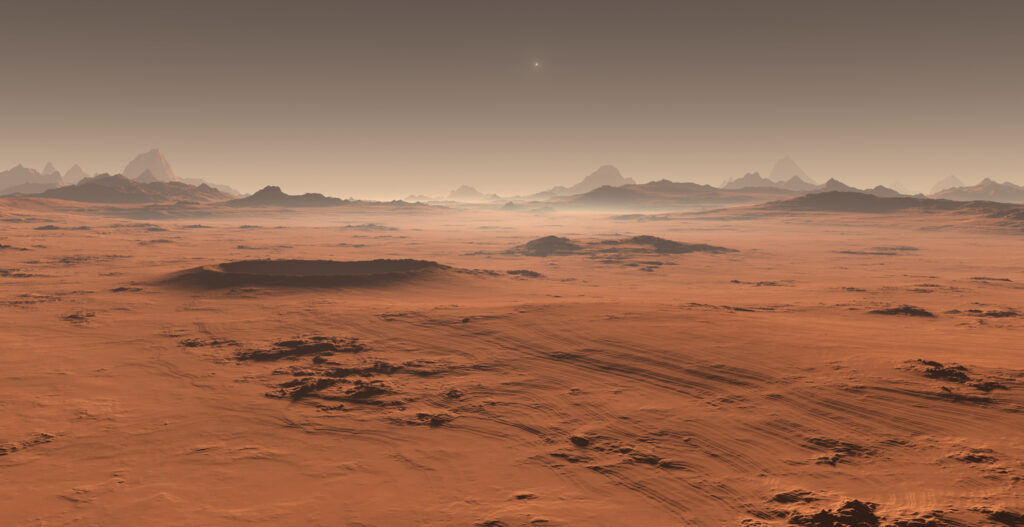
The sun releases a continuous stream of charged particles that flows past all the planets, and that solar wind acts like a cosmic sandblaster on unprotected atmospheres. Mars receives the same battering that Earth does, but without a magnetic field to redirect it, the particles hit the atmosphere directly.
Each collision can knock atmospheric molecules free, sending them tumbling into space. Over billions of years, that steady erosion removed most of Mars’s atmosphere. Earth deflects almost all of the solar wind around its magnetic field, so our atmosphere stays put.
A thinner atmosphere means water evaporates more easily.
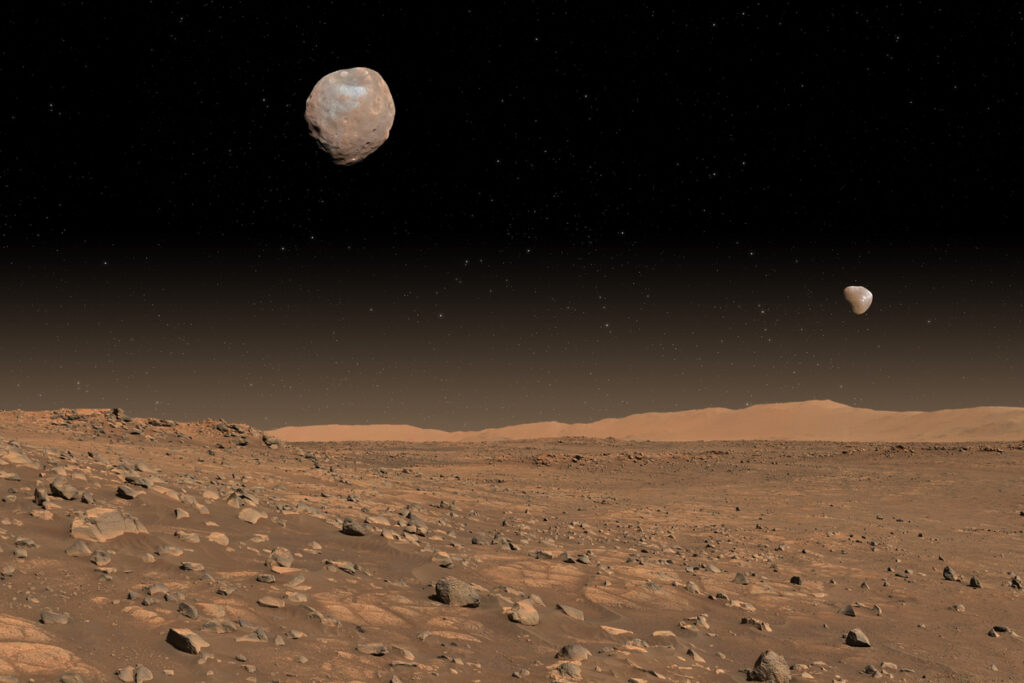
As Mars lost its atmosphere, the air pressure dropped dramatically, and low pressure allows water to evaporate or even boil at much cooler temperatures. Any liquid water on the Martian surface would have started evaporating rapidly as the atmosphere thinned.
The water vapour then rose into the upper atmosphere where solar radiation split it apart into hydrogen and oxygen. The lightweight hydrogen escaped into space, while some oxygen either escaped or bonded with rocks. This process created a vicious cycle where losing atmosphere made it easier to lose water, which further reduced the atmosphere.
Mars cooled down too quickly inside.

A planet’s internal heat drives volcanic activity, which releases gases that replenish the atmosphere over time. Earth’s volcanoes still pump out water vapour, carbon dioxide, and other gases that maintain atmospheric pressure. Mars, being smaller, cooled much faster and its volcanic activity essentially stopped billions of years ago.
Without fresh gases being released from the interior, there was nothing to replace what solar wind was stripping away. The planet’s geological death sentence meant its atmospheric death as well.
Mars has no plate tectonics to recycle water.

Earth’s surface is broken into plates that constantly move, dive beneath one another, and bring water trapped in rocks back into the interior where it’s eventually released through volcanoes. That recycling system keeps water moving between the surface and interior in a continuous loop.
Mars never developed plate tectonics, possibly because it cooled too quickly or its composition prevented it. Any water that soaked into the Martian crust stayed there permanently, with no mechanism to bring it back to the surface. Earth’s active geology keeps our water in circulation.
The distance from the sun made recovery impossible.
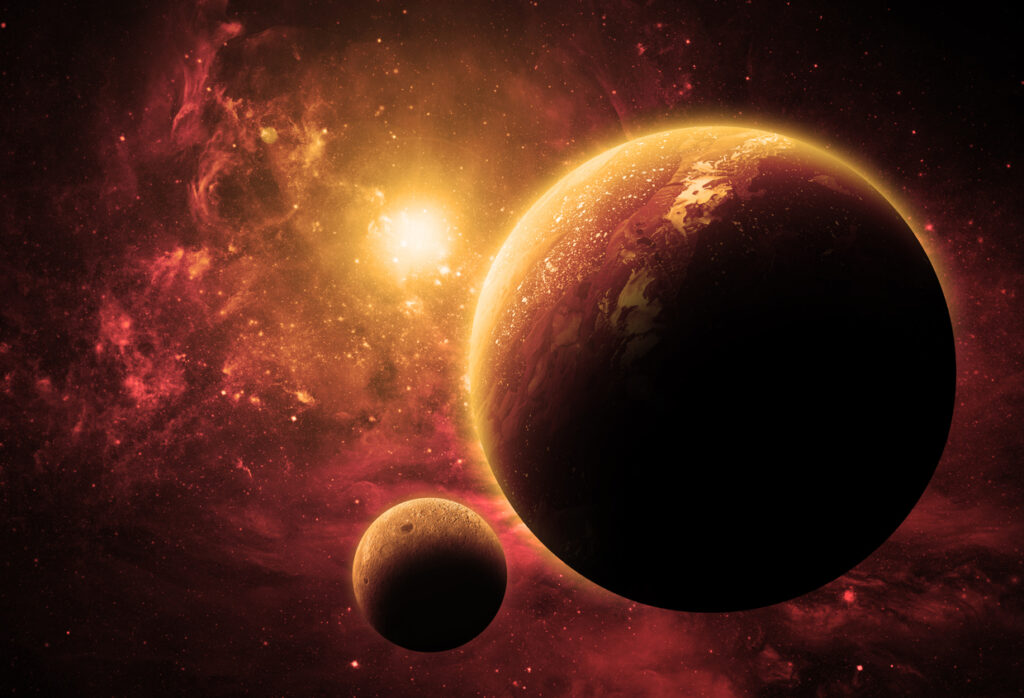
Mars orbits further from the sun than Earth, which means it receives less heat and light. The extra distance made the planet colder to begin with, so when it started losing its atmosphere, temperatures dropped even more dramatically. Water that might have remained liquid on a warmer world froze solid or evaporated.
Earth’s position in the habitable zone gives us just the right temperature range to maintain liquid water on the surface. Mars sits right on the edge of this zone where conditions are marginal, and once things started going wrong, the planet couldn’t recover.
Ancient impacts knocked away chunks of atmosphere.
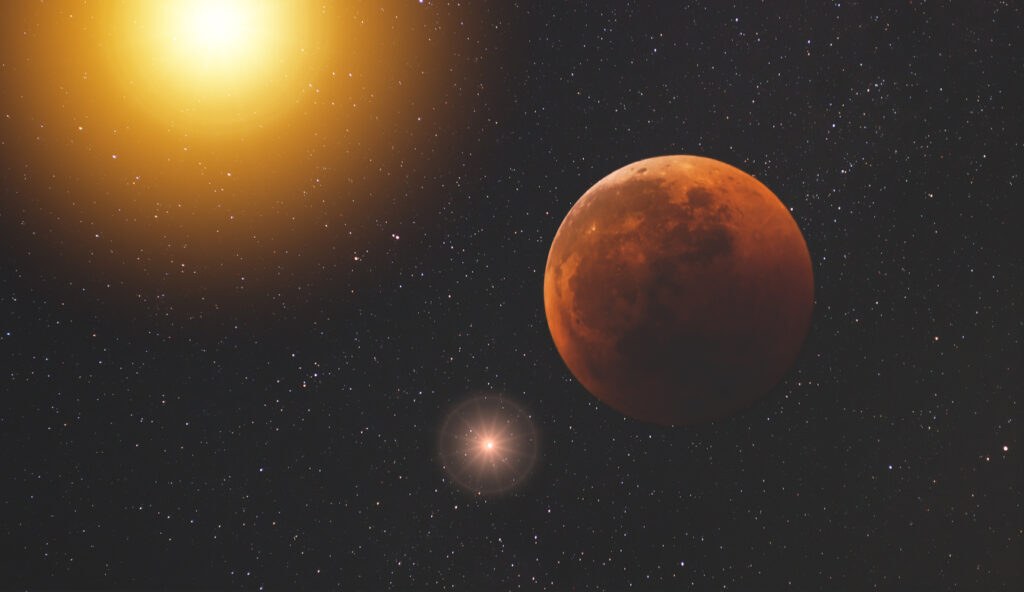
Early in the solar system’s history, massive asteroids and comets regularly smashed into planets. When these objects hit Mars, the impacts were so violent they blasted huge amounts of atmosphere directly into space. Earth experienced similar impacts, but our stronger gravity pulled most of that atmosphere back down.
Mars couldn’t recover what it lost, and each major impact made the problem worse. Some scientists think a particularly massive collision early in Mars’s history might have been the beginning of the end for its atmosphere.
Ice trapped underground can’t easily return to the surface.
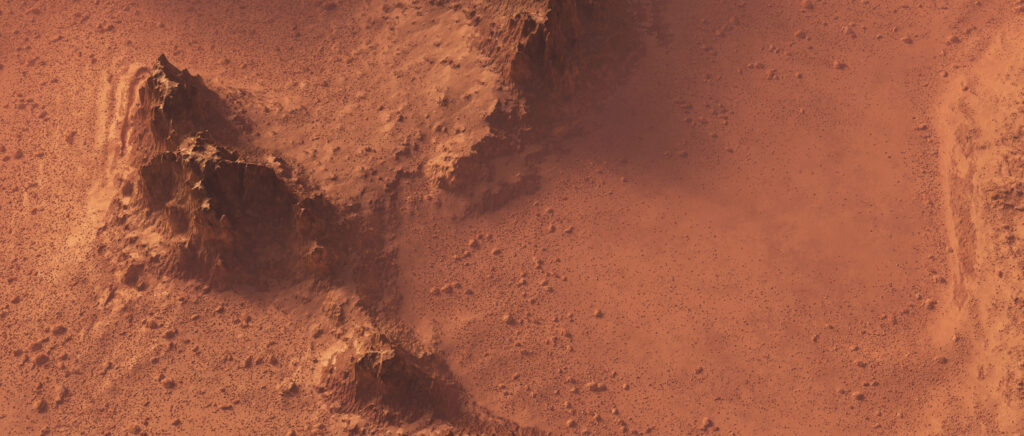
Significant amounts of water still exist on Mars, but it’s locked up as ice beneath the surface and in the polar caps. Without active geology or a thick atmosphere to create weather patterns, this ice stays frozen in place. Earth’s water cycles between oceans, atmosphere, ice, and underground in a constant exchange driven by solar heating and atmospheric circulation.
Mars lost the atmospheric pressure needed for a proper water cycle, so any remaining water just sits frozen where it is. Occasional melting might happen in summer near the equator, but it evaporates almost immediately in the thin air.
Earth had help from life itself.
Once life appeared on Earth, photosynthetic organisms began pumping oxygen into the atmosphere while plants helped regulate temperature and humidity. This biological input strengthened our atmosphere and created feedback loops that kept conditions stable.
Mars never developed life, or if it did, the organisms disappeared before they could establish these protective cycles. Earth’s biosphere actively works to maintain conditions suitable for life, creating a self-reinforcing system. Mars had no such help, and purely physical processes led inevitably to atmospheric loss and water disappearing into space or freezing underground.