Science communicators love to throw around the term “megadiverse” like it’s some kind of honorary badge, but it’s actually a specific classification that has nothing to do with a country just having a lot of pretty parks. It’s a term coined back in the late 1980s to identify the handful of nations that house the vast majority of the Earth’s species. To make the cut, a country has to meet some pretty strict criteria, including having at least 5000 species of endemic plants, meaning plants that grow there and absolutely nowhere else on the planet. It’s essentially a way of pointing at a map and saying, “If we mess things up here, the whole world’s ecosystem is in deep trouble.”
The reality of being a megadiverse country is a bit of a double-edged sword. On one hand, you’ve got incredible natural wealth and biological variety that most places can only dream of. On the other, it puts a massive target on your back for conservation efforts and international scrutiny because these 17 countries are responsible for protecting around 70% of the world’s biodiversity. It’s not just about having a few cool animals; it’s about supporting entire marine ecosystems and rainforests that keep the planet breathing. If you’re curious about which spots on the globe are doing the heavy lifting for nature, these 17 countries are the ones that actually qualify.
“Megadiverse” refers to extreme biological richness, not just variety you can see.
A megadiverse country isn’t simply one with rainforests, coral reefs, or dramatic landscapes. It’s a country that contains an exceptionally large share of the planet’s total species, across plants, animals, fungi, insects, and microorganisms. Many of these organisms never appear in documentaries, but they form the backbone of ecosystems.
What makes this stand out is scale. These countries hold a disproportionate amount of global life within their borders. Even when adjusted for size, their biological density is far higher than average, which is why they matter so much scientifically. It’s the difference between a garden with 10 types of flowers and a single square foot of soil teeming with thousands of distinct life forms you’d need a microscope to even see.
@mindyonthemove Win a free trip to @Perú for you and a friend and experience its megadiversity for yourself! My journey from the Amazon to the Andes with @G Adventures was a bucket-list adventure — and now you can do it too… 🇵🇪 🏔️ 🦜🌿 #LivePerutotheFullest This trip took me through some of the most breathtaking corners of Peru: the glacier-covered Andes, turquoise lakes, ancient Inca sites, vibrant mountain towns, Machu Picchu, and the wildlife-rich Amazon rainforest. It’s the kind of travel that expands your definition of “epic.” And the best part? You can win the exact same journey! ✈️ Two people will fly to Peru for a fully guided G ADVENTURES adventure — complete with accommodations, transportation, meals, epic excursions, and meaningful visits to community projects supported by @Planeterracares You’ll even get adventure gear from @Eagle Creek and cameras from @OM SYSTEM to capture every moment! 🎒📸 👉🏻 𝐕𝐢𝐬𝐢𝐭 𝐭𝐡𝐞 🔗 𝐢𝐧 𝐦𝐲 𝐛𝐢𝐨 𝐭𝐨 𝐞𝐧𝐭𝐞𝐫!! (Open to U.S. & Canadian residents; ends soon!) ✨ If Peru is on your bucket list… this is your sign!! ❓Who would you bring with you on this adventure? #VisitPeru #Peru #PeruTravel #travelgiveaway ♬ original sound – mindyonthemove
Endemic species matter more than raw numbers.
The most important factor isn’t how many species live in a country, but how many live nowhere else. Endemic species are confined to a specific place and can’t be replaced if lost. That’s what turns biodiversity into something fragile. When habitats disappear in these regions, extinctions aren’t local problems; they’re permanent global losses.
If a bird species in a megadiverse forest dies out, it isn’t just gone from that woods—it’s wiped off the face of the planet forever. This “all or nothing” reality is why scientists get so worked up about protecting these specific patches of land.
The term comes from conservation science, not marketing.
Megadiverse wasn’t created to promote tourism or national pride. It emerged from scientific efforts to map where most of Earth’s life is concentrated so that conservationists knew exactly where to put their limited resources. Today, 17 countries are widely recognised as megadiverse. Together, they contain the majority of the planet’s species, while covering a much smaller share of Earth’s land surface. It’s a way of prioritising the most “bang for your buck” when it comes to saving the environment.
Tropical regions dominate because life thrives where conditions are stable.
Most megadiverse countries sit near the equator. Warm temperatures, high rainfall, and long-term climate stability allow species to specialise rather than constantly adapt to extreme change. Over millions of years, this leads to ecosystems that become incredibly complex. More niches appear, more species evolve to fill them, and biodiversity snowballs. In these areas, the environment has been stable for so long that evolution has had the time to get really weird and specific, creating life forms that couldn’t survive anywhere else.
@mikehernandezct Thousands and thousands of species! 🌴🐊 #latam #megadiverse #mexico #colombia #ecuador #brazil #peru #venezuela ♬ Latin-style instrumental song of acoustic guitar and piano(1167239) – DIAL-K
Brazil holds the single largest share of global biodiversity.
Brazil consistently ranks at the top because of its sheer ecological range. It contains vast rainforest, savanna, wetlands, grasslands, river systems, and long coastlines. This variety supports enormous numbers of plants, mammals, birds, amphibians, insects, and freshwater species. No other country matches its overall biological reach. It’s essentially the world’s biggest living laboratory, where the Amazon alone does enough heavy lifting to influence the climate of the entire Western Hemisphere.
Indonesia’s biodiversity is shaped by fragmentation.
Indonesia is made up of thousands of islands spread across a huge area. This isolation allows species to evolve independently of one another. As time goes on, that separation creates extraordinary levels of endemism. Entire species can exist on single islands or even specific valleys, which also makes them extremely vulnerable. If a single island is developed or deforested, you could potentially wipe out an entire branch of the evolutionary tree that doesn’t exist anywhere else in the archipelago.
Mexico sits at a biological crossroads.
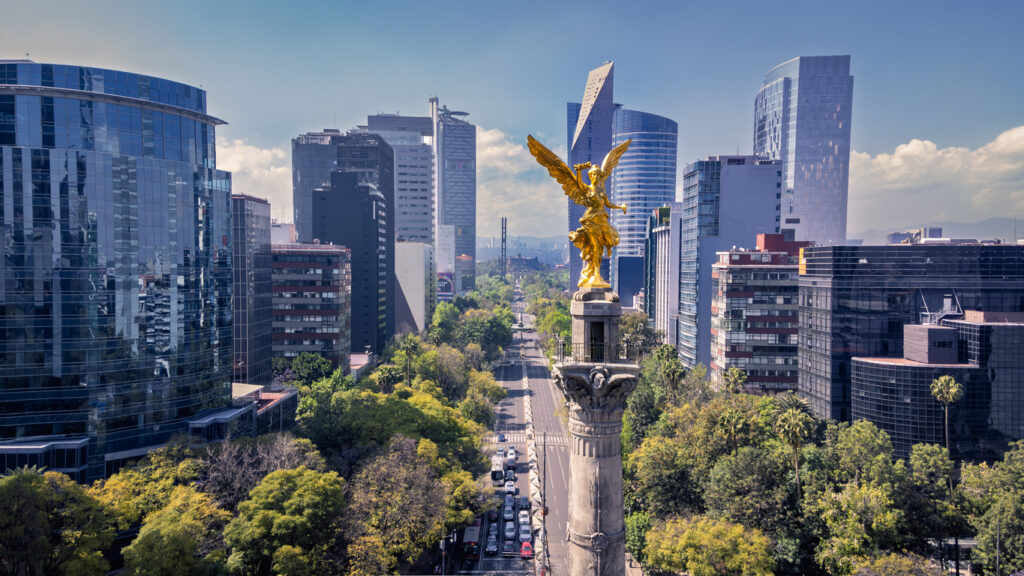
Mexico connects North and South America, allowing species from both regions to overlap in a way you don’t see anywhere else. Add deserts, rainforests, mountains, and coastlines, and diversity multiplies. The country is especially rich in reptiles, plants, and amphibians, many of which are found nowhere else on Earth. It’s a literal bridge between two worlds, meaning you get a mashup of species that evolved in completely different climates, all living within the same national borders.
Australia’s megadiversity comes from isolation, not abundance.
Australia has fewer total species than some tropical nations, but an unusually high proportion of them are endemic. Long separation from other landmasses allowed wildlife to evolve in total isolation. This is why marsupials, monotremes, and many reptiles and plants exist only there. Evolution took a different path and never rejoined the rest of the world. It’s like a time capsule where the rules of nature were allowed to play out differently for millions of years, resulting in creatures that look like nothing else on the planet.
India compresses multiple ecosystems into one country.
India contains deserts, rainforests, wetlands, alpine regions, and tropical coastlines within a single national boundary. Seasonal monsoons and dramatic altitude shifts add further complexity to the landscape. That environmental compression supports huge plant diversity, major mammal populations, and deeply interconnected ecosystems shaped by climate and geography. You can go from the highest mountains in the world to tropical swamps in the space of a single country, which forces a massive variety of life to adapt to those extreme changes.
Megadiverse countries carry global responsibility, not just status.
Because so much of Earth’s biodiversity exists within these borders, decisions made there affect the entire planet. Deforestation, pollution, and habitat loss in these regions ripple far beyond national boundaries. Being megadiverse isn’t a badge of honour. It’s a reminder that a small number of countries are holding an enormous portion of the planet’s living future, and once it’s gone, there’s no backup. If these 17 nations fail to protect their land, the global ecosystem doesn’t just “suffer”—it fundamentally breaks.
In simple terms, a megadiverse country is one that contains an extraordinary concentration of life, especially life that exists nowhere else. These places aren’t just rich in species. They’re irreplaceable, and the choices made within them shape the biological future of the entire planet. We aren’t just talking about a few cool animals; we’re talking about the life-support system for the entire world.