
Most people can point to the seven continents on a map, but the actual reality of these massive landmasses is a lot weirder than what you likely picked up in a school geography lesson. We tend to think of them as permanent, static chunks of earth, but they’re constantly moving, merging, and hiding secrets that span billions of years.
From mountain ranges that don’t belong where they are to entire “lost” landmasses that we’re only just starting to map, there is a lot of hidden history buried under the surface. If you think you’ve got the world figured out just because you know where the borders are, these 15 facts are going to make you look at the globe in a completely different way.
1. Asia isn’t just the largest continent, it completely dominates the numbers.
Asia holds more than 50% of the world’s population, which means most humans alive today call it home. That alone makes it wildly different from every other continent in terms of culture, politics, and global influence. It also covers around 30% of Earth’s land surface and stretches across more climate zones than any other landmass. From frozen tundra to tropical rainforest, Asia contains almost every environment humans can live in. You could spend a lifetime exploring just one corner of it and still not scratch the surface of its geographical diversity.
2. Africa is the most biologically and genetically diverse continent.
Humans evolved in Africa, and because of that, African populations hold the greatest genetic diversity on Earth. People outside Africa descend from relatively small groups that migrated outward, meaning there is more genetic variety within a single African region than in the rest of the world combined. Its diversity also shows up in wildlife, ecosystems, and languages. Africa has over 2000 spoken languages and some of the most complex ecological systems on the planet. It’s the literal cradle of humanity, and its biological “database” is deeper than anywhere else.
@misterimhotep Genetically Africans are very special. The concept of genetic diversity means more than what they are saying. I have been saying that for a long time and many people attacked me. Now we have experts validating what I said. What do you think about it? #imhotepfacts #blackhistory #joerogan #neildegrassetyson #joeroganpodcast #genetic #genetics #africa #science #biology #universe #kemet #pyramids #pharaoh #intelligence #athlete ♬ original sound – Mr. Imhotep
3. Europe is only a continent because of history, not geography.
Geographically speaking, Europe isn’t really separate from Asia. Together, they form one continuous landmass called Eurasia, and there’s no vast ocean or tectonic break sitting between them. Europe is considered its own continent mostly for cultural, political, and historical reasons. The boundaries taught in schools are human-made conventions rather than natural breaks in the land. It’s a perfect example of how we let history and politics define the map just as much as geology does.
4. Antarctica is technically a desert.
Despite being covered in miles of ice, Antarctica receives very little precipitation. Some parts, known as the Dry Valleys, haven’t seen rain or snow for millions of years. It’s the coldest, driest, and windiest continent on Earth, making it one of the harshest environments humans have ever studied. You’d think all that ice means it’s a wet place, but the air is so cold it can’t hold moisture. It’s essentially a frozen wasteland where survival depends entirely on the technology you bring with you.
5. North America has some of the oldest exposed rock on the planet.
Parts of Canada sit on the Canadian Shield, a massive area of ancient rock that’s billions of years old. These rocks formed when Earth itself was still young, long before complex life or even the first plants existed. Walking across them is like stepping on deep planetary history that has survived eons of erosion and tectonic shifts. It’s a stable, ancient core that has remained largely unchanged while the rest of the world’s surface was being recycled by the planet.
6. South America was once connected to Africa.
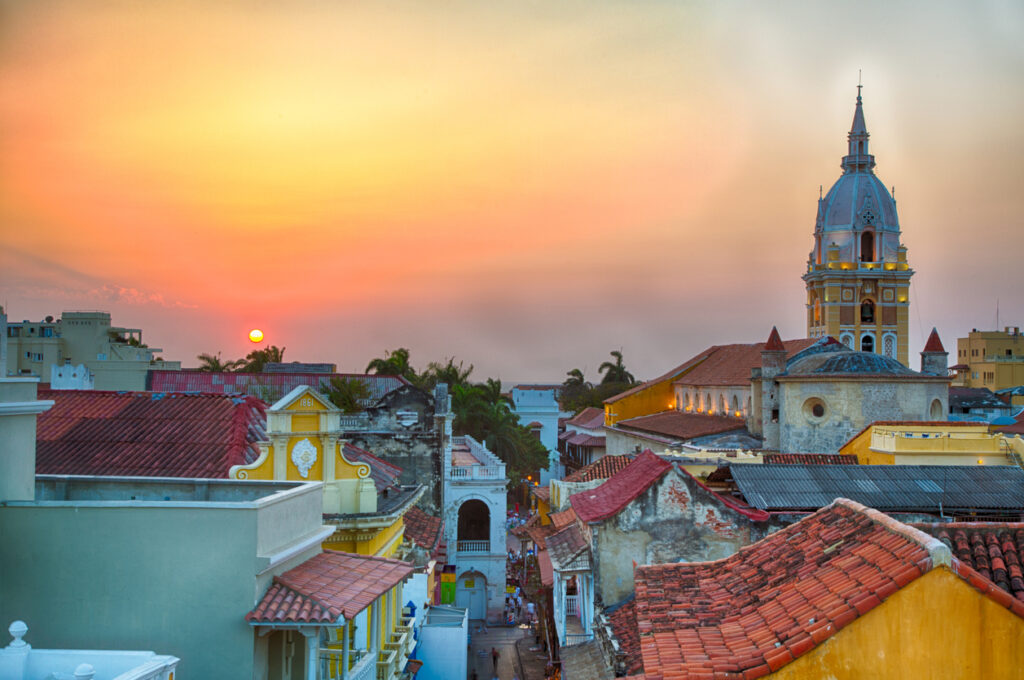
Millions of years ago, South America and Africa were part of the same supercontinent called Gondwana. That’s why their coastlines look like they could fit together like pieces of a giant jigsaw puzzle. Their shared history explains why fossils and rock formations on both continents often match up so closely, even though they’re now separated by thousands of miles of ocean. It’s a lingering reminder that the map we see today is just a temporary snapshot of a much longer, moving story.
7. Australia is both a country and a continent.
Australia is the only place where a single nation occupies an entire continent. That makes it politically simple but ecologically unique. Its long isolation allowed animals and plants to evolve in strange directions, producing species found nowhere else on Earth. While other continents shared wildlife back and forth, Australia was a massive, isolated laboratory where evolution went rogue. That’s why you get weird and wonderful creatures like monotremes and marsupials that seem to break all the usual rules of nature.
8. Continents are still moving right now.
Earth’s tectonic plates don’t stop shifting just because humans are watching or drawing maps. Continents drift a few centimetres each year—roughly the same speed that your fingernails grow. Over millions of years, this slow movement reshapes oceans, creates massive mountain ranges, and eventually forms entirely new landmasses. We like to think of the ground as solid and permanent, but we’re actually riding on giant rafts that are constantly jockeying for position.
9. Africa is slowly splitting in two.
There’s a massive rift running through eastern Africa where the continent is gradually pulling apart. In millions of years, this could form a new ocean and split Africa into 2 separate continents. You can already see the evidence in the Great Rift Valley, where the Earth’s crust is thinning and pulling away. It’s a live-action look at how continents are born and destroyed, proving that the world’s geography is far from finished.
@crewfiction #europe : a continent housing 53 countries 🇪🇺🫢 #eu #facts #factsyoudidntknow #fyp ♬ original sound – crewfiction
10. Europe has more countries packed into it than any other continent.
Europe contains over 40 countries in a relatively small area, many with distinct languages, borders, and identities. That density explains why European history is filled with shifting borders, alliances, and endless conflicts over territory. You can drive for 2 hours and cross 3 national borders, each with its own laws and culture. It’s a level of political fragmentation that you just don’t find on the same scale anywhere else on the planet.
11. Asia has both the highest and lowest points on Earth.
The highest point above sea level, Mount Everest, and the lowest point on land, the shore of the Dead Sea, are both found in Asia. The extreme vertical range adds to the continent’s dramatic climate differences and geological complexity. It means Asia possesses the most extreme pressure and temperature shifts found on any landmass. From the “Roof of the World” to the depths of a desert basin, the geographical stakes are higher here than anywhere else.
12. Antarctica has no permanent residents.
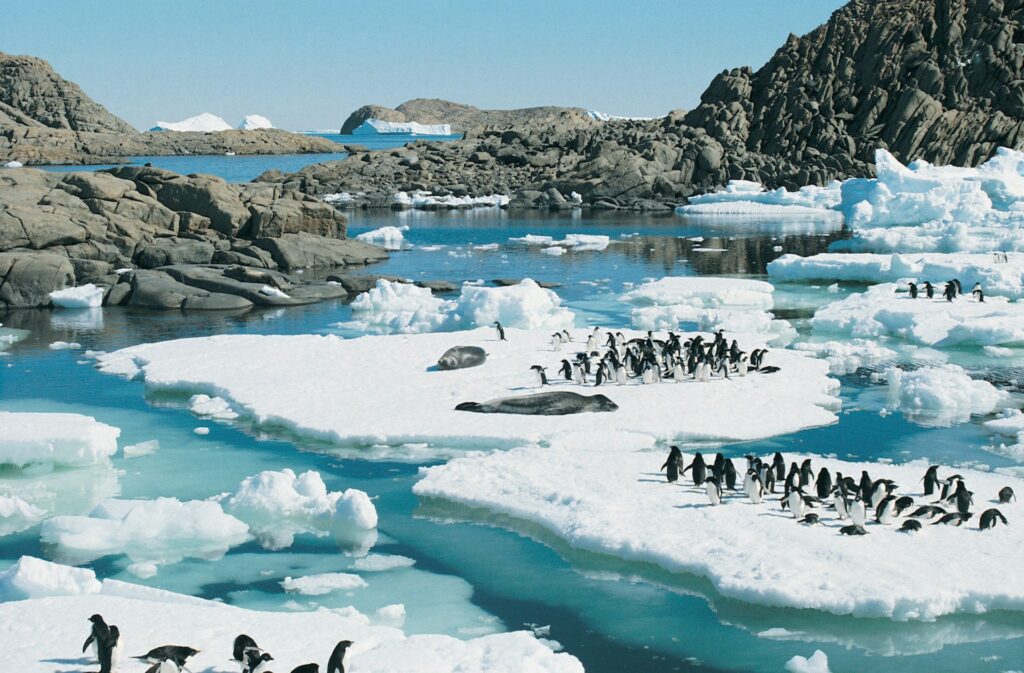
No one is born or raised there in a traditional sense, and there are no cities or towns. Only scientists and support staff live there temporarily in research stations, often only for a few months at a time. It’s governed by international agreement rather than by any single country, which makes it a unique experiment in global cooperation. It’s the only place on Earth where humanity has agreed to put aside borders in the name of science and peace.
13. South America has the world’s largest rainforest.
The Amazon rainforest plays a major role in regulating global climate and absorbing massive amounts of carbon dioxide. Its health affects rainfall patterns far beyond South America, influencing weather across the entire planet. It’s the Earth’s “green lung,” and its sheer scale is hard to wrap your head around—it’s so big that it creates its own weather systems. Protecting this one chunk of South America is basically a prerequisite for keeping the global climate stable.
14. North America stretches across almost every climate zone.
From Arctic tundra to tropical beaches, North America contains a huge range of environments. That variety has shaped everything from wildlife migration to human settlement patterns over thousands of years. You can experience nearly every type of weather on Earth without ever leaving the continent. Diversity is what made North America such a powerhouse for resources, as it contains everything from fertile plains to mineral-rich mountains.
15. Continents don’t have universally agreed boundaries.
Different cultures and education systems divide the world differently, so there’s no “correct” number of continents. Some recognise more continents, like separating North and South America, while others combine them into one. What feels like a fixed global truth is often just a shared convention passed down through maps and classrooms rather than nature itself. It turns out that even something as massive as a continent is open to interpretation depending on who is holding the pen.