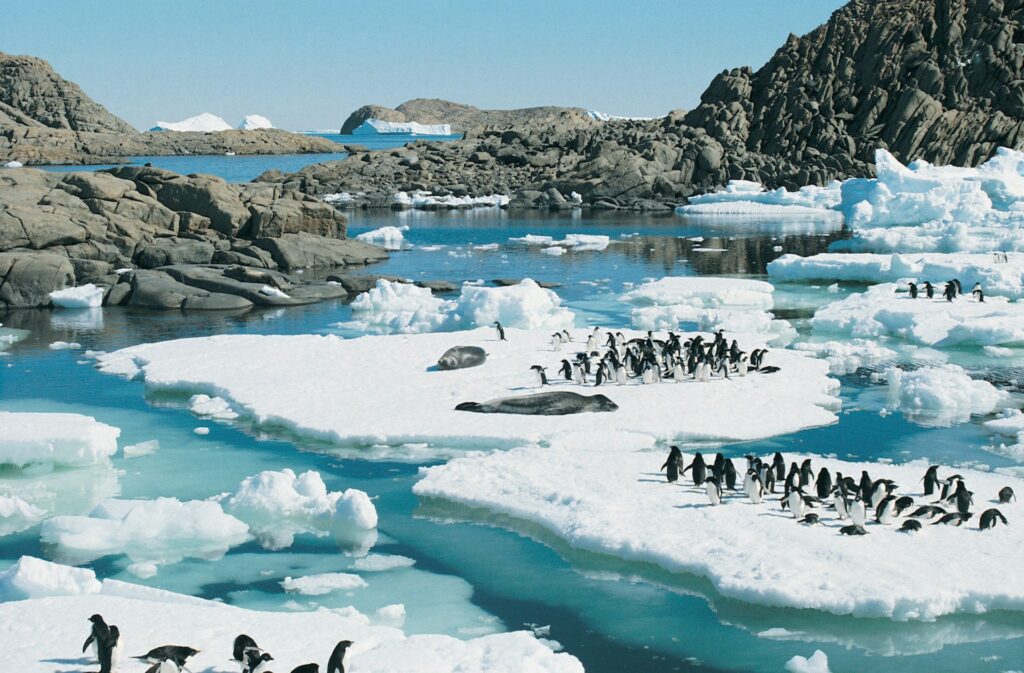
Deserts cover roughly a third of Earth’s land surface, and they’re far more varied and extreme than most people realise. From frozen wastelands to scorching sand seas, these harsh environments shape weather patterns, ecosystems, and human civilisation in profound ways.
Antarctica is technically the world’s largest desert.
When you think desert, you probably picture sand and heat, but deserts are actually defined by lack of precipitation, not temperature. Antarctica receives less than 50 millimetres of precipitation annually across most of the continent, making it the largest desert on Earth at about 14 million square kilometres. It’s a frozen desert where ice has accumulated over millions of years because snowfall is so minimal. The interior is incredibly dry, with some areas receiving virtually no precipitation at all. This makes Antarctica more arid than the Sahara in terms of actual moisture.
The Sahara is the largest hot desert, and it’s still growing.
The Sahara stretches across 9 million square kilometres of North Africa, roughly the size of the United States. It’s been expanding southward into the Sahel region, partly due to climate change and partly because of human activities like overgrazing and deforestation. The desert wasn’t always this massive, though. Thousands of years ago, the Sahara was green and fertile, supporting rivers, lakes, and diverse wildlife. Climate shifts transformed it into the harsh landscape we see today, and it continues to change.
@hulkroganclips The Sahara Desert was once Green & Tropical #joerogan #joeroganpodcast #jre #jreclips #history #sahara #africa #chad #desert ♬ Originalton – HulkRoganClips
The Arabian Desert has some of the hottest temperatures ever recorded.
Covering most of the Arabian Peninsula, this desert reaches brutal temperatures that regularly exceed 50 degrees Celsius in summer. The Rub’ al Khali, or Empty Quarter, is one of the largest continuous sand deserts in the world and one of the most inhospitable places on Earth. Sand dunes there can reach heights of 250 metres, shifting constantly with the wind. Despite the extreme conditions, Bedouin peoples have survived in this environment for thousands of years through incredible adaptation and knowledge of the landscape.
The Gobi Desert experiences massive temperature swings.
The Gobi, stretching across northern China and southern Mongolia, is famous for its extreme temperature fluctuations. Winter temperatures can plummet to minus 40 degrees Celsius while summer can hit 45 degrees, giving it one of the widest temperature ranges of any place on Earth. It’s a cold desert for much of the year, covered in snow and ice during winter months. The Gobi is also expanding rapidly, with desertification threatening agricultural lands and forcing communities to adapt. Dust storms from the Gobi can be so massive they affect air quality as far away as North America.
The Atacama Desert is the driest place on Earth.
Located in Chile, the Atacama Desert has areas that haven’t seen rain in over 400 years. Some weather stations there have never recorded any rainfall whatsoever. The average annual precipitation in the driest parts is less than one millimetre, making it more arid than Antarctica. This extreme dryness is caused by a double rain shadow effect from the Andes Mountains and the Chilean Coast Range, plus cold ocean currents offshore. Despite the lack of water, specialised plants and animals have found ways to survive by harvesting moisture from coastal fog.
Deserts aren’t all sand dunes.
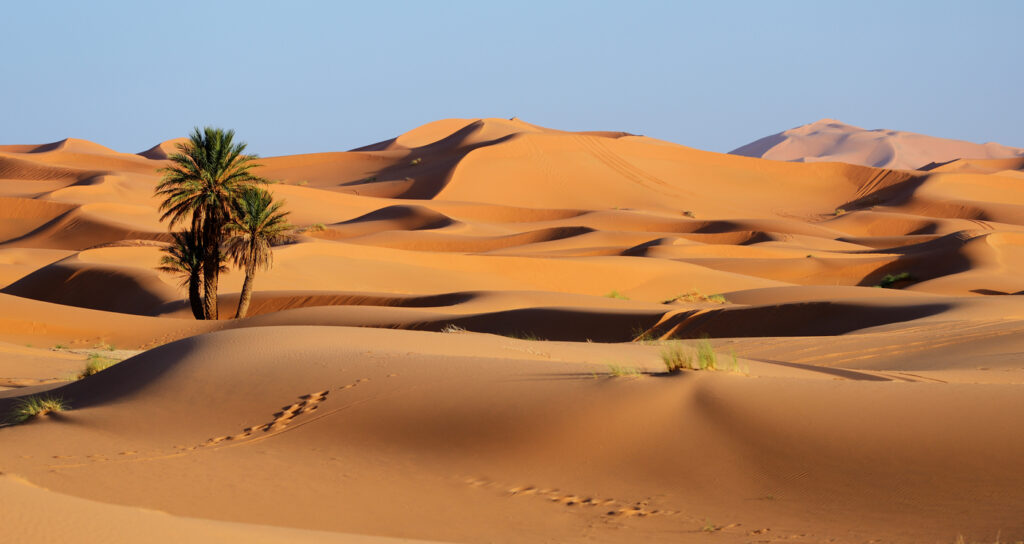
Only about 20% of the world’s deserts are covered in sand. The rest consist of rocky plateaus, gravel plains, mountains, and salt flats. The classic image of endless rolling sand dunes applies to only specific regions called ergs. Many deserts, like the Great Basin in the United States, are rocky or covered in sparse vegetation. The diversity of desert landscapes is actually remarkable, ranging from the white salt flats of Bolivia to the red rock formations of Australia’s outback.
The Kalahari supports surprisingly diverse wildlife.
The Kalahari in southern Africa isn’t a true desert by strict definition since it receives more rainfall than typical deserts, but it’s still classified as semi-arid. It supports an impressive array of wildlife including lions, elephants, giraffes, and countless antelope species. The San people have lived in the Kalahari for over 20,000 years, developing extraordinary survival skills and deep knowledge of the environment. Seasonal rains transform parts of the Kalahari into grasslands that attract massive animal migrations, showing how dynamic desert ecosystems can be.
Australia’s deserts cover most of the continent.
Australia has ten major deserts covering about 18% of the mainland, with the Great Victoria Desert being the largest. These deserts are home to unique wildlife found nowhere else, including thorny devils, bilbies, and desert-adapted kangaroos. Aboriginal Australians have thrived in these harsh environments for at least 50,000 years through sophisticated understanding of seasonal patterns and water sources. Many Australian deserts are characterised by red sand coloured by iron oxide, creating the iconic outback landscape. The deserts there are relatively flat compared to other continents, with few major mountain ranges interrupting the arid expanse.
@planet.people.pod Did you know deserts naturally fight climate change? In our latest episode, we’re joined by Sendy Barrows, co-founder of the CactusToCloud Institute, to talk about how the newly designated Chuckwalla National Monument is doing just that by storing carbon in undisturbed desert lands 🌵✨ Tune in to hear about why desert conservation matters now more than ever! 🌎 #desert #chuckwalla #publicland #conservation #planetpeople ♬ INTERESTELLAR – Kore Blanco
Deserts play a crucial role in global weather patterns.
Large deserts influence weather systems far beyond their boundaries. The Sahara, for instance, sends massive dust plumes across the Atlantic that fertilise the Amazon rainforest with nutrients. Desert surfaces reflect solar radiation differently than other landscapes, affecting atmospheric circulation and precipitation patterns worldwide. Cold ocean currents adjacent to coastal deserts like the Atacama and Namib create unique microclimates and fog systems. Understanding desert systems is essential for predicting climate change impacts since these regions are particularly sensitive to temperature and precipitation shifts.
Humans have lived in deserts for thousands of years.
Despite their harsh conditions, deserts have supported human civilisation throughout history. Ancient Egypt flourished along the Nile cutting through the Sahara, while desert trade routes connected distant civilisations for millennia. Modern cities like Phoenix, Las Vegas, and Dubai have grown massive populations in desert environments through technology and resource management. Indigenous desert peoples developed sophisticated survival strategies including water conservation, seasonal migration, and extensive plant knowledge. The relationship between humans and deserts shows both our adaptability and the challenges we face as these environments expand and climate patterns shift.