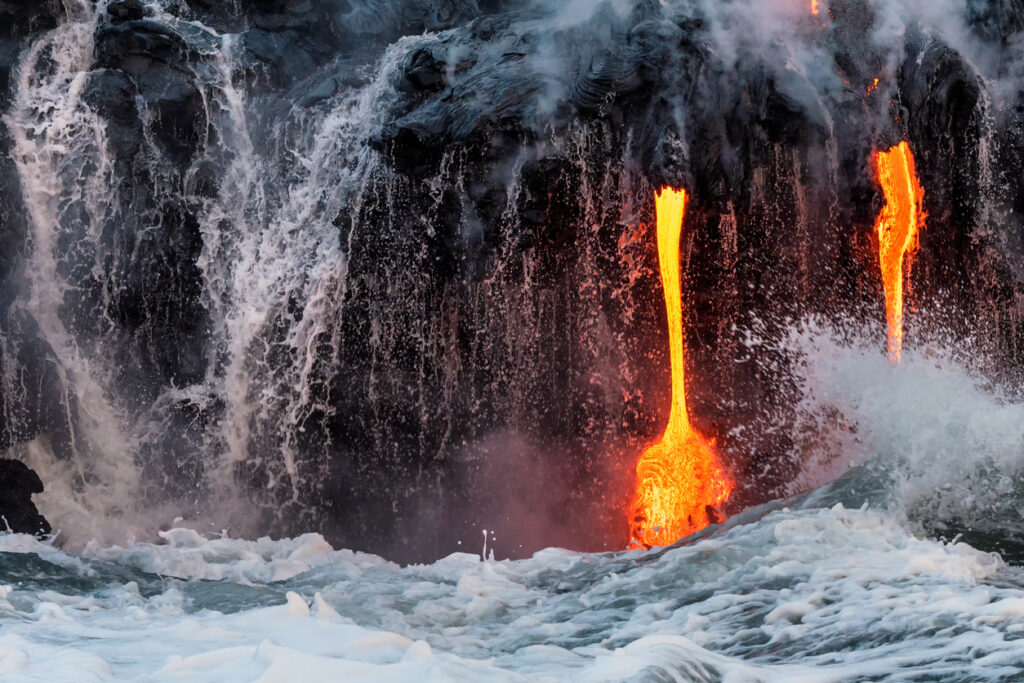
Most volcanic activity on Earth doesn’t happen on land. It happens out of sight, beneath kilometres of water, where pressure hides warning signs and eruptions can unfold without anyone noticing for years. Some of these underwater volcanoes are dormant, some are slowly building pressure, and some have erupted within living memory. They don’t always announce themselves with explosions. Sometimes they reshape the ocean floor quietly, until one day they don’t.
1. Axial Seamount in the northeast Pacific
Axial Seamount sits on the Juan de Fuca Ridge, hundreds of kilometres off the coast, and it’s one of the most closely watched underwater volcanoes on the planet. Unlike many deep-sea volcanoes, it’s well-mapped and constantly monitored because it has erupted multiple times in recent decades. Each eruption subtly lifts and drops the seafloor as magma moves beneath it, creating measurable changes scientists can track.
What makes Axial unsettling is how predictable it’s becoming. Pressure builds, the seafloor swells, and eventually magma breaks through. It doesn’t create towering explosions, but it releases lava flows across the seabed and reshapes the local environment. It’s a reminder that active volcanism isn’t rare under the ocean. It’s just hidden.
2. Kick’em Jenny near the eastern Caribbean
Kick’em Jenny is one of the most famous submarine volcanoes because of how close it sits to populated islands. It rises from the seafloor north of Grenada and has erupted repeatedly over the last century. Each eruption sends gas, ash, and debris into the water above, sometimes disturbing the sea surface.
The concern with Kick’em Jenny isn’t just lava. Gas release can reduce water density, which poses risks to ships passing overhead. There’s also the ongoing question of whether a larger collapse could displace enough water to generate local waves. It’s closely watched because it sits at the uncomfortable intersection of geology and human life.
@shyaamroots Beneath the sea north of Grenada lies Kick ’Em Jenny — an active underwater volcano that could one day rise and form a brand new island 👀🌍🔥 Imagine witnessing the birth of land right in the Caribbean! 🌊🇬🇩 #Grenada #KickEmJenny #CaribbeanHistory #VolcanoFacts #BlackGeography ♬ original sound – Shyaam-Roots
3. West Mata in the Pacific Ring of Fire
West Mata is one of the deepest actively erupting volcanoes ever observed. Located near the Tonga-Kermadec arc, it produces lava flows and explosive bursts even under immense pressure. Scientists have captured footage of glowing magma and ash clouds erupting more than a kilometre below the surface.
This kind of eruption challenges assumptions about how volcanoes behave underwater. Pressure doesn’t always suppress explosions. In some cases, it interacts with gas-rich magma to create violent activity. West Mata shows that depth alone doesn’t guarantee safety or predictability.
4. Monowai Seamount near New Zealand
Monowai Seamount is one of the most active underwater volcanoes on Earth, even though few people have heard of it. It grows and collapses repeatedly, sometimes changing its height by tens of metres in a short period. These changes are detected through sonar surveys rather than visual observation.
Its constant activity highlights how dynamic the ocean floor really is. While Monowai’s eruptions are unlikely to affect land directly, they remind scientists that the seafloor is not a stable surface. It’s a living landscape that can change dramatically without warning.
5. Havre Seamount and its massive pumice raft
Havre Seamount erupted in the early 2010s and went unnoticed until satellites detected an enormous raft of floating pumice spreading across the ocean. The eruption itself happened quietly underwater, but its aftermath covered thousands of square kilometres of sea surface.
This event showed how underwater eruptions can still have far-reaching effects. The pumice raft altered marine ecosystems, affected shipping routes, and demonstrated that submarine volcanoes can influence the surface world even when the eruption itself remains unseen.
6. The Canary Islands volcanic flank system
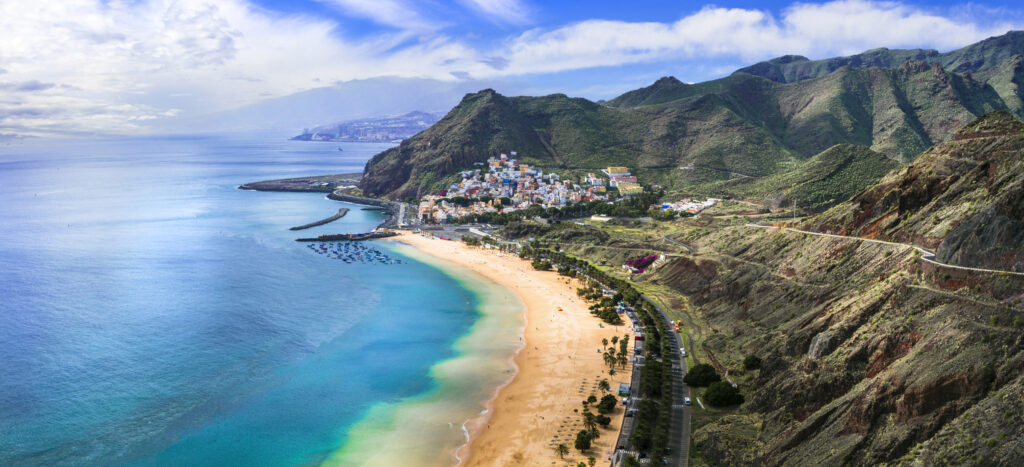
Beneath the waters around the Canary Islands lie massive volcanic structures built up over millions of years. While eruptions here usually occur on land, much of the volcanic system extends underwater, where steep slopes and unstable rock layers exist.
The concern isn’t constant eruption, but sudden collapse. If a large underwater section were to fail during volcanic activity, it could displace enormous volumes of water. This makes the region one scientists watch carefully, not because disaster is inevitable, but because the consequences would be severe if conditions aligned.
7. Kolumbo near Santorini
Kolumbo is an underwater volcano close to the famous Santorini caldera. It erupted violently in the 1600s, killing people on nearby islands through gas release and ash fallout. Today, it remains active beneath the sea, with hydrothermal vents releasing hot fluids and gases.
The proximity to populated islands makes Kolumbo particularly concerning. Even without a dramatic eruption, gas release or smaller events could pose hazards. It’s a reminder that volcanic risk doesn’t end at the shoreline.
8. The South Sandwich volcanic arc
The South Sandwich Islands sit above one of the most active submarine volcanic regions on Earth. Many of the volcanoes here are mostly underwater, erupting regularly beneath rough seas in one of the planet’s most remote areas.
Because of the isolation, eruptions often go unnoticed unless satellites detect surface disturbances or ash clouds. The region illustrates how much volcanic activity happens beyond human awareness, shaping the planet regardless of whether anyone is watching.
@latimesVolcano near California could erupt later this year. The volcano known as Axial Seamount is drawing increasing scrutiny from scientists who only discovered its existence in the 1980s. It could erupt by the end of this year, scientists say.
9. Loihi Seamount near Hawaii
Loihi is an underwater volcano slowly growing toward the surface southeast of the Hawaiian Islands. It’s considered the next potential Hawaiian island, although that process will take tens of thousands of years. Despite its slow growth, Loihi is geologically active, with frequent earthquakes and magma movement.
While Loihi doesn’t pose an immediate threat, its activity shows how island chains are born underwater. Eruptions here reshape the seafloor incrementally, building future land one eruption at a time.
10. Unknown and unmapped submarine volcanoes
Perhaps the most unsettling reality is that many underwater volcanoes haven’t been mapped at all. Large areas of the ocean floor remain poorly studied, meaning active volcanic systems could exist without any monitoring.
As technology improves, new seamounts and eruption sites are still being discovered. The ocean hides its activity well, and that uncertainty is part of what makes submarine volcanism so powerful. These volcanoes don’t wait to be understood. They erupt on geological schedules, not human ones.
Underwater volcanoes don’t need drama to be dangerous. Their power lies in scale, pressure, and invisibility. Most will erupt quietly, reshaping the planet without consequence to us. But a few sit close enough, large enough, or unstable enough to remind us that even beneath calm waves, Earth is very much alive.