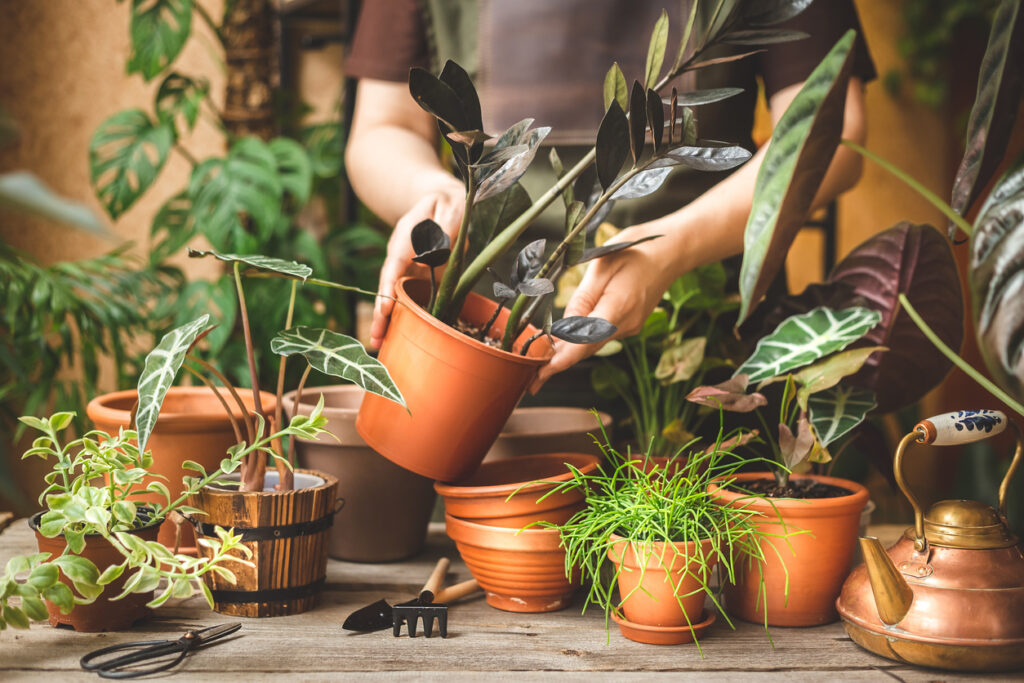
The obsession with bright, airy rooms and sun-drenched cacti is finally starting to change as a much darker and more atmospheric vibe takes over our living spaces. Instead of the usual neon greens and pale palms, people are moving toward plants with deep burgundy leaves, velvet textures, and almost-black foliage that feels a bit more sophisticated.
It’s a move away from that “perfectly lit showroom” look and toward something that feels a bit more grounded and mysterious. These moody plants don’t just look great in a dimly lit corner; they bring a bit of drama to a room without you needing to pick up a paintbrush or buy new furniture. Whether you’re a seasoned collector or just looking for something that doesn’t scream for direct sunlight every five minutes, this trend is about embracing the shadows.
Black and burgundy foliage is replacing traditional green.
Plants with leaves so dark they’re almost black are becoming the must-have for 2026, moving away from the bright green jungle aesthetic that’s dominated for years. Deep burgundy, purple, and near-black foliage creates dramatic contrast against light walls and pairs beautifully with neutral interiors. These aren’t just novelty plants, they’re serious design statements that transform ordinary corners into conversation starters. The colour holds year-round without fading, giving you consistent drama through all seasons. Think of it as the moody, sophisticated cousin of the cheerful green plant collection everyone’s been growing.
@k_wos ZZ & Raven Zz Plant care 💤🪴 #zzplant #ravenzz #plantcare #plantdaddykoss #plantsoftiktok ♬ Brunch (Lofi) – Muspace Lofi
The Raven ZZ plant is leading the trend.
This variety of ZZ plant has stems and leaves so dark they look painted black, staying upright and neat while reaching 2–3 feet tall. It’s become the poster child for moody plants because it delivers maximum visual impact with minimum fuss. The Raven ZZ forgives neglect better than most houseplants, tolerating low light and irregular watering without complaint. Those glossy black leaves create striking contrast whether you’ve got them in a brass pot or on a wooden stand. It’s the perfect starter plant for anyone wanting to dip into the moody aesthetic without taking on something high-maintenance.
Black Cardinal philodendron offers glossy near-black leaves.
This philodendron starts with burgundy new growth that matures into glossy, almost black foliage with thick, leathery leaves. It stays compact at 2–3 feet, making it perfect for tabletops or shelves where it can trail dramatically. The leaves feel substantial and waxy, holding their dark colour throughout the year without any special treatment. You can train it to climb a moss pole for vertical drama, or let it spill from a hanging basket. Regular watering and humidity above 50% keeps it happy, and it tolerates lower light better than you’d expect from such dramatic foliage.
Black Colocasia brings oversized drama.
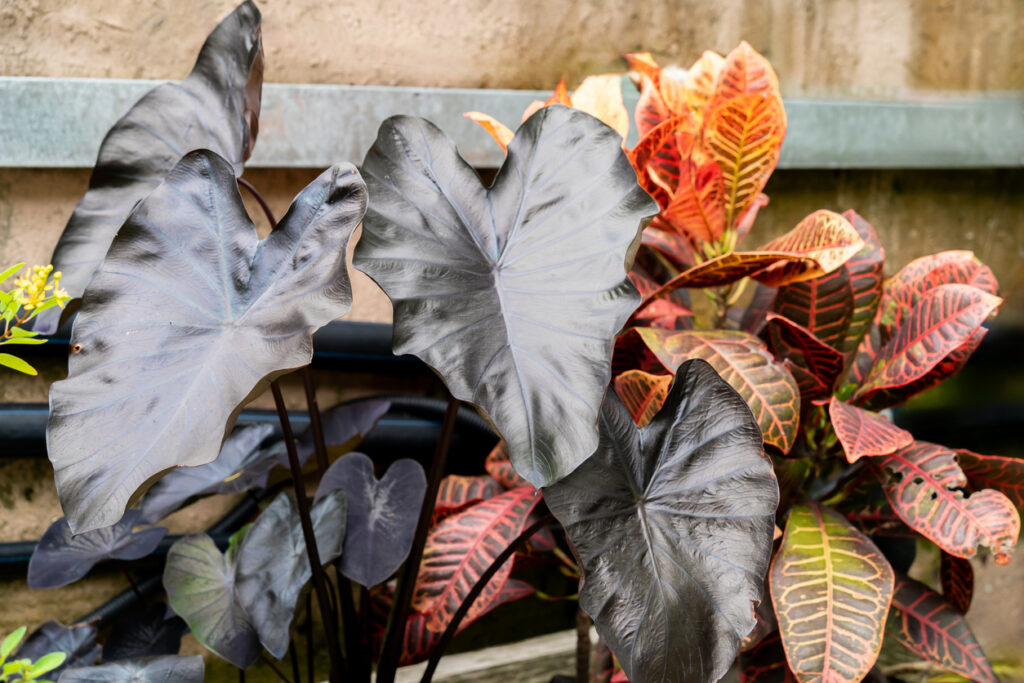
These elephant ear plants with near-black leaves make an instant statement that’s impossible to ignore. The massive leaves feel cool and slightly dusty once mature, creating a bold focal point in any room. They need more attention than some moody plants, requiring consistent moisture and bright indirect light, but the payoff is worth it.
One well-placed black Colocasia can anchor an entire room’s design. The scale and colour combined make them showstoppers that work particularly well in corners that need filling or as standalone features.
The trend pairs perfectly with minimalist and maximalist aesthetics.
Moody plants work equally well in sparse, modern spaces and lush, layered interiors, which is part of their appeal. Against white or neutral walls, the dark foliage pops dramatically, while in busier rooms they add depth without competing for attention. You can style them with brass accessories for warmth or wooden stands for an organic feel.
The versatility means you’re not locked into one aesthetic, the plants adapt to whatever vibe you’re creating. Whether you want one statement piece or a collection of dark beauties, the look translates across different design styles.
They’re forgiving plants that suit busy lifestyles.
Most moody houseplants tolerate irregular watering and lower light conditions better than their bright green counterparts. This makes them practical for people who want impact without constant fussing. The dark foliage often indicates plants that have adapted to shadier conditions in nature, meaning they’re genuinely suited to typical home environments.
You get the drama of a high-maintenance plant with the ease of something nearly indestructible. Missing a watering or two won’t send these plants into immediate decline like it would with some fussier varieties.
The velvety textures add tactile interest.
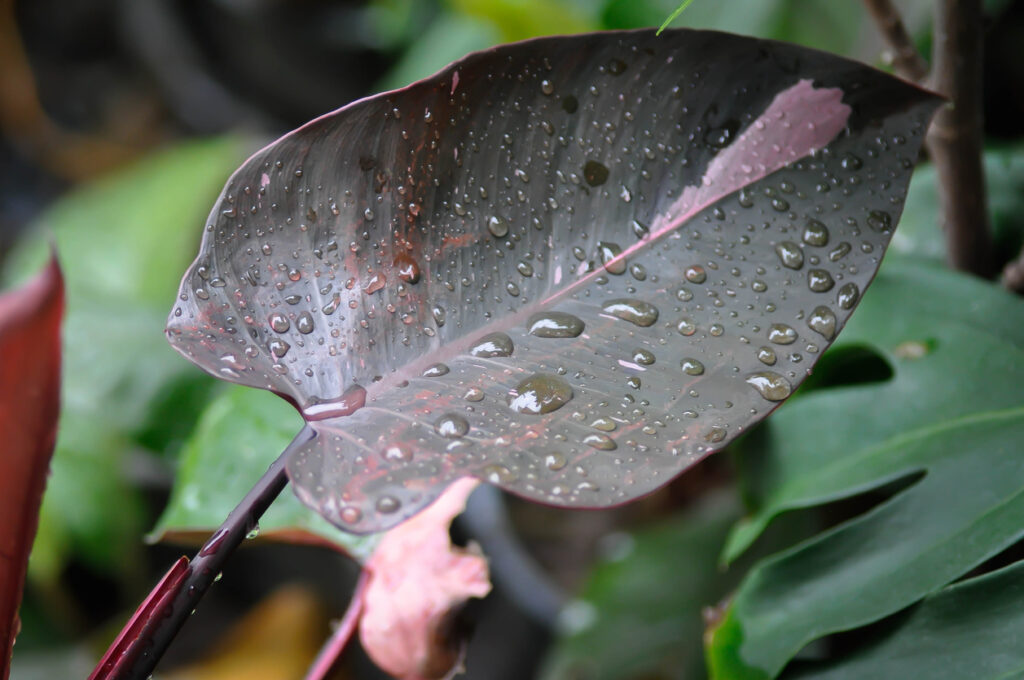
Many dark-leaved plants have velvety or waxy textures that beg to be touched, adding another dimension beyond just visual appeal. Running your hand over a Black Velvet Alocasia or feeling the substantial leaves of a Black Cardinal philodendron creates a sensory experience.
The textures photograph beautifully, too, which partly explains why these plants are taking over Instagram and Pinterest. There’s something luxurious about foliage that looks and feels rich, making your plant collection seem more curated and intentional.
They create contrast without needing flowers.
Traditional houseplants rely on green foliage with occasional blooms for interest, but moody plants provide constant visual drama through leaves alone. The near-black colour creates natural contrast against any background, eliminating the need for flowering plants that require specific conditions. You get year-round impact that doesn’t depend on bloom cycles or seasons. This makes decorating easier because you’re not waiting for plants to flower, or dealing with the mess when blooms fade. The leaves are the show, and they’re always on display.
Collecting dark varieties is becoming its own hobby.
Plant collectors are specifically seeking out rare dark-leaved cultivars, turning moody plants into collectible items. Unusual varieties with unique patterns or particularly dark colouration command attention and sometimes significant prices.
The collecting mentality is driving the trend forward as people hunt for the darkest, most dramatic specimens. It’s similar to how variegated plants had their moment, but focused on depth of colour rather than patterns. Online plant communities are swapping recommendations for where to find the best dark beauties.
The aesthetic signals a shift towards intentional, curated spaces.
Moving away from bright green jungle vibes towards moody, dramatic plants reflects broader design trends favouring sophisticated, lived-in spaces. People are choosing plants with purpose now, rather than grabbing whatever looks nice at the garden centre.
The moody trend is part of this intentionality, selecting plants that make specific design statements. It’s about creating atmosphere and character rather than just adding greenery. Homes are becoming more personalised and less trend-driven, with plants chosen to enhance specific moods rather than follow generic “plant wall” aesthetics that feel overdone.