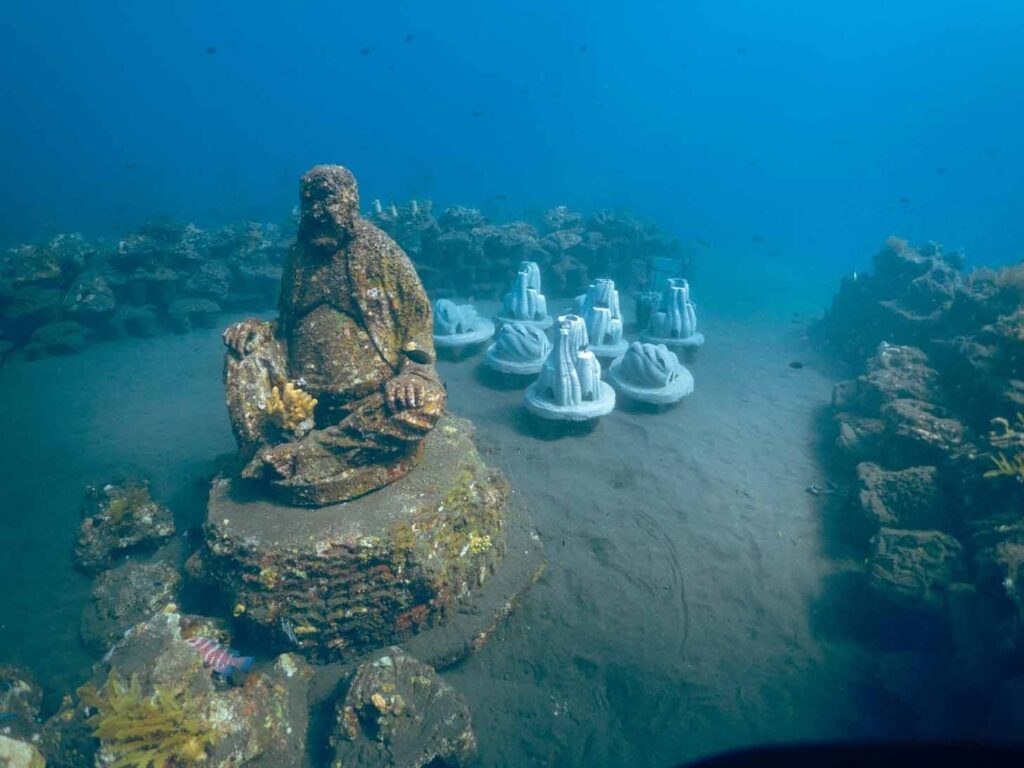
Losing a pet can feel like a piece of your heart goes missing. Traditionally, you hold onto ashes or scatter them somewhere meaningful. But UK startup Resting Reef asked a different question: what if that goodbye could give back to something bigger? As it turns out, it can. Founders Aura Murillo Pérez and Louise Skajem are turning pet ashes into underwater memorial reefs that help damaged marine ecosystems recover.
They use aquamation, an eco-friendly alkaline cremation, to create a fine ash that’s then blended with crushed oyster shells and marine-safe concrete. The mixture is shaped into 100‑kg reef structures designed using patterns from natural reef formations. Each one includes caves, tunnels, and textures ideal for sea life to settle, feed and spawn. According to DesignBoom, this method helps ensure that the structures are both functionally beneficial and environmentally sound.
These bespoke reef “urns” were first placed off the coast of Bali in 2024, with 24 memorials laid down. Within months, researchers recorded more than 84 fish species, which is nearly 14 times the biodiversity found in the surrounding degraded seabed. A Fast Company feature later noted that 46 new marine species had made the reefs their home within a year, while turf and coralline algae were already laying new groundwork for coral growth.
Bridging love, loss, and life
@goinggreenmedia RESTING REEF 🪸 Follow for more projects like this! This is a memorial coral reef made from your loved ones ashes that literally turns death into new life in the ocean. Please note for the example reef we made it did not include any actual ashes and we instead used sand. Usually human or pet ashes are combined with local natural materials like volcanic sand and calcium carbonate to create the reefs which are scientifically designed to encourage coral regrowth. After successful placements in North Bali, the sites now show 17x more biodiversity compared to nearby degraded areas. Resting Reef is now expanding globally, placing full-scale reefs in Indonesia and other locations. Right now, 90% of the world's coral reefs are at risk and these ecosystems support 25% of all marine life. With Resting Reef, a loved one's final act could be helping to rebuild an entire ecosystem!
Resting Reef wasn’t born from a marine biology lab. It was born from grief. Murillo Pérez speaks openly about reshaping the death-care industry, so cemeteries become places of reconnection, not just remembrance. They’re creating a tradition that “honours life” instead of mourning loss, and that’s something that’s resonated with many grieving pet owners.
Every memorial is personal. Pet owners receive invitations to ceremonies, photos, GPS tags of the reef site, and even miniature replicas made with the same materials, so the memory of their companion goes home with them.
The structures are more than symbolic. Oyster shells provide essential calcium phosphate, a key nutrient and natural fertiliser in marine ecosystems. The reef forms microhabitats: crevices safe for fish and crustaceans, algae that clean and oxygenate the water, and hard surfaces to anchor corals and sponges. Over time, these reefs stabilise sediments, safeguard shorelines and even absorb carbon.
Scaling up from pet memories to human memorials
With strong local success in Bali, Resting Reef is setting its sights on larger ambitions. They’re working with UK regulators to place human memorial reefs near Plymouth Breakwater, offering an alternative to high‑emission burials or traditional cremations, which can produce around 400 kg of CO₂ per funeral.
Their early-bird packages for pets start at around £350 for a community reef, rising to £2,250 for individual structures. Human memorials are expected to begin at around £3,900, with add-ons like bespoke designs or ceremonial events available. The startup’s community-based model also supports local economies, as Bali artisans help build and deploy the reefs under guidance from marine conservationists including Dr Zach Boakes and the team at North Bali Reef Conservation.
Resting Reef has already earned recognition: it received funding from Innovate UK, was praised by the Terra Carta Design Lab (co-founded by King Charles and Jony Ive), and earned a spot on Forbes’ 30 Under 30 for social impact.
Artificial reef programmes aren’t new. Memorial reefs exist in the US and Australia, but Resting Reef’s concept adds a deeply personal, eco-conscious layer. Unlike traditional concrete reef balls, their low-emission blends are designed to degrade naturally, merging with the marine landscape over time.
These reefs help rebuild marine biodiversity at a time when 85 percent of oyster reefs and 90 percent of coral reefs have been lost worldwide. They also bridge the emotional and ecological, turning private grief into public restoration. That grief becomes a part of a growing legacy, and one that literally breathes new life into the sea.
The company’s plans for expansion
Resting Reef’s ambitions stretch beyond Bali and Plymouth. They’re in early talks about expansion into Mexico and other regions in the UK. Plans for a pilot human memorial project are already taking shape, with an estimated launch in 2026 or 2027.
They’re pushing for a bigger rethink of how we mark death. What if cemeteries weren’t static rows of stone, but vibrant habitats that support life? Murillo Pérez puts it best: this is about shifting from an industry of death to an industry of life.
Whether it’s a cat, dog, horse, or human, the idea is the same. What if a farewell could help reefs rebound, carbon be buried in sand, and coastlines resist erosion? Resting Reef believes it can. And if even a few thousand of these reef structures take root, they may leave behind a legacy far richer than we ever expected.