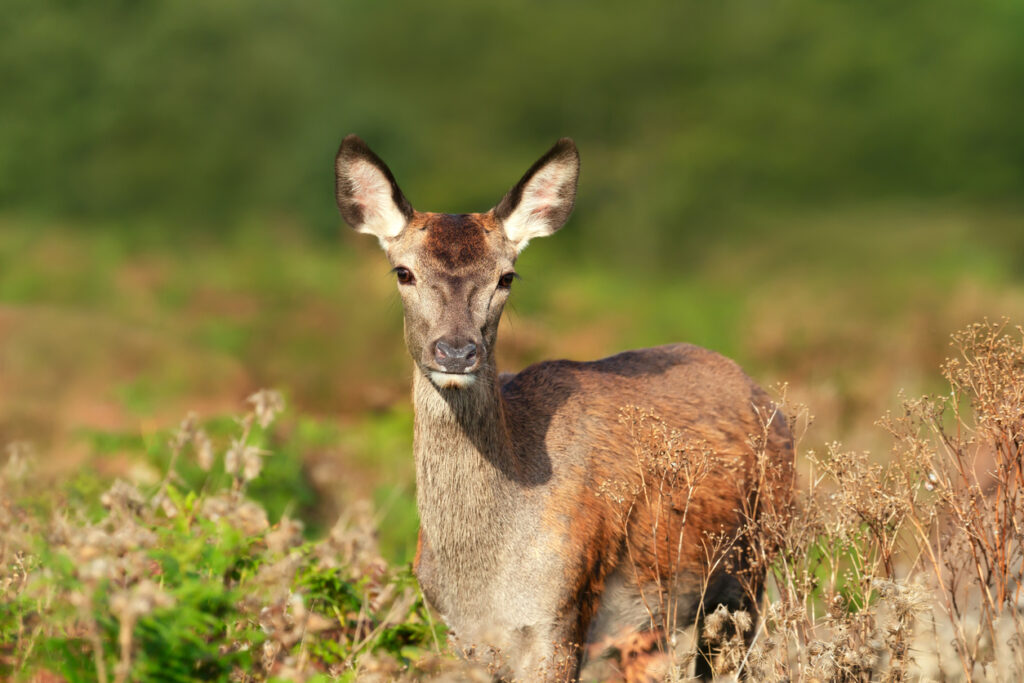
We’ve all seen those nature documentaries where a gazelle just stands there like a statue while a predator creeps closer, and you’re sat on your sofa shouting at the telly for it to get a move on. It looks like a proper lapse in judgement, doesn’t it? You’d think the logical response to being hunted would be to put as much distance between you and those teeth as possible, but evolution has cooked up some far more complex survival strategies than just “run for it.”
Sometimes, the best way to stay alive is to effectively vanish into the background or engage in a high-stakes staring match that looks like total madness to us. It’s not about the animal being “broken” or paralysed by fear in the way we might think; there’s a deep-seated biological reason for that sudden stillness that’s kept species going for millions of years.
Freezing makes them invisible to predators that hunt by movement.
Loads of predators rely on detecting motion to spot prey, so staying completely still makes you vanish from their attention. A deer freezing in headlights isn’t being thick, it’s using a strategy that works brilliantly against wolves and big cats that track movement.
The problem is that cars weren’t part of their evolutionary calculations, so the tactic backfires spectacularly with vehicles. Birds do this constantly when hawks fly over, and it genuinely works because the hawk’s vision is tuned to spot movement rather than stationary objects. Running triggers the chase response in most predators, but freezing often means they’ll scan right past you looking for something moving.
They’re calculating whether you’ve actually spotted them yet.
Animals often freeze because they’re not sure if the threat has noticed them, and bolting would confirm their location. If they stay still, and you haven’t clocked them, there’s a chance you’ll just walk past without ever knowing they’re there. The second they run, every predator in the area knows exactly where they are and that they’re prey.
Rabbits do this loads, sitting absolutely motionless when you’re nearby, then only legging it once you look directly at them. It’s risk assessment, not stupidity, and often staying put is genuinely safer than making yourself obvious by running. They’re buying time to see if the threat passes without requiring action.
Running wastes energy they might need for an actual chase.
Fleeing from every potential threat would exhaust animals completely, so they save their energy for situations that genuinely require escape. If you’re far enough away or not behaving like a predator, running is pointless energy expenditure they can’t afford. Animals operate on tight energy budgets, where wasting calories on unnecessary flight could mean not having enough later when it actually matters.
Deer will watch you walk past at a reasonable distance without bothering to run because you’re not close enough to be a real threat. They’re rationing their panic response for situations that truly require it, rather than spending energy fleeing everything vaguely concerning.
Their camouflage only works if they stay still.
Loads of animals are brilliantly camouflaged when motionless, but incredibly obvious the second they move. A perfectly hidden bird or insect gives itself away instantly by running, so staying put is their best defence. Their entire colouring and pattern evolved to make them invisible while stationary, and movement destroys that advantage completely.
You’ve probably walked past hundreds of frozen animals without ever knowing they were there because their camouflage worked. The ones you spot are either the ones that moved or the ones whose hiding spot failed, but staying still gives them the best odds of going unnoticed.
They’re assessing what kind of threat you actually are.
Not everything that approaches is hunting, so animals watch to determine your intentions before wasting energy on escape. Predators move differently than herbivores, stalking predators move differently than ambush predators, and animals are quite good at reading these signals.
If you’re walking past on a footpath at a steady pace, you’re probably not hunting them, so why bother running. They’re gathering information through observation, and premature flight means missing crucial details about whether you’re actually dangerous. Staring isn’t aggression or stupidity, it’s them trying to work out what you’re doing and whether you’re worth panicking about.
Running reveals they’re prey and triggers pursuit.
Many predators won’t bother chasing something unless it runs because running confirms that it’s prey and activates their chase instinct. Standing your ground or moving slowly might make a predator reconsider whether you’re worth attacking.
Small animals especially use this because running just confirms they’re edible and vulnerable. Some animals even act injured or weak to misdirect predators away from nests, while others freeze to avoid triggering the hunt response. Movement equals prey in most predators’ brains, so staying still is sometimes the only thing stopping an attack from starting.
They’re in shock or completely overwhelmed.
Sometimes animals genuinely freeze from fear or sensory overload, especially when facing threats they’ve never encountered before like cars or humans in unusual contexts. Their brain’s essentially crashed trying to process what’s happening, and they’re stuck in a fear response rather than making a strategic choice.
This is different from tactical freezing, it’s their nervous system being overwhelmed to the point where they can’t make decisions. Young or inexperienced animals do this more often because they haven’t learned proper threat responses yet. It looks like stupidity, but it’s actually their system being flooded with stress chemicals that temporarily disable their ability to act.
They’re protecting something nearby that would be exposed by running.
Parent animals often freeze or act strangely near nests or babies because running would lead threats directly to their offspring. Birds will sit tight on nests even when you’re quite close because leaving exposes eggs or chicks to predators or weather. Ground-nesting birds do this extreme version, where they’ll let you almost step on them before finally flushing.
It seems mental but from their perspective, their genes survive better if they risk themselves rather than guaranteeing their offspring die by running and revealing the nest. Some animals will even fake injury and run in the wrong direction to draw threats away, while their young stay hidden and still.
They know running won’t actually save them.
Some animals can’t outrun certain predators, so running is pointless, meaning their better strategy is playing dead, freezing, or using other tactics. Opossums famously play dead because they can’t outrun most threats, and many predators prefer live prey so they’ll leave a “corpse” alone.
Toads freeze because they’re too slow to escape anyway, and movement just makes them more obvious. If escape is impossible, looking uninteresting or already dead is a better survival strategy than wasting your last moments on a futile sprint. They’re making calculated decisions based on their actual capabilities, rather than our assumptions about what they should do.
They’re used to humans and have learned we’re mostly harmless.
Urban and suburban animals have often worked out that humans walking past don’t usually attack them, so why bother running. Squirrels, foxes, and birds in cities have completely different threat responses than rural populations because they’ve adapted to living alongside people.
They’ve learned to distinguish between dangerous human behaviour and neutral human behaviour through experience. Country deer bolt at the first sign of people, while city deer barely look up because they’ve calibrated their threat response to actual danger rather than reacting to everything. This isn’t tameness exactly, it’s them updating their survival instincts based on real data about what actually poses a threat in their specific environment.