When the world starts feeling like it’s tuned to a frequency that’s far too high, it’s easy to get lost in the mental fog of deadlines and digital noise. We’ve all had those days where the walls feel like they’re closing in, and your brain is basically a browser with 40 tabs open, all of them frozen.
Stepping outside isn’t about some magical, instant fix, but there’s a real groundedness in the way the natural world just carries on regardless of our stress. Whether it’s the stubborn way a plant grows through a crack in the pavement or the steady rhythm of the tide, there are bits of perspective waiting out there that you’re never going to find on a screen. These are 10 small cues from the outdoors that can help pull you back from the edge when everything feels a bit much.
1. Everything moves at its own pace, whether we like it or not.
In nature, nothing speeds up just because someone is watching or tapping their watch impatiently. Trees don’t grow faster because you want shade sooner, and rivers don’t rush just because there’s a destination waiting downstream. Growth happens when the conditions are right, not when it’s demanded by a boardroom or a calendar.
@robertg111 Mother Nature is the best healer and medicine. Its time we reconnect with her. #fyp #nature #healing #stress #anxiety #mentalhealth #spirituality ♬ original sound – Robert G
When life gets a bit much, it often feels like you’re falling behind some invisible schedule that everyone else has mastered. Nature reminds us that real progress isn’t about racing; it’s about timing. Pushing harder doesn’t always move things forward, and more often than not, it actively makes things worse. You can’t shout a flower into blooming, and you can’t force your way through a period of life that simply needs time to resolve itself.
2. Rest isn’t optional; it’s built into survival.
Animals rest without an ounce of guilt, and entire seasons move into a slower gear on purpose. There are huge periods in the natural world where growth completely pauses because constant output isn’t sustainable. A forest in winter might look like it’s doing nothing, but it’s actually performing the essential work of staying alive.
We’ve somehow convinced ourselves that rest is a reward we have to earn by hitting a certain level of exhaustion. Nature pushes back on that idea completely. Recovery isn’t a bonus for coping well; it’s a non-negotiable part of staying functional at all. If the entire planet needs to take a breather every year just to keep going, you probably do too.
3. Not every stimulus deserves a response.
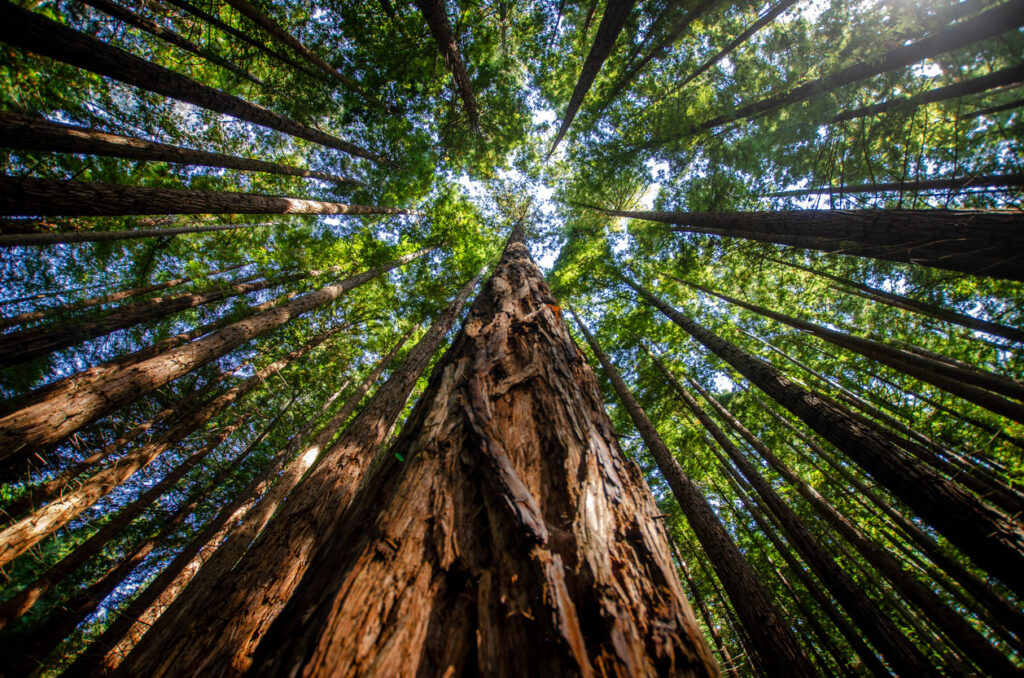
Forests are absolutely full of movement and noise, but most of it doesn’t trigger a single leaf to move. The wind shakes the branches, animals pass through the undergrowth, and the weather changes, but the system carries on without reacting to every tiny disturbance.
When things get hectic, every notification or passing comment starts to feel personal and urgent. Nature shows us that stability often comes from letting things pass rather than engaging with every single thing that happens. You don’t have to respond to every bit of noise to stay intact; sometimes the smartest move is to just let the wind blow past you.
4. Change happens without asking for permission.
Coastlines erode, leaves fall, and rivers move course over time. None of it waits for reassurance or asks if the timing is convenient. Change happens because the conditions have changed, and the environment simply adjusts to the new reality.
A lot of the pressure we feel comes from desperately resisting changes that are already well underway. Nature reminds us that change isn’t a personal failure or a sign that things have gone wrong. It’s simply how systems stay alive and relevant. Embracing the move to a new phase is usually a lot less painful than trying to hold back the tide.
5. Strength doesn’t have to look aggressive.
Some of the strongest things in the world are actually quite flexible. Roots can crack solid concrete if they’re given enough time, and grass pushes through pavement without using any brute force at all. Survival usually comes from persistence and the ability to bend, not from trying to dominate everything in sight.
When life is hectic, we often mistake strength for constant effort, control, or being the loudest person in the room. Nature offers a different definition. Adaptability and the willingness to move with the pressure keep things going far longer than stubborn force ever does. Being “tough” isn’t always about being a rock; sometimes it’s about being the willow that doesn’t snap in the gale.
6. Most important work happens out of sight.
So much of the heavy lifting in nature is completely invisible. Roots spread out underground, fungi connect entire ecosystems, and insects pollinate the world while we’re busy looking elsewhere. None of it is flashy, but the entire system would collapse without it.
@caoiltemaclean When’s the last time you got into nature #nature ♬ original sound – Caoilté
We live in a world where visibility is often tied to worth, and if people aren’t seeing what we’re doing, we feel like it doesn’t count. Nature reminds us that impact doesn’t require an audience. Some of the most important work you do for yourself or for other people won’t be noticed by anyone else, and that doesn’t make it any less real or valuable.
7. Balance is messy, not calm.
Ecosystems aren’t peaceful, static places. They’re constantly dealing with disruption, loss, overgrowth, and correction. Balance isn’t a perfect state of Zen; it’s a constant, slightly chaotic process of adjusting to whatever has just happened.
When life gets crazy, people often chase this mythical idea of perfect calm and feel like they’re failing when their life still feels a bit messy. Nature shows us that balance isn’t the absence of chaos; it’s the ability to adjust your course after the chaos hits. It’s okay if things aren’t perfectly still, as long as you’re still moving toward a point of stability.
8. Simpler systems cope better under pressure.
Nature rarely overcomplicates things. Energy is reused, materials are recycled, and processes repeat in straightforward ways that hold up when things get stressful. A simple root system is much more likely to survive a drought than a complex, delicate garden that requires constant fussing.
If you’re feeling overwhelmed, it’s often because your life has become a bit too tangled and overbuilt. Nature suggests that stripping things back to the basics can actually make you stronger. Simplifying your schedule or your expectations isn’t a sign of weakness; it’s a way to make sure your system doesn’t break when the pressure turns up.
9. Nothing exists in isolation, even when it feels that way.
A tiny change in temperature affects the insects, which affects the birds, which then changes how the plants grow. These connections exist whether or not we can see them with the naked eye. Everything is part of a much larger conversation.
It’s incredibly easy to feel like you’re alone inside your problems when the world is shouting at you. Nature reminds us that everything sits within a wider system. What you’re dealing with might feel isolated, but it rarely exists on its own. Reaching out and acknowledging those connections is often the quickest way to find a bit of relief.
10. Quiet isn’t empty, it’s active.
A forest that seems dead in the middle of a winter afternoon is actually full of movement you just can’t hear yet. Calm water holds an entire world of life beneath the surface. Quiet spaces in nature are rarely ever truly inactive; they’re just working on a different level.
When life finally slows down and the noise stops, the silence can feel uncomfortable or even “wrong.” You might feel like you should be doing something, or that the lack of drama means you’ve stalled. Nature reminds us that quiet isn’t about stagnation. It’s usually exactly where the most important repair and growth actually begin.