The idea of aliens tends to split people into two camps: those who are absolutely convinced we’re not alone, and those who roll their eyes and picture little green men.
However, when you strip away the sci-fi nonsense and look at the actual arguments, the question starts feeling a lot less ridiculous. This isn’t about UFO sightings or blurry photos on the internet. It’s about maths, scale, physics, and how staggeringly big the universe really is.
Once you dig into the science, the odds start to feel… a bit weird. There are galaxies upon galaxies, each packed with stars, many of them older than our own Sun, and plenty with planets sitting in just the right conditions for life to exist. At that point, believing Earth is the only place where anything living ever cropped up starts to sound less sensible than the alternative. These arguments don’t prove aliens are waving at us right now, but they do make a strong case that life elsewhere is far from a wild fantasy.
1. The universe is unimaginably vast.
There are roughly two trillion galaxies in the observable universe, each containing hundreds of billions of stars. Our own Milky Way has between 100 and 400 billion stars, and most of those have planets orbiting them. The sheer scale makes it statistically unlikely that Earth is the only place where life emerged. Even if the conditions for life are incredibly specific and rare, with those numbers you’d expect it to happen more than once. Claiming we’re alone feels like standing on a beach, picking up one grain of sand, and declaring it’s the only special one.
2. We keep finding potentially habitable planets.
Exoplanet discovery has exploded in recent decades, and we’ve identified thousands of planets in what’s called the habitable zone where liquid water could exist. Planets like Proxima Centauri b, Kepler-452b, and TRAPPIST-1e sit at distances from their stars where temperatures could support life. We’re finding these with relatively primitive detection methods, so there are likely millions more we haven’t spotted yet. The fact that habitable-zone planets aren’t rare suggests the ingredients for life are scattered throughout the universe.
3. Life survives in extreme conditions on Earth.
Extremophiles are organisms that thrive in environments we thought were too hostile for life. They live in boiling hydrothermal vents, frozen Antarctic lakes, acidic pools, and even inside nuclear reactors. If life can adapt to such brutal conditions here, it suggests life elsewhere might not need Earth-like environments to develop. This expands the potential habitable zones dramatically because we were probably too narrow in defining what “habitable” actually means.
4. The building blocks of life exist throughout space.
Amino acids, the organic compounds that form proteins, have been found in meteorites and detected in interstellar clouds. Water exists throughout the solar system and beyond. The chemical ingredients for life aren’t unique to Earth but appear to be common in the universe. If the raw materials are everywhere, it stands to reason they’ve combined into living organisms elsewhere. The chemistry that produced life here isn’t special or unique.
5. The Drake Equation suggests high probability.
Astronomer Frank Drake created an equation to estimate the number of detectable civilisations in our galaxy. Even using conservative estimates for factors like star formation rates and the fraction of planets that develop life, you end up with numbers suggesting multiple civilisations should exist. The equation has uncertainties, but it provides a framework showing that alien life is mathematically plausible. You’d have to assume extremely pessimistic values for every variable to conclude we’re alone.
6. The universe has had plenty of time.
The universe is roughly 13.8 billion years old, and Earth is only 4.5 billion years old. That means life could have emerged billions of years before it did here. Some stars and planets are far older than our solar system, giving life elsewhere a significant head start. Ancient alien civilisations could have risen and fallen before Earth even formed. Time is on the side of alien life existing somewhere.
7. Credible witnesses report unexplained phenomena.
Military pilots, radar operators, and government officials have reported objects displaying flight characteristics that don’t match known technology. The US government has released footage of unidentified aerial phenomena that remain unexplained. While most UFO sightings have mundane explanations, a small percentage genuinely puzzle experts. These don’t prove aliens, but they suggest something unusual is happening that deserves investigation. Dismissing all testimony from trained observers seems unreasonable.
8. The Fermi Paradox implies they might exist, but we can’t detect them.
The Fermi Paradox asks why we haven’t found evidence of aliens if they’re likely to exist. But this question itself suggests intelligent life probably does exist, we just haven’t connected yet. Maybe we’re looking in the wrong way, or they’re too far away, or advanced civilisations don’t broadcast radio signals. The paradox is less about aliens not existing and more about why contact hasn’t happened. Our failure to detect them doesn’t mean they’re not there.
9. Unexplained radio signals keep appearing.
The Wow! signal detected in 1977 remains unexplained despite decades of analysis. Fast radio bursts are powerful, brief pulses of radio waves from distant galaxies that we don’t fully understand. While natural explanations exist for some signals, others remain mysterious. These aren’t proof of alien communication, but they show the universe produces phenomena we haven’t figured out. Some could potentially be artificial in origin.
10. Moons in our own solar system might harbour life.
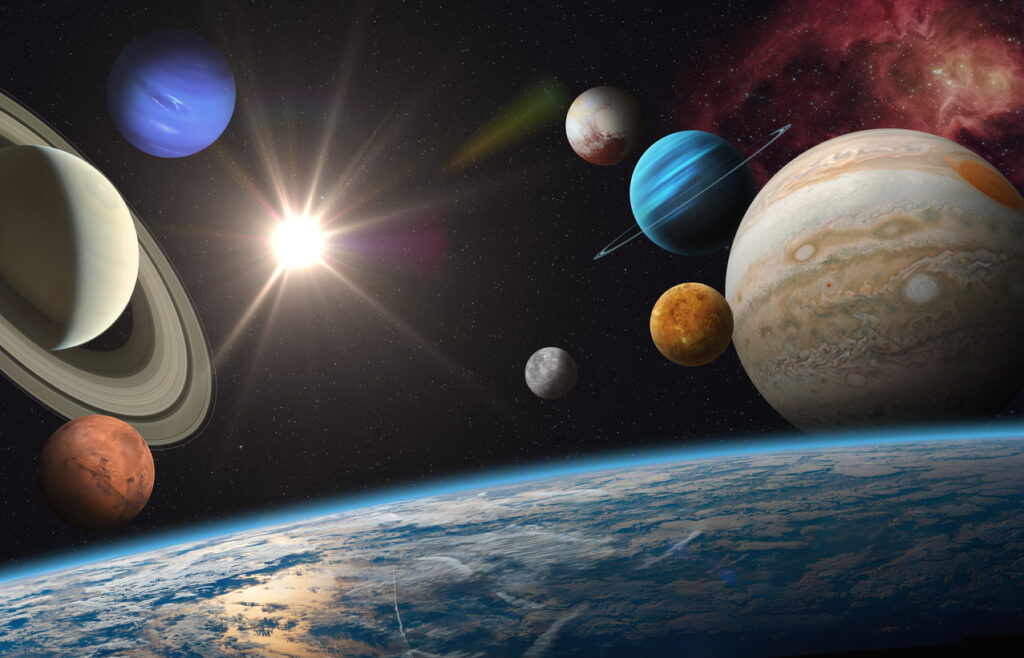
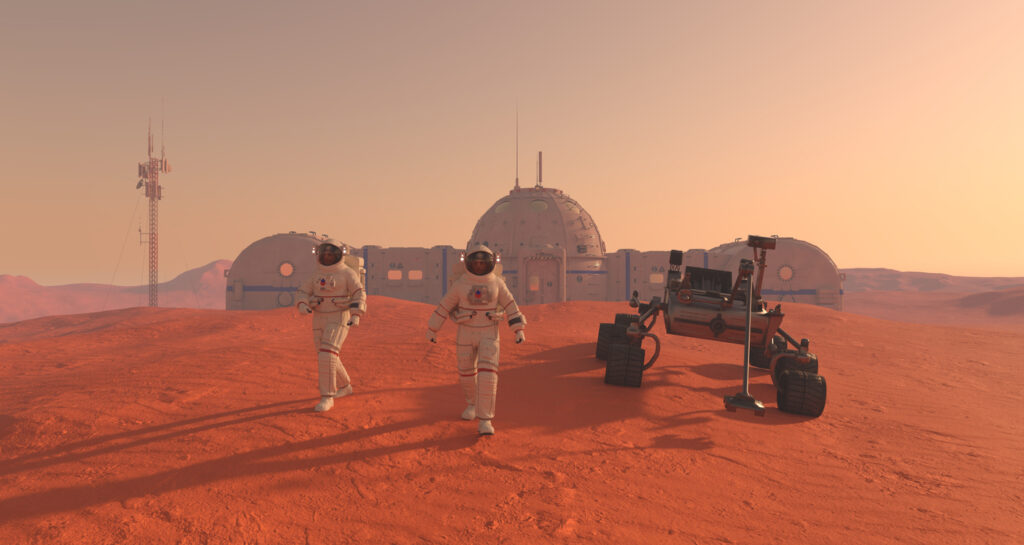
Europa, one of Jupiter’s moons, has a subsurface ocean beneath its icy crust. Enceladus, orbiting Saturn, has geysers shooting water into space from an underground ocean. Both environments could potentially support microbial life. Mars likely had liquid water in its past and might still have it underground. If life exists within our solar system, that dramatically increases the odds it’s common throughout the universe. We might find aliens without leaving our cosmic neighbourhood.
11. Evolution is probably universal.
Given the right conditions, natural selection should work anywhere. The principles of evolution aren’t Earth-specific but follow from basic chemistry and physics. If replicating molecules form and compete for resources, evolution happens automatically. This suggests that wherever life starts, it will diversify and adapt over time. The process that created the complexity we see on Earth should apply elsewhere.
12. Ancient Earth suggests life emerges quickly.
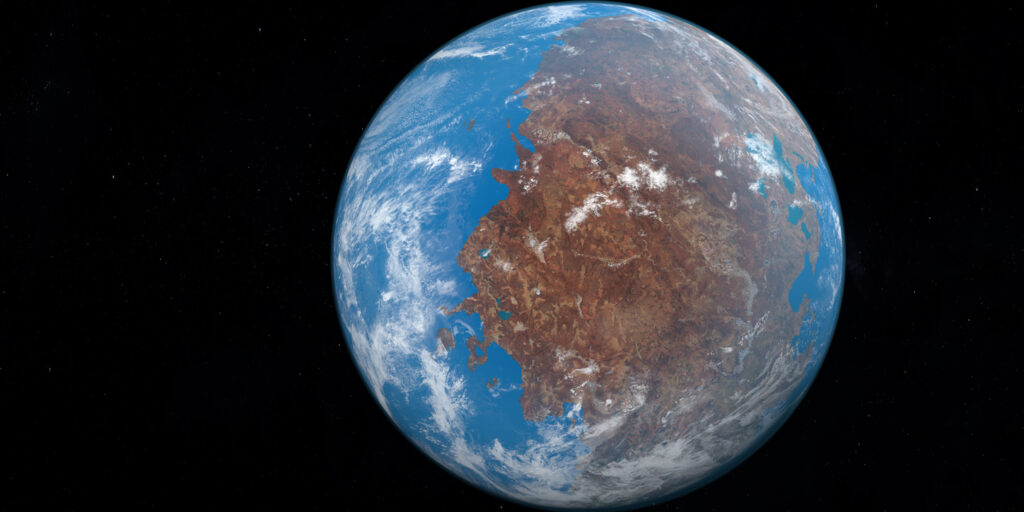
Life appeared on Earth relatively soon after the planet cooled enough to support it, possibly within a few hundred million years. This suggests that given suitable conditions, life doesn’t require billions of years to emerge but happens fairly readily. If life starts quickly when conditions allow, that increases the number of planets where it could develop. The speed of abiogenesis on Earth implies it’s not an incredibly rare fluke.
13. We’ve barely started looking properly.
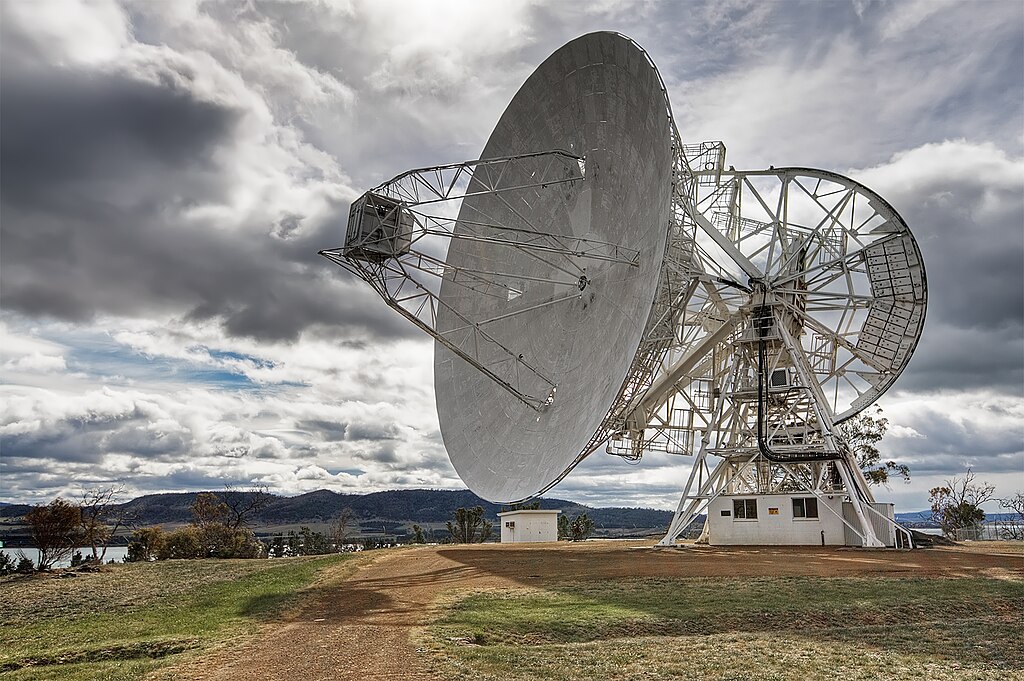
Serious searches for extraterrestrial intelligence only began in the 1960s, which is nothing on cosmic timescales. We’ve examined a tiny fraction of the sky and barely scratched the surface of what’s detectable. Our technology improves constantly, and future telescopes will be far more capable. Claiming aliens don’t exist because we haven’t found them yet is premature. We’ve only just begun looking, and absence of evidence isn’t evidence of absence when the search has barely started.