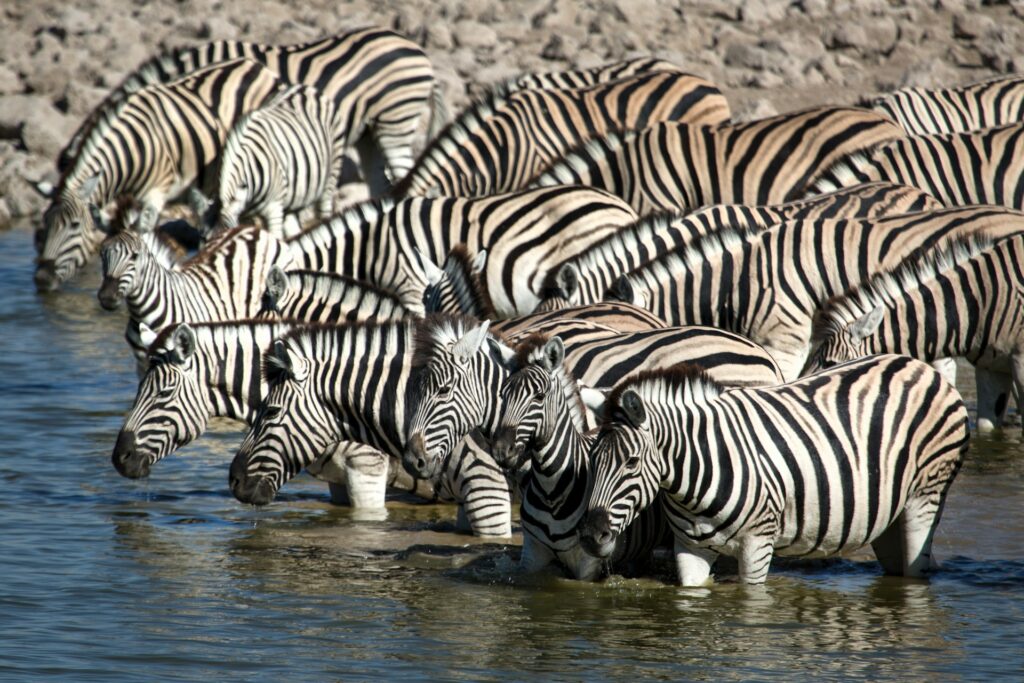
Animal stripes and spots might look decorative, but they’re the result of deeply complex biological processes that begin long before an animal is born. These patterns aren’t painted on by chance. They emerge from chemistry, genetics, growth timing, and evolution working together in ways that scientists are still unpicking today.
Patterns are mapped out before an animal is born.
Stripes and spots don’t appear gradually as an animal grows older. In most species, the blueprint for these markings is established while the animal is still developing as an embryo. At this stage, the skin is essentially a blank canvas where pigment-producing cells are being directed to specific locations.
Once those pigment pathways are set, the overall pattern is locked in. Growth later in life simply stretches or enlarges what’s already there. That’s why a newborn zebra already has its stripe layout, and why a leopard’s spots don’t rearrange themselves as the animal matures.
Pigment cells move across the skin in organised waves.
The cells that create colour don’t just appear randomly. They migrate across the developing skin, responding to chemical signals that guide where pigment should and shouldn’t form. These movements happen in waves and clusters. Where pigment cells settle, darker colour develops. Where they don’t, lighter areas remain. Slight differences in timing or movement speed can dramatically change the final pattern.
@pbsnature Here’s why tigers have stripes! 🐅 #tiger #bigcats #animalfacts #pbs #stem ♬ original sound – PBS Nature
Chemical reactions create repeating patterns naturally.
One of the most important processes behind stripes and spots is something called a reaction-diffusion system. This involves at least two chemical signals interacting with each other, one encouraging pigment formation and the other suppressing it.
When these chemicals spread across the skin at different speeds, repeating patterns naturally emerge. Faster-moving signals tend to form stripes, while slower, more localised interactions tend to form spots. No artistic instruction is needed. Physics does the work.
Body size affects whether stripes or spots appear.
The same basic biological system can produce very different results depending on the size of the developing animal. Smaller embryos tend to produce tighter, more frequent patterns, while larger embryos create broader stripes or larger spots. This is why small animals often have fine markings and large animals display bold, widely spaced ones. As the skin grows, the distance between chemical signal centres increases, naturally changing the scale of the pattern.
Hair and skin growth shape how patterns look.
The pattern itself exists in the skin, but fur length, hair direction, and skin thickness influence how we see it. The same pigment arrangement can look completely different depending on how hair grows over it. It becomes obvious when animals are shaved for medical reasons. The pattern underneath often looks sharper, softer, or even distorted compared to the animal’s usual appearance, even though the pigmentation hasn’t changed.
Evolution decides which patterns survive.

Once a pattern exists, natural selection determines whether it sticks around. Stripes and spots that improve survival are more likely to be passed on to the next generation. In many environments, broken patterns help animals blend into tall grass, forest shadows, or dappled light. Predators struggle to identify clear outlines when shapes are disrupted, especially when the animal is moving.
Some patterns confuse predators rather than hiding animals.
Not all stripes and spots are about camouflage. In some species, bold patterns actually make animals more visible but harder to track. When striped animals move together, predators can struggle to judge speed, direction, and distance. The visual overload makes it difficult to lock onto a single target, increasing the prey’s chance of escape.
Patterns can influence temperature regulation.
Colour affects how heat is absorbed and released. Darker areas warm faster than lighter ones, creating tiny temperature differences across the body surface. These differences may help create small air currents near the skin that aid cooling in hot climates. While this effect is still being studied, it suggests patterns may play a role beyond appearance alone.
Small genetic changes create individual variation.
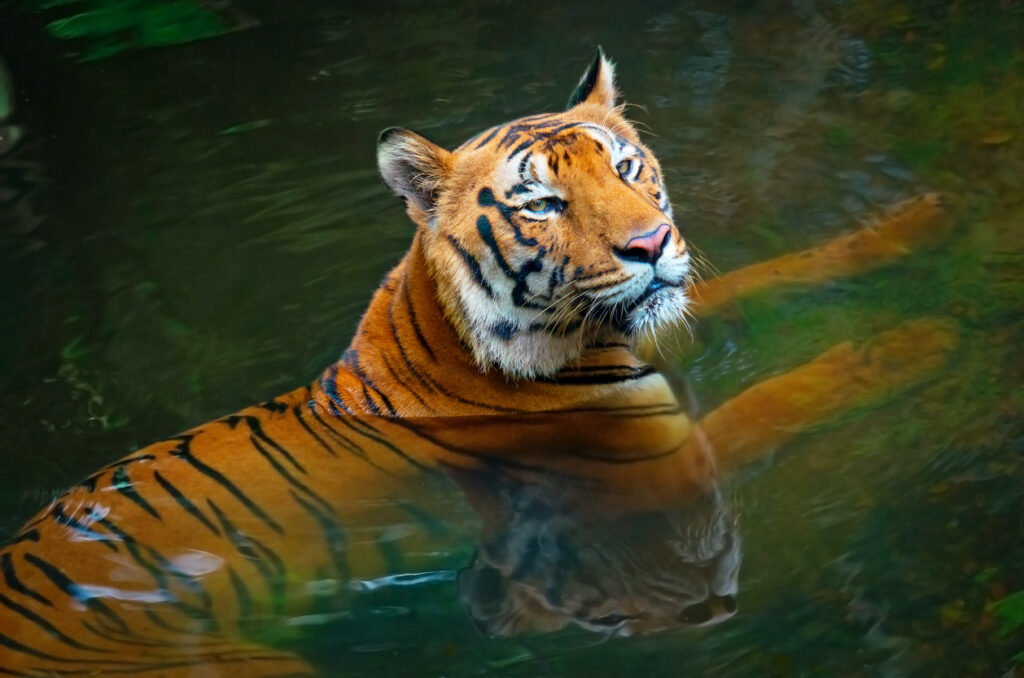
No two spotted animals have identical markings, even within the same species. That’s because small genetic differences influence how pigment signals behave during development. Tiny variations in timing, signal strength, or cell movement can alter spot size, stripe thickness, or spacing. The system follows rules, but it isn’t perfectly precise, which creates natural uniqueness.
Stripes and spots are the result of systems, not decoration.
What looks like nature being artistic is actually biology solving practical problems. Stripes and spots are the visible outcome of chemistry, growth, physics, and evolution interacting over millions of years. The beauty is a side effect. These patterns exist because they work, not because they look good. Once you understand how they form, stripes and spots stop seeming mysterious and start feeling inevitable.