
Time doesn’t tick the same way for every living thing. What feels like a blink to us can stretch out far longer for certain animals, while other creatures experience the world at a slower pace. The difference comes down to how quickly brains process information and how often they update what’s happening around them. Once you start looking at time through that lens, some animals begin to seem far quicker, sharper, and more reactive than we ever give them credit for.
Dragonflies and blowflies see at 300Hz.
These insects are the absolute champions of fast time perception, processing changes 300 times per second compared to humans who manage about 65Hz. To a dragonfly, the world moves at roughly one-fifth the speed it does for you, giving them plenty of time to react to threats or catch prey mid-flight. Their eyes contain more mitochondria than other flies, essentially extra batteries that power this supercharged vision. That’s why they’re such effective predators despite their small size.
Killer flies are even faster than regular flies.
There’s a predatory fly species found in Europe that puts normal flies to shame. It can launch from rest, circle around another fly multiple times mid-flight, catch it, and bring its body down to the ground in under a second. The whole sequence looks instantaneous to human eyes, but to the killer fly it’s happening at a pace where every movement can be calculated. For this insect specifically, time moves about six times slower than it does for humans.
Small body size equals faster vision.

Scientists discovered a clear pattern: the smaller the animal and the faster its metabolism, the quicker it processes visual information. This isn’t random, it’s survival. Tiny creatures like squirrels and hummingbirds are constantly under threat from larger predators, so they evolved to perceive the world at a fraction of the rate bigger species do. What looks like twitchy, spastic behaviour to us is actually an animal operating at a faster clock rate, making our movements seem impossibly slow and clumsy.
Hummingbirds need speed to hover perfectly.
When you’re beating your wings 50 to 80 times per second and trying to drink from tiny flowers while hovering, you need incredibly fast visual processing. Hummingbirds can process visual information at around 50 to 60 frames per second, and their motion-detecting brain area is significantly larger than in other birds. Their neurons are tuned differently than every other animal studied, allowing them to detect motion from all directions equally, rather than just focusing on threats from behind.
Chipmunks see you in slow motion.
That shadow of a hawk passing overhead appears to move through molasses for a chipmunk, giving it precious extra microseconds to dive for cover. Their faster metabolism powers rapid visual processing that makes the difference between life and death. When you try to catch one, and it seems to anticipate your every move, it’s because from their perspective you’re moving at a crawl. They’re genuinely seeing your hand coming in what feels like slow motion to them.
The pied flycatcher has the fastest eyes among vertebrates.
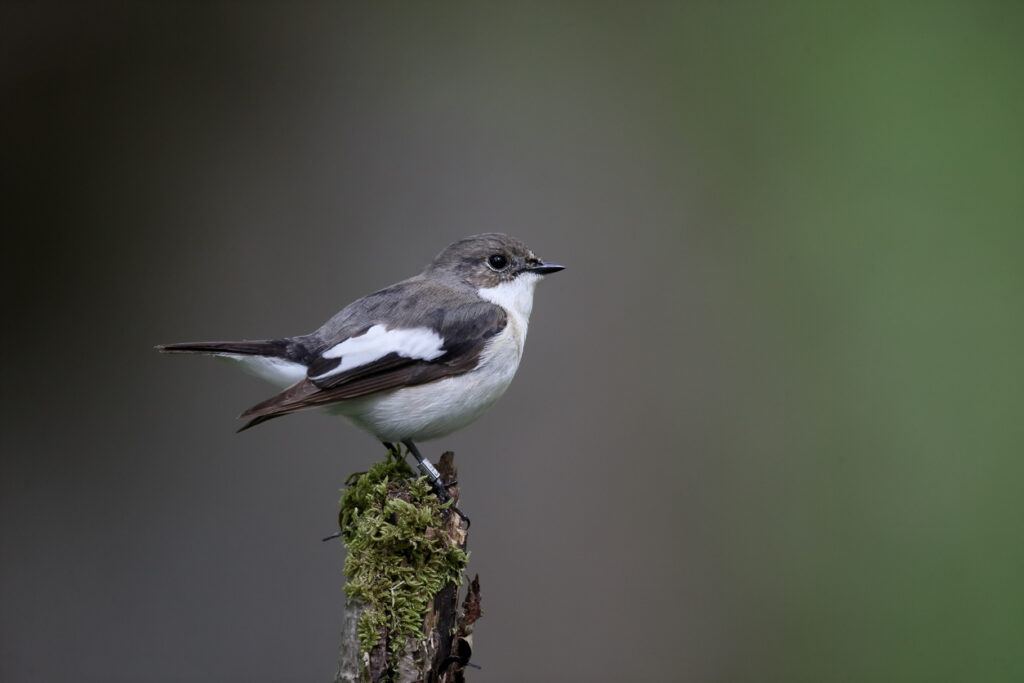
This small bird clocks in at 146Hz, making it the vertebrate champion of time perception. It needs this speed to catch flying insects midair, tracking their movements precisely enough to intercept them. Salmon come in at 96Hz and dogs at 75Hz, both faster than humans. The speed correlates directly with lifestyle, as animals that need to catch fast-moving prey or avoid quick predators evolved faster vision.
Your dog sees your TV as flickering images.
Dogs process visual information at about 80Hz, which means traditional TVs with 60Hz refresh rates look like rapid-fire still images to them rather than smooth video. This is why your dog might not seem interested in watching television with you. They’re not seeing a proper movie, they’re seeing something that flickers annoyingly. Unless you’ve got a high-quality TV with a faster refresh rate, your favourite film looks completely different to your pet.
It’s energetically expensive to see quickly.
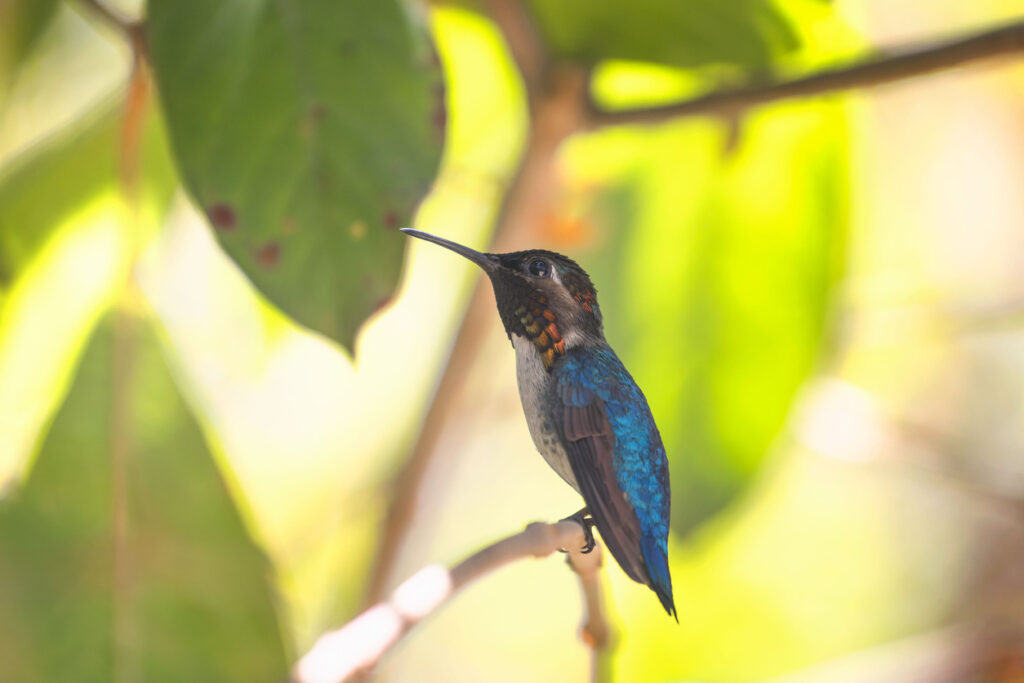
Fast vision requires massive amounts of energy, which is why not every animal has it. The neurons connected to retinal cells need to recharge quickly, and processing all that visual information burns through calories. Animals that don’t require rapid vision use that energy for other things like growth or reproduction instead. Hummingbird brains already consume 10% of their total oxygen supply, and boosting it further for even faster processing might be biologically impossible given their tiny size.
Squirrels remember where you are because time moves differently.
Tree squirrels process information at a much quicker rate because their brains function at higher frequencies. This doesn’t just help them dodge predators, it also explains their remarkable memory for food storage locations and their ability to navigate complex environments at speed. What seems like quick thinking to us is actually them having more time to process each decision because their internal clock runs faster than ours.
Crown-of-thorns starfish have the slowest vision at 0.7Hz.
At the opposite end of the spectrum, these starfish barely process any visual changes at all. They only detect changes 0.7 times per second, making them the slowest-seeing animals in studies comparing over 100 species. It makes sense given their lifestyle. They don’t need to dodge predators or catch fast-moving prey, so that energy goes elsewhere. For them, the world genuinely whizzes past at incredible speed compared to their sluggish perception.