
Getting into stargazing can feel strangely intimidating at first. You look up, see a sky full of dots, and realise you don’t actually know what you’re looking at or where to start. There’s a lot of gear talk, technical language, and “must-know” advice floating around, which can make it seem far more complicated than it needs to be.
The truth is, stargazing works best when you keep it simple in the beginning. You don’t need expensive equipment, encyclopaedic knowledge, or perfect conditions to enjoy it. A bit of basic understanding goes a long way, and once a few things click, the night sky stops feeling random and starts feeling familiar. That’s when it really gets fun.
1. Your eyes need time to adjust.
One of the biggest surprises for new stargazers is how little you see at first. When you step outside from a lit room, your eyes are still tuned for brightness, which washes out faint stars and details. It can take up to 30 minutes for your eyes to fully adapt to the dark. During that time, avoid phone screens and bright torches if you can. Once your night vision kicks in, the sky suddenly feels deeper and far more alive.
2. Light pollution matters more than equipment.
Many beginners assume they need a telescope straight away, but where you observe from matters far more. Streetlights, security lights, and city glow can erase most of the night sky. Even a short drive away from built-up areas can dramatically improve what you see. A dark sky with the naked eye will always beat expensive gear under heavy light pollution.
@starnameregistry Which of these stargazing tips will you use? 💫🌌 #stargazing #stargazingontiktok #stargazingchallenge #astronomytiktok #starnameregistry #nameastar ♬ Tell Me – Muspace Lofi
3. The sky changes constantly.
The night sky isn’t fixed. Stars rise and set just like the Sun, and constellations shift with the seasons. What you see in winter won’t match what’s overhead in summer. This is why patience pays off. Stargazing becomes more rewarding when you return regularly and notice how the sky slowly rearranges itself throughout the year.
4. Photos set unrealistic expectations.
Astrophotography images are stunning, but they can mislead beginners. Cameras collect light over long periods, revealing colours and details your eyes simply can’t see. Through your own eyes, objects will look softer and subtler. That doesn’t mean you’re doing it wrong. Stargazing is about presence and scale, not postcard perfection.
5. You don’t need to know everything at once.
The night sky can feel overwhelming at first, with countless stars and unfamiliar names. Many people quit early because they think they should understand it all straight away. Start small. Learn a few bright stars or one constellation at a time. Familiarity builds naturally, and confidence follows without effort.
6. The Moon changes everything.
The Moon is beautiful, but it also floods the sky with light. A bright Moon can wash out faint stars, planets, and deep-sky objects. Some of the best stargazing happens during a new Moon or when the Moon sets early. Checking the lunar phase before heading out makes a huge difference.
7. Cold feels colder when you’re standing still.
New stargazers often underestimate how cold they’ll feel. Standing or sitting still for long periods drains body heat fast, even on mild nights. Layers matter more than you think. Warm socks, gloves, and a hat often make the difference between an enjoyable session and one you cut short.
8. Binoculars are a brilliant first step.
Before investing in a telescope, binoculars are an excellent tool. They’re easy to use, portable, and surprisingly powerful for star clusters and the Moon. They also help you learn how the sky is laid out. Finding objects is far less frustrating with binoculars than jumping straight into a telescope.
@astroathens I've been asked A LOT about #Stargazing best practices!! 🪐🔭 Like stargazing tips, what sorts of equipment to use, and how to have the best stargazing experience!🤩 ⬇️ So here are my top 5 for THE BEGINNER stargazer!! The basic rules you should probably aim to follow on each stargazing adventure you have. 1️⃣ Avoid light pollution💡❌ Go to DarkSky.org to locate certitied dark sky locations!🌌 2️⃣ Binoculars (before a telescope) IMO 🔭 I recommend this because you will start to get used to how to navigate the sky, which is very very vast, using binoculars, and eventually will become sensitive enough to how to navigate using a simple telescope and beyond to advanced ones. I have some binoculars that Like listed on my Amazon storefront: Amazon.com/Shop/Astroathens 3️⃣ Astronomy Apps 📱 I use Sky Guide all the time. Sky Safari is great too! 4️⃣ Patience ☺️ Your eyes take about 20 minutes to adjust to the environment. So put away the phone or set it to night shift + True Tone, get a red flashlight 🔦 and you're all set! 5️⃣ Join an astronomy club🪐 Joining an astronomy club is an amazing way to make friends, to learn stuff about the night sky, and to truly enjoy the cosmos in w way that l believe we are meant to as people. You get to share your own equipment and view the stars through others' equipment too.🤩 🔭 I hope these tips & tools are useful to you on your next stargazing adventure! 🤓 Did I miss any tips or tools you use when you go stargazing? Comment them below 👇 I'm always looking to learn something new. ☺️ #stargazing #astronomy #nightsky #lookup #astronomytips #spacenerd #explorethecosmos #cosmos #spaceExploration #astroathens ♬ original sound – Athena ✨
9. Your neck and posture will complain.
Looking up for long stretches can strain your neck quickly. Many beginners don’t realise how uncomfortable stargazing can become without support. A reclining chair, blanket, or even lying on the ground makes a huge difference. Comfort keeps you outside longer, which is when the best moments usually happen.
10. Not all stars twinkle the same way.
Stars often appear to twinkle, while planets tend to shine more steadily. This difference helps you tell them apart without charts or apps. Once you notice this, identifying planets becomes much easier. That small observational skill makes the sky feel far less random.
11. Clouds aren’t always obvious at night.
Thin cloud can be hard to spot in the dark, especially under light pollution. It can dim stars without looking like cloud at all. If the sky feels strangely flat or dull, high cloud is often the reason. Learning to recognise this saves a lot of confusion and frustration.
12. Stargazing rewards stillness, not rushing.
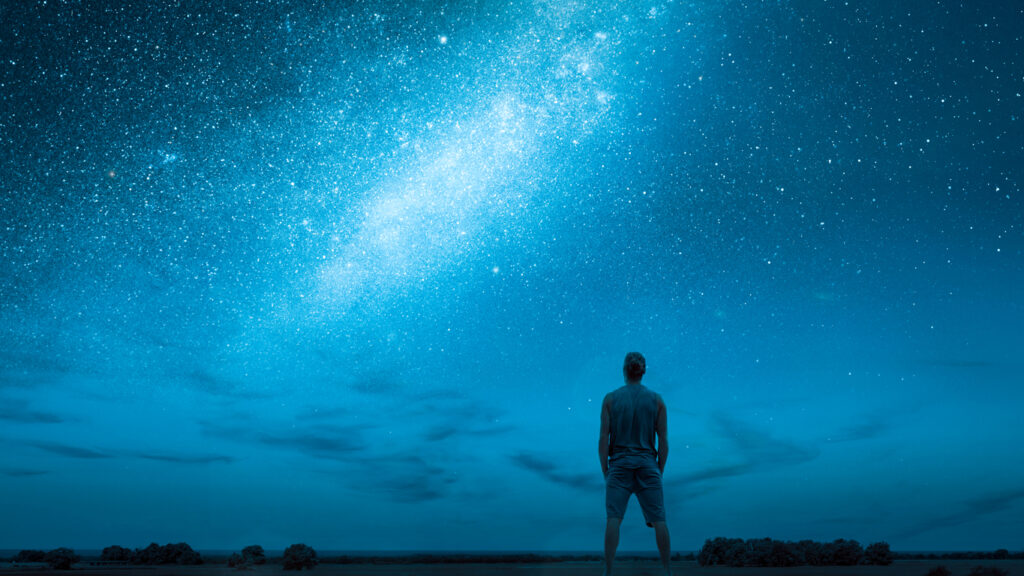
It’s tempting to jump from object to object, especially when using an app. But some of the best moments come when you stop actively searching. Give your eyes time to settle. Faint stars, satellites, and subtle patterns often appear only when you slow down and let the sky come to you.
13. You’ll see more the more often you look.
Stargazing isn’t about one perfect night. It’s about repetition. Each time you look up, your brain learns what to notice. Over weeks and months, details that once felt invisible become obvious. The sky doesn’t change. Your perception does.
14. Feeling small is part of the point.
Many new stargazers are surprised by the emotional side of it. The vastness can feel humbling, calming, or slightly unsettling. That feeling isn’t something to push away. It’s part of why people keep returning to the night sky. Stargazing isn’t just about what you see, but how it quietly shifts your perspective.