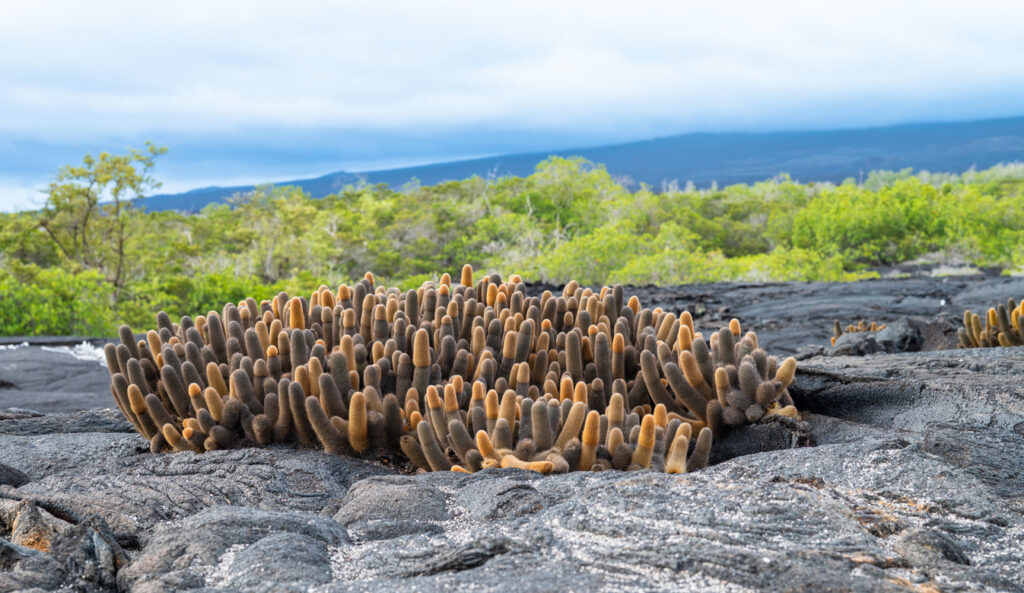
The lava cactus grows in one of the most hostile environments on Earth, thriving on bare volcanic rock where almost nothing else can survive. Found exclusively in the Galápagos Islands, this small cactus has adapted to conditions that would kill most plants within days. It’s not the most dramatic or colourful species, but its ability to colonise fresh lava flows makes it one of nature’s most impressive survivors and a crucial pioneer in creating habitats for other life.
It grows directly on hardened lava with no soil.
Lava cacti don’t need soil to establish themselves because they’ve adapted to root directly into the porous surface of cooled volcanic rock. The plant sends roots into tiny cracks and crevices in the lava, anchoring itself while extracting minimal moisture and nutrients from an environment that appears completely barren. Having the ability to survive without traditional growing medium means the lava cactus can colonise areas where other plants simply cannot establish, making it one of the first species to appear after volcanic eruptions.
It tolerates extreme temperature fluctuations.
Bare lava surfaces absorb intense heat during the day and radiate it back at night, creating temperature swings that most plants couldn’t withstand. The lava cactus handles these extremes through its compact, cushion-like growth form that minimises exposure and retains moisture. Dark lava can reach scorching temperatures under direct sun, yet the cactus thrives in these conditions that would dessicate other species. Such thermal tolerance is essential for survival in an environment without shade or temperature moderation.
It survives with almost no rainfall.
The Galápagos Islands receive limited and unpredictable rainfall, and lava fields are particularly arid because water runs off quickly through porous rock. Lava cacti have evolved to survive on fog, dew, and occasional rain, storing every drop of moisture they can capture. Their thick, waxy coating reduces water loss through evaporation, and their compact structure minimises surface area exposed to drying winds. Its extreme drought tolerance allows them to persist through months without significant water, outlasting dry periods that eliminate less adapted species.
It changes colour as it matures.
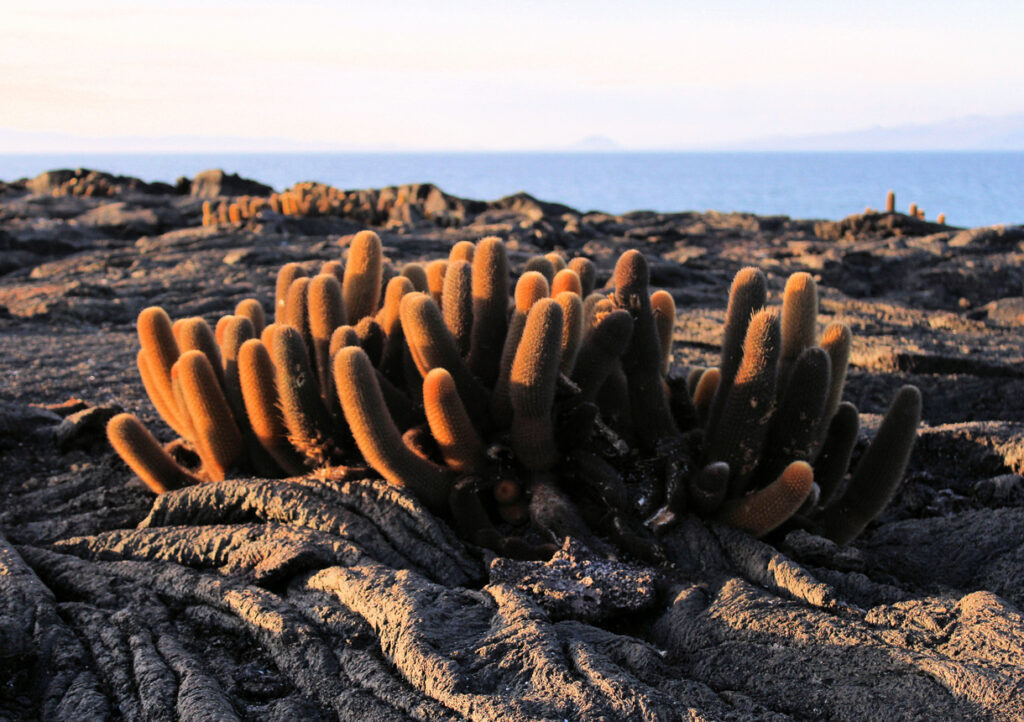
Young lava cacti are grey or silvery in colour, providing some protection from intense solar radiation while the plant establishes itself. As the cactus matures, it develops a golden or brownish hue, and older specimens can appear almost bronze. The colour change reflects the plant’s adaptation to its environment and may help regulate temperature and light exposure at different life stages. The shifting colours also make it easier to identify the age of individual cacti and understand the timeline of colonisation in lava fields.
It acts as a pioneer species for other plants.
By establishing itself on bare lava, the lava cactus begins the slow process of breaking down rock and creating conditions where other plants can eventually grow. Its roots work into cracks, and when parts of the plant die, they contribute organic matter to the otherwise sterile surface. As time goes on, the accumulation of material creates pockets where more demanding species can take root. Without pioneer species like the lava cactus, volcanic landscapes would remain barren far longer, so these small plants play an outsized role in ecosystem development.
It grows in dense colonies for survival.
Rather than growing as isolated individuals, lava cacti typically form dense cushions or mats that can spread across the lava surface. This growth pattern helps individual plants by creating a microclimate that retains moisture and provides some shade. The colony structure also protects against wind and helps trap organic material that can benefit the entire group. Growing together increases survival rates in an environment where isolated plants would face even harsher conditions.
It produces small yellow flowers despite harsh conditions.
Even in the most inhospitable lava fields, the lava cactus manages to produce flowers, demonstrating that it has enough resources not just to survive but to reproduce. The small yellow flowers appear seasonally and attract pollinators, which is remarkable considering how few other plants exist in fresh lava zones. Its flowering ability shows the cactus isn’t merely clinging to life, but actively thriving and completing its reproductive cycle in conditions that seem incompatible with plant life.
It’s found nowhere else in the world.
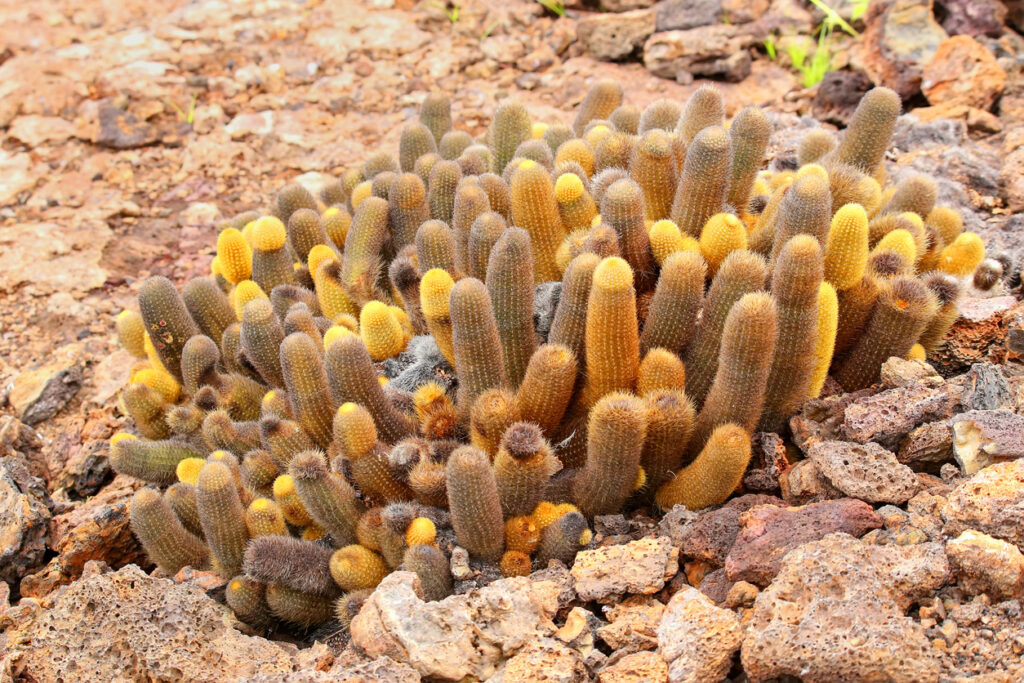
The lava cactus is endemic to the Galápagos Islands, meaning it evolved specifically to fill the ecological niche created by frequent volcanic activity in this particular location. You won’t find this species growing naturally anywhere else on Earth, making it a unique example of evolution responding to extremely specific environmental pressures. This restricted range also makes the lava cactus vulnerable, as it depends entirely on the preservation of its island habitat and cannot relocate if conditions change dramatically.
It faces threats from invasive species.
Despite surviving volcanic eruptions and extreme drought, the lava cactus is threatened by invasive plants and animals introduced to the Galápagos by humans. Aggressive invasive plant species can outcompete the slow-growing cactus, and introduced herbivores may damage populations that evolved without grazing pressure. These threats demonstrate that adaptation to natural extremes doesn’t protect species from human-caused disruptions. Conservation efforts in the Galápagos work to control invasives and protect endemic species like the lava cactus from these newer challenges.
It’s a living example of evolution in action.
The lava cactus represents a clear case of natural selection favouring traits that allow survival in specific extreme conditions. Its adaptations to heat, drought, and nutrient-poor substrate show how environmental pressures shape species over time. Scientists study the lava cactus and other Galápagos endemics to understand evolutionary processes, and the ongoing volcanic activity in the islands means researchers can observe colonisation patterns in real time. This small, unassuming plant offers insights into how life adapts to the most challenging environments Earth can produce.