If you’ve only ever thought of plants as passive, silently minding their own business, sundews tend to stop you in your tracks.
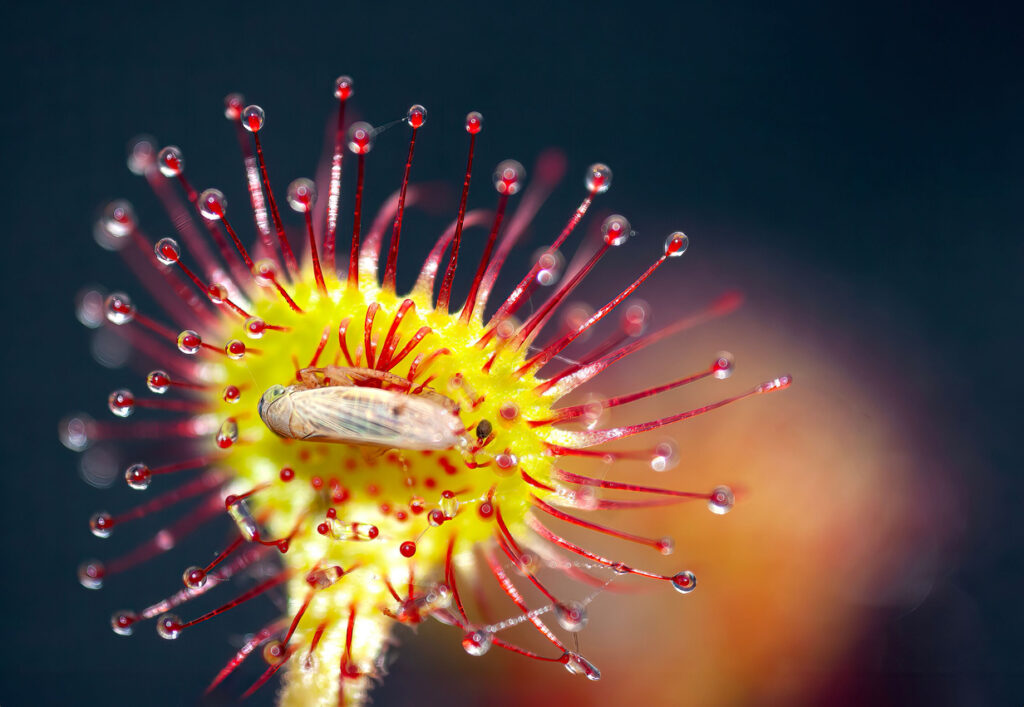
These strange little plants look delicate at first glance, almost sparkly in the right light, but they’re anything but harmless. They catch insects, hold them fast, and slowly digest them, all while sitting there looking like they couldn’t possibly hurt a thing.
What makes sundews so fascinating isn’t just that they eat insects, but how they do it. There’s no snapping shut or sudden movement like you get with a Venus flytrap. Instead, it’s a slow, sticky process that feels oddly unsettling once you know what’s happening. The sundew doesn’t chase its prey. It waits, and that patience is part of what makes it so effective.
It grows in places where other plants can’t survive.
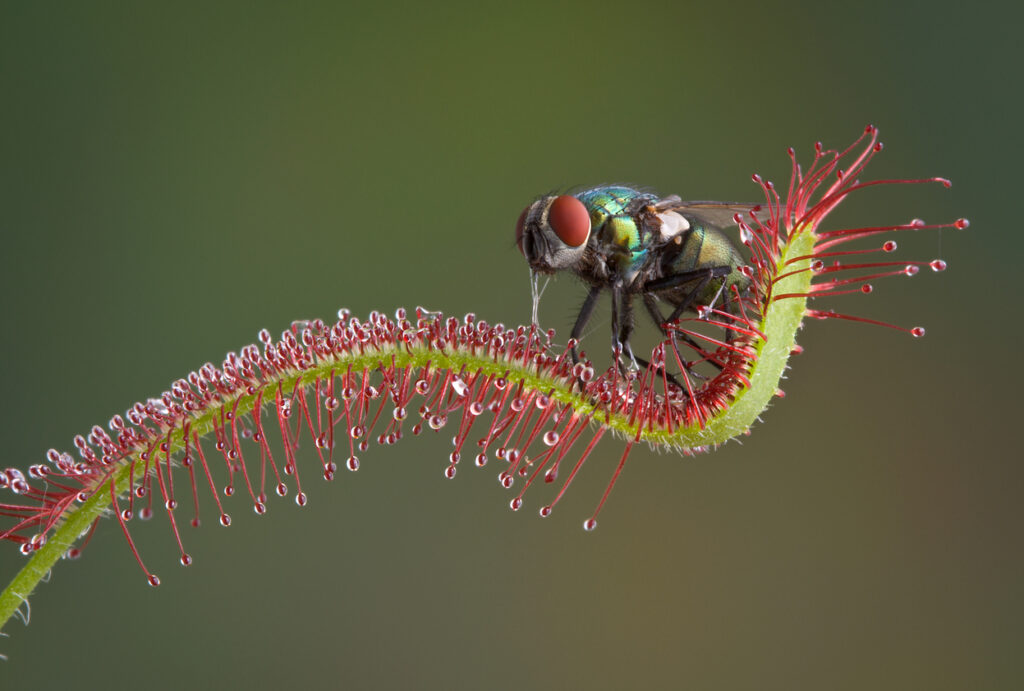
Sundews often live in bogs and wetlands where the soil is poor and lacking nutrients. Most plants would quickly weaken in these conditions, but sundews found a different way to thrive. By catching insects, they make up for what the soil can’t give them, which allows them to live in environments others avoid.
That adaptation makes them stand out in the plant world because they don’t rely on typical growth methods. Their ability to feed themselves in unusual ways shows how resourceful nature can be. Once you notice them, they become even more fascinating because they’re surviving on their own terms in difficult places.
Its leaves are covered in sticky droplets.
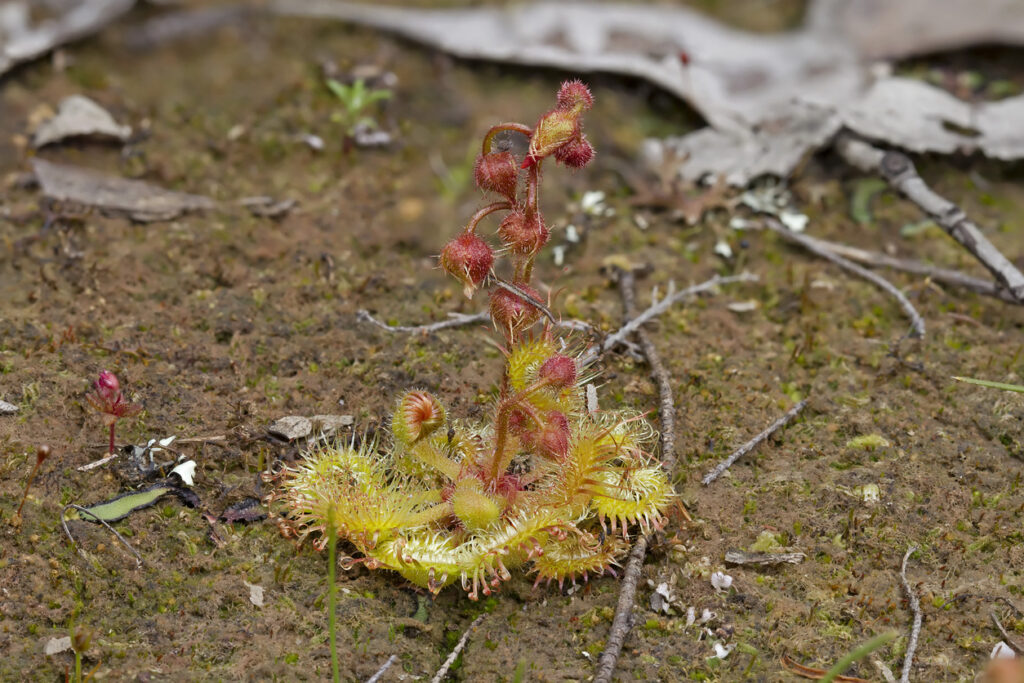
The small droplets on a sundew’s leaves look like tiny beads of dew, which is how the plant got its name. These droplets are actually a sticky substance that works like glue when insects land on the surface. Flies, gnats, and other small creatures get trapped quickly before they have any chance to escape.
That clever design helps the plant catch food without moving quickly or aggressively. The bright shine also attracts insects towards it, which means the plant doesn’t need to hunt actively. It simply creates the right conditions and waits patiently for something to land.
It slowly curls around its prey.
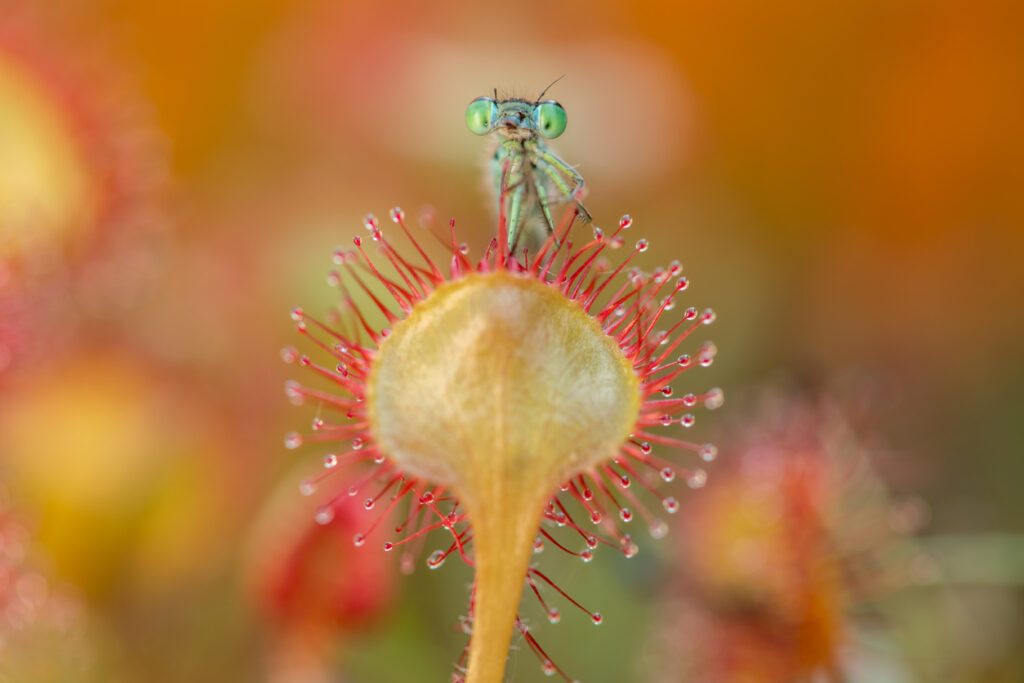
Once an insect is stuck, the sundew’s leaf begins to curl inward to hold it securely. This movement is slow but effective and ensures the insect stays in place while the plant prepares to digest it. The motion isn’t dramatic, but it shows how the plant responds to touch in a very controlled way.
The curling allows the plant to press the insect against more sticky surfaces, improving the chances of a successful meal. It’s one of the most unusual feeding behaviours in the plant world, and watching it happen makes you appreciate how many different strategies nature has created for survival.
It releases digestive enzymes to break down insects.
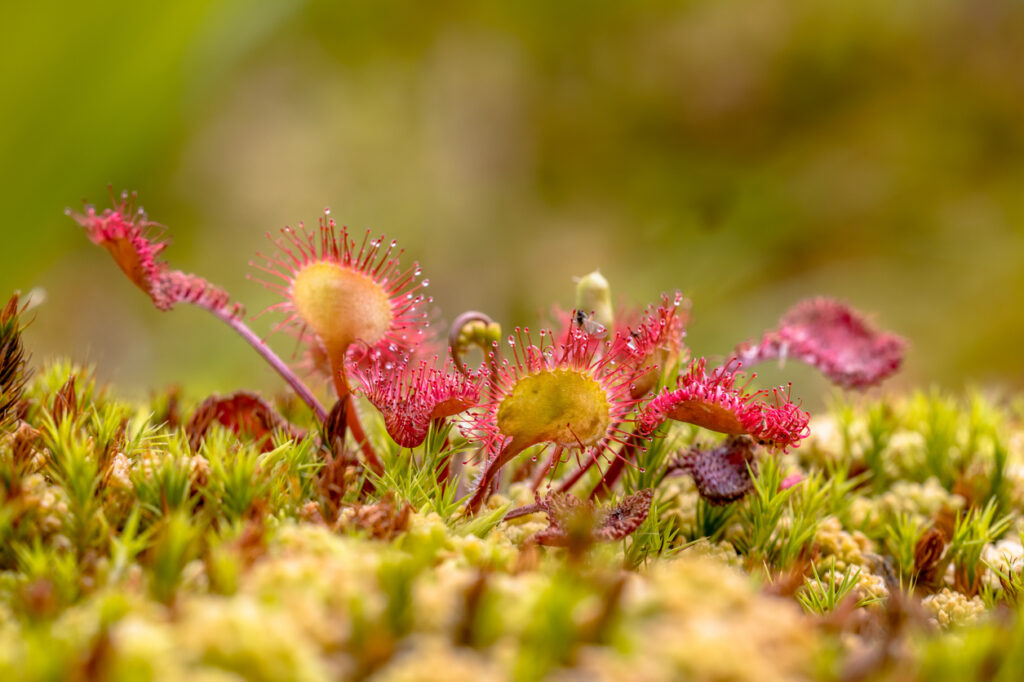
After trapping its prey, the sundew releases enzymes that slowly break down the insect’s body. These enzymes dissolve soft tissues and allow the plant to absorb nutrients like nitrogen, which is difficult to get from the soil in its natural habitat. The process is slow but steady and ensures the plant gets exactly what it needs.
Once the insect is fully digested, only a small shell remains. The plant then uncurls and waits for its next meal. This feeding cycle is essential for the sundew’s growth and is a major reason why it can survive in such nutrient-poor environments.
There are hundreds of species across the world.
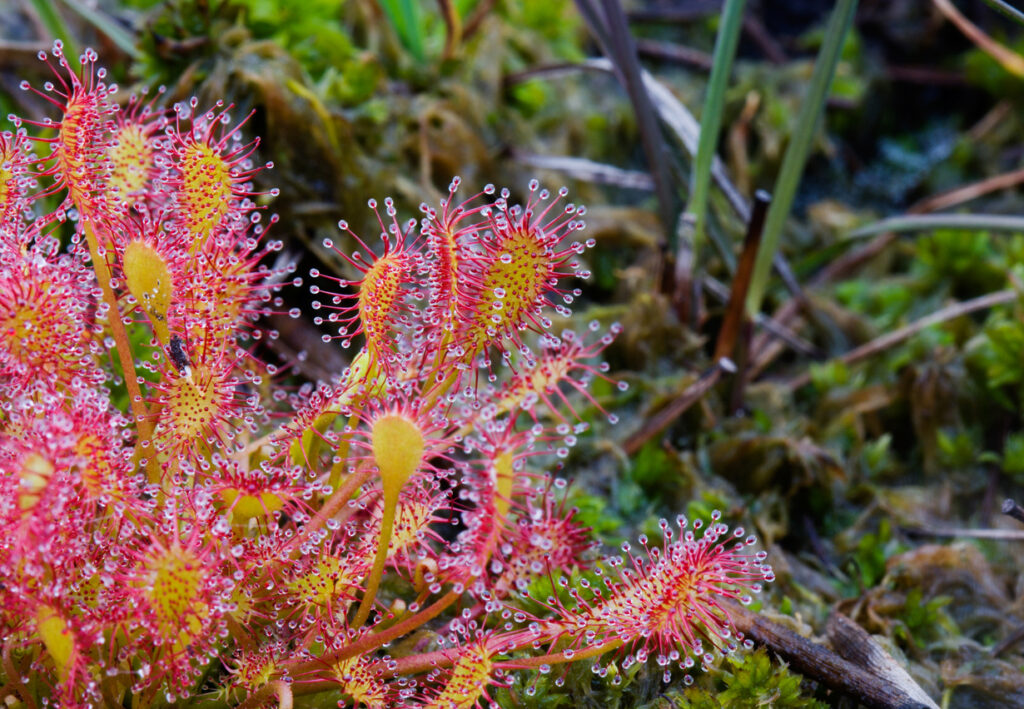
Sundews come in many different shapes and sizes, with some growing close to the ground and others stretching upwards on thin stems. They appear in many countries, including parts of Europe, Australia and South America, and each species has its own unique look. Some have long tentacle-like leaves, while others are compact and rounded.
The variety means you can find sundews in a surprising number of places. Their differences help them adapt to local environments, and each species has slight variations in colour, size, and trapping ability. The wider you look, the more interesting they become because no two species are exactly alike.
British bogs are home to several native sundews.
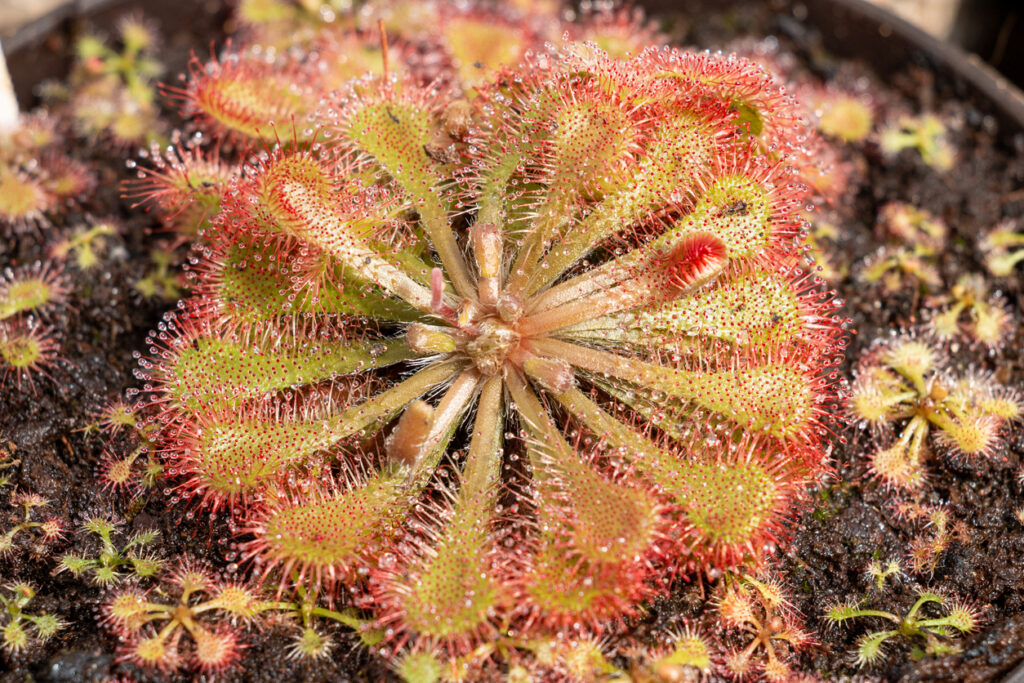
In the UK, sundews can be found in peat bogs, moorlands and wet heathlands. Species like the round-leaved sundew and the oblong-leaved sundew are part of the country’s natural plant life, though many people never notice them. Their small size makes them easy to overlook unless you know what to look for.
Finding one in the wild is a satisfying moment because they often appear in quiet places rich with wildlife. Their presence is a sign of a healthy bog environment, which makes them valuable for conservation. They remind you how many unusual species thrive in overlooked corners of Britain.
They’re not harmful to humans or pets.
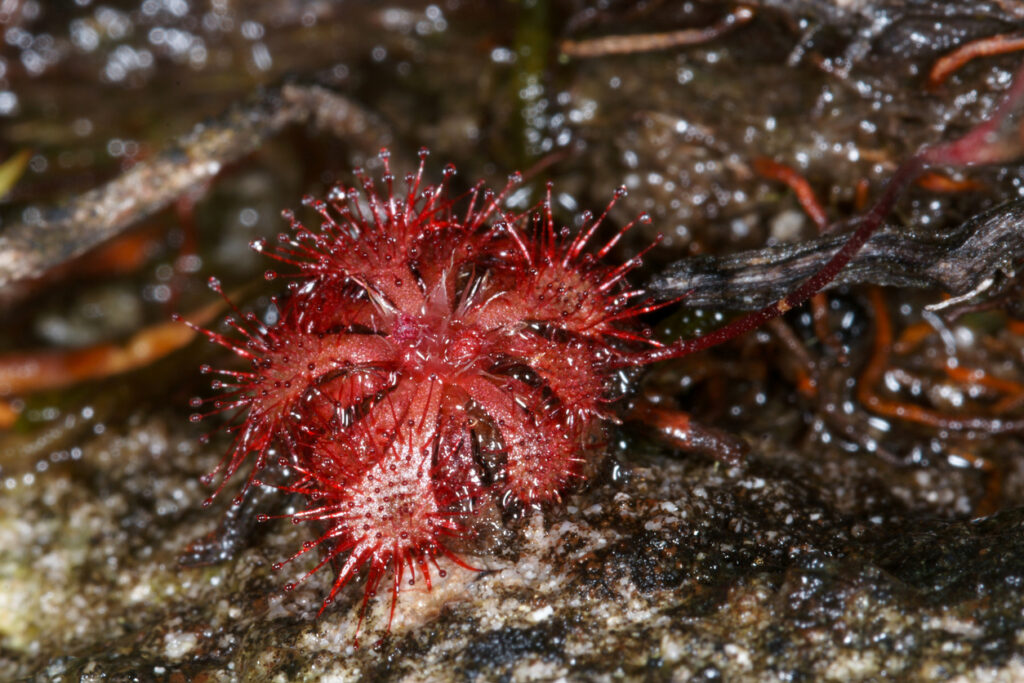
Even though sundews eat insects, they’re harmless to people and animals. Their traps are designed only for tiny creatures that land directly on the sticky droplets. You can touch the plant gently without worrying about being hurt, although it’s best to avoid disturbing them too often.
Their harmless nature makes them interesting plants to grow at home. Many people enjoy keeping them because they’re unusual but safe, and caring for them offers a small window into the world of carnivorous plants. They’re more delicate than they look, so gentle handling is important.
They grow surprisingly well in pots.
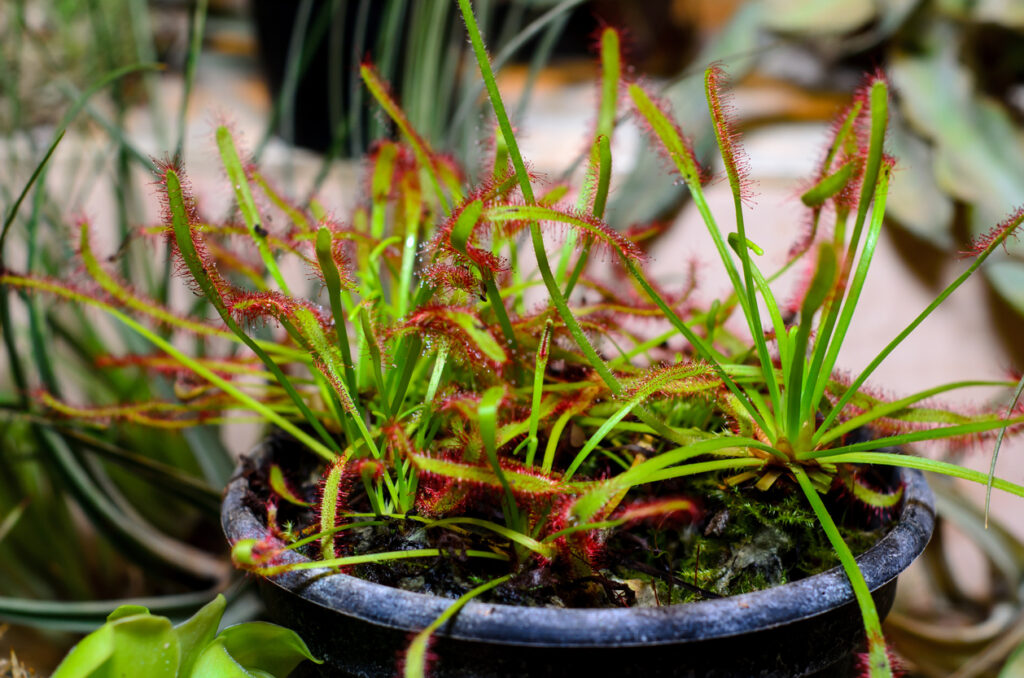
Because sundews are used to nutrient-poor soil, they do well in containers filled with peat or specialised carnivorous plant compost. They need damp conditions and bright light to thrive, but they’re not as demanding as many people expect. With steady care, they can live for years indoors or in greenhouses.
Growing them can be rewarding because you get to watch their feeding behaviour up close. Their delicate leaves and sparkling droplets make them one of the most decorative carnivorous plants available. Once they settle in, they often produce flowers that add to their charm.
Their flowers grow on long stalks for a reason.
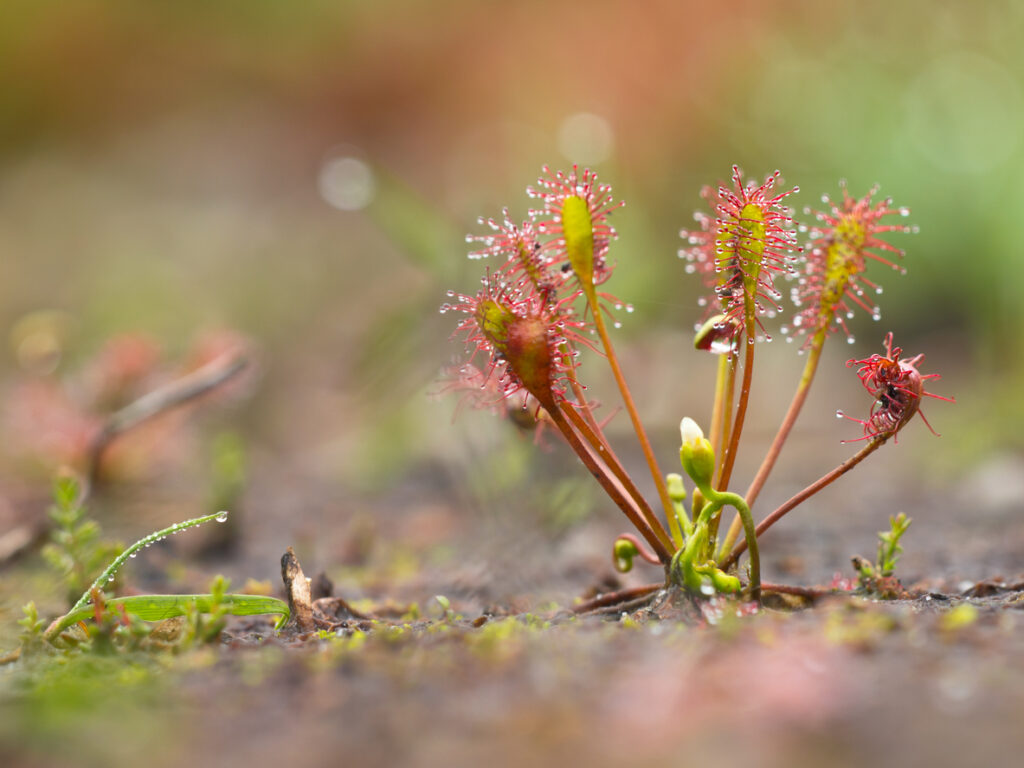
Sundews produce pretty white or pink flowers that sit high above the plant on thin stems. This height keeps pollinators at a safe distance from their sticky leaves. If the flowers grew close to the traps, the plant might accidentally catch the insects it needs to spread its pollen.
Such thoughtful separation shows how finely tuned their design is. The plant avoids harming helpful insects while still feeding itself efficiently. It’s a clever solution to a potential problem, and it allows them to reproduce successfully without losing valuable pollinators.
They play an important role in their ecosystem.
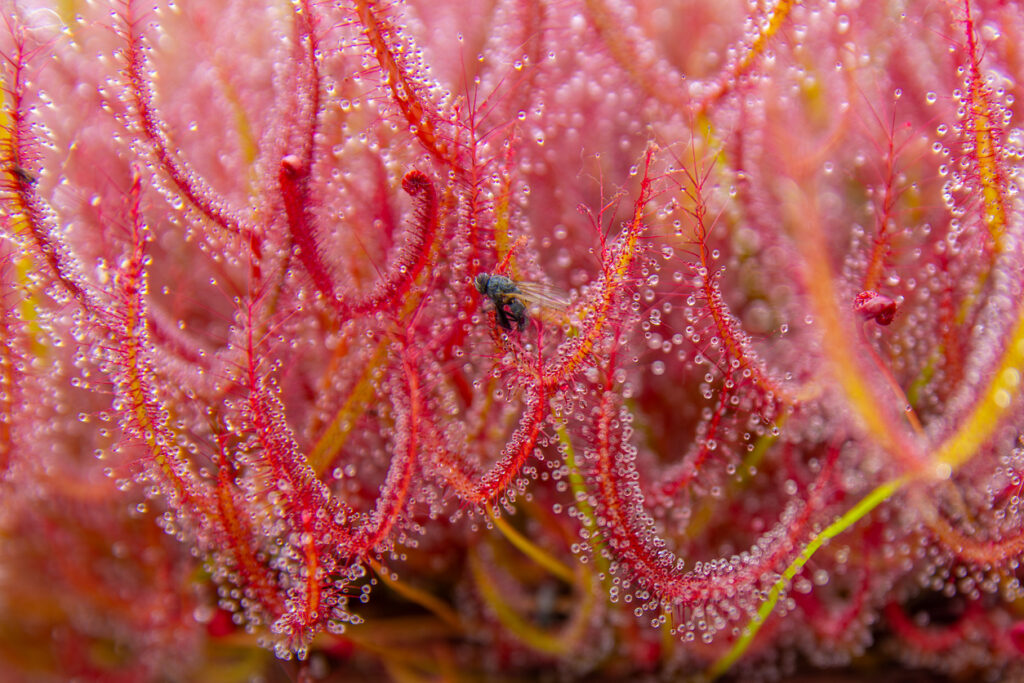
By catching insects, sundews help control small bug populations in the areas where they grow. They also support the health of bog habitats, which rely on a delicate balance of species. Because sundews depend on clean, wet environments, their presence signals a landscape that’s functioning properly.
Protecting these habitats is vital because bogs are disappearing in many places. Sundews act as a reminder of how fragile and special these environments are. Seeing one in the wild highlights the importance of conservation and the need to keep these ecosystems thriving.
They’ve fascinated scientists for centuries.
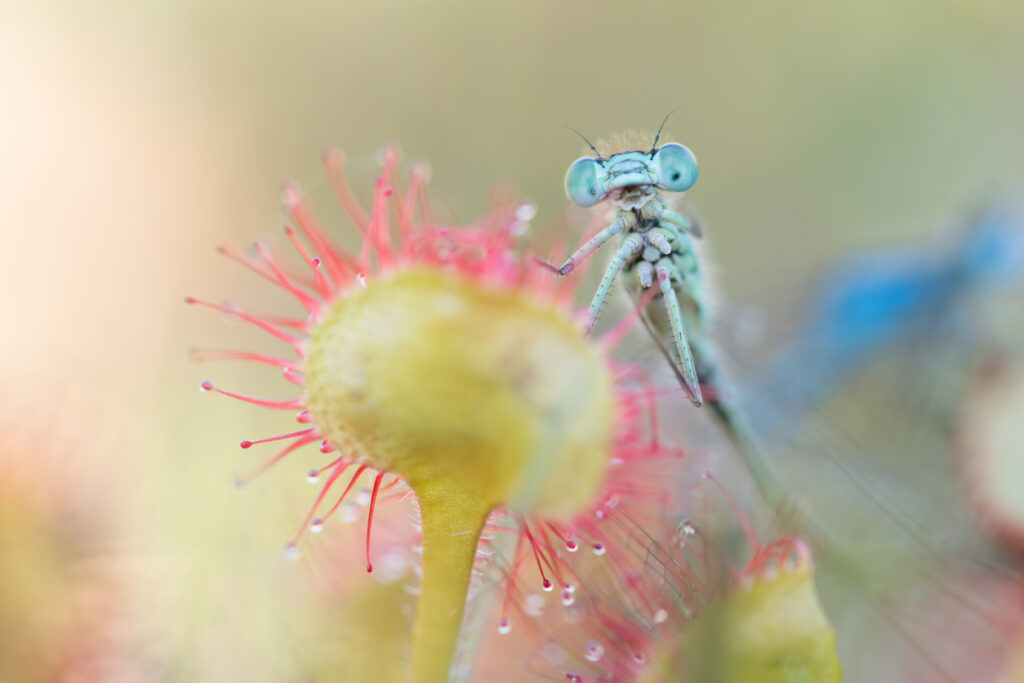
Charles Darwin was particularly interested in sundews and spent years studying how they trapped insects. He carried out experiments that helped reveal the plant’s reactions and its ability to digest prey. His work contributed greatly to our understanding of plant movement and carnivorous behaviour.
The scientific interest continues today because sundews offer so many unusual features to explore. Researchers still study how their traps work and why different species have developed their own variations. Their complexity makes them stand out, even among other carnivorous plants.
Watching them feed is strangely satisfying.
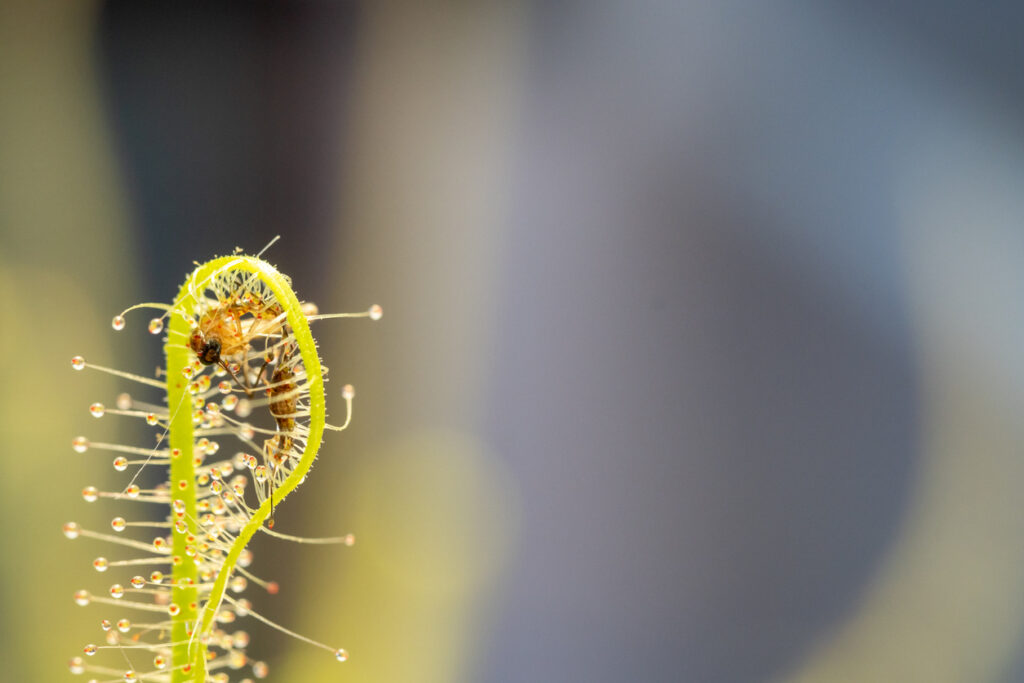
Seeing a sundew catch an insect can be fascinating because the process feels both gentle and precise. The slow curl of the leaf and the shimmering droplets create a scene that draws you in. It’s not dramatic, but it’s unusual enough to hold your attention every time it happens.
For many people, these plants become a favourite because they offer something you don’t often see in nature. They’re small, quiet and unexpectedly powerful in their own way. Once you learn how they work, it’s easy to appreciate how remarkable they really are.